Suro Senen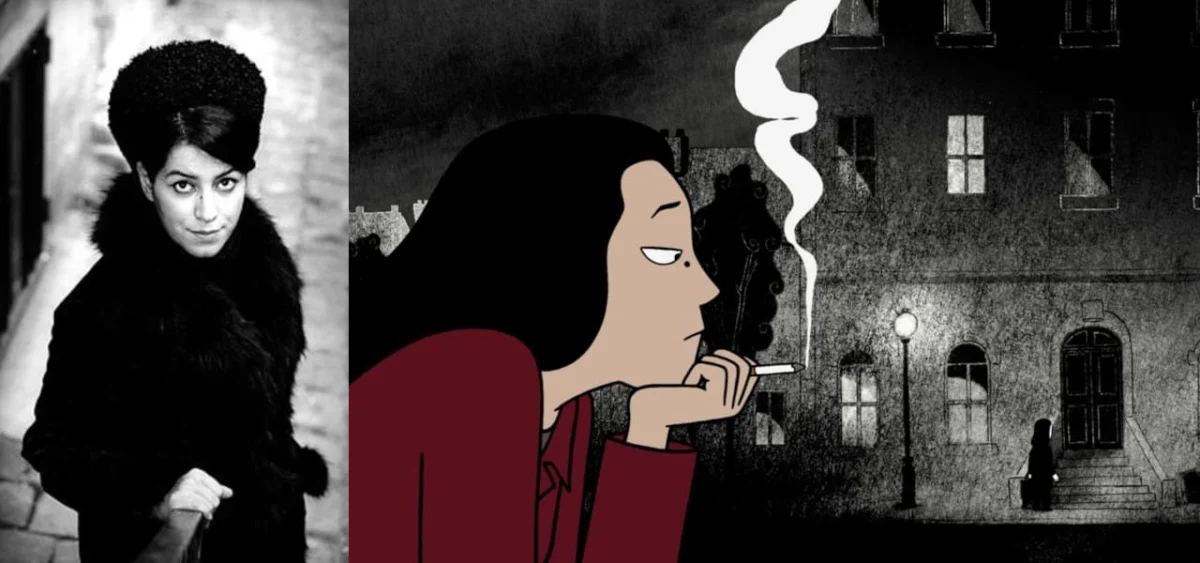
Marjane Satrapi, the visionary Iranian-born cartoonist, filmmaker, and tireless advocate for human rights, has passed away at the age of 56. Her death, which her family described as the result of a "broken heart" following the passing of her husband, Swedish producer and screenwriter Mattias Ripa, marks the end of a singular chapter in contemporary art and international cinema.
Satrapi’s influence spanned continents and mediums. From the stark, high-contrast pages of her autobiographical graphic novels to the groundbreaking, Oscar-nominated animated masterpiece Persepolis, she redefined the capacity of animation to serve as a medium for political witness and profound personal memoir. Beyond her artistic output, she evolved into a formidable voice on the global stage, using her platform to challenge authoritarianism and champion the cause of freedom.
A Legacy Forged in Revolution
Born in 1969 in Rasht, Iran, Satrapi’s early life was defined by the cataclysmic shifts of the late 20th century. Growing up amidst the turmoil of the Iranian Revolution and the devastating Iran-Iraq War, she developed a worldview shaped by both the brutality of systemic oppression and the resilience of the human spirit.
These formative years became the bedrock of her creative output. After emigrating to France, she began translating her memories into art. Her signature style—characterized by thick, expressive black-and-white ink lines—was deceptively simple. It possessed an immediate, visceral quality that allowed her to convey the weight of historical trauma without sacrificing intimacy or wit. Her work was never merely a recounting of events; it was an exploration of how memory functions, how identity is forged in exile, and how the personal remains inextricably linked to the political.
Chronology: From Tehran to Global Acclaim
Satrapi’s career trajectory is a testament to the power of authentic storytelling.
- 1969: Born in Rasht, Iran.
- 2000–2003: Publication of the Persepolis graphic novel series in France, which became a global phenomenon, translated into dozens of languages.
- 2007: The release of the animated feature film Persepolis, co-directed with Vincent Paronnaud. The film won the Jury Prize at the Cannes Film Festival and earned an Academy Award nomination for Best Animated Feature.
- 2010s: Transitioned into live-action filmmaking, directing projects such as Chicken with Plums (2011) and The Voices (2014), while remaining an active voice in international human rights discourse.
- 2023: Participated in the Nobel Peace Prize Forum, cementing her status as a global intellectual leader.
- 2024: Awarded Spain’s prestigious Princess of Asturias Award for Communication and Humanities.
- 2025: Witnessed the historic Oscar win for In the Shadow of the Cypress, a milestone for the Iranian animation community she helped pioneer.
- 2026: Passed away on June 4, at the age of 56.
Challenging the Conventions of Animation
Before Persepolis, the global perception of animation was largely dominated by commercial studio models—often pigeonholed as content for children or escapist fantasy. Satrapi dismantled these notions with clinical precision. By refusing to adapt her graphic novel into a more "traditional" cinematic aesthetic, she preserved the raw, hand-drawn integrity of her work.
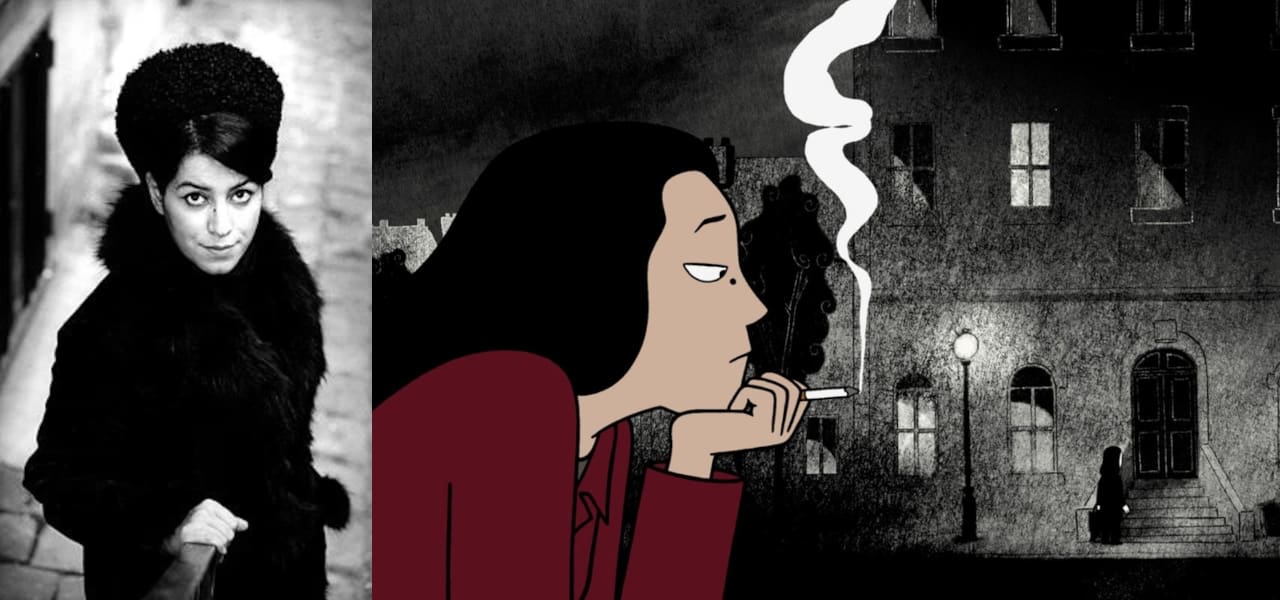
Her choice to utilize bold silhouettes and flattened, stylized spaces did not alienate audiences; rather, it invited them into a shared space of memory. The film demonstrated that animation could tackle the most harrowing subjects—exile, religious repression, and the death of childhood innocence—with a gravity usually reserved for live-action documentary or prestige drama. She proved that the medium was a versatile, sophisticated tool for storytelling that could cross cultural boundaries with ease.
Official Responses and Public Mourning
The international community has reacted with profound grief to the news of her passing. The office of French President Emmanuel Macron released an official statement, calling Satrapi a "leading figure in French culture" and a "freedom-loving artist whose work carried a universal message."
The outpouring on social media and from human rights organizations reflects the depth of her impact. Her final public posts, shared on Instagram in April, serve as a heartbreaking coda to her life. Sharing photos of her late husband, Mattias Ripa, with the caption, "For I lost the love of my life," she signaled a period of deep mourning that, according to her family, she ultimately could not overcome.
Her commitment to principle remained steadfast until the end. In 2025, in a move that shocked the establishment, she famously refused France’s Legion d’Honneur. She cited the nation’s "hypocritical attitude toward Iran" and its continued leniency toward the wealthy oligarchs of the regime she had spent her life opposing. This final act of defiance was typical of a woman who viewed art and political integrity as inseparable.
Implications for the Future of Animation and Activism
Satrapi’s passing leaves a void in both the artistic and activist landscapes. However, her influence is firmly embedded in the current generation of filmmakers.
The recent success of Iranian animation on the world stage—highlighted by Yegane Moghaddam’s Our Uniform and the Oscar-winning In the Shadow of the Cypress—is a direct result of the trail Satrapi blazed. By proving that an Iranian story could capture the world’s attention, she empowered a new generation of animators to pursue their own personal, often dangerous, truths.
.png)
For the industry at large, her legacy is a reminder of the "possibility of personal filmmaking." She demonstrated that an individual life, when presented with absolute clarity and conviction, can reflect the lived experiences of millions.
A Cultural Ambassador Beyond Borders
In her later years, Satrapi transcended the labels of "cartoonist" or "filmmaker." She became a cultural ambassador, a witness to the Iranian struggle, and a fierce advocate for women’s rights. Her work was consistently cited as an entry point for Western audiences to understand the complexities of Iranian history—moving beyond the reductive headlines to see the human faces of those living under authoritarian rule.
Her advocacy was not performative. Whether she was criticizing the Iranian government’s human rights record or participating in international forums, she brought a sense of urgency to every platform she occupied. The link in her final social media bio—a plea for the lives of political prisoners Varishe Moradi and Pakhshan Azizi—stands as a final testament to her priorities. She did not use her fame to bolster her own brand; she used it to amplify the voices of those the world had forgotten.
As the global arts community mourns, the focus remains on the immense body of work she leaves behind. From the ink-stained pages of Persepolis to the halls of the Nobel Peace Prize Forum, Marjane Satrapi lived a life that defied boundaries. She proved that the most powerful weapon against silence and oppression is the honest, unrelenting testimony of one’s own life. Her story, like the films she made, will continue to resonate for generations to come.


 Asro
Asro
 Sagoh
Sagoh