

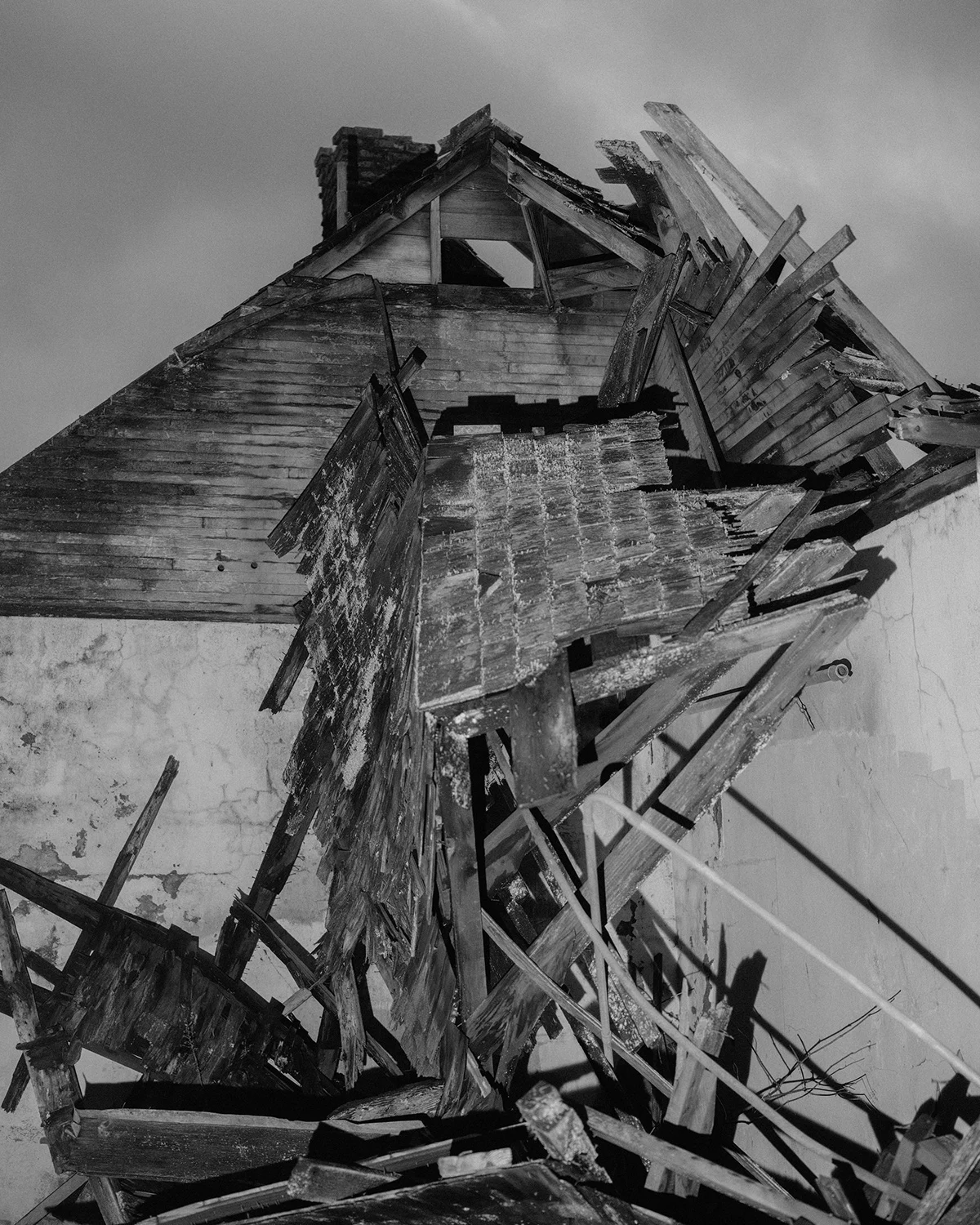
In the landscape of contemporary photography, few works manage to bridge the chasm between personal trauma and artistic catharsis with as much visceral intensity as Brian Van Lau’s debut monograph, We’re Just Here for the Bad Guys. Published by the esteemed nonprofit organization Light Work, the book serves as a poignant, haunting, and ultimately redemptive exploration of a father-son relationship defined by absence, incarceration, and the finality of illness.
Through a synthesis of intimate portraiture, archival recovery, and landscape photography, Lau investigates the ghosts of his own lineage. The work is not merely a documentation of a terminal diagnosis; it is a rigorous, often painful archaeological dig into the life of an estranged father who existed more as a myth—or a cautionary tale—than a parent for the majority of Lau’s childhood.
The Core Narrative: A Journey Toward Closure
The central tension of We’re Just Here for the Bad Guys lies in the oscillation between the distant and the immediate. For years, Lau’s understanding of his father was filtered through the lens of incarceration, a period that effectively severed the paternal bond during the photographer’s formative years. Even after his father’s release, a sense of stability remained elusive; the elder Lau moved to Vietnam, effectively vanishing from his son’s life for nearly a decade.
The catalyst for the book was not a reunion, but a crisis. Upon receiving news of a sudden and severe illness, Lau traveled to Vietnam, where he discovered his father was suffering from terminal cancer. This journey marked the beginning of a final, compressed chapter in their relationship. During their last week together, the two men engaged in an act of artistic collaboration—a desperate, profound attempt to document the elder Lau’s waning health and the reality of his terminal state. This collaboration provides the monograph with its most raw and unflinching imagery.
Returning to his hometown in Hawaiʻi, Lau transitioned from the role of a son-in-waiting to a steward of his father’s memory. Tasked with the responsibility of scattering his father’s ashes across the landscapes of Oʻahu, Lau found himself confronted with the silence of the dead and the fragmented narratives of the living. Working in tandem with his grandparents, he began to reconstruct a family history that had been buried under decades of secrecy, shame, and distance.
Chronology of a Fragmented Life
To understand the weight of the monograph, one must view it as a timeline of displacement. The narrative can be segmented into four distinct movements:
1. The Era of Absence
For the duration of his childhood, Lau’s father was a figure defined by his physical confinement. Incarceration created a vacuum in the family structure, one that fostered a complicated mixture of longing and resentment in the younger Lau. This period established the foundational "bad guy" narrative that the title of the book suggests—a shorthand for the criminalized or marginalized figure who exists on the periphery of society.
2. The Vietnamese Exile
Following his release, the elder Lau sought a new beginning in Vietnam. However, rather than facilitating a reconciliation, this geographical shift solidified the estrangement. For nearly ten years, the connection between father and son was defined by silence, rendering the elder Lau a phantom in his own family tree.
3. The Final Week: A Collaboration of Decay
The middle section of the monograph chronicles the week in Vietnam. This was a period of forced intimacy, where the camera became a bridge between the two men. By documenting the physical decline of his father, Lau was forced to confront the reality of his own grief. This was not a sentimental farewell, but a clinical, objective observation of mortality.
4. The Hawaiian Return and Reconstruction
The final movement takes place in Oʻahu. Here, the book shifts from the documentation of death to the excavation of life. By collaborating with his grandparents, Lau engaged in a process of oral history and photographic recovery, piecing together the events and circumstances that led his father to the life he ultimately lived.
Supporting Data and Artistic Methodology
The technical and aesthetic choices in We’re Just Here for the Bad Guys reflect the fractured nature of the subject matter. Light Work, an organization renowned for its commitment to supporting artists working in photography, has provided the necessary platform for this project, which utilizes a mixture of mediums.
The book incorporates:
- Contemporary Portraits: Capturing the physical deterioration of the father with a brutal, yet tender honesty.
- Archival Photography: Integrating old family photos that have been rediscovered or recontextualized to challenge the original, perhaps misleading, narratives of the past.
- Landscape Imagery: The Hawaiian landscapes serve as a backdrop for the scattering of ashes, acting as a site of both mourning and grounding.
By blending these visual elements, Lau avoids a strictly linear biography. Instead, he presents a "mosaic of memory." The "data" of this project is not found in statistics, but in the visual evidence of a life—the scars, the discarded documents, the faces of grandparents who carry the weight of stories that were never meant to be told.
Official Perspectives: The Role of Light Work
Light Work, based in Syracuse, New York, has long been a pillar for artists exploring identity and the human condition. In sponsoring the publication of Lau’s work, they have validated a project that sits at the intersection of private grief and public discourse.
According to representatives from Light Work, the project stands out for its "unflinching look at the complexities of paternal relationships and the way in which the camera can act as a tool for mediation." The organization emphasizes that the book is not merely about a specific man, but about the universal process of attempting to reconcile with the figures who shaped us, regardless of how absent or flawed they may have been.
Lau himself has described the process as an act of "reclaiming the narrative." In various statements surrounding the release, he has noted that the project was never intended to exonerate his father or simplify his life. Rather, it was about achieving a state of "radical honesty." By uncovering the "hidden, previously unknown parts" of his father’s history, Lau was able to strip away the label of "the bad guy" and replace it with a more nuanced understanding of a human being caught in a cycle of circumstance and choice.
Implications: The Ethics of Documenting the Self
The publication of We’re Just Here for the Bad Guys raises significant questions regarding the ethics of personal documentary photography.
The Burden of Representation
When a photographer turns the lens on their own family, they inherently change the nature of the relationship. In the final week in Vietnam, the camera served as a barrier. Did the act of photographing his dying father prevent a more "natural" or "pure" interaction? Or, as many critics suggest, did the camera provide the only possible language for an emotional intimacy they had never known?
The Healing Power of the Archive
The implications of Lau’s work reach beyond his own family. In many immigrant and marginalized communities, family history is often lost to the urgency of survival. By reconstructing his history through his grandparents, Lau provides a roadmap for others seeking to reclaim their own lost narratives. The monograph suggests that we are all, to some extent, the authors of our own genealogies, and that the past can be reshaped through the act of creative interpretation.
A New Standard for Memoir
In an era of digital oversaturation, where family life is often curated for social media, We’re Just Here for the Bad Guys serves as a stark reminder of the power of physical media. The monograph demands time, focus, and emotional stamina from its reader. It challenges the genre of the photographic memoir by refusing to offer a clean resolution. There is no neat "happily ever after" here; there is only the ongoing, iterative work of remembering and reconciling.
Conclusion
Brian Van Lau’s We’re Just Here for the Bad Guys is a seminal work that marks the arrival of a significant new voice in photography. By navigating the uncomfortable territory between love and judgment, Lau has created a document that is as much a testament to his own resilience as it is to the complexity of his father.
For those interested in the intersections of sociology, art, and the personal experience, the book is an essential read. It stands as a profound reminder that even the most "absent" figures in our lives leave an indelible mark—and that sometimes, the only way to heal the wounds of the past is to capture them, frame by frame, until they are finally understood.
We’re Just Here for the Bad Guys is currently available through Light Work. As the artistic community continues to grapple with the role of the personal in photography, this monograph will undoubtedly remain a touchstone for years to come.










No comments yet. Be the first to join the conversation!