


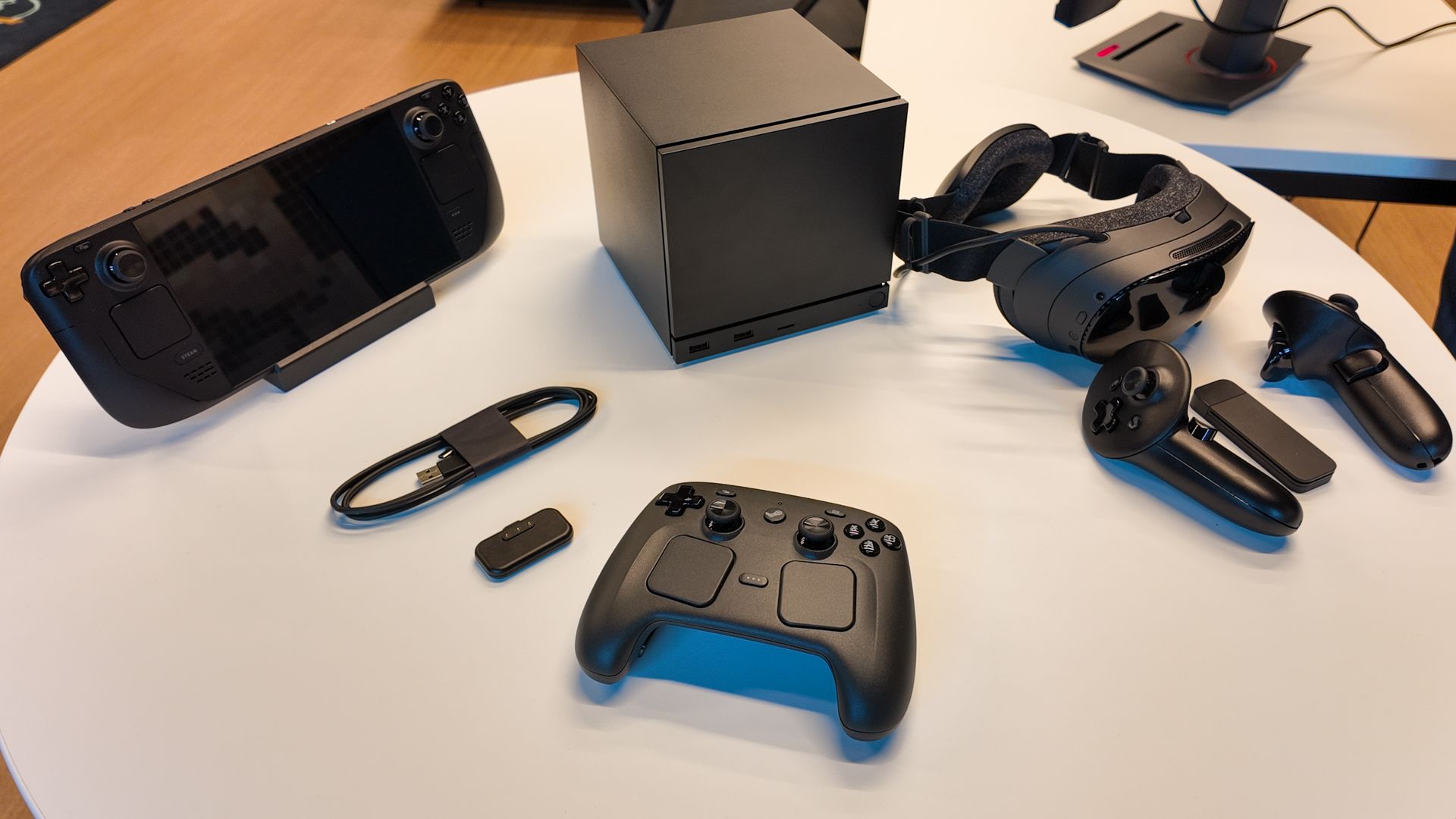
In an era defined by volatility in the global semiconductor market, Valve Corporation remains locked in a high-stakes race against time. Despite a year crippled by ballooning component costs and widespread supply chain fragility, the gaming giant is holding firm to its aggressive roadmap: the launch of the Steam Machine and Steam Frame by the end of this summer.
As the tech industry grapples with the fallout of an AI-driven surge in demand for high-bandwidth memory, Valve is doubling down on its hardware ecosystem. The company recently confirmed a significant expansion of its "Verified" program, extending the rigorous performance-testing framework that defined the Steam Deck era to its upcoming living room and display-centric hardware. This move signals a push for platform consistency, yet it also highlights the precarious nature of Valve’s current hardware strategy in a market where even established giants like Sony and Nintendo have been forced to implement significant price hikes.
The Verified Ecosystem: A Standardized Vision for Steam
At the heart of Valve’s strategy is the "Verified" program, a certification system that provides consumers with a clear expectation of game performance. By leveraging the Proton compatibility layer—which bridges the gap between Windows-native titles and Linux-based hardware—Valve has successfully democratized the handheld market.
With the upcoming expansion of this program, the standard is clear: if a game achieves "Verified" status for the Steam Deck, it is effectively guaranteed to perform on the Steam Machine and Steam Frame. Valve’s documentation, released alongside the program’s update, clarifies that the software architecture is intended to be near-identical across the product line. However, this uniformity comes with a curious caveat regarding development access.
The Dev Kit Paradox
Perhaps the most telling sign of Valve’s current manufacturing pressure is the status of developer support. While Steam Frame dev kits have already been distributed to studios, Steam Machine dev kits remain notably absent. Valve’s official stance, as noted in recent Steamworks documentation, is that developers should utilize the Steam Deck as the primary proxy for the Steam Machine.
"Steam Machine dev kit units are not currently available," the documentation reads. "The best way to ensure compatibility on Steam Machine is to work on your title’s compatibility with Steam Deck. If your game runs well on Deck, it will also run well on Machine with no extra work required."
This omission raises serious questions about the depth of Valve’s inventory. The availability of dev kits is typically the first step in a hardware rollout. Their absence suggests that Valve is likely rationing components with surgical precision, prioritizing retail units over mass distribution to third-party developers.
Chronology of a Challenged Launch
To understand the gravity of the current situation, one must look at the timeline of Valve’s recent hardware ambitions.
- Late 2024: Industry analysts begin flagging the "AI Supercycle," with data centers consuming the vast majority of available DRAM and NAND flash supply. Prices for consumer electronics begin an upward trend.
- Early 2025: Valve signals intent to expand the hardware lineup beyond the handheld market. Initial projections for the Steam Machine’s pricing remain conservative.
- May 2025: Lawrence Yang, a key figure at Valve, admits to the difficulties of the current supply chain. In a candid interview with PC Gamer, he acknowledged that the state of component pricing was "challenging" and unavoidable.
- Q1 2026: Significant price increases hit the console market. The PlayStation 5 and the anticipated Nintendo Switch 2 undergo dramatic MSRP adjustments, normalizing a higher entry price for gaming hardware.
- GDC 2026: Valve clarifies the technical requirements for the Steam Machine/Frame, doubling down on the "Verified" program despite the lack of specialized dev hardware.
- Today: Valve confirms the expansion of the Verified program, reaffirming their commitment to a late-summer launch window.
The Economic Backdrop: Why Hardware Costs are Skyrocketing
The challenges facing the Steam Machine are not unique to Valve; they are systemic. The primary culprit is the runaway growth of the artificial intelligence sector. Because AI models require massive amounts of high-speed memory, tech giants have been buying up global stockpiles of HBM (High Bandwidth Memory), DRAM, and NAND flash.
This demand-side pressure has created a "trickle-down" effect. When memory and storage manufacturers prioritize the high-margin contracts for enterprise AI servers, the supply available for consumer electronics drops significantly. For a company like Valve, which aims to keep its hardware competitive, this is a nightmare scenario.
The Price Tag Dilemma
In late 2025, industry analysts were estimating a price of roughly $529 for a 512GB Steam Machine model. By February 2026, those same estimates had climbed toward the $899 mark. With three months of further market volatility behind us, that price point looks increasingly like a floor rather than a ceiling.
Valve faces a fundamental conflict: release a device that is affordable and lose money on every unit, or price it to reflect the reality of the component market and risk alienating the enthusiast base that made the Steam Deck a success.
Official Responses and Corporate Strategy
Valve’s communication has been characterized by a blend of transparency and guarded optimism. Lawrence Yang’s recent remarks underscore a "we are all in this together" mentality. By acknowledging that the current climate impacts "basically anything we make that has any of those parts in them," Valve is managing expectations.
The company is clearly attempting to thread a needle: they want to build momentum for the Steam Machine as a high-performance, Linux-based console alternative, while shielding themselves from the public relations fallout of a delayed launch. By keeping the launch window fixed for "the end of summer," Valve is signaling to shareholders and the public that they have secured enough of a supply chain foothold to avoid a total postponement.
Implications for the Future of Gaming
The implications of this rollout extend far beyond a single piece of hardware. If the Steam Machine launches at a high price point—or if it faces supply constraints that lead to widespread stock-outs—it could fundamentally alter the perception of Valve as a hardware vendor.
- The Linux Gaming Pivot: The Steam Machine serves as the ultimate test for Valve’s commitment to Linux. By centralizing the experience around the Steam Deck’s verified library, they are creating a walled garden that is highly optimized and portable. Success here would cement Linux as a viable gaming platform.
- The "Premium Console" Shift: If the Steam Machine is priced at a premium, it may move the goalposts for what consumers expect from "PC-like" gaming hardware. This could inadvertently justify higher prices for future iterations of the Steam Deck and other handhelds.
- Hardware Rationing as a New Normal: The absence of dev kits could set a precedent. If developers become accustomed to using retail-equivalent hardware (like the Steam Deck) for development, it could lower the barrier to entry for cross-platform development but might also limit the ability to optimize for more powerful, living-room-bound hardware.
As we move toward the end of summer, the gaming world is watching closely. Valve is betting that the strength of the Steam brand—its massive game library and its seamless software integration—will be enough to overcome the economic headwinds that have stalled competitors. Whether this gamble results in a revolutionary new console or a cautionary tale about the limits of hardware manufacturing, one thing is certain: Valve is not playing it safe. They are committed to their vision, even as the world around them makes that vision increasingly expensive to realize.












No comments yet. Be the first to join the conversation!