

In a decisive move to secure its foothold in the burgeoning market for wearable technology, Snap Inc. has announced the acquisition of Illumix, a specialized developer of spatial artificial intelligence and digital mapping software. This strategic consolidation marks a pivotal moment for the parent company of Snapchat, which is currently engaged in a high-stakes race to redefine how consumers interact with the world through Augmented Reality (AR) and AI-integrated hardware.
As the tech industry pivots away from traditional screens toward spatial computing, Snap is positioning itself to transition from a mobile-first software powerhouse to a hardware-integrated ecosystem provider. By integrating Illumix’s proprietary spatial mapping technology, Snap aims to enhance the capabilities of its upcoming AR Spectacles, slated for a 2026 consumer launch, and solidify its influence in the evolving wearables landscape.
The Core Acquisition: Why Illumix?
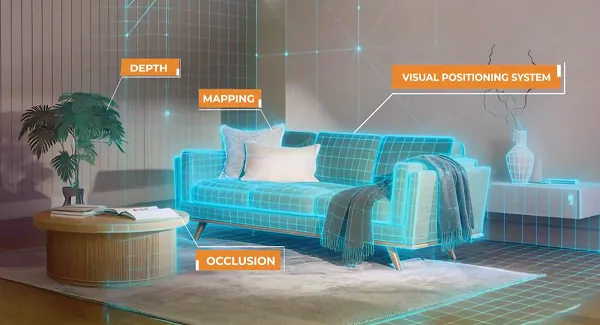
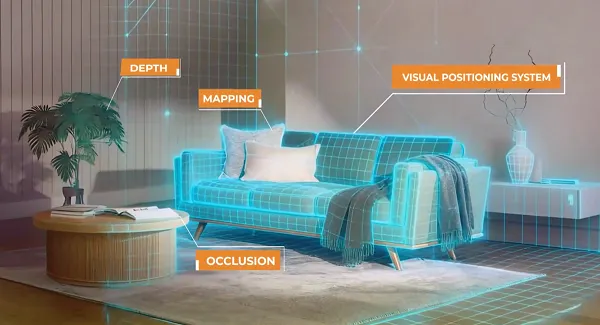
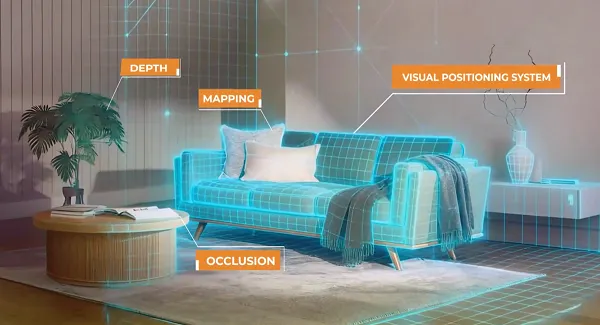
Illumix has spent the last eight years quietly perfecting a "spatial stack" designed to bridge the chasm between digital overlays and the physical environment. Unlike basic AR filters that often jitter or fail to align with real-world objects, Illumix’s technology excels in three core domains: real-time 3D mapping, centimeter-accurate localization, and persistent world anchoring.
For Snap, these capabilities are not merely incremental; they are fundamental. The company’s vision for future AR glasses relies on the device’s ability to "understand" the user’s surroundings. Illumix’s platform allows a device to remember where digital objects were placed within a physical space, ensuring that a virtual note left on a kitchen counter or an AR game anchored to a park bench remains exactly where it was left when the user returns.
Furthermore, Illumix provides the infrastructure for "contextual memory." By building user profiles that understand individual habits and preferences, the technology aims to transform smart glasses from passive displays into active, intuitive assistants capable of serving personalized information exactly when and where it is needed.
Chronology: A Trajectory Toward Hardware
Snap’s journey toward this acquisition has been a long, deliberate evolution, punctuated by both successes and setbacks.
- 2016: Snap introduces "Spectacles," its first foray into hardware. Initially positioned as a novelty camera for content creation, it set the stage for the company’s internal hardware division, later rebranded as Snap Lab.
- 2019-2021: Snap shifts focus toward more sophisticated AR development, introducing Lens Studio, which quickly becomes the industry standard for mobile AR creators.
- 2021: Snap unveils its fourth-generation Spectacles, the first to feature built-in AR displays. While not a mass-market consumer product, it serves as a critical R&D vehicle.
- 2023: The company begins heavily emphasizing "Spatial AI" in its developer communications, acknowledging that hardware limitations—specifically tracking and mapping—are the primary bottlenecks to mass adoption.
- Late 2024/Early 2025: Snap announces its roadmap for consumer-ready AR glasses, with a release window set for 2026.
- Present: The acquisition of Illumix is finalized, signaling a desperate need to bolster the backend software stack required to make these 2026 devices functional, persistent, and "human-centric."
The Strategic Implications: Snap vs. The Giants
The acquisition arrives at a time when the "war of the wearables" is intensifying. Snap finds itself squeezed between two industry titans: Meta and Apple.
The Meta Challenge
Meta’s Ray-Ban smart glasses have proven that there is a consumer appetite for lightweight, AI-integrated wearables. By prioritizing camera quality, battery efficiency, and seamless AI voice integration, Meta has established a "good enough" threshold that consumers find immediately useful. Snap’s upcoming device is rumored to be more "chunky" and technologically ambitious, aiming for full AR overlays rather than just smart-camera functionality. The risk is that while Snap’s tech might be technically superior in mapping, it may be less aesthetically or practically appealing to the average user than Meta’s sleek, everyday-wear design.
The Apple Factor
Apple’s Vision Pro, while positioned as a "spatial computer" rather than everyday glasses, has set a high bar for visual fidelity and spatial tracking. While Snap is not aiming for the same price point or power consumption as Apple, it must compete for the same developer mindshare. By acquiring Illumix, Snap is attempting to create a "developer moat"—a platform so intuitive for building spatial experiences that developers will prioritize Snapchat’s ecosystem over competitors.
Official Perspectives: The Vision for Human-Centric Computing
Kirin Sinha, the founder of Illumix, expressed strong alignment with Snap’s mission, noting that the integration represents the culmination of her company’s eight-year journey.
"We started Illumix with an ambitious belief: that digital experiences would eventually become part of the physical world around us," Sinha noted in a recent public statement. "Snap’s bold vision for AR and AI strongly aligns with what we have always believed—that the future of computing will be more immersive, more intuitive, and ultimately more human."
For Snap, this acquisition is an investment in humanizing technology. The company believes that if AR glasses can interact with the world in a way that mimics human spatial perception, the friction of using digital tools will disappear. Snap’s leadership maintains that their focus on social, lightweight, and location-based experiences differentiates them from the isolated, productivity-focused approach of their rivals.
Supporting Data and Technical Challenges
To understand the scale of the task ahead, one must look at the technical requirements for a successful AR wearable:
- Latency: Real-time 3D mapping requires sub-millisecond latency to prevent "AR sickness." Illumix’s software stack is designed to optimize this, but hardware integration remains the true test.
- Power Efficiency: Persistent mapping consumes significant battery life. Snap must integrate Illumix’s algorithms into custom silicon to ensure that the device lasts for more than a few hours of operation.
- Developer Ecosystem: Snap currently boasts over 300,000 creators on Lens Studio. The success of the Illumix acquisition will be measured by how quickly these creators can translate their 2D AR experience into 3D, space-anchored applications.
Market analysts suggest that Snap’s current strategy is a "high-risk, high-reward" play. If Snap can successfully package Illumix’s mapping capabilities into a consumer-friendly form factor, it could leapfrog Meta’s current AI-focused glasses. However, if the hardware remains bulky and battery-constrained, the software innovation may be relegated to a "niche professional tool" rather than a mass-market product.
The Road Ahead: Can Snap Prevail?
The acquisition of Illumix is a clear signal that Snap is doubling down on its AR roadmap, regardless of the current market dominance of Meta’s wearables.
If Snap’s AR glasses launch in 2026 and fail to gain traction, the acquisition will still hold value. By developing a world-class spatial mapping platform, Snap could potentially license its software to other hardware manufacturers or integrate it into its primary mobile application, keeping the brand relevant even if their standalone hardware division struggles.
Ultimately, the battle for the future of computing will not be won by hardware specs alone, but by the companies that can best merge the digital and physical worlds in a way that feels natural, helpful, and essential. Whether Illumix provides the "secret sauce" for Snap to win this race remains to be seen, but the company has clearly signaled that it is unwilling to cede the future of spatial computing to anyone without a fight.
As the industry watches the 2026 rollout, the integration of Illumix will serve as the litmus test for Snap’s ability to pivot from a social media platform into a critical player in the global infrastructure of spatial intelligence. Whether this move alters the company’s long-term fate, or merely delays an inevitable decline in the face of better-funded competitors, remains the most significant question for investors and tech enthusiasts alike.












No comments yet. Be the first to join the conversation!