

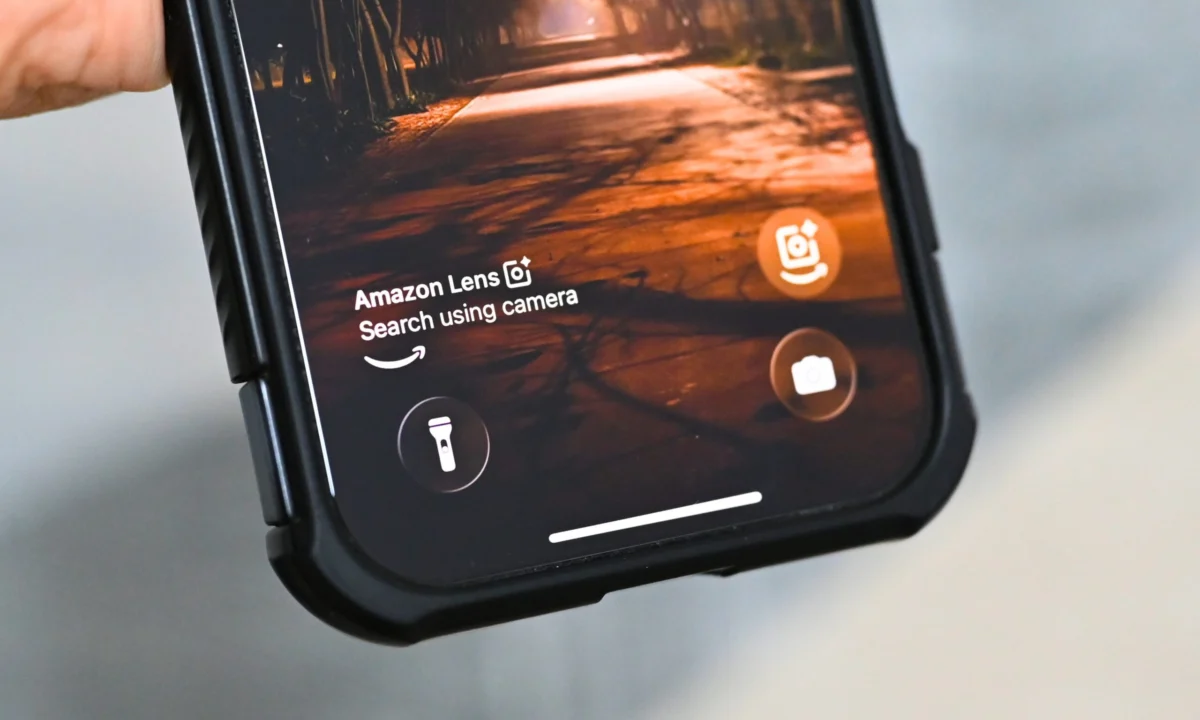
In the digital era, the distance between a fleeting desire and a completed transaction is measured in clicks, swipes, and seconds. For years, Amazon has sought to minimize this "friction"—the cognitive and physical labor required to move from identifying a product to purchasing it. With the introduction of its new suite of visual search features, most notably the Amazon Lens widget for the iPhone lock screen, the retail giant is taking its most aggressive step yet to transform shopping from a deliberate, planned activity into a seamless, ambient part of daily life.
By placing the power of visual search directly onto the iPhone’s lock screen, Amazon is betting that if it can shorten the path to purchase to a single tap, it can capture impulsive consumer behavior that was previously lost to the friction of unlocking a device and navigating an app.
The Evolution of Visual Search
For most consumers, the traditional e-commerce workflow is standardized: open the Amazon app, locate the search bar, type a query or initiate a camera scan, and then browse results. It is a process that requires intent and active engagement.

Amazon’s latest update, which includes six new visual search features, fundamentally alters this paradigm. The centerpiece is the Amazon Lens widget, a tool that integrates directly into the iOS lock screen ecosystem. This allows users to bypass the authentication process entirely. By simply tapping the widget, the phone’s camera is activated, allowing the user to scan an object in the physical world and receive instant purchase links or similar product recommendations before they have even fully "opened" the device.
This is not merely a convenience update; it is a tactical shift in how Amazon views the consumer journey. By moving the search interface to the lock screen, Amazon is positioning itself as the immediate, go-to visual interface for the physical world.
A Chronology of Integration
The push toward "ambient commerce" has been a decade-long project for Amazon. To understand how we arrived at a lock-screen-ready shopping experience, one must look at the progression of the company’s retail strategy:

- Early 2010s: Amazon establishes basic mobile search, focusing on text-based queries and barcode scanning.
- 2014-2017: The introduction of the Fire Phone, while a commercial failure, laid the groundwork for visual object recognition (Firefly). The technology was later folded into the main Amazon app as "Flow" and eventually "Lens."
- 2020-2022: With the rise of iOS and Android home screen widgets, Amazon began testing snippets of data—package tracking and order status—outside the app environment.
- 2024-2025: The integration of more sophisticated generative AI models began allowing Amazon to better identify complex, non-branded items in the wild.
- June 2026: The current rollout. Amazon deploys the lock screen widget, effectively integrating its retail engine into the base layer of the smartphone’s operating system.
How to Deploy the Amazon Lens Widget
For users looking to turn their device into a streamlined shopping tool, the implementation is intentionally simple, designed to encourage rapid adoption.
- Enter Customization Mode: With your iPhone unlocked, press and hold the lock screen until the "Customize" button appears at the bottom.
- Access the Widget Gallery: Tap the "Add Widgets" button. This will open the iOS widget library.
- Locate Amazon: Scroll through your installed apps to find Amazon.
- Select and Place: Choose the Amazon Lens widget and drag it to your lock screen.
Users can also layer this alongside existing "Search" and "Orders" widgets. When combined, this creates a dedicated, permanent "Amazon Panel" on the lock screen, allowing for immediate text searches, package tracking, and visual scanning without ever needing to navigate through a home screen or app drawer.
The Psychology of Impulse and the "Friction Tax"
The logic behind this widget is rooted in the "narrow window" theory of consumer behavior. When a person spots an object—perhaps a stylish pair of shoes on a stranger or a piece of decor in a cafe—their motivation to purchase is at its peak. As time passes, the motivation decays due to distraction, memory loss, or the onset of rational deliberation ("Do I actually need this?").

By reducing the number of steps to initiate a search, Amazon is effectively reducing the "friction tax" on the consumer. Every second saved between spotting an item and seeing it in the Amazon cart represents a higher probability of conversion. If the user does not have to unlock their phone, navigate to an app, and wait for it to load, they are less likely to be interrupted by a notification or a change of heart. The widget is designed to be the path of least resistance.
Data-Driven Shopping: The Privacy Concerns
While convenient, this level of integration raises significant questions regarding privacy and data collection. The Amazon Lens widget requires access to the camera and, by extension, the ability to process visual data in real-time.
Industry analysts point out that this creates a massive data loop for Amazon. Every time a user points their phone at an object, Amazon gains valuable metadata about that user’s environment, tastes, and shopping triggers. Unlike a text search, which is an explicit declaration of intent, a camera scan is an observational signal. This allows Amazon to build a more granular profile of the user’s physical life, which can then be used to refine advertising algorithms and predictive shipping models.

Industry Implications and Competitive Landscape
Amazon is not acting in a vacuum. The broader tech industry is currently engaged in an "ambient AI" arms race.
Google’s "Gemini Spark," for example, is also moving away from app-based interactions to more autonomous, system-wide agentic behaviors. If Google can perform tasks in the background without user intervention, and Amazon can make shopping an instantaneous, one-tap reality, the traditional "app economy" may be in decline.
The implications for smaller retailers are profound. As Amazon secures the most valuable real estate on the smartphone—the lock screen—they effectively lock out competitors. If a user can find a product on Amazon in one second from their lock screen, they are far less likely to visit a specialty retailer’s website or a search engine like Bing or DuckDuckGo to compare prices.

Official Responses and Strategic Outlook
While Amazon has not released specific sales projections tied to the widget, company spokespeople have characterized the move as part of a broader commitment to "removing barriers to customer needs." In recent press materials, Amazon executives have emphasized that the company is transitioning from a "search-and-buy" platform to a "see-and-buy" ecosystem.
For the company, this is a defensive play as much as an offensive one. By embedding itself into the iOS lock screen, Amazon is ensuring that its brand remains top-of-mind during every waking hour of the consumer. Even if the user does not buy anything, the presence of the widget serves as a constant reminder of the platform’s utility.
Future Projections: Beyond the Lock Screen
What comes next? Industry observers suggest that the next step in this evolution will be the integration of AR (Augmented Reality) glasses and wearable devices. If a user can simply look at an item and have the Amazon Lens interface overlay purchase information directly into their field of vision, the concept of a "widget" will seem quaint.

However, for now, the iPhone lock screen remains the most important piece of digital real estate on the planet. By capturing this space, Amazon is signaling that it intends to be the invisible partner in every shopping decision.
Conclusion: The Convenience Paradox
The Amazon Lens widget is a masterclass in behavioral engineering. It transforms a complex, multi-step process into a reflexive habit. For the consumer, it provides unparalleled convenience, turning the entire world into a potential catalog. For the industry, it sets a new standard for how companies must compete for attention.
As we move toward a future where our devices are increasingly proactive, the line between "shopping" and "living" will continue to blur. Whether this leads to a more efficient consumer experience or a more manipulated one remains to be seen. What is certain, however, is that the path to purchase has never been shorter—or more pervasive. The age of deliberate shopping is fading, replaced by a world where everything we see is already for sale, just a single tap away.












No comments yet. Be the first to join the conversation!