

Date: June 4, 2026
Author: Editorial Staff
Category: Animation / Film
For generations, the image of a park pond populated by ducks has served as a quintessential symbol of urban tranquility. It is a ritual etched into the collective consciousness: the walk to the water’s edge, the handful of bread crusts, and the gentle gathering of waterfowl. However, animator AJ Jeffries has decided to dismantle this pastoral fantasy with his latest short film, DUCKS.
What begins as a seemingly innocuous, lighthearted study of pond life quickly descends into a surrealist nightmare. Through a series of unsettling contortions and physiological transformations, Jeffries forces the viewer to confront the absurdity of our relationship with urban wildlife—and perhaps, to think twice before reaching into the bread bag again.
Main Facts: The Anatomy of a Surrealist Short
DUCKS is the latest creative output from animator AJ Jeffries, an artist known for his penchant for the bizarre and the anthropomorphically uncomfortable. The film, which has garnered significant attention since its June 2026 release, utilizes high-fidelity 3D animation to depict ducks that defy biological norms.
The central conceit of the film revolves around the "human-adjacent" movement of the birds. As the animation progresses, the ducks shed their graceful, aquatic silhouettes for unsettling, human-like limbs, transforming the peaceful pond environment into a theater of the grotesque. The film serves as a satirical commentary on the "don’t feed the ducks" signage that decorates nearly every public park in the Western world—a warning that most park-goers choose to ignore. By portraying the ducks as something far more calculating and physically capable than their real-world counterparts, Jeffries transforms a harmless hobby into a dark, comedic thriller.
Chronology: From Pond Life to Paranoia
To understand the impact of DUCKS, one must track the narrative arc of the piece, which Jeffries carefully constructs to lure the audience into a false sense of security.
Phase 1: The Pastoral Deception
The film opens with a classic aesthetic: vibrant blues of the pond water, soft lighting, and the familiar, rhythmic bobbing of ducks in a suburban park. The sound design is muted and peaceful, mimicking the sensory experience of a sunny afternoon. For the first minute, the audience is lulled into a state of calm, expecting a standard, whimsical animation.
Phase 2: The Uncanny Shift
The tension begins when the ducks emerge from the water. Instead of the typical waddle, the birds begin to exhibit behaviors that border on the human. Jeffries animates the legs with a jarring realism—muscular, articulated, and far too long for a mallard. The "dark comedy" element kicks in as these creatures begin to navigate the landscape with an intention that suggests they are not merely hungry, but perhaps, sentient in a way we are not prepared for.
Phase 3: The Escalation
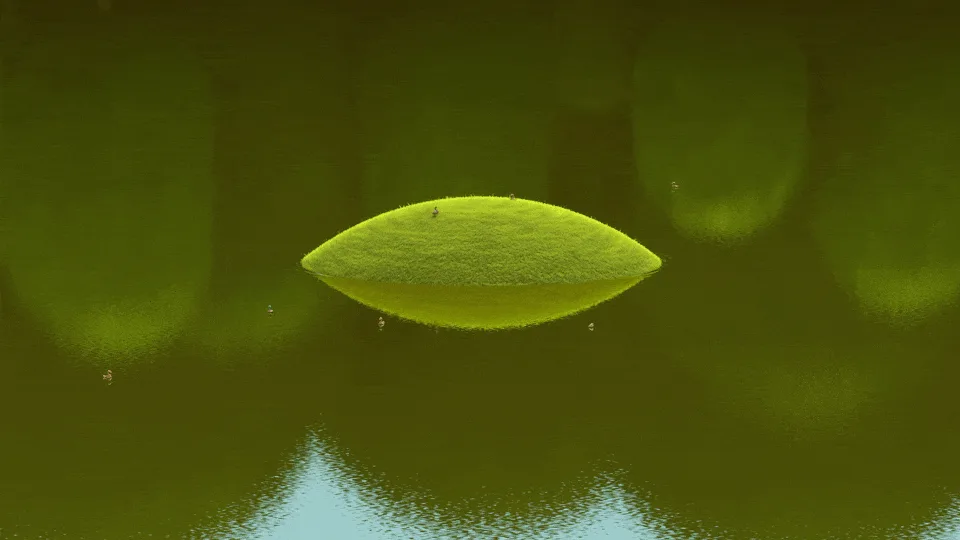
By the midpoint of the short, the pond is no longer a sanctuary; it is a staging ground. A central sequence involves a grass-covered mound rising from the water, revealing itself to be a gargantuan avian entity. This shift signals the climax of the film, where the absurdity of the "bread-feeding" ritual is turned on its head, suggesting that the ducks are not the ones being fed, but the ones doing the observing.
Supporting Data: The Cultural Context of Feeding Wildlife
While DUCKS is a work of fiction, it arrives at a time when the debate over urban wildlife management is at a fever pitch. Wildlife biologists have long campaigned against the practice of feeding ducks, citing several key concerns:
- Nutritional Deficiencies: Bread is effectively "junk food" for waterfowl, lacking the essential nutrients they require. It leads to conditions like "Angel Wing," a deformity that prevents birds from flying.
- Environmental Degradation: Excess bread leads to algae blooms, which deplete oxygen in the water, killing off the fish and insects that the ecosystem relies on.
- Behavioral Alteration: Constant human interaction removes the natural fear response in ducks, leading to overpopulation in concentrated areas and increased disease transmission.
Jeffries’ animation acts as a visceral, visual metaphor for these warnings. By giving the ducks human traits, he forces the viewer to acknowledge that by "humanizing" these animals through feeding, we are creating a distorted, unsustainable version of nature that could, in his artistic estimation, eventually turn on us.

Official Responses and Ecological Criticism
While the film is a piece of digital art rather than a scientific paper, it has sparked conversations among environmental advocacy groups. Representatives from urban park management services have noted that while they do not support the film’s "nightmare" portrayal of waterfowl, they appreciate the underlying message regarding human interference.
"We spend thousands of dollars annually repairing the ecological damage caused by well-meaning citizens," said a spokesperson for the Urban Parks Conservancy. "While Mr. Jeffries’ film is certainly extreme, it captures the frustration we feel when we see signs being ignored. If this animation makes someone pause before tossing a loaf of sourdough into a sensitive wetland, it serves a purpose."
Art critics have also weighed in, noting that Jeffries is carving out a unique niche in the digital landscape. His previous work, including his viral, horse-centric animation from 2020, demonstrated his ability to make the mundane feel monstrous. DUCKS is seen as a maturation of this style, blending technical mastery with a sharp, cynical wit.
Implications: The Future of Our Parks
The lasting implication of DUCKS is not necessarily a sudden decline in park attendance, but a fundamental shift in how we perceive the "other" in our urban spaces. We treat parks as our living rooms, yet they are complex, wild ecosystems.
Jeffries’ work suggests that our anthropomorphism—the tendency to project human thoughts and feelings onto animals—is a dangerous game. When we pretend that a duck is a "little person in a feather suit" waiting for our bread, we fail to see it as a wild animal. By forcing us to look at a duck with human legs, Jeffries destroys the cuteness factor, forcing us to reconcile with the biological reality of the animal.
Furthermore, the animation serves as a commentary on the "viral" nature of social media content. We are constantly seeking the next "cute" animal video, yet we rarely consider the ethics behind the creation of such content. DUCKS challenges the consumer to look past the surface of the gif and consider the reality of the subject.
Conclusion: A Call for Caution
Whether or not you choose to heed the warning in DUCKS, it is impossible to walk away from the film unchanged. AJ Jeffries has succeeded in creating a piece of art that is as technically impressive as it is emotionally disquieting.
As the animation concludes, the viewer is left with a lingering sense of unease. The next time you find yourself at the park, perhaps you will leave the bread at home. Perhaps you will observe the ducks from a distance, respecting their space and their inherent wildness. Or perhaps, like the protagonists in Jeffries’ surreal world, you will simply wait to see if the grass begins to move, and if those ducks are truly as hungry as they seem.
For those who wish to explore more of Jeffries’ unsettling, masterfully crafted universe, his portfolio remains available across several platforms. Whether through his Instagram, Vimeo, or Behance channels, one can find a repository of work that consistently pushes the boundaries of digital animation, reminding us that sometimes, the most terrifying monsters are the ones we invite into our own backyards.
DUCKS is currently available to view on Vimeo. It serves as a stark reminder: in the digital age, even the most familiar sights can be re-imagined as something far more complex—and far more bizarre.










No comments yet. Be the first to join the conversation!