

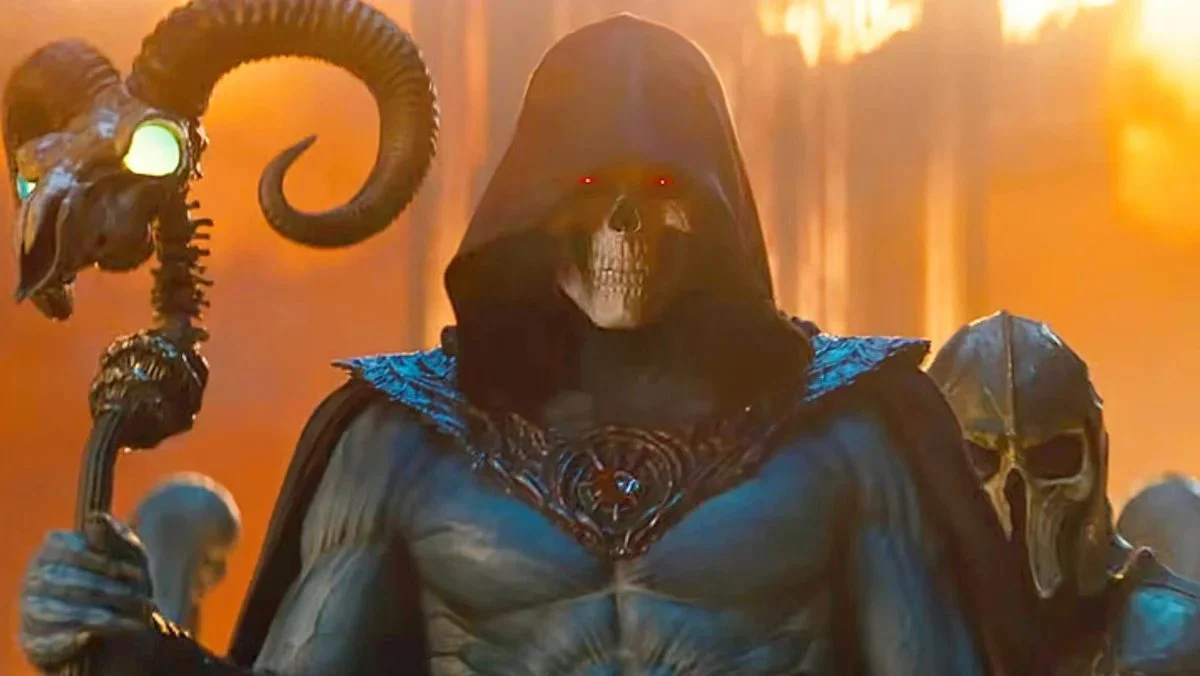
In the cinematic landscape of 2026, few franchise revivals have carried the weight of history quite like Travis Knight’s Masters of the Universe. As audiences flood theaters to witness Nicholas Galatzine’s turn as the iconic Prince Adam/He-Man and Jared Leto’s transformative portrayal of the villainous Skeletor, the film has sparked a conversation that stretches back nearly four decades. Beyond the spectacle of Castle Grayskull and the updated mythology of Eternia, it is the film’s closing moments—specifically its trio of post-credits sequences—that have captured the attention of long-term fans and industry analysts alike. The final tease is not merely a hook for a sequel; it is a deliberate, poignant homage to the 1987 Cannon Films original, a movie that famously promised a return that never materialized.
The Return of the Skull: A Narrative Breakdown
In the climax of the 2026 adaptation, the battle between He-Man and Skeletor reaches a visceral conclusion within the walls of Castle Grayskull. After a decisive confrontation, Skeletor is seemingly vanquished, leaving behind nothing but his iconic, bleached skull upon the stone floor. The film’s narrative arc appears closed, leaving the audience to believe that the Lord of Snake Mountain has finally been purged from the realm.
However, the third and final post-credits scene provides a starkly different trajectory. The camera pans across the ruins of the battlefield, six months after the main event, to reveal Evil-Lyn, portrayed with sinister complexity by Alison Brie. She moves through the shadowed corridors of the Castle with an air of calculated purpose, eventually coming upon the discarded skull of her former master. The tension is palpable as she stoops to retrieve it. With a wicked smirk, she whispers to the inanimate bone, "You’ve looked better," followed immediately by the unmistakable, chilling cackle of Jared Leto.
This scene does more than signal a sequel; it confirms that the mantle of "Master" is far from secure. While the film leaves the mechanics of his resurrection ambiguous, fans have already begun speculating on a narrative shift toward the mystical underworld of Subternia. This strategy mirrors the bold creative choices seen in Kevin Smith’s animated Netflix series, which utilized the afterlife as a narrative device to heighten the stakes of the conflict. By choosing to revive the villain through the dark sorcery of Evil-Lyn, the production team has successfully bridged the gap between modern blockbuster sensibilities and the camp-horror roots of the franchise.
A Historical Chronology: From 1987 to 2026
To understand the weight of this post-credits scene, one must examine the industry climate of the late 1980s. When Gary Goddard directed the original Masters of the Universe starring Dolph Lundgren and Frank Langella, the concept of a "post-credits scene" was virtually non-existent in mainstream cinema. Marvel’s Cinematic Universe would not standardize the practice for another two decades, and the trend was largely reserved for comedic relief in films like The Muppet Movie or Ferris Bueller’s Day Off.
The 1987 film, however, attempted something radical. After He-Man casts Skeletor into a bottomless abyss, the audience was treated to an additional shot of Skeletor’s head emerging from the water, declaring, "I’ll be back!" It was a quintessential 80s cliffhanger, intended to build anticipation for a sequel that Cannon Films desperately needed to be a success. Unfortunately, the box office performance of the original film was underwhelming, and the studio’s financial collapse followed shortly thereafter. The promise of Skeletor’s return became one of the great "what ifs" in genre filmmaking, a dangling thread that haunted the franchise for nearly forty years.

By explicitly referencing this moment, Travis Knight and his team have engaged in a sophisticated form of meta-narrative. They are acknowledging the tragedy of the original film—a project that was, in many ways, ahead of its time—and finally fulfilling the promise that remained unkept for nearly half a century.
The Cultural Significance of the "Camp" Villain
Skeletor has always occupied a unique space in pop culture: he is a source of genuine menace, yet he is inherently theatrical. Frank Langella’s performance in the 1987 film is frequently cited by critics and fans as the high point of the production, precisely because he leaned into the operatic, campy nature of the character. Langella himself has remained vocal about his affection for the role, treating the character not as a mere cartoon villain, but as a Shakespearean antagonist.
The 2026 iteration, with Jared Leto in the role, strikes a careful balance. The post-credits scene is a masterclass in tone management; it is campy, yes, but it is underpinned by the genuine threat of dark magic. The industry response has been largely positive, with many critics noting that the scene feels like a "gift to the fans." It acknowledges that the audience for Masters of the Universe is broad—ranging from children discovering the lore for the first time to adults who grew up with the 80s aesthetic. By keeping the tone consistent with the source material while elevating the production values, the 2026 film has avoided the trap of being "too cool" for its own legacy.
Implications for the Future: A Cinematic Universe?
The presence of this scene invites a larger conversation about the future of the Masters of the Universe franchise under Amazon MGM Studios. The reference to Hordak—Skeletor’s mentor and a major antagonist in the broader lore—is the key piece of evidence for the direction of a potential sequel.
If the studio intends to expand this into a multi-film saga, the introduction of Hordak provides a natural progression for the story. A team-up between the two villains, or perhaps a struggle for power between them, would offer a compelling central conflict. Furthermore, the rumors surrounding the integration of She-Ra into this timeline, as hinted at in recent interviews with the production team, suggest that the scope of the conflict is set to expand beyond the borders of Eternia.
The implication is clear: the 2026 film is the foundation of a much larger architectural project. By grounding the "return" of the villain in the specific imagery of the 1987 film, the filmmakers are signaling to the audience that they respect the past, even as they look toward a multi-film future.
Official Responses and Industry Context
The reception to the film, both from a critical and commercial standpoint, has been strong enough to validate the risky narrative choices made in the final minutes. In recent press junkets, Travis Knight has spoken at length about his desire to honor the "soul" of the 1980s while grounding the characters in human stakes. "We wanted to ensure that the villainy felt earned," Knight stated in an interview at CinemaCon. "Skeletor isn’t just a force of nature; he is a character with history, and that history includes the weight of his previous failures. The post-credits sequence is our way of saying that the story is not over."
Industry analysts have pointed out that this type of "fan-service" is a high-stakes gamble. If the audience does not feel an emotional connection to the characters, a post-credits scene can feel like a cynical attempt to force a sequel. However, because the 2026 film has succeeded in building a world that feels both fresh and nostalgic, the scene has been received as a legitimate reward for the audience. It creates an immediate demand for a sequel, not because of a contractual obligation, but because the audience is genuinely invested in the next chapter of the conflict.
Conclusion: A Promise Finally Kept
The 2026 Masters of the Universe is a film that wears its heart on its sleeve. It understands the history of its intellectual property, the importance of its aesthetic, and the necessity of looking forward while respecting the past. The post-credits scene featuring Evil-Lyn and the resurrected skull of Skeletor is more than just a tease—it is an act of narrative reconciliation.
For forty years, the fans of the original film were left waiting at the edge of that abyss. With this new iteration, the narrative arc has been corrected. Skeletor is back, the stakes have been raised, and the promise of a larger, more complex Eternian saga is now firmly on the table. Whether or not the future installments will feature Jared Leto or a new performer, or whether Hordak will indeed take center stage, remains to be seen. But one thing is certain: the masters of this universe have finally learned how to build a legacy that lasts. As the credits roll, the audience is left with the distinct, cackling feeling that the best is yet to come.










No comments yet. Be the first to join the conversation!