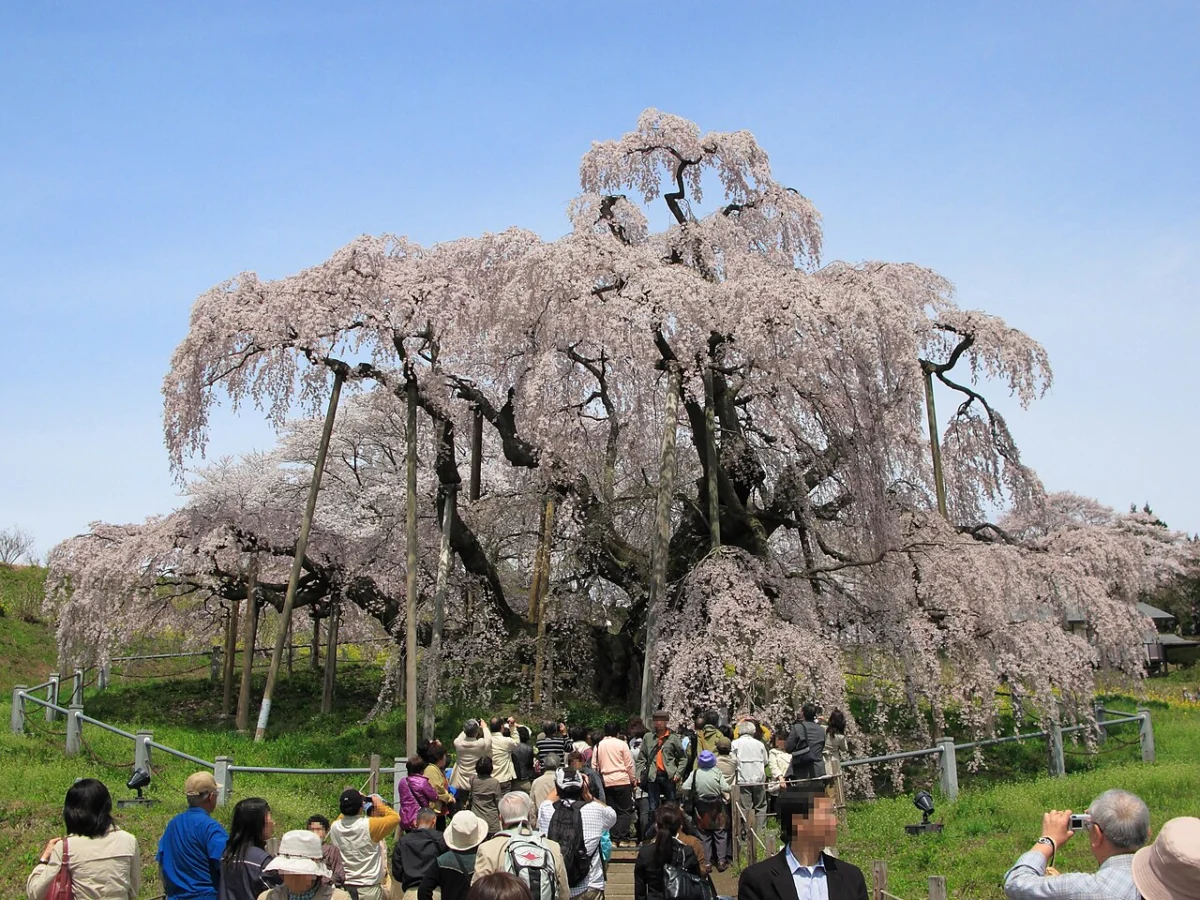
In the pastoral landscape of Fukushima Prefecture, where the gentle slopes of the Abukuma highlands meet the rural quietude of paddy fields, stands a singular natural phenomenon that commands a silence unlike any other in Japan. Pull into the parking field at the base of the hill on a Sunday in mid-April, and you will find yourself walking the final five minutes up a gentle slope alongside two thousand other pilgrims. Remarkably, the crowd is hushed. As you round the bend and the Miharu Takizakura—the Waterfall Cherry Tree—comes into full view, the reason for this collective reverence becomes immediately clear.
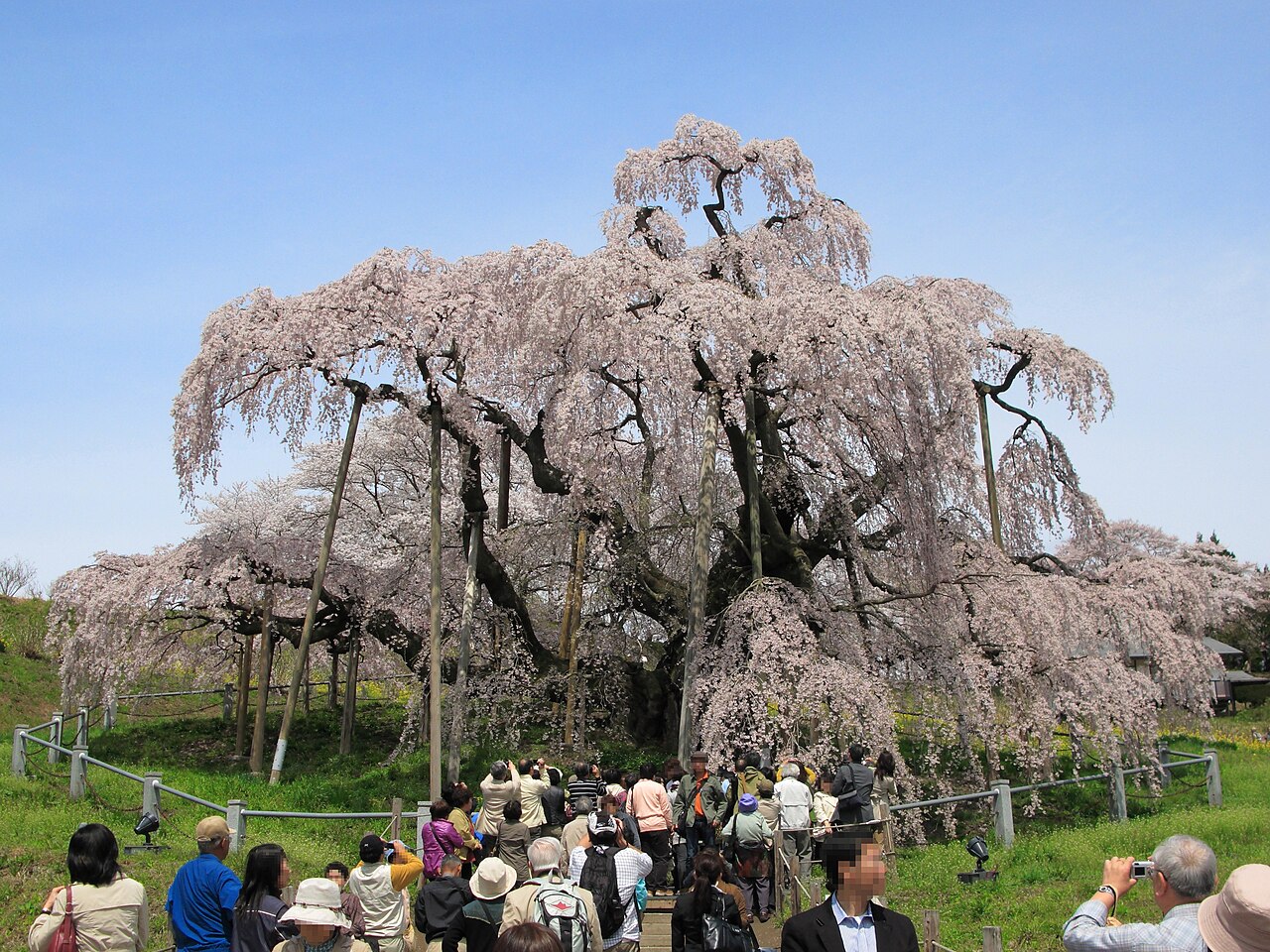
Standing over thirteen meters tall, the tree’s massive, gnarled branches cascade outward and downward, forming a sprawling, luminous pink curtain that occupies a footprint larger than a tennis court. It is not merely a tree; it is an epoch in bloom. Observers stop dead in their tracks, often whispering "kirei" (beautiful) or "uso desho" (you’re kidding) under their breath, before the momentum of the crowd gently nudges them forward again.
Main Facts: The Anatomy of a Legend
The Miharu Takizakura (三春滝桜) is officially recognized as one of the "Three Great Cherry Trees of Japan," standing in historical and botanical significance alongside the Usuzumi-zakura in Gifu and the Yamataka Jindai-zakura in Yamanashi.
- Botanical Classification: It is a beni-shidare (red weeping) cultivar of Prunus pendula. Unlike the ubiquitous Somei-yoshino cherry trees that define Tokyo’s spring, which are clones with a lifespan of roughly 80 years, the Takizakura is grown from seed. Left to its own devices, it has survived for over a millennium.
- Physical Scale: The tree’s measurements are staggering: a height of 13.5 meters, a trunk circumference of 8.1 meters at chest height, and a branch spread that reaches 14.5 meters to the south.
- Cultural Status: It was designated a National Natural Monument on October 12, 1922—the first cherry tree in Japan to receive this prestigious protection.
Chronology: A Millennium of Growth
The history of the Takizakura is inextricably linked to the feudal history of the Miharu domain. Protected as an oya-boku (official tree) from the late Edo period onward, it has served as a silent witness to forty human generations.
Pre-Modern Era
In the 1830s, the poet Kamo no Suetaka immortalized the tree in verse, describing blossoms "reaching to every corner of Oshu." This literary recognition cemented its place in the national imagination long before the age of tourism. Throughout the centuries, the tree’s asymmetrical growth—leaning into the light and away from the biting mountain winds—has been its most defining feature, telling the story of a thousand years of survival on a precarious slope.
The Modern Era and Conservation
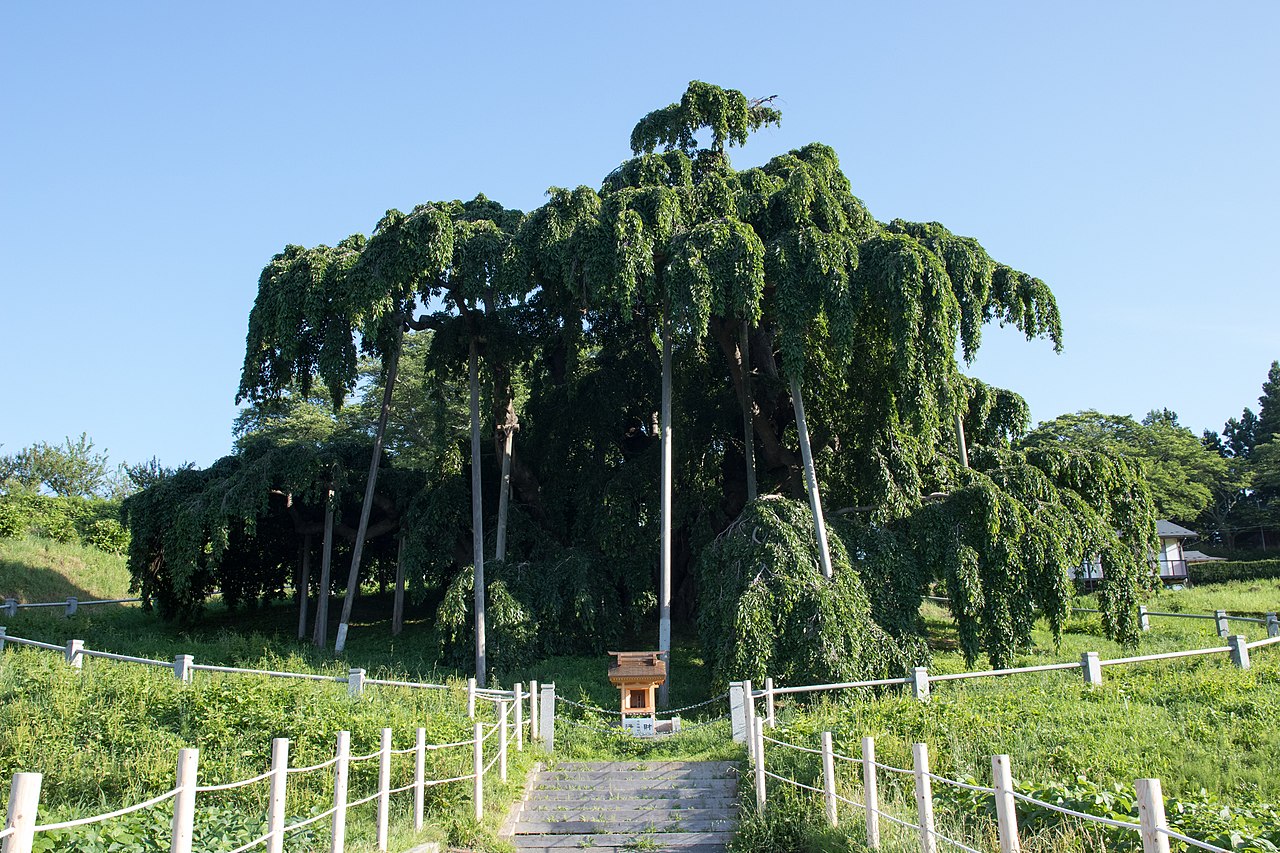
By the 1970s, the weight of the sprawling branches necessitated human intervention. Permanent supporting poles were installed to hold up the outer canopy, a measure that remains in place today. Since 2011, the tree has faced renewed scrutiny, not just from environmentalists but from the public concerned about the region’s recovery. Monitoring has confirmed that the tree remains healthy and unaffected by the events at the nearby Fukushima Daiichi plant, standing as a symbol of the region’s enduring resilience.
Supporting Data: The Science of the "Waterfall"
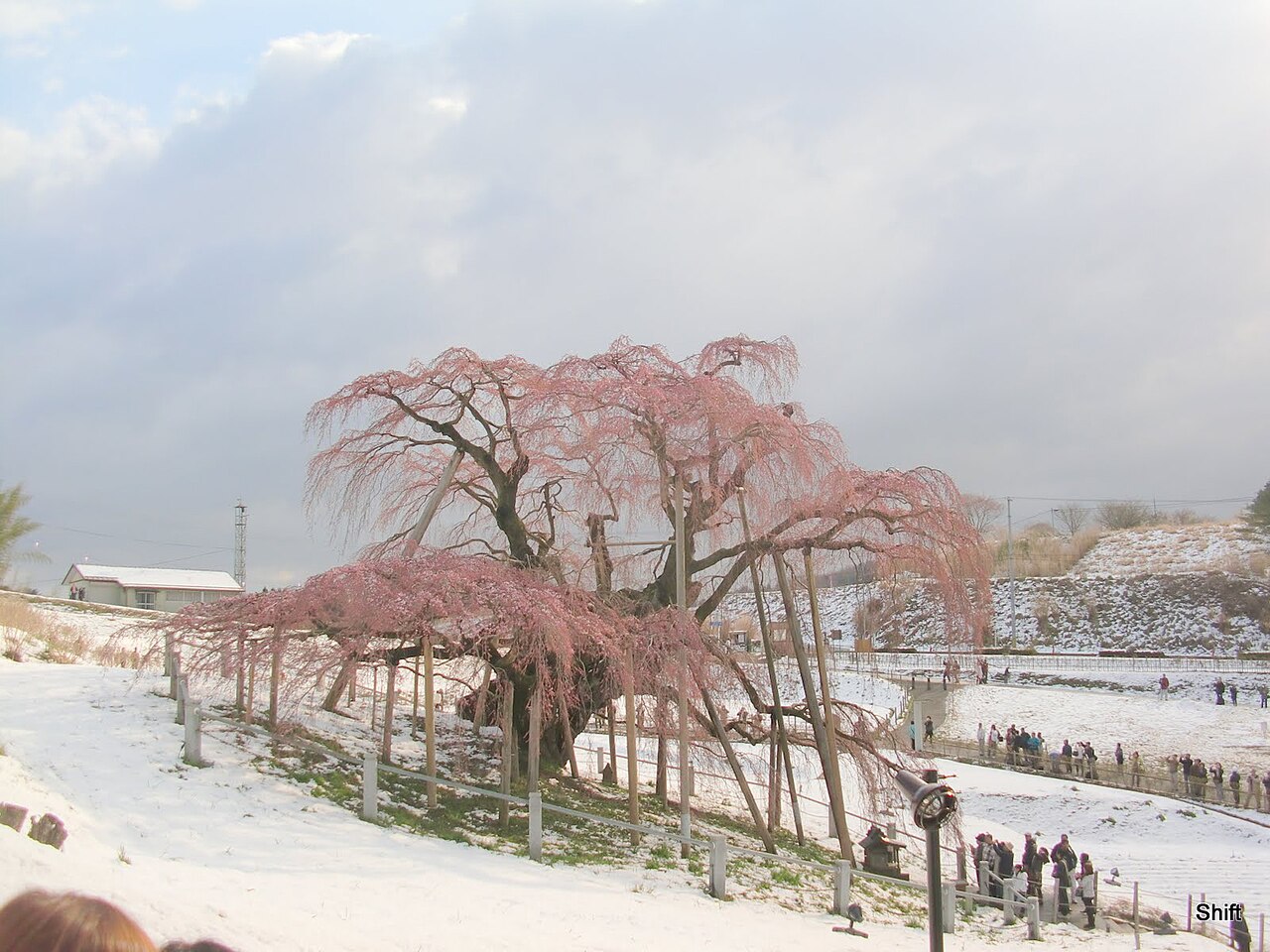
To understand the Takizakura, one must look beyond the aesthetic beauty to the biological architecture. The beni-shidare is a slow-growing, long-lived variety. Its weeping habit is not an injury but a structural adaptation that, when mature, creates a cascading effect that mimics a waterfall—hence the name "Takizakura."
The asymmetry of the tree is a masterclass in dendrology. Its northern spread is only 5.5 meters, while the southern reach extends 14.5 meters. This stark contrast is the result of a thousand years of heliotropism; the tree has spent a millennium stretching toward the southern sun while shielding itself from the prevailing northerly winds. The trunk, measuring 8.1 meters in circumference, acts as a single, monumental column that supports a massive, delicate crown, requiring careful soil management and root-zone protection by the local forestry authorities.
Official Responses and Tourism Management
The Miharu Tourism Association, in coordination with the Fukushima prefectural government, manages the site with precision. During the roughly ten-day peak bloom, the area hosts between 150,000 and 200,000 visitors.
Bloom Forecasting
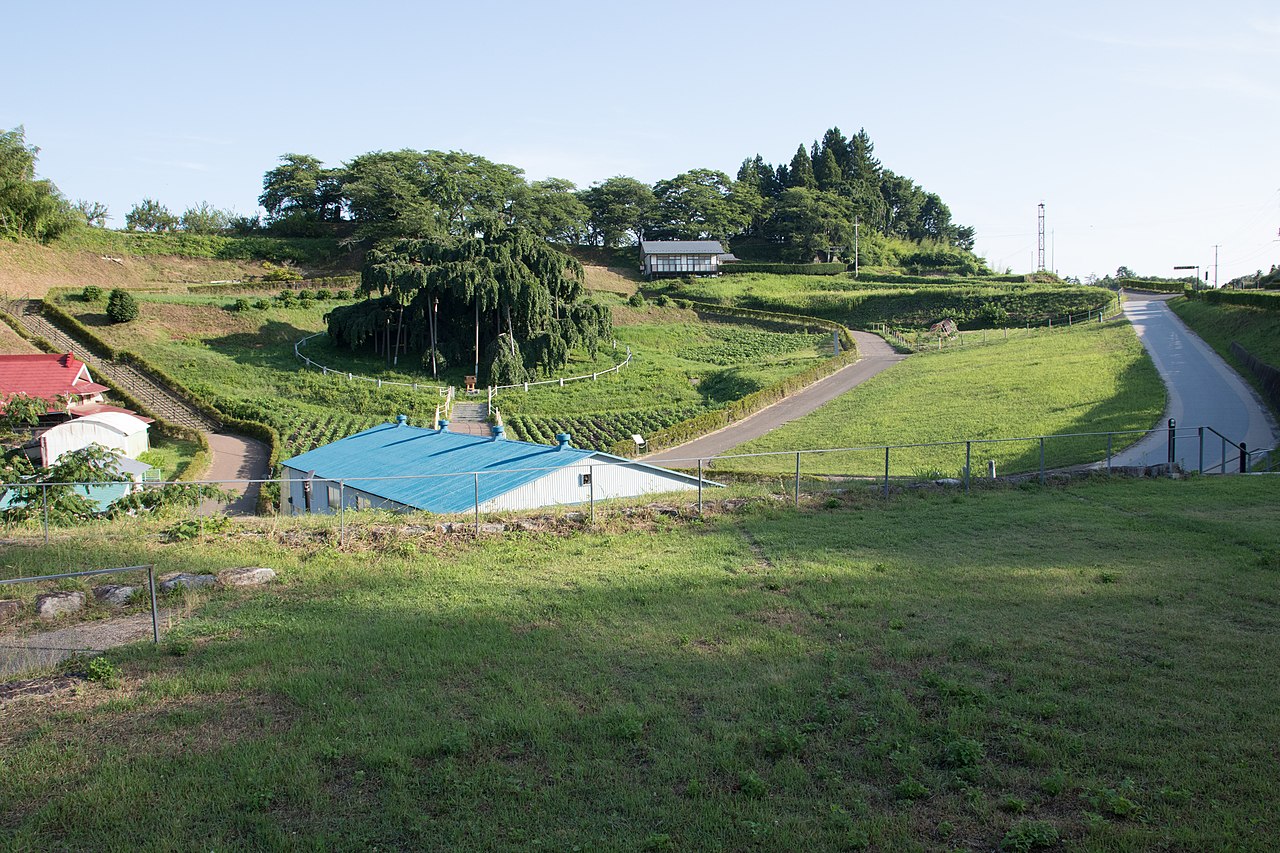
The Association maintains a rigorous daily update system. From late March, the tree’s state is classified:
- Tsubomi (bud)
- Saki-hajime (starting to bloom)
- Mankai (full bloom)
- Chiri-hajime (starting to fall)
Because the bloom is highly weather-dependent, officials emphasize that visitors must build "buffer days" into their travel plans. In warm years, peak bloom can arrive as early as April 10th; in colder, snowy years, it may be delayed until after the 25th.
Infrastructure and Access
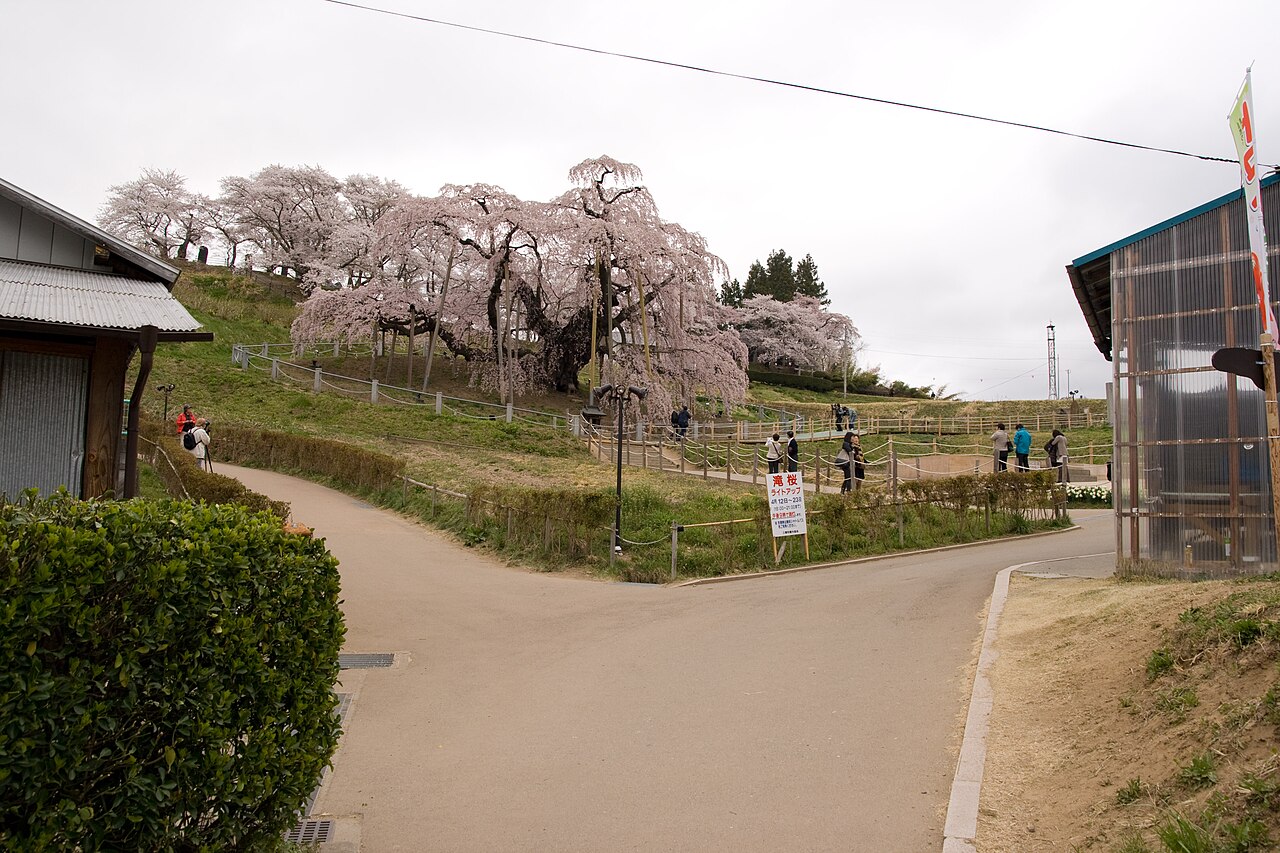
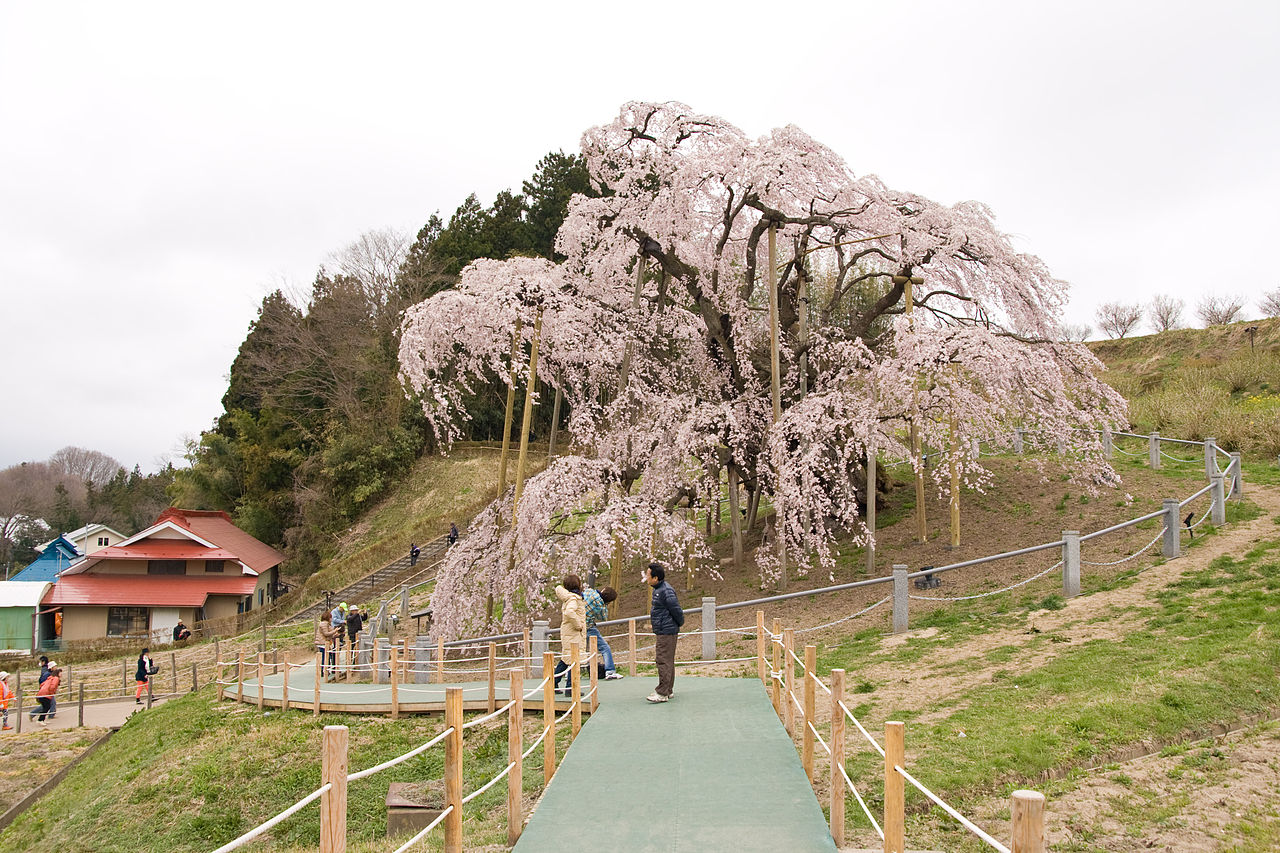
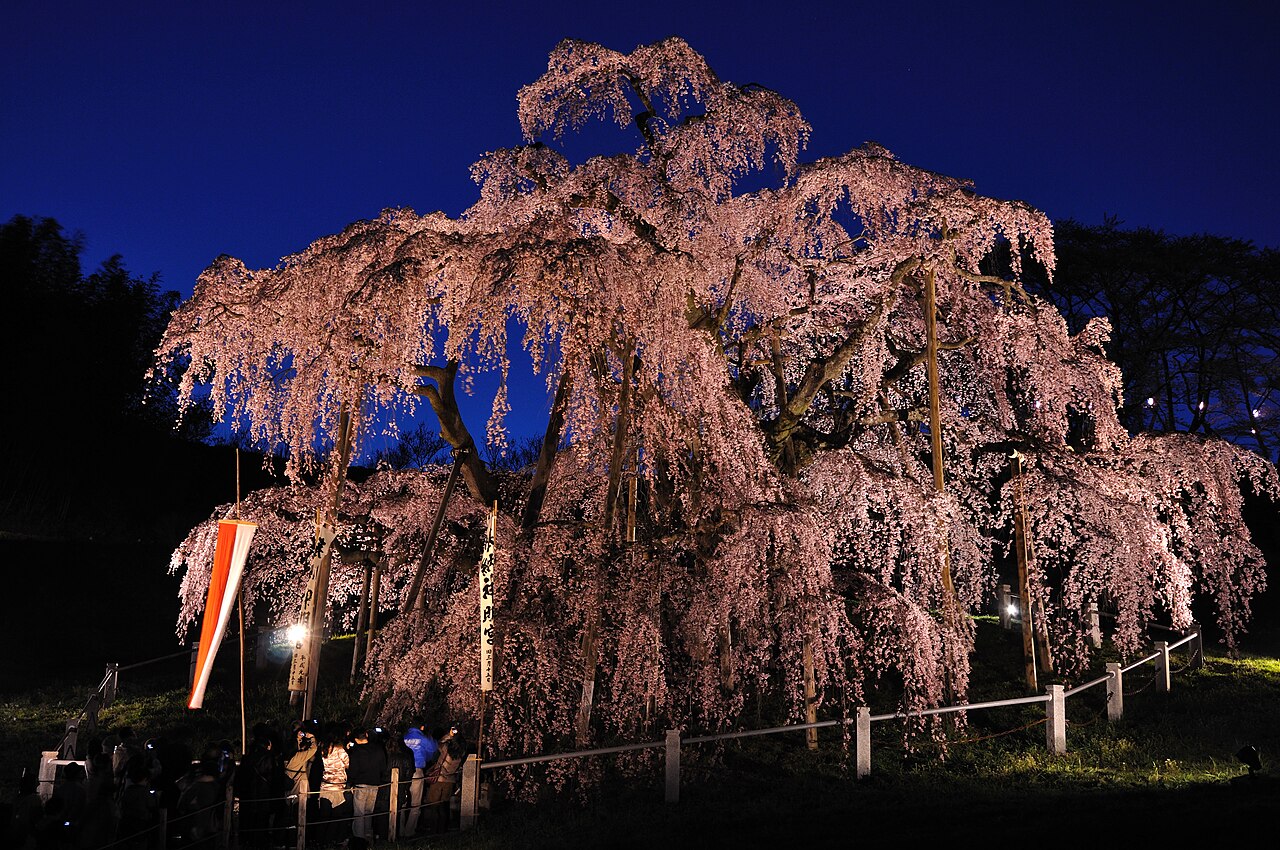
Access is strictly managed to protect the roots. A one-way path system ensures a constant flow of foot traffic. For those visiting without a car, a shuttle bus service operates from Miharu Station during the peak period, synchronized with the train schedules from Koriyama. The authorities have also implemented a "light-up" program, where the tree is illuminated from 18:00 to 21:00. This is not merely for aesthetics; it helps distribute the tourist load, encouraging visitors to stay into the evening and reducing peak daytime congestion.
Implications for the Traveler: A Strategic Approach
Visiting the Takizakura is a commitment, not a casual stop. To truly experience the tree, one must abandon the "tour bus mentality."
The "Night Experience"
The night illumination is, by many accounts, the superior experience. The lighting, positioned low and behind the tree, casts a golden glow that transforms the pink blossoms into something ethereal. Because tour buses depart by 17:00, the evening hours offer a quieter, more contemplative atmosphere. Visitors are advised to bring a heavy jacket; even in April, the mountain air at 370 meters elevation can drop to single-digit temperatures.
Beyond the Main Attraction
Miharu is more than just one tree. The "Sakura-Meguri" (cherry-tour) map, available at the station, marks forty other significant cherry trees in the area. Furthermore, the town offers deep cultural experiences:
- Takashiba Dekoyashiki: A village of craftsmen where the famous Miharu-goma (wooden horse) is produced. This folk art, dating back to the Edo period, offers a window into the region’s soul that remains open year-round.
- Lake Sakura and Miharu Dam: A reservoir that provides a stunning, low-traffic alternative for blossom viewing.
- Commutan Fukushima: An environmental education center that provides an essential, balanced, and sobering context regarding the 2011 disasters, making it a critical stop for those wishing to understand the contemporary history of Fukushima.
Strategic Recommendations
For the international traveler, the most efficient base is Koriyama. It offers the best connectivity and a wide range of accommodation. When planning, utilize the flexible booking options of business hotels in Koriyama, waiting for the bloom forecast to solidify roughly 48 hours before arrival.
Conclusion: Is it Worth the Journey?
The Miharu Takizakura is a pilgrimage site. If you are an admirer of natural history, the sight of a thousand-year-old living organism that has survived famine, war, and environmental crisis is profoundly moving. However, the caveat remains: do not come if you cannot time it for peak bloom. A barren tree in late winter is a testament to age, but a mankai tree is a testament to life.
If your schedule is tight and you only have one day, consider if your time is better spent elsewhere; but if you have the luxury of time—to spend three days in the region, to walk the rural roads of the Abukuma highlands, and to see the tree both under the morning sun and the evening lights—then the Miharu Takizakura stands as one of the most rewarding experiences in the Japanese archipelago. It is a reminder that nature, given time, will always produce something that human art can only hope to imitate.