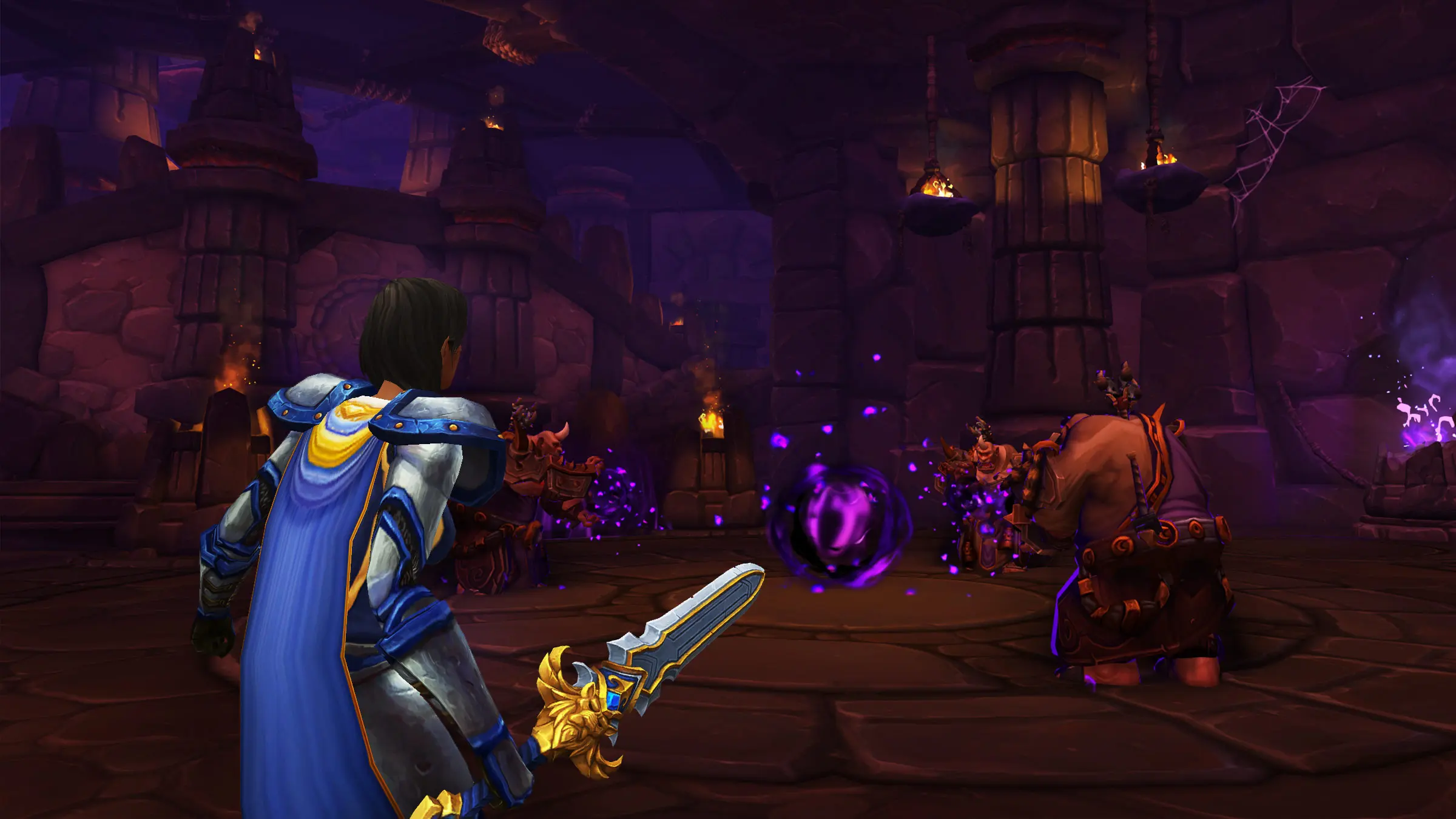
In a high-stakes legal maneuver that underscores the ongoing tension between official game developers and the thriving world of private server communities, Blizzard Entertainment has officially filed a copyright infringement lawsuit against "Project Ascension." The project, a popular private server platform for World of Warcraft (WoW), has long operated in a legal gray area, but Blizzard’s latest filing suggests that the company’s patience with these unauthorized iterations of its flagship MMORPG has reached an end.
The lawsuit, which paints a picture of large-scale intellectual property theft, alleges that the operators of Project Ascension have built a lucrative enterprise on the back of Blizzard’s proprietary code and assets. As the gaming industry watches, this case promises to be a landmark moment in defining the boundaries of fan-led modification versus unauthorized commercial exploitation.
The Core Allegations: Intellectual Property and Economic Harm
The legal complaint, filed by Blizzard, does not mince words regarding the severity of the alleged infractions. Blizzard contends that Project Ascension has been responsible for the distribution of millions of pirated copies of World of Warcraft game software. More significantly, the developer argues that the project is not merely a fan hobby, but a sophisticated, monetized operation.
"The defendants have built an entire business on large-scale, egregious, and ongoing infringement of Blizzard’s intellectual property," the filing states.
Blizzard’s legal team asserts that the project’s business model is inherently predatory. By offering a modified version of the World of Warcraft experience—often featuring unique classless systems and custom gameplay mechanics—Project Ascension has successfully attracted a massive player base that would otherwise be required to pay for official subscriptions.
According to the lawsuit, this creates a two-fold injury. First, there is the direct loss of subscription revenue. Second, there is the dilution of the brand. Blizzard argues that by modifying game assets and code without oversight, these private servers "devalue the WoW experience" and undermine the creative labor of the artists, programmers, and designers who spend years crafting the official ecosystem.
Chronology of the Conflict
The rise of private servers has been a persistent challenge for Blizzard since the early 2000s, but the specific legal trajectory involving Project Ascension highlights a shift toward more aggressive litigation against high-profile platforms.
- The Proliferation Phase: Over the past several years, Project Ascension gained significant traction by offering a "classless" version of World of Warcraft, which allowed players to mix and match abilities from different character classes. This innovation drew in a massive audience of millions, many of whom felt disillusioned by the trajectory of official retail expansions.
- The Escalation of Monetization: As Project Ascension’s popularity grew, so did its infrastructure. The platform introduced in-game stores and cosmetic monetization, which moved the project from a "fan-project" status into a commercial entity in the eyes of Blizzard.
- The Regulatory Spotlight: Tensions reached a boiling point when legal investigations revealed the hosting infrastructure utilized by the project. The discovery that the project relied on "bulletproof" hosting services—specifically the Russia-based Aeza Group—brought national security and international sanctions into the conversation.
- The Filing: Blizzard officially initiated legal proceedings, arguing that the combination of copyright infringement and the use of sanctioned infrastructure constitutes a direct threat to both the company’s revenue and its corporate standing.
The Sanctioned Infrastructure: A Geopolitical Complication
One of the most alarming aspects of Blizzard’s filing is the focus on the server infrastructure itself. The lawsuit explicitly references the Aeza Group, a Russian-based hosting provider.
In a move that elevates this from a simple intellectual property dispute to a matter of international compliance, the U.S. Department of the Treasury sanctioned the Aeza Group last year. The Treasury Department identified the firm for its "role in supporting cybercriminal activity targeting victims in the US and around the world."
Blizzard’s inclusion of this detail serves a dual purpose. Legally, it helps paint the defendants as operators who are not only violating copyright law but are also utilizing infrastructure associated with malicious, state-sanctioned, or criminal-adjacent entities. This framing makes it significantly harder for the defendants to garner public sympathy, as the conversation shifts from "players wanting to play a game" to "a commercial operation utilizing sanctioned, high-risk infrastructure."
Supporting Data: The Scale of the Infringement
While specific internal financial data from Project Ascension remains private, the scope of the project is massive. By the operator’s own metrics, they have serviced over a million unique users. For a private server, these numbers are staggering—rivaling some smaller, legitimate MMORPGs.
The financial impact, according to Blizzard, is quantifiable in the context of the "Subscription Loss Model." If even a fraction of the million players currently enjoying the "free" experience provided by Project Ascension were to transition to official servers, the revenue generated would be in the millions of dollars annually.
Beyond the revenue, the technical infringement is extensive. Blizzard’s attorneys allege that:
- Code Manipulation: The defendants have reverse-engineered core game binaries to bypass authentication servers.
- Asset Misappropriation: Thousands of proprietary assets—including textures, models, sound files, and quest scripts—have been lifted and modified without licensing.
- Community Devaluation: The unauthorized servers offer a "fragmented" experience that Blizzard claims degrades the perceived quality of the intellectual property in the eyes of the consumer.
The "Irreparable Harm" Argument
Blizzard’s lawsuit centers heavily on the concept of "irreparable harm." In legal terms, this is a high bar to clear. To prove irreparable harm, a plaintiff must demonstrate that monetary damages alone are insufficient to compensate for the injury caused.
Blizzard argues that the damage is multifaceted:
- Brand Integrity: When players encounter bugs, server instability, or security breaches on a private server, the negative user experience is often misattributed to the World of Warcraft brand as a whole.
- Creative Suppression: The company posits that the unauthorized nature of these servers creates an "unscrupulous" environment that discourages future investment in creative, community-driven content.
- The "Precedent" Effect: By failing to act, Blizzard fears it would be effectively conceding its rights to its own intellectual property, making it impossible to defend its copyrights against future, more malicious actors.
Implications for the Gaming Industry
The legal battle between Blizzard and Project Ascension serves as a bellwether for the future of private server communities. For years, these projects have argued that they are preserving "classic" iterations of games that companies have long abandoned. However, as these servers become increasingly commercialized, the "preservation" argument loses its moral and legal standing.
1. The Death of the "Fan Project" Defense
Historically, many private servers operated on a donation-based model to avoid the "commercial" label. Project Ascension’s move toward deeper monetization and professionalized business structures has clearly crossed a line. This lawsuit will likely serve as a warning to other large-scale private servers: if you turn your passion project into a business, you are playing by the rules of a business, which includes the risk of litigation.
2. The Role of Infrastructure Providers
The mention of the Aeza Group in the filing suggests that developers may start targeting the infrastructure of these projects, not just the operators. If hosting providers that offer "bulletproof" services are forced to de-platform gaming servers to avoid legal scrutiny, the lifespan of such projects could be severely shortened.
3. The Future of Official Community Servers
Blizzard’s argument that they are working to "deliver classic and community-driven content" points to the success of World of Warcraft Classic. By providing official versions of historical game states, Blizzard has effectively undercut the primary market reason for private servers. This lawsuit may be the final stage of a strategy to eliminate the competition, allowing Blizzard to reclaim that specific player demographic.
Conclusion: A Precedent in the Making
The lawsuit against Project Ascension is more than a simple copyright dispute; it is a confrontation between the decentralized, anarchic nature of early internet gaming and the modern, strictly controlled, and monetized reality of corporate gaming giants.
As the case proceeds, the gaming community will be watching to see how the court balances the rights of intellectual property holders against the complex reality of digital ownership and fan-led preservation. Whether or not Project Ascension survives, the message from Blizzard is clear: the era of the large-scale, monetized private server is facing a reckoning.
For now, the servers remain, but the shadow of the law looms larger than ever before. Blizzard’s pursuit of this case suggests that they are not just looking to shut down one project, but are looking to establish a definitive legal precedent that will reshape the landscape of MMORPG modification for years to come. The "irreparable harm" Blizzard cites may be the catalyst that finally closes the curtain on one of the most successful, and controversial, private server projects in the history of World of Warcraft.