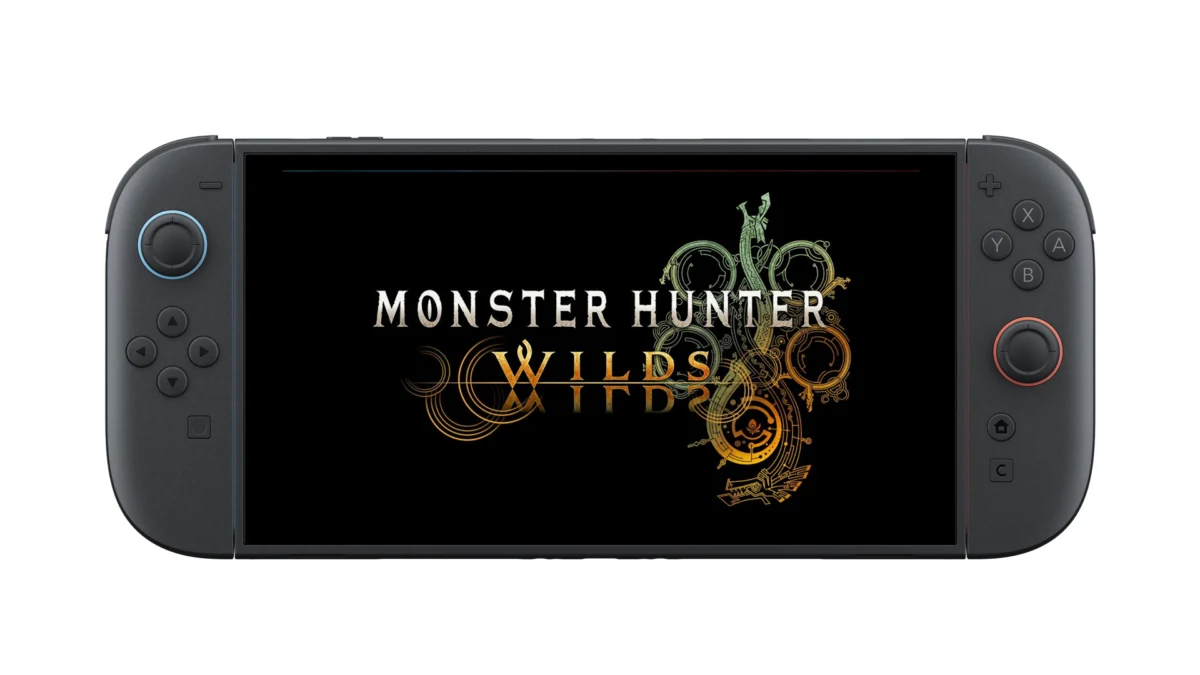
In a move that signals a significant shift in the portable gaming landscape, Capcom has officially confirmed that its critically acclaimed action-RPG, Monster Hunter Wilds, is currently in development for the upcoming Nintendo Switch 2. This announcement, delivered through the official Monster Hunter social media channels, confirms long-standing rumors that the franchise’s latest entry would eventually bridge the gap between high-fidelity home consoles and Nintendo’s next-generation hardware.
The announcement arrives at a pivotal moment for both Capcom and Nintendo, setting the stage for what many industry analysts believe will be the most technically ambitious portable version of a Monster Hunter title to date.
The Evolution of the Hunt: Main Facts
Monster Hunter Wilds, which launched to widespread acclaim in February 2025 for PlayStation 5, Xbox Series X|S, and PC, has redefined the series’ scope with its seamless, hyper-dynamic open world. Bringing such an expansive title to the successor of the Nintendo Switch represents a monumental technical challenge, but one that Capcom is clearly prepared to undertake.
While the publisher has kept specific technical details—such as frame rates, resolution targets, or proprietary cloud-streaming limitations—under wraps, the confirmation of a native port confirms that Nintendo’s next platform will possess the architectural headroom to handle the RE Engine’s demanding features. This development ensures that the "Wilds" experience—characterized by massive, reactive ecosystems, complex weather systems, and intense monster-on-monster turf wars—will be playable on the go.
A Chronology of the Wilds Journey
The trajectory of Monster Hunter Wilds has been one of rapid growth and continuous support. To understand the significance of the Switch 2 announcement, one must look at the game’s timeline:
- Initial Reveal: The game was teased in late 2023, showcasing a level of environmental detail previously unseen in the series.
- Launch Window (February 2025): The title hit the market, delivering a robust experience that earned high marks for its fluidity, creature design, and mechanical depth.
- The Post-Launch Expansion: Shortly after the base game established itself as a commercial success, Capcom announced Monster Hunter Wilds: Ascendance. This "massive" expansion is set to introduce new biomes, a bolstered roster of apex predators, and a continuation of the core narrative.
- The Switch 2 Announcement (June 2026): Capcom formally acknowledged the Switch 2 port, validating player theories that the title was designed with scalability in mind from its inception.
Technical Ambitions and Hardware Expectations
The jump from the original Nintendo Switch to the highly anticipated "Switch 2" is expected to be more than just a minor iterative upgrade. For Monster Hunter Wilds to function effectively, the new hardware must account for the RE Engine’s reliance on advanced asset streaming and complex AI behaviors.

Industry insiders suggest that the Switch 2 will feature NVIDIA-powered hardware, likely utilizing DLSS (Deep Learning Super Sampling) technology. This would be the "secret sauce" required to render the lush, dense jungles and scorching deserts of Wilds on a handheld device. Unlike Monster Hunter Rise, which was built specifically for the original Switch’s hardware constraints, Wilds was built for the current generation of consoles. Adapting this game requires significant optimization of its dynamic weather-shading, complex volumetric lighting, and large-scale monster density.
Official Responses and Strategic Significance
Capcom’s decision to bring Wilds to the Nintendo ecosystem underscores the publisher’s long-standing philosophy: Monster Hunter is at its best when it is portable. Ever since the PSP and 3DS eras, the franchise has thrived on the ability to "hunt on the go."
"We are committed to bringing the full Monster Hunter Wilds experience to our fans, regardless of their platform of choice," a spokesperson for Capcom noted during the announcement. While the statement remained brief, the implications are clear. Capcom views the Nintendo Switch 2 as a vital part of its future roadmap, ensuring that the Monster Hunter community remains unified across both high-end stationary consoles and the more versatile, portable architecture offered by Nintendo.
Implications for the Industry
The decision to port Monster Hunter Wilds to the Switch 2 has several cascading effects on the gaming industry:
1. Bridging the Power Gap
For years, the "power gap" between Nintendo consoles and the hardware from Sony and Microsoft has prevented many "AAA" titles from appearing on Nintendo platforms. If Wilds runs successfully on the Switch 2, it will serve as a proof-of-concept for other third-party developers, proving that the Switch 2 is a legitimate destination for high-end, cross-platform releases.
2. The Longevity of the "Wilds" Ecosystem
By introducing the game to a new platform alongside the Ascendance expansion, Capcom is effectively extending the life cycle of the game by years. This allows for a staggered release strategy where the base game arrives on Switch 2, followed by the Ascendance expansion, keeping the community engaged and sales steady well into the late 2020s.

3. Impact on Local Multiplayer
Monster Hunter has always been synonymous with local, "couch" co-op. The portable nature of the Switch 2 allows for localized multiplayer sessions that are simply not possible on the PS5 or Xbox Series X|S. This social aspect has historically been the lifeblood of the Monster Hunter community in regions like Japan, and its inclusion on the Switch 2 is expected to revitalize interest in in-person gaming meetups.
Looking Ahead: What to Expect
As fans wait for further information, the community is already speculating on what the Switch 2 version might include. Will there be exclusive Nintendo-themed cosmetic armor? Will the game support cross-save functionality with the PC and console versions?
Given Capcom’s track record, they are likely to prioritize feature parity. While visual fidelity will undoubtedly be adjusted to meet the handheld’s thermal and battery constraints, the core gameplay loop—the tracking, the combat, and the crafting—is expected to remain untouched.
As we approach the release of Monster Hunter Wilds: Ascendance and the eventual hardware launch of the Nintendo Switch 2, the gaming world will be watching closely. This port is not just a game; it is a test of whether the next generation of handheld gaming can truly keep pace with the evolving demands of modern, open-world software.
For those who have already conquered the wilds on other platforms, the prospect of taking their hunter on the road again is a tantalizing one. For Nintendo fans, it marks the arrival of a titan, promising hundreds of hours of tactical, rewarding gameplay. The hunt, it seems, is far from over—it is only expanding.