
 Asro
Asro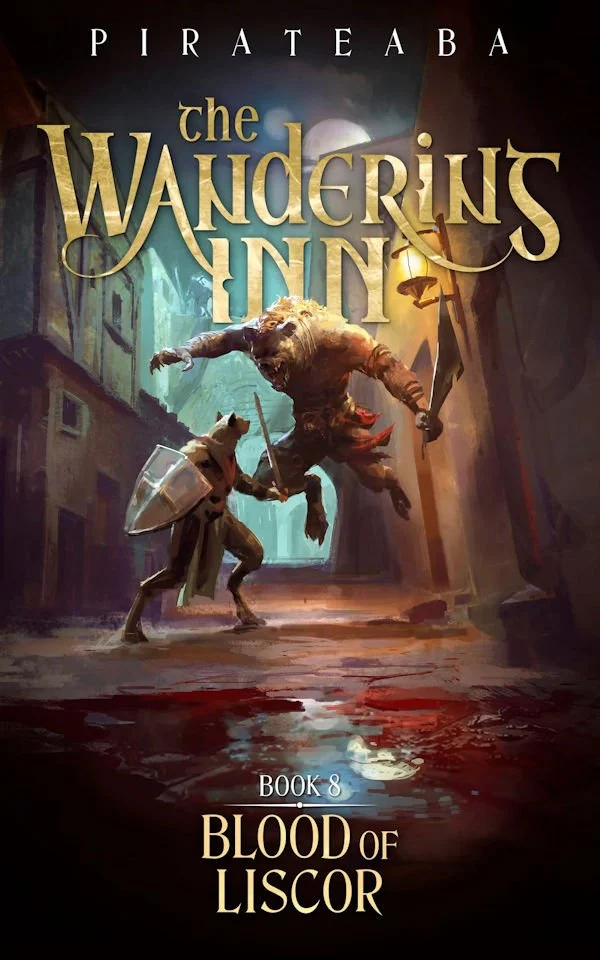
The literary landscape of modern fantasy has been forever altered by the sprawling, ambitious, and deeply character-driven epic that is The Wandering Inn. As the series continues to evolve, the latest installment, Blood of Liscor, serves as a pivotal bridge between the series’ humble beginnings and the high-stakes, geopolitical maneuvering that now defines its trajectory.
Blood of Liscor is not merely a continuation; it is a profound exploration of identity, survival, and the shifting loyalties that define the northern reaches of Izril. With the titular dungeon looming as a constant, predatory threat and the encroaching political instability involving the Unseen Emperor of Riverfarm, the stakes have never been higher. Yet, as this analysis will demonstrate, the true strength of the volume lies in its intimate character portraits.
Main Facts: The Core Conflict
At its heart, Blood of Liscor revolves around a central, terrifying mystery: something ancient, vast, and insatiable is stirring beneath the city of Liscor. While the dungeon itself has long been a source of wealth and danger for adventurers, the current narrative suggests that the status quo is collapsing.
The narrative threads are divided into three primary sectors:
- The Dungeon Menace: An atmospheric, high-tension descent into the bowels of Liscor, where the line between hero and monster blurs.
- The Goblin Question: As Goblins continue to traverse northern Izril, the narrative challenges the reader’s—and the characters’—perceptions of this species. With figures like the Goblin Lord representing existential threats, the presence of more nuanced Goblins forces leaders like the Unseen Emperor of Riverfarm to make difficult, potentially catastrophic, moral calculations.
- The Sanctuary of the Inn: Amidst the chaos, Erin Solstice’s inn remains a bastion of normalcy. It is a place where adventurers, Antinium, and common folk share food and stories, serving as a microcosm for the world-building that makes the series so compelling.
Chronology: The Arc of Evolution
The progression of Blood of Liscor follows a carefully plotted trajectory that rewards long-term readers.
- The Early Phase: The book begins by re-establishing the rhythm of daily life in Liscor. The Inn is fully operational, and the reader is eased into the current political climate of northern Izril.
- The Mid-Point: The conflict begins to fracture. The Redfang five are given significant narrative focus, moving away from simple survival mechanics to full-fledged character development. Simultaneously, the tension surrounding the Unseen Emperor of Riverfarm reaches a boiling point, creating a secondary front of conflict.
- The Climax: The dungeon crawl reaches its zenith. The revelation regarding a long-lost character—whose psyche has been fractured by isolation and madness—serves as the book’s emotional anchor.
- The Resolution: While certain subplots, such as the theatrical production hosted at the Inn, conclude with a speed that borders on the abrupt, the thematic arcs regarding Lyonette and Erin reach a satisfying, if complex, resolution.
Supporting Data: Character Analysis and Development
What separates The Wandering Inn from its contemporaries is its refusal to rely on stale tropes. In Blood of Liscor, the character work is not just a secondary feature; it is the primary engine of the narrative.
Erin Solstice: The Underestimated Protagonist
Erin has always been a character defined by her adaptability. In this volume, the narrative leans into her role as the "underestimated" force. Her ability to manipulate the perceptions of others—often by appearing less formidable than she is—allows her to navigate the complex social hierarchies of Liscor with a precision that feels earned rather than forced.
Lyonette: The Princess Reborn
Perhaps the most rewarding arc in the book belongs to Lyonette. For volumes, the reader has watched her transition from a pampered royal to a servant who subsumed her identity to meet the needs of others. Blood of Liscor marks the moment these two versions of her life collide. She is no longer just a princess or a maid; she is finally becoming an individual, a process that feels grounded in the trauma and growth she has endured throughout the series.
The Redfang Five and Bird
The inclusion of the Redfang five provides a much-needed perspective on the Goblin population, humanizing a species often relegated to the role of fodder in traditional fantasy. Furthermore, the character of Bird continues to be a highlight. His depiction is widely recognized for its neurodiverse coding, offering a level of representation that is rarely seen in high fantasy. His interactions with those around him, who treat his unique perspective with respect rather than condescension, serve as a testament to the series’ inclusive world-building.
Official Responses and Critical Reception
Critically, Blood of Liscor has been received as one of the stronger entries in the series. Industry observers have noted that while the sheer scale of the series can sometimes lead to pacing issues—such as the aforementioned play subplot, which suffered from a rushed conclusion—the emotional payoff remains consistent.
The "dungeon crawl" sequence has been singled out for its nuance. The depiction of a hero corrupted by solitude is handled with a level of maturity that avoids the easy, binary morality often found in the genre. It forces the reader to sit with the discomfort of old loyalties clashing against new, painful realities.
While some readers have noted that Laken, the Unseen Emperor of Riverfarm, feels somewhat diminished in this volume compared to his appearances in previous installments, this is largely viewed as a minor friction point within an otherwise cohesive narrative.
Implications: The Future of Izril
The events of Blood of Liscor have massive implications for the future of the series. The "hunger" lurking beneath the city is clearly a long-term antagonist that will likely define the next stage of the series. By focusing on the shifting dynamics of the Antinium, the Goblins, and the human powers, the author has set the stage for a grand-scale conflict.
Thematic Significance
The series continues to ask: What does it mean to be a person? By focusing on the Antinium—creatures often viewed as hive-minded machines—and the Goblins—viewed as mindless monsters—the story argues that personhood is defined by agency and community, not by species or class.
Final Thoughts
Blood of Liscor is a masterclass in patient storytelling. It is a book that demands much from its reader, asking them to keep track of dozens of threads, yet it pays that effort back in full. The weaknesses—the rushed subplots or the uneven pacing of specific political arcs—are overshadowed by the sheer heart of the project.
As we look toward the future, the primary takeaway from this volume is clear: the safety of the Inn is a temporary illusion. The world outside is growing more dangerous, the shadows in the dungeon are lengthening, and the characters we have come to love are being forced to choose between who they were and who they must become to survive. For fans of epic fantasy, Blood of Liscor is not just recommended; it is essential reading. It stands as a reminder of why this series has cultivated one of the most passionate and dedicated fanbases in the literary world.
The story is not over. In fact, if the events beneath Liscor are any indication, the most harrowing chapters are likely yet to be written. The hunger is still there, and the inn is still open—for now.


 Nana Wu
 Ali Ikhwan





