After more than a decade of dominating the MMORPG landscape with the enduring success of Guild Wars 2, ArenaNet has officially shattered the silence. The studio has unveiled Guild Wars 3, a bold, next-generation entry that promises to redefine the genre’s mechanical foundations while pulling the franchise back to its mythological roots. This announcement serves as the most significant shift for the series since the 2012 launch of its predecessor, signaling a transition toward a more kinetic, spirit-bound, and console-integrated future.
The Foundation: A Return to the Ancient Frontier
Guild Wars 3 is not a direct sequel in the traditional sense; rather, it is a temporal pivot. Set over 1,000 years prior to the events of the original Guild Wars, the game transports players to the Tyrian region of Orr—long before its eventual cataclysmic sinking. In this era, Orr is not the desolate, undead-ridden wasteland familiar to veteran players, but a vast, vibrant, and untamed wilderness frontier saturated with raw, primal magic.
The geopolitical landscape of this ancient Orr is fractured. Various guilds, each harboring distinct philosophies, are locked in a desperate struggle for control over the land’s burgeoning resources. Looming over this conflict are the Vael spirits—powerful, sentient manifestations of nature that serve as the heartbeat of the continent. The central narrative hook places players in the boots of a "Vaelwarden," an elite member of a guild sworn to act as a steward of the land and a protector of the Vael spirits.
By choosing this setting, ArenaNet is afforded the creative freedom to explore the origins of the Tyrian mythos without being constrained by the established lore of the last fifteen years. It is a clean slate that honors the franchise’s identity while providing a fresh entry point for a new generation of gamers.
Chronology of a Franchise: From Prophecies to the Future
The trajectory of the Guild Wars franchise is a testament to the evolution of the MMORPG genre itself. Understanding the significance of Guild Wars 3 requires an appreciation of the timeline that brought us here:
- 2005: Guild Wars: Prophecies launches. It pioneered the "instanced world" concept, challenging the traditional subscription-based MMO model with a buy-to-play system and a heavy emphasis on competitive PvP.
- 2006–2007: The expansions Factions and Nightfall, followed by the stand-alone campaign Eye of the North, expanded the world, introducing new professions and the Hall of Monuments, which bridged the gap between titles.
- 2012: Guild Wars 2 is released. It fundamentally altered MMO design by introducing dynamic events, horizontal progression, and an action-oriented combat system, effectively keeping the game relevant for over a decade through the "Living World" content model.
- 2024: ArenaNet officially announces Guild Wars 3.
- 2027: The scheduled window for the first public beta test, signaling a three-year development sprint to polish the new console-first engine and mechanics.
Supporting Data: Innovations in Movement and Combat
Perhaps the most radical departure from the Guild Wars pedigree lies in the game’s core loop. ArenaNet is moving away from the static, tab-targeting-heavy combat of the past in favor of a system defined by momentum and spatial awareness.
The Seeker System
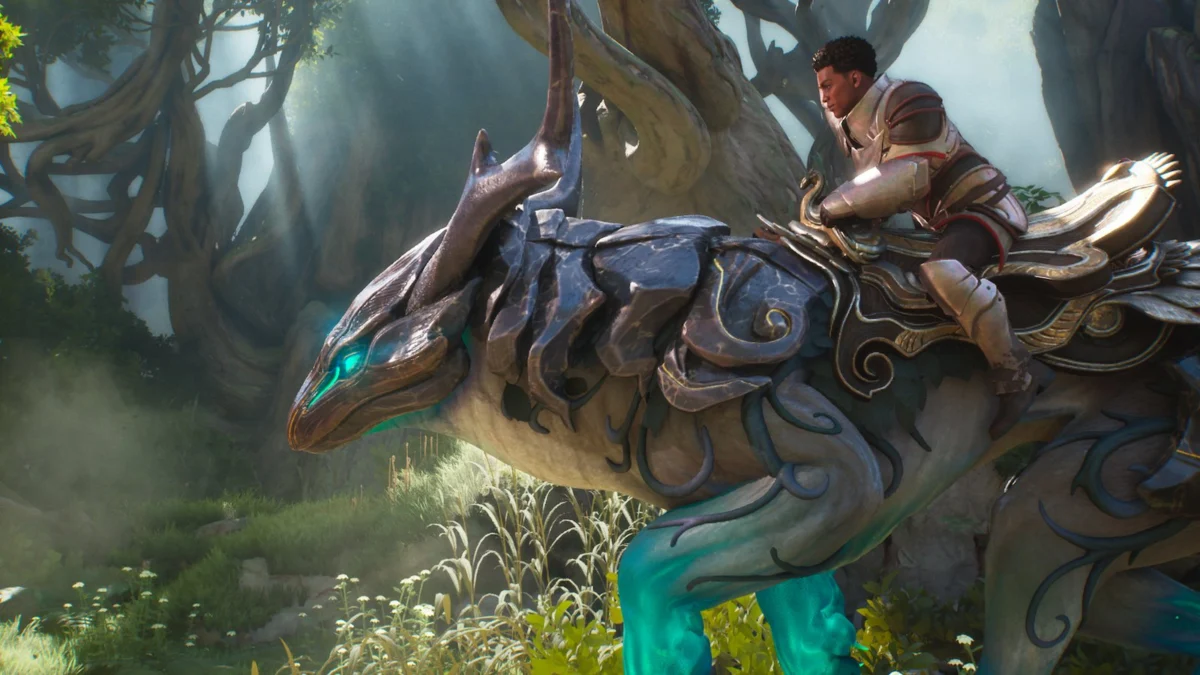
Central to the traversal and utility of Guild Wars 3 is the "Seeker." Every player will be bonded to a Seeker, a spirit-linked mount that acts as a conduit to the natural energy of Orr. Unlike the mounts in Guild Wars 2, which served primarily as travel tools, the Seeker is an extension of the character’s identity. It functions as a partner in combat, a guardian in the wilderness, and a vital component of the player’s ability to navigate the verticality of the Tyrian landscape.
Kinetic Combat Architecture
The development team has emphasized that combat in Guild Wars 3 is built around the "Momentum Engine." Players are encouraged to maintain movement across different modes—sprinting, gliding, and spirit-dashing—to build up kinetic energy. This energy can then be unleashed in high-impact, momentum-based abilities. The goal is to move the player away from the "turret" playstyle common in older MMOs, forcing them to treat the battlefield as a fluid space where positioning and speed are just as important as cooldown management.
Official Responses: The Vision of Colin Johanson
Game Director Colin Johanson, a veteran of the studio whose leadership has been synonymous with the franchise’s evolution, framed the project as a total reimagining of what an online world can be.
"We are standing at the threshold of a new era," Johanson stated during the unveiling. "Our objective with Guild Wars 3 is not simply to iterate on what we have done before, but to push the entire MMORPG genre forward. We want to craft a world that is inherently believable, where every action feels responsive, and where the game respects the player’s time."
Johanson underscored that community-building is the pillar upon which the game is constructed. By focusing on the guild system and the stewardship of the Vael spirits, ArenaNet intends to foster a sense of shared responsibility among players. The "rewarding" aspect of the game, according to the director, will focus on meaningful achievements rather than endless, repetitive grinds, aiming to provide a high-fidelity experience that caters to both casual explorers and competitive, high-skill players.
Implications: A Console-First Future
The announcement that Guild Wars 3 will launch on PlayStation 5, PC, and Steam represents a massive shift in ArenaNet’s strategic roadmap. Historically, the franchise has been tethered to the PC ecosystem. By optimizing the game for console architecture from day one, ArenaNet is signaling a desire to capture a broader global audience.
The Impact on the Industry
The shift to console brings with it several implications:
- Interface Design: The UI will likely undergo a massive transformation, favoring controller-friendly radial menus and streamlined hotbars, which may inadvertently benefit PC players by reducing screen clutter.
- Cross-Platform Play: With a simultaneous release across PS5 and PC, the pressure for cross-play and cross-progression will be higher than ever. ArenaNet’s ability to synchronize these platforms will define the game’s launch success.
- Market Competition: By entering the console space, Guild Wars 3 will compete directly with established giants like Final Fantasy XIV and The Elder Scrolls Online. Its success will depend on whether its "momentum-based" combat can feel as intuitive on a controller as it does on a mouse and keyboard.
The Road to 2027
The announcement has already sparked a surge of activity within the community. With beta sign-ups now open, the studio is clearly interested in involving the player base early in the tuning process. The three-year gap between the announcement and the first beta is a calculated move; it allows the developers to refine the "momentum" combat and the complex Seeker systems without the pressure of an immediate release.
Conclusion: The Horizon of Orr
Guild Wars 3 represents a significant gamble for ArenaNet. They are retiring the static, established comfort of Guild Wars 2 to pursue an innovative, high-octane vision of what a fantasy world can offer. By rooting the game in the ancient past, they have cleared the lore-heavy hurdles that often alienate new players, while the integration of console play suggests a future where the Guild Wars brand is more accessible than ever before.
As we look toward the fall of 2027, the industry will be watching closely. Whether this "new era" can deliver on the promise of a truly responsive, innovative, and community-driven MMORPG remains to be seen. However, one thing is certain: for the Vaelwardens of the future, the wilderness of Orr is calling, and for the first time in over a decade, the path forward is entirely unknown.