Asep Darmawan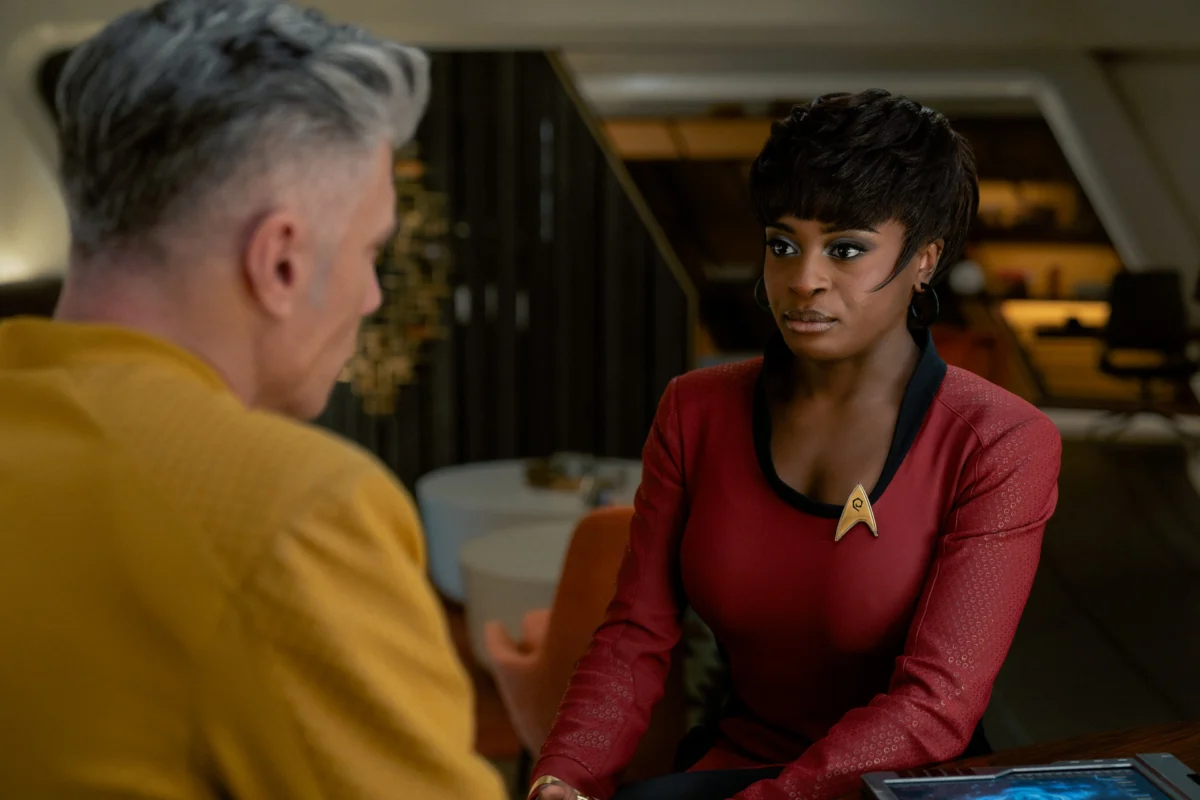
As the fourth season of Star Trek: Strange New Worlds reaches its dramatic conclusion, the production team has finally pulled back the curtain on an episode that has haunted fan theories for months. Titled "Tomorrow’s Enterprise," the finale promises to be a watershed moment for the series, serving as both a narrative pivot point and a reverent nod to the franchise’s storied history. With the release of the first official trailer, promotional imagery, and a cryptic logline, viewers are now preparing for a temporal event that threatens to bridge the gap between the era of Captain Christopher Pike and the legendary voyages of the Original Series (TOS).
The Genesis of a Temporal Ripple
The anticipation surrounding "Tomorrow’s Enterprise" began early in the production cycle when the showrunners unveiled the episode titles for the current season. The finale’s name immediately triggered a visceral response from the Star Trek faithful, evoking memories of the iconic Star Trek: The Next Generation episode "Yesterday’s Enterprise." In that 1990 classic, a temporal rift forced the Enterprise-D into a brutal, alternate timeline, fundamentally altering the crew’s reality.
For Strange New Worlds, the stakes appear equally high. While the TNG episode explored a war-torn "what-if" scenario, the Strange New Worlds team has hinted that their approach will be distinct. Executive producer Henry Alonso Myers has previously expressed a desire to push the boundaries of the "time travel episode" trope, moving away from standard procedural mechanics to offer something more emotionally resonant and narratively transformative.
The official synopsis provided by Paramount+ is stark in its simplicity, yet heavy with implication: "A time ripple damages the Enterprise, forcing young and old Uhura to cooperate and fix the timeline."
A Chronology of Confusion: Analyzing the Visual Evidence
The promotional assets released this week—specifically a collection of high-resolution stills and a brief, atmospheric trailer—provide the first concrete look at the chaos to come. The visuals confirm that this is no ordinary mission; it is a structural fracture in the space-time continuum.
The Duality of Uhura
The most striking element of the promotional material is the inclusion of two versions of Nyota Uhura. We see a younger version, consistent with our current Strange New Worlds timeline, interacting with an older iteration of the character. The older Uhura sports a distinct hairstyle and a uniform that appears to bridge the aesthetic gap between the Strange New Worlds era and the late 23rd-century design seen in the Original Series.
The implications are profound. If the "old" Uhura is present, it suggests that the time ripple is not merely pulling characters from the past, but potentially drawing them from the established future of the Star Trek canon. Whether this is a physical displacement or a form of consciousness transfer remains a point of intense debate, but the visual of them working in tandem suggests a desperate, high-stakes repair operation.
The Command Chair
Perhaps the most tantalizing detail in the footage is the fleeting glimpse of what appears to be James T. Kirk in the center seat. While fans have been aware that the series is marching toward the inevitable hand-off of the Enterprise to Kirk, seeing him in command within the context of a finale—and amidst a temporal distortion—is a massive development. Does this indicate that the ripple has accelerated the timeline? Or are we seeing a momentary glimpse of a future that the crew must fight to either reach or avoid?
Supporting Data: The Convergence of Timelines
The structure of this episode suggests more than just a simple time-jump. The presence of legacy characters—some already established and others teased for the upcoming fifth season—alongside current Strange New Worlds crew members creates a "timeline collision."
In previous seasons, Strange New Worlds has utilized "gimmick" episodes (such as the musical installment or the crossover with Lower Decks) to explore character dynamics through unconventional lenses. However, "Tomorrow’s Enterprise" feels different. It appears to be an exercise in narrative destiny.
By blending characters who are not slated to be in the Original Series with those who are, the showrunners are signaling a complex interweaving of fates. If we are witnessing a blend of timelines, it implies that the "ripple" is not just a damage report for the ship, but a damage report for the Star Trek continuity itself. The mechanics remain obscured, but the visual cues point toward a "cracked" reality where the past, present, and future of the Enterprise are being forced to occupy the same space simultaneously.
Official Perspectives and Behind-the-Scenes Strategy
While the cast and crew have remained characteristically tight-lipped, the strategic release of this information signals a shift in the show’s final-season marketing. By highlighting the emotional core of the episode—the cooperation between two versions of the same person—the producers are emphasizing that this is a character study, not just a sci-fi spectacle.
Behind the scenes, the writers have been under pressure to balance the episodic nature of the show with the looming shadow of the TOS timeline. Fans have long debated the "gimmick" reliance, but this episode seems to be an attempt to address that criticism by using high-concept science fiction to facilitate necessary character growth. If the crew must confront their future (or an alternate version of it), it provides an organic way to address the emotional weight of their eventual departure from the Enterprise.
Implications for the Future of the Series
As Strange New Worlds prepares for its fifth and final season, "Tomorrow’s Enterprise" serves as a crucial barometer. Will this event have lasting consequences, or will it be "reset" by the final frame?
- The Narrative Destination: The series is moving toward a specific, well-known endpoint. This episode may serve as a "bridge," showing the audience that the path to the Original Series is fraught with temporal instability.
- Character Arcs: For characters like Uhura, La’an, and Pike, witnessing their future—or a distorted version of it—provides a unique psychological challenge. It forces them to reconcile who they are with who they are destined to become.
- The Franchise Legacy: By utilizing the "Yesterday’s Enterprise" title, the show is inviting a direct comparison to the most critically acclaimed moments in Star Trek history. It is a bold move that signals confidence in the current writing team’s ability to handle the weight of the franchise’s legacy.
Conclusion
The "Tomorrow’s Enterprise" finale is shaping up to be a masterclass in tension and nostalgia. By taking the classic Star Trek trope of the temporal anomaly and applying it to the specific, character-driven focus of Strange New Worlds, the team has created a perfect storm for a season finale.
Whether the episode functions as a standalone curiosity or a foundational pillar for the series’ final act remains to be seen. However, one thing is certain: as the Enterprise faces this latest chronological kerfuffle, the audience is being reminded that in the world of Star Trek, the future is never set in stone. As we prepare to watch the crew navigate this distortion, we are reminded that their greatest challenge isn’t the ripple itself, but the choices they make when forced to confront the echoes of their own destinies. The finale promises to be a journey not just through time, but through the heart of what makes the Enterprise the most iconic ship in science fiction history.

 Laily UPN
 Iffa Jayyana