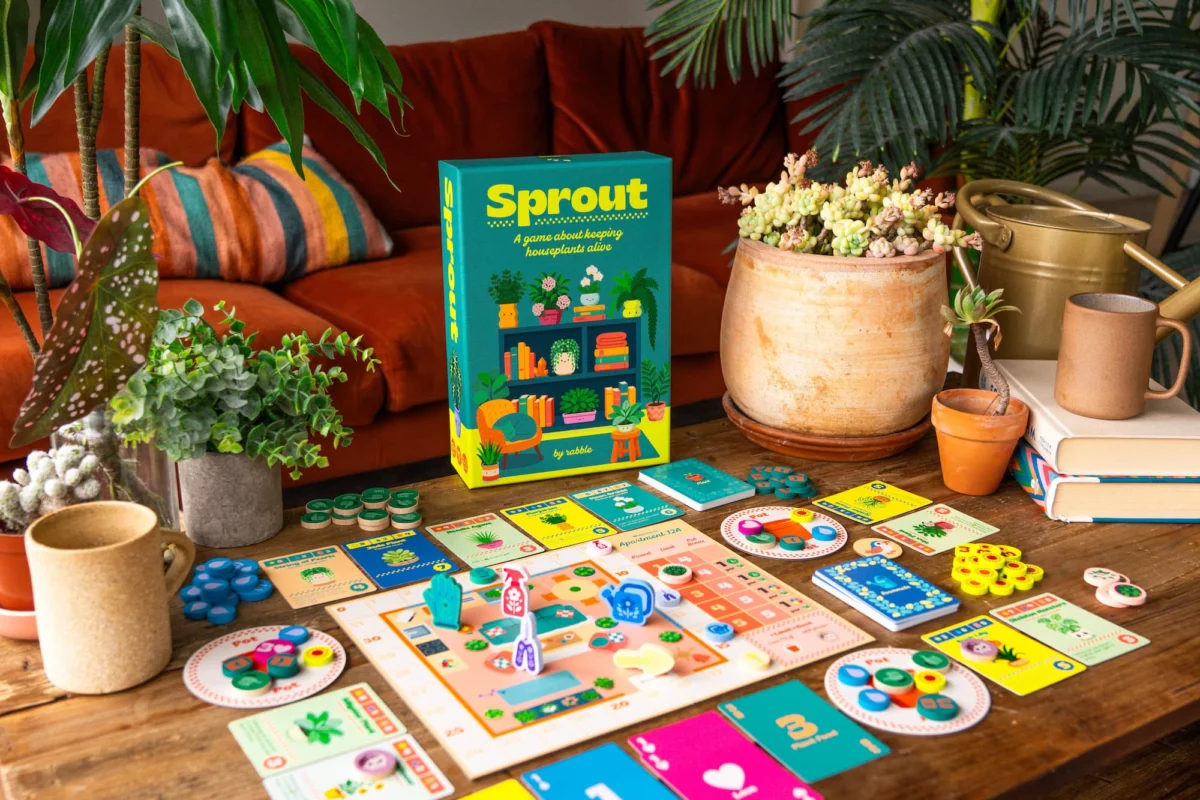
The tabletop hobby has seen a verdant surge in interest over the last few years, with games focusing on nature, ecosystems, and gardening finding a dedicated audience. Joining this growing collection is Sprout, a brand-new strategy title from Rabble Games that challenges players to cultivate their own indoor jungles. Blending the tension of "push-your-luck" mechanics with the satisfying progression of tableau building, Sprout invites two to five players to manage their botanical collections with precision, strategy, and just a hint of roommate-fueled chaos.
Scheduled for a late June launch on Kickstarter, Sprout promises a vibrant and tactical experience, tasking players with balancing the delicate needs of their plants against the limited resources of their living spaces. With its accessible age rating of 10 and up and a brisk runtime of 45 to 75 minutes, the game aims to strike a balance between casual appeal and strategic depth.
The Core Mechanics: Nurturing Your Botanical Empire
At the heart of Sprout lies a two-phase structure played over the course of five rounds. This cycle creates a rhythmic loop that forces players to balance their ambitions against the risk of over-extending.
The Nutrient Phase: The High-Stakes Garden
The first phase, the Nutrient Phase, serves as the engine for the entire game. Players draw cards to secure vital nutrients for their personal pots. However, this is where the "push-your-luck" element comes into play. While drawing additional cards can yield a bountiful harvest of resources, greed is a dangerous thing in the world of indoor gardening. If a player accumulates too much of a single nutrient type, they "bust," a penalty that forces them to prune—and subsequently remove—plants from their collection. This creates a compelling tension: do you settle for a moderate haul, or do you gamble for the nutrients needed to grow that rare, high-scoring Monstera?

The Sprout Phase: Strategic Growth
Once the nutrients are secured, players move to the Sprout Phase. Here, the focus shifts from luck to calculated development. Players spend their accumulated nutrients to "sprout" new plants, adding them to their tableau. Each plant card is more than just a victory point generator; they function as unique engine-building components. Some plants offer immediate, one-time bonuses, while others provide ongoing benefits that can change the trajectory of a player’s strategy. With over 100 distinct plant varieties promised in the final retail version, Rabble Games is betting that the combination of these effects will keep players returning to the table to experiment with new botanical configurations.
The Social Dynamic: Roommates and Table Talk
One of the most intriguing aspects of Sprout is its commitment to social interaction through the inclusion of "Roommate Cards." In many tableau-building games, players can become siloed, focusing entirely on their own board state. Sprout attempts to subvert this through semi-cooperative mechanics.
Roommate Cards are designed to be double-edged swords. When a player utilizes one of these cards, they gain a specific benefit for their own garden, but the card also provides a boost to other players at the table. This design choice necessitates a degree of "table talk," forcing players to negotiate, trade, or begrudgingly accept assistance from their opponents. It transforms the game from a solitary exercise in optimization into a living, breathing social experience where the table’s atmosphere is just as important as the cards in your hand.
Behind the Scenes: Artistic Direction and Development
The aesthetic identity of Sprout is a point of pride for the team at Rabble Games. Every piece of art in the game, from the box cover to the individual plant illustrations, was created by co-founder Jake. The visual style promises to be a standout feature, moving away from the sterile, academic look of many science-themed games and leaning into a warmer, more inviting artistic direction that mirrors the cozy feeling of a well-tended home garden.

While the primary competitive mode is the focus of the current announcement, Rabble Games has acknowledged the high demand for solo content in the modern hobby space. The team has confirmed that a solo mode is currently in active development. While specific mechanics for this mode—such as whether it involves an "AI opponent" or a "beat-your-own-score" puzzle—remain under wraps, the confirmation is a welcome nod to the growing community of solo board gamers.
The Kickstarter Campaign: Upgrades and Expectations
The upcoming Kickstarter campaign, slated for late June, is positioned not just as a crowdfunding effort but as a way to elevate the physical quality of the game. Rabble Games has already teased several premium component upgrades that backers will be able to unlock or select, including high-quality wooden nutrient tokens and custom player markers. These tactile additions are intended to ground the gameplay experience, moving away from cardboard chits toward a more premium, "deluxe" feel that aligns with the game’s theme of nurturing living things.
As the launch date approaches, the board game industry is watching closely. Titles that marry accessible themes like gardening with solid, crunchy mechanics have historically performed well on crowdfunding platforms. The combination of engine-building, push-your-luck tension, and semi-cooperative social dynamics makes Sprout a title that could easily find a home on the shelves of both casual families and hardcore strategy enthusiasts.
Implications for the Hobby: Why "Cozy Games" Matter
The rise of Sprout and similar titles signals a broader shift in the tabletop landscape. For decades, the hobby was dominated by themes of war, conquest, and economic exploitation. The "cozy game" movement—which encompasses themes like farming, knitting, hiking, and gardening—has proven that players are hungry for experiences that provide a sense of accomplishment without the aggressive confrontation inherent in traditional strategy games.

By focusing on the "maintenance" and "growth" aspects of a hobby, Sprout taps into the psychological satisfaction of progress. Watching a garden grow, even in a cardboard format, provides a dopamine hit that is distinct from the satisfaction of capturing territory or bankrupting an opponent. Furthermore, the inclusion of the "Roommate Cards" suggests that Rabble Games understands the social contract of board gaming: that the game is a catalyst for conversation, not just a set of rules to be solved.
As we look toward the late June launch, the question remains: will the tactical depth of the nutrient-management system hold up to repeated play? With over 100 plant cards, the potential for "broken" combos or highly efficient synergies is high, which will keep players engaged as they look for the optimal way to arrange their garden. If Rabble Games can deliver on the quality of the components and the balance of the cards, Sprout could very well be one of the breakout hits of the year.
Whether you are a seasoned gardener looking to bring your hobby to the game table, or a strategy enthusiast looking for a new engine-building challenge, Sprout offers a refreshing blend of mechanics and theme. With its vibrant art, clever social interactions, and promise of upcoming solo content, it is a project that merits a close watch as the Kickstarter campaign prepares to bloom this summer.