The landscape of modern cinema is currently undergoing its most significant structural shift since the transition from celluloid to digital projection. At the center of this seismic evolution is the legendary Martin Scorsese. At 83 years old, the Casino and Killers of the Flower Moon director is not retreating from the rapid advancement of artificial intelligence; rather, he is integrating it into his creative process to streamline one of the most labor-intensive aspects of filmmaking: storyboarding.
While the industry remains sharply divided over the ethics of generative models, Scorsese’s pragmatic adoption of technology—specifically the FLUX model developed by Black Forest Labs—highlights a growing trend among the titans of Hollywood. Far from replacing the director, AI is increasingly being positioned as a high-speed drafting tool, signaling a new era of "cinematic intelligence" where technology serves to accelerate vision rather than automate art.
The Evolution of the Storyboard: A New Workflow
For decades, the storyboard process—a fundamental bridge between a script and the physical production—has been a manual, time-consuming endeavor. Traditionally, directors work with storyboard artists to sketch out camera angles, blocking, and lighting setups, a process that requires iterative feedback loops that can span weeks.
Scorsese, however, has begun utilizing FLUX to map out his visual intentions in real-time. By utilizing these tools, he can provide his cinematographers and production designers with precise, AI-generated visual references immediately. This allows for a more fluid collaborative environment, where the director’s "cinematic intelligence"—the decades of accumulated knowledge regarding composition, shadow, and movement—is translated into a visual shorthand that the rest of the crew can interpret instantly.

Chronology of Adoption: From Skepticism to Integration
The history of technology in film has always been met with resistance, from the introduction of synchronized sound in the 1920s to the move toward digital editing in the 1990s. The current AI adoption curve follows this well-worn path:
- The Early 2000s (The Digital Transition): Filmmakers like George Lucas and James Cameron began pushing the boundaries of digital cinematography, facing backlash from purists who felt film stock provided an "authentic" texture that pixels could not replicate.
- 2010–2020 (The Rise of CGI): Visual effects became the industry standard, moving from a supplementary tool to the primary medium for storytelling in blockbusters.
- 2022–2023 (The Generative Breakthrough): The public release of high-fidelity generative AI tools signaled a turning point. While the initial reaction from the creative guilds was one of existential dread, a segment of the industry began exploring how to leverage these tools for efficiency.
- 2024 (The Auteur Integration): Major directors, including Steven Spielberg, Steven Soderbergh, and now Martin Scorsese, have begun publicly acknowledging the inclusion of AI in their pre-production workflows, marking the end of the "experimental phase" and the beginning of mainstream implementation.
The Industry Divide: Voices of Dissent and Optimism
The conversation surrounding AI in film is not monolithic. The spectrum of opinion ranges from outright hostility to cautious, pragmatic optimism.
The Critics: The Preservation of Craft
Guillermo del Toro remains one of the most prominent voices of caution. Del Toro, known for his obsessive attention to practical effects and tactile artistry, has frequently warned that the over-reliance on automated systems threatens to strip the "soul" from cinema. His position reflects a broader concern among unions and guilds that AI, if left unchecked, will lead to the devaluation of human labor and the homogenization of visual storytelling.
The Pragmatists: The "Billionaire on Acid"
Conversely, directors like Gareth Edwards (Jurassic World Rebirth) represent the pragmatic school of thought. Edwards has described AI as a revolutionary tool that may eventually rival the invention of the camera itself. In his assessment, AI currently possesses "no taste," serving best as an organizational aid.
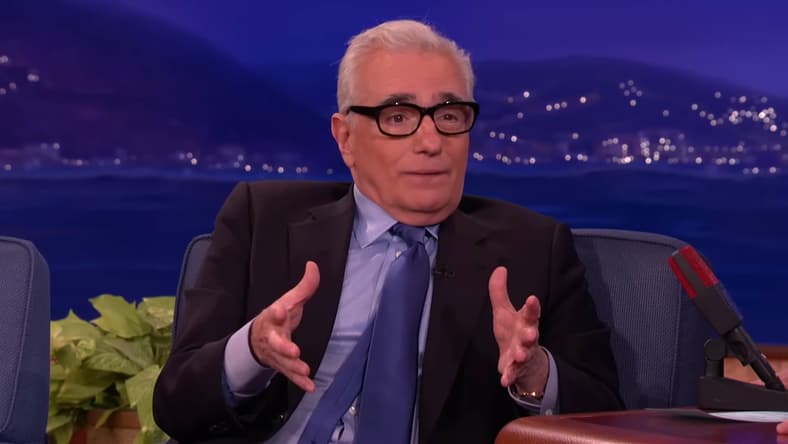
Edwards famously compared the current state of AI to having a "second-unit director who is a billionaire on acid." This analogy captures the duality of the tech: it is capable of immense, rapid production—doing exactly what it is asked—but prone to wild, unpredictable creative detours that require human intervention to rectify.
Supporting Data: Why Directors are Turning to Tech
The shift toward AI is not merely a creative choice; it is an economic necessity in an era where film budgets are ballooning.
- Time Efficiency: By cutting the storyboard generation phase from weeks to days, productions can lock in visual aesthetics before a single camera is rented or a set is built.
- Cost Reduction: Rapid prototyping of sets and lighting setups via AI allows production designers to identify potential logistical issues long before the crew arrives on location.
- Communication Clarity: The ability to generate a high-quality visual representation of a complex shot reduces the "lost in translation" phenomenon between the director’s brain and the crew’s execution.
Directors such as Harmony Korine and Darren Aronofsky have similarly experimented with AI in their projects, viewing the technology as an extension of their creative palette rather than a replacement for their vision. Paul Schrader, a longtime collaborator of Scorsese’s, has noted that the tech will eventually reach a point of maturity where it becomes a standard utility for creatives at every stage of the pipeline.
The Implications for the Future of Filmmaking
As we look toward the next five years, the implications of this shift are profound. If top-tier directors continue to integrate AI into their pre-production, the entry barrier for high-concept storytelling may lower, but the value of "taste" and "curation" will likely skyrocket.
The Displacement of Labor
The most significant concern remains the displacement of junior-level storyboard artists and concept illustrators. If a director can generate a rough composition in seconds, the role of the storyboard artist will need to pivot toward high-level creative direction and post-processing rather than raw drafting. This necessitates a workforce transition, similar to the transition graphic designers faced when moving from physical drafting tables to Adobe Creative Suite.
The Unpredictable Future
Gareth Edwards’ assertion that "anybody saying they know exactly what’s going to happen over the next five years is just a liar" is perhaps the most accurate summary of the current climate. We are witnessing the "Wild West" era of cinema technology.
While AI can synthesize existing data to create new imagery, it cannot replicate the lived experience, the trauma, the joy, or the singular perspective that defines the work of an auteur like Scorsese. For now, the consensus among the industry’s elite is that AI is a tool—a powerful, erratic, and efficient assistant. It can build the frame, but it cannot decide what the picture should mean.
As the technology continues to evolve, the distinction between "AI-assisted" and "AI-generated" content will likely become the defining debate of the next decade. For Scorsese, however, the choice is clear: he is using the tools available to ensure that his vision reaches the screen with as little friction as possible. In an industry that often fears the future, the legendary director is proving that even the most established masters must evolve to keep their stories moving forward.