Nana Wu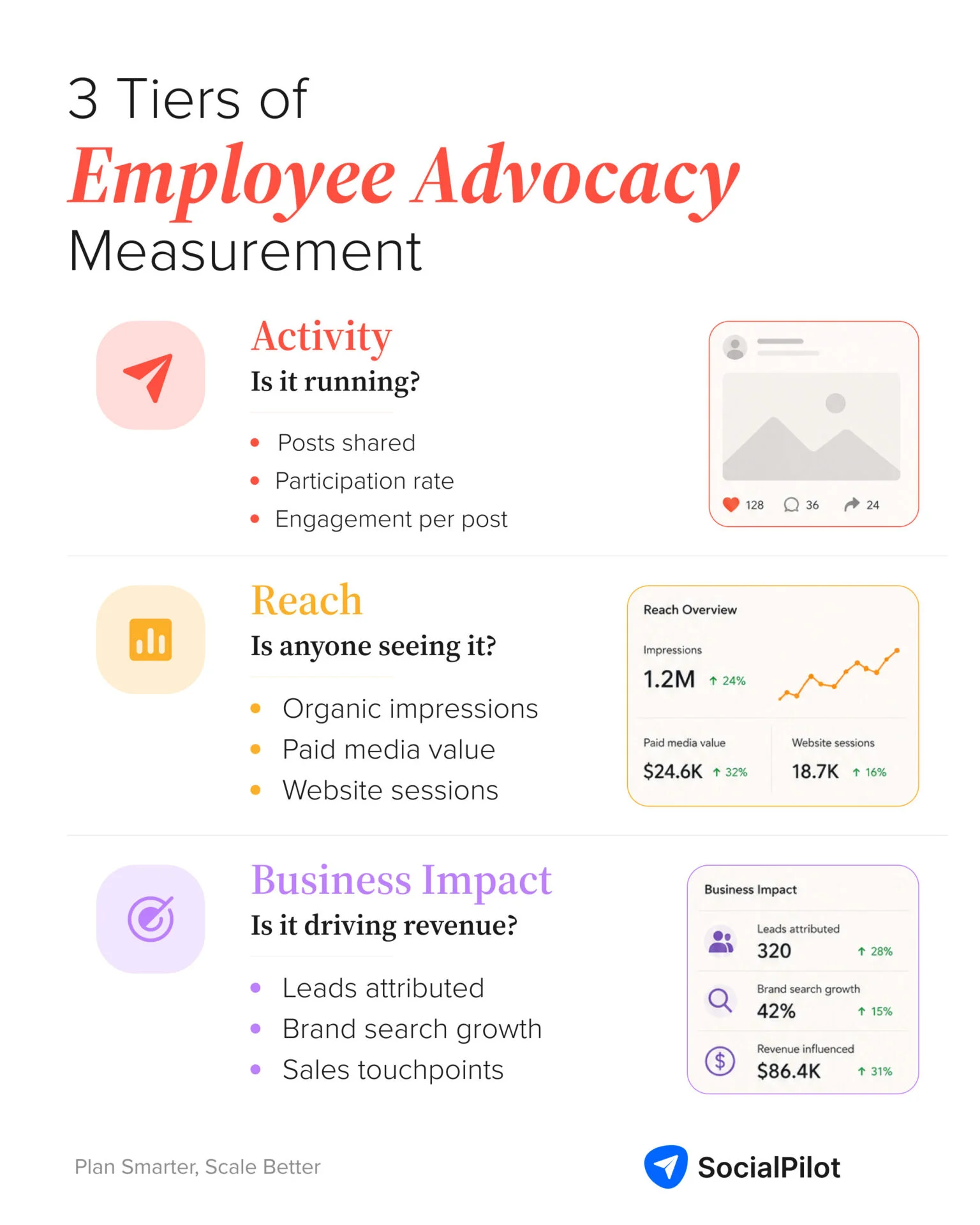
The initial pitch meeting is often the high point of a client-agency relationship. You present the numbers, the logic is sound, and the client buys into the vision: employee advocacy as a "trust multiplier" that exponentially increases organic reach. It is a compelling narrative. Yet, for many agencies, the excitement of the kickoff is quickly dampened by the reality of the 90-day mark.
Statistically, most employee advocacy programs collapse within their first three months. This failure isn’t rooted in a lack of employee loyalty or interest; it is a design failure. If an agency treats employees as mere "distribution channels" rather than individuals, the program will inevitably fade into obscurity. To turn advocacy from a one-off project into a scalable, long-term service line, agencies must move beyond manual workflows and adopt a robust, infrastructure-first approach.
The Anatomy of an Advocacy Failure
The most common complaint from employees in failing programs is not a lack of willingness to help, but a lack of clarity. Employees often report, "I don’t know what to post," or "The content sounds like a sterile press release."
When an agency forces employees to share verbatim corporate copy, the result is a loss of credibility for the employee. Professionals with any degree of personal brand awareness will naturally resist sharing content that feels robotic or disingenuous. Participation is a design problem, not a motivation problem.
The Shift from Content Dump to Content System
To fix this, agencies must transition from a "content dump" model—where employees are told what to share—to a "content system" model. A successful system provides:

- Personalization Prompts: Every post should include a clear, bracketed prompt, such as, "[Add one sentence about your own experience with this]."
- Segmented Content: Rather than pushing one message to everyone, content should be curated by role, expertise, and department.
- Batch Approvals: Reduce friction by moving away from post-by-post approvals to a monthly batch-approval process with a flexible sharing window.
The Chronology of a Successful Launch
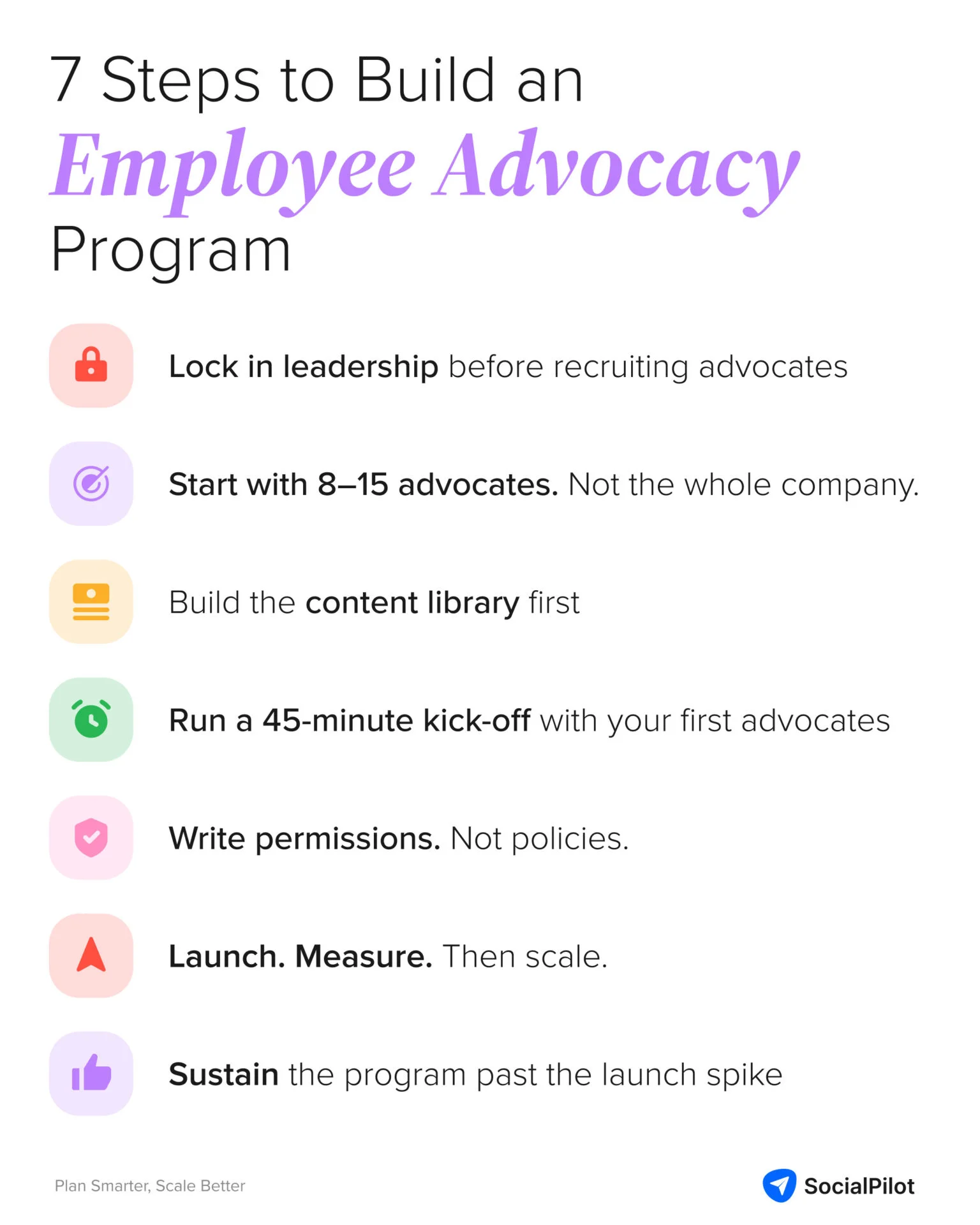
Building an advocacy program that survives the "90-day slump" requires a strict operational timeline. Success is rarely accidental; it is engineered through these seven critical steps:
1. The Leadership Pre-requisite
Before recruiting a single employee, you must secure executive buy-in. Executives who champion the program but do not participate themselves send a clear, silent signal that advocacy is optional. Agencies should aim to have at least two to three executive posts ready for the launch. Frame this to the leadership as "executive visibility"—a way to reach audiences the corporate brand page can never touch.
2. The Pilot Cohort
Resist the urge to launch with the entire company. Start with a pilot cohort of 8–15 high-impact employees—those already active on LinkedIn, such as sales leaders or subject matter experts. This allows the agency to refine the content strategy and troubleshoot operational bottlenecks before scaling.
3. The Content Library
The content library serves as an informal training tool. By providing 20–30 high-quality, pre-written posts per month, you are effectively teaching employees how to talk about the brand. If you skip this, you are handing them a megaphone without a script.
4. The 45-Minute Kickoff
The initial meeting should not be a lecture on policy; it should be a pitch on personal branding. The most effective argument for participation is career development: sharing expert content compounds an employee’s professional credibility over time.

5. Permission vs. Policy
Create a one-page document that gives employees "permission" to speak. When guidelines are framed as a restrictive policy manual, they breed resentment. When framed as a guide to what is "open for discussion," they encourage engagement.
6. The Launch Sequence
- Week 1: Executive activation only.
- Week 2: First cohort sharing cycle.
- Week 3: Feedback loop (collect data on what felt easy vs. awkward).
- Week 4: First formal reporting moment to showcase wins.
7. Designing for Month Three
The "launch spike" is often a misleading indicator of success. To sustain momentum, agencies must rotate formats—introducing polls, short-form video prompts, and opinion-based posts to keep the content fresh.
Supporting Data: Why Advocacy Matters
The business case for advocacy is supported by overwhelming data. According to DSMN8 (2026), programs with active executive participation see significantly higher internal adoption rates. Furthermore, MSLGroup (2022) research confirms that brand messages reach 24 times further when reshared by employees, and employee-shared content generates 8x more engagement than brand-account posts.
However, these numbers only materialize if the agency understands the "Internal Champion Gap." If the responsibility for the program falls on a marketing coordinator who is already juggling five other projects, the program will die by neglect. Agencies must act as the operational backbone, absorbing the heavy lifting of scheduling, reporting, and content creation to ensure the client-side burden remains under two hours per week.
Official Perspectives: The Agency Operational Model
When an agency runs an advocacy program, they lack the "levers" that a brand manager has—such as tying participation to performance reviews. Consequently, the agency must build a frictionless system.
"One program is a project; five is a business," says a lead digital strategist. "If you are manually re-building reports or juggling spreadsheets for multiple clients, you are not running an advocacy service—you are running a chaotic, manual labor project that will fail as soon as you scale."
Effective agencies utilize dedicated, team-based workspaces. By using tools like SocialPilot, agencies can silo each client’s content library, approval chain, and reporting metrics. This prevents cross-contamination—such as an erroneous hashtag from Client A ending up in Client B’s post—and keeps the team efficient.
Measuring for Retention: The Three-Tier Framework
Most agencies lose advocacy clients because their reporting is limited to "vanity metrics" like raw impressions or total likes. To ensure long-term retention, agencies must structure reporting across three tiers:
- Tier 1: Activity: Participation rates and frequency of posts. This proves the program is operational.
- Tier 2: Reach: Organic impressions and equivalent paid media value. This shows the program is driving exposure.
- Tier 3: Business Impact: Leads generated, website sessions via UTM-tracked links, and sales cycle touchpoints. This is the "revenue-proof" tier that justifies the budget.
The Importance of UTM Tracking
UTM tracking is the most frequently skipped setup step, yet it is the most critical for demonstrating ROI. Agencies must standardize their UTM structure in the content library template from Day One. An untracked month is, effectively, a month of effort that cannot be quantified to the client.
Implications for the Future of Social Marketing
The shift toward employee advocacy represents a broader move away from sterile, corporate social media toward authentic, human-led interaction. As algorithms continue to favor personal profiles over corporate pages, employee advocacy will cease to be a "nice-to-have" and become a standard requirement for brand survival.
Agencies that master this will find themselves with a highly sticky, high-value service line. Those that treat it as a manual add-on will continue to struggle with high churn. The key is in the infrastructure: the ability to build once and run everywhere. By creating a repeatable service model—defined by clear executive buy-in, structured content systems, and multi-tier reporting—agencies can turn the promise of employee advocacy into a sustainable, profitable reality.
The pitch might be the easy part, but the infrastructure is what makes the business last.



 Layla Zulfa