Nana
Nana
In the history of science fiction cinema, the extraterrestrial has long served as a mirror for human anxiety. From the Cold War-era paranoia of The Thing to the hyper-militarized destruction of Independence Day, Hollywood has historically framed the arrival of "the other" as a prelude to conflict. However, the cinematic landscape of 2026 has witnessed a profound pivot. Two of the year’s most significant films—the high-concept adaptation of Andy Weir’s Project Hail Mary and Steven Spielberg’s original, intimate epic Disclosure Day—have arrived with a shared, radical thesis: the extraterrestrial is not a threat to be neutralized, but a companion to be understood.
By moving away from xenophobic tropes and toward narratives of cooperation and empathy, these two blockbusters are not only dominating the box office; they are challenging audiences to reconsider the nature of "the enemy" in an increasingly fractured real-world society.
The Core Thesis: A Shift in Cosmic Perspective
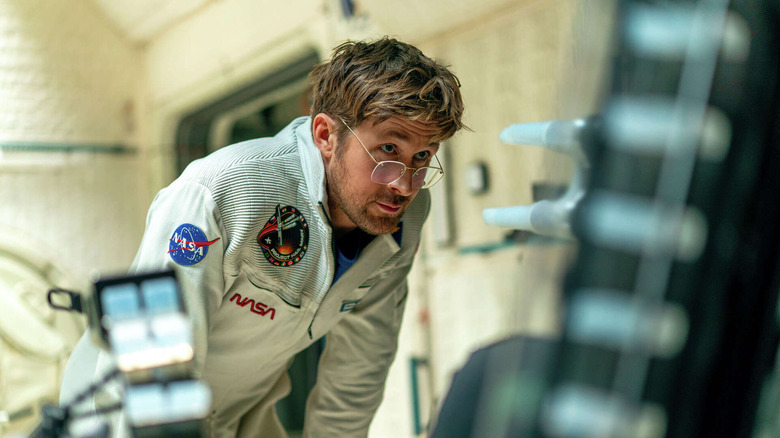
The common thread binding Project Hail Mary and Disclosure Day is a departure from the "invasion" narrative. In Project Hail Mary, directed by Phil Lord and Christopher Miller, Dr. Ryland Grace (Ryan Gosling) ventures into the deep reaches of the solar system, not to conquer, but to save humanity from the encroaching, sun-dimming phenomenon known as "astrophage." When he encounters Rocky, a chitinous, rock-like alien with a distinct biology and language, the film avoids the inevitable "first contact" firefight. Instead, it commits to a methodical, deeply moving process of cross-species linguistics and mutual survival.
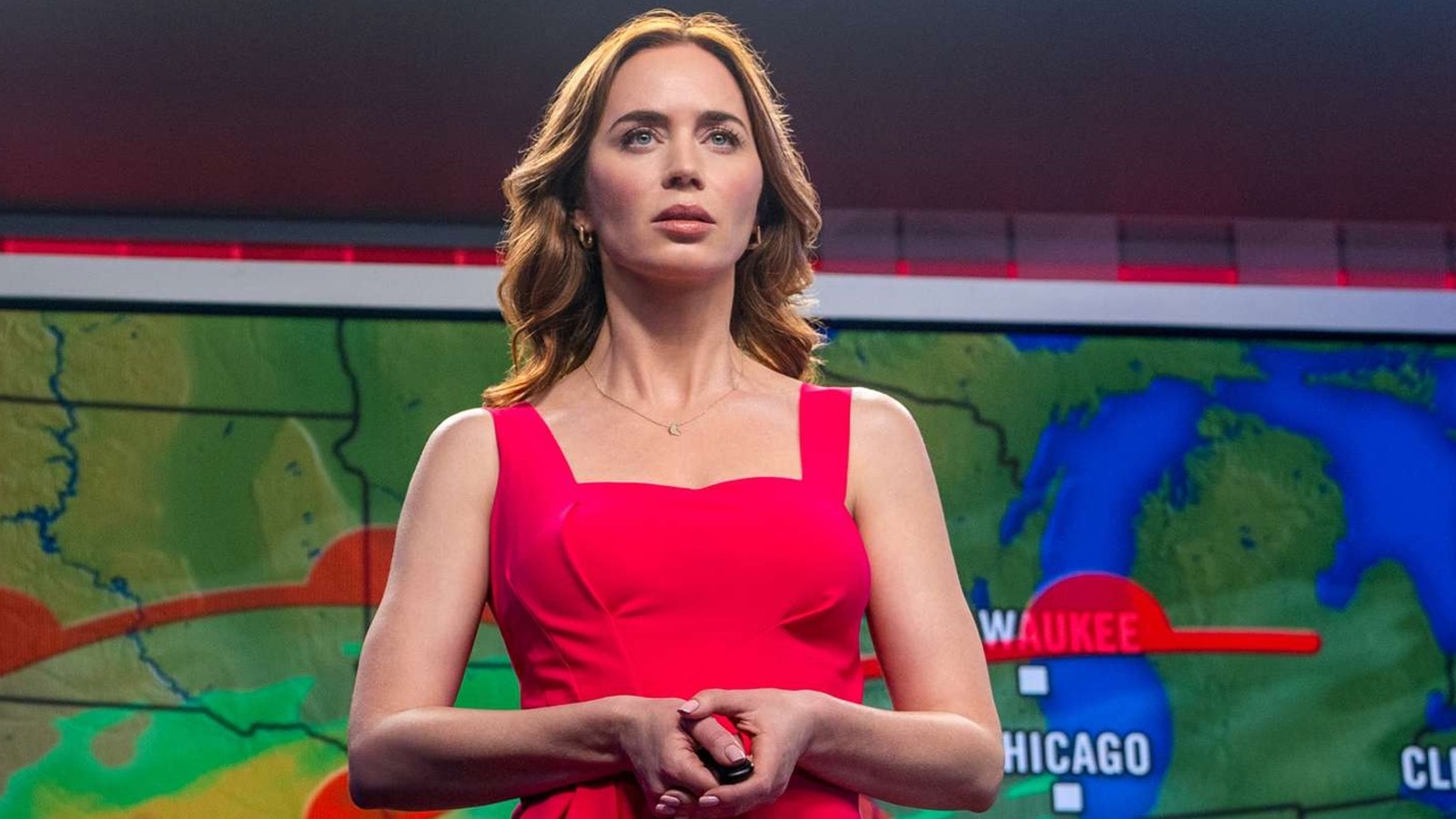
Similarly, Disclosure Day—a more grounded, earthbound narrative helmed by Steven Spielberg—explores the politics of extraterrestrial contact. Through the eyes of whistleblower Daniel Kellner (Josh O’Connor) and meteorologist Margaret Fairchild (Emily Blunt), the film reveals a clandestine history where "the other" has been living among us, camouflaged and benevolent, while a shadowy corporate-government entity known as WARDEX attempts to weaponize the secret.
Both films argue that our survival depends not on the caliber of our weaponry, but on the capacity for radical communication.
Chronology of Contact: From Scientific Inquiry to Social Revelation
The Scientific Odyssey of ‘Project Hail Mary’
Project Hail Mary operates on the principles of hard science fiction. The narrative follows a classic trajectory: isolation, discovery, and synthesis. Dr. Ryland Grace begins his journey as a man alone, facing the heat-death of the solar system. His discovery of Rocky serves as a narrative catalyst that shifts the genre from a survival thriller to an intergalactic "buddy comedy."
The film meticulously tracks the effort required to build a bridge between two vastly different evolutionary paths. The creation of a portable habitat for Rocky and the development of a complex, sound-based translation program are not just plot devices; they are metaphors for the scientific method as a form of diplomacy. When Grace ultimately chooses to sacrifice his return to Earth to remain with his alien counterpart, the film underscores that friendship is a currency more valuable than human ego or survival.
The Societal Awakening of ‘Disclosure Day’
Conversely, Disclosure Day operates as a socio-political thriller. It asks what happens when the truth of alien existence is held captive by the powerful. Daniel Kellner’s journey is one of systematic revelation. The film traces the lives of characters who were chosen as children by these extraterrestrial visitors—given psychic gifts and augmented intelligence—to act as future stewards of the truth.
The chronology here is one of delayed gratification. For years, these characters live in the shadows of a state-sanctioned lie. The film’s climax is not a battle in the sky, but a public disclosure—a moment where the "enemy" is unveiled as a misunderstood neighbor. By revealing the aliens as protectors who have been waiting for humanity to grow into its maturity, the film shifts the burden of proof from the aliens to the humans.
Supporting Data: The Box Office of Empathy
The success of these films at the box office suggests that audiences are hungry for stories that emphasize connection over combat.

- Audience Reception: Exit polls for both films indicate a high degree of emotional engagement regarding the "buddy" elements of the stories. Critics have noted that the chemistry between Ryan Gosling’s Grace and the puppeteered Rocky is the primary driver of repeat viewings.
- Thematic Resonance: Market research suggests that in a post-pandemic, politically polarized global environment, audiences are actively rejecting the "us vs. them" narratives that characterized 20th-century sci-fi.
- The "Spielberg Effect": With Disclosure Day, Steven Spielberg returns to the themes he pioneered in Close Encounters of the Third Kind and E.T., proving that the "friendly alien" archetype remains a powerful, bankable force in modern cinema.
Official Responses and Creative Vision
The creative teams behind these projects have been vocal about the intent to move the genre forward. In various press junkets, directors Phil Lord and Christopher Miller have emphasized that Project Hail Mary is fundamentally a story about "the necessity of trust."
"We wanted to strip away the armor," Miller noted in a recent interview. "When you take away the fear of the unknown, what are you left with? You’re left with a problem to solve and a partner to solve it with. That is the essence of humanity."
Regarding Disclosure Day, the production team worked closely with scientific consultants to imagine a form of life that is truly alien yet biologically coherent. "We didn’t want a monster," a representative for the film’s production stated. "We wanted a mirror. The conflict in our film isn’t between humans and aliens; it’s between the truth and the institutions that fear it."
Implications: The New Frontier of Sci-Fi
The implications of this shift are profound. By consistently portraying the "alien" as a figure of benevolence or curiosity, these films are subtly recalibrating the cultural expectations of the audience.
Breaking the Cycle of Xenophobia
Historically, sci-fi has been used as a tool to explore contemporary fears about immigration, global war, and cultural encroachment. By subverting these tropes, Project Hail Mary and Disclosure Day are essentially asking viewers to apply the same logic of empathy to their daily lives. If we can empathize with a rock-based life form or an extra-dimensional visitor, why can we not do the same for our ideological opponents on Earth?
The Death of the "Invasion" Trope
The decline of the "invasion" narrative suggests that audiences are weary of cynicism. The sheer emotional weight of the conclusion of Project Hail Mary—where friendship outweighs self-preservation—is a stark contrast to the hollow triumphs of earlier alien-war films. It signals that modern audiences prefer the "kumbaya" of complex cooperation over the spectacle of destruction.
A Call to Action for Future Storytellers
These films set a high bar. Future sci-fi projects will now have to contend with the expectation that an extraterrestrial encounter should be a character-driven experience rather than a generic action set-piece. This is a net positive for the genre, as it forces writers to focus on dialogue, philosophy, and the intricacies of the human condition.
Conclusion: A More Hopeful Horizon
As we look toward the future of the genre, the legacy of 2026’s cinema will likely be defined by this turn toward the heart. Project Hail Mary and Disclosure Day are, at their core, testaments to the power of connection. They do not shy away from the existence of evil—represented by the cold, bureaucratic machinery of WARDEX or the existential threat of the astrophage—but they posit that the antidote to such forces is not more power, but more understanding.
In an age of deep division, these films serve as a vital, necessary reminder: we are, quite literally, better together. Whether we are floating in the dark void of the solar system or standing on the front lawn of a suburban home waiting for a sign, the message remains the same. The alien is not the enemy; the enemy is our own refusal to open the door.
Project Hail Mary is currently available on VOD and MGM+, while Disclosure Day continues its theatrical run.


 Jia Lissa
 Muslim