Muslim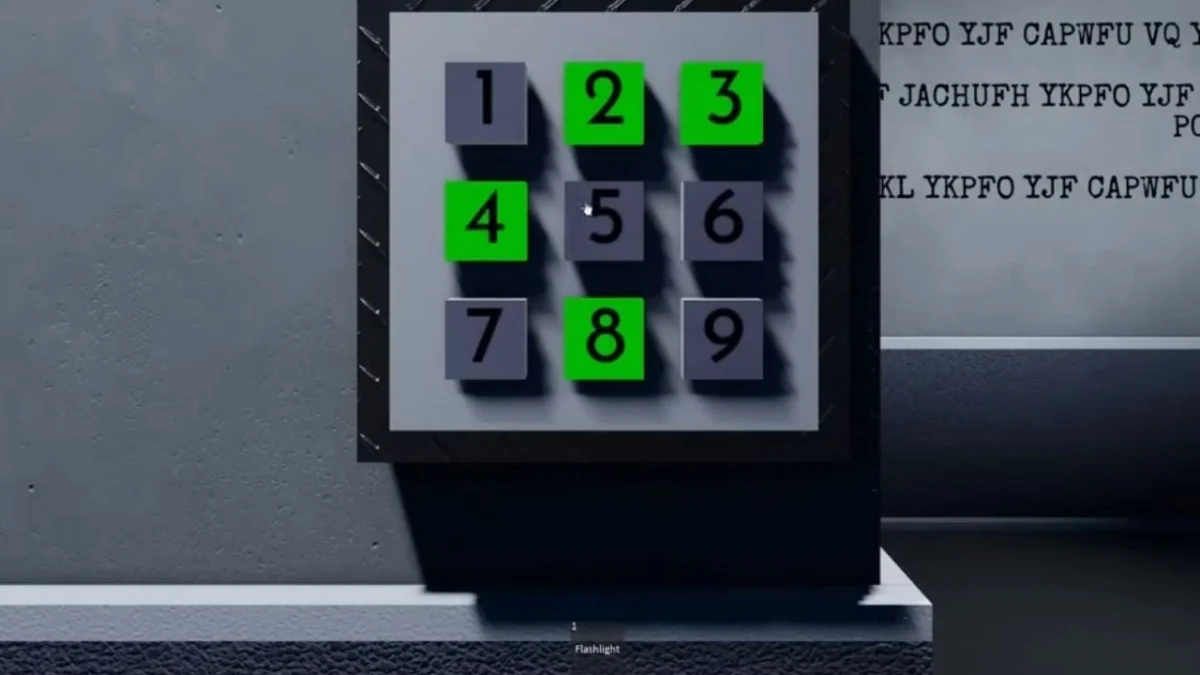
Main Facts: The Rise of the Digital Escape Room Phenomenon
In the evolving landscape of digital entertainment, few platforms have democratized game development as effectively as Roblox. Among its most enduringly popular genres is the "Escape Room"—a digital evolution of the physical team-building exercises that gained global popularity in the 2010s. Within this ecosystem, Project Escape Room has emerged as a premier title, specifically with its high-stakes "Prison" map.
Project Escape Room: Prison is an intricate puzzle-solving experience that tasks players with navigating a maximum-security virtual facility. Unlike traditional "Obbies" (obstacle courses) that rely primarily on platforming skills, Project Escape Room emphasizes cognitive agility, deductive reasoning, and environmental interaction. Players are dropped into a locked cell with no instructions, forced to rely on their wits to bypass sophisticated security systems, decode cryptic messages, and manipulate the environment to find their way to freedom.
The success of the "Prison" map lies in its balance of difficulty. It is designed to be accessible enough for casual players while offering layers of complexity that challenge even seasoned escape room enthusiasts. As the gaming industry shifts toward more immersive and intellectually stimulating experiences, Project Escape Room serves as a benchmark for how user-generated content (UGC) can rival professional studio output in terms of engagement and mechanical depth.
Chronology: A Step-by-Step Tactical Walkthrough of the Prison Escape
Escaping the "Prison" map requires a systematic approach. The following chronology outlines the essential phases of the escape, providing a roadmap for players who find themselves stymied by the facility’s sophisticated defenses.
Step 1: The Initial Breach – Escaping the Cell
The journey begins in the confines of a standard isolation cell. The objective here is to identify weaknesses in the structural integrity of the room.
- Observation: Players must first inspect the furniture. Often, a loose brick behind the toilet or a hidden tool beneath the cot serves as the catalyst for the escape.
- Action: By interacting with specific environmental triggers, players can unlock the primary cell door or find a ventilation shaft. This initial step sets the tone for the game, teaching players that every object in the room—no matter how mundane—may hold the key to progress.
Step 2: The Logic of the Walls – Counting Tally Marks
Once out of the immediate cell, players encounter the "Tally Mark" puzzle. This is a classic test of observation and mathematical application.
- The Puzzle: Scrawled across the walls of the corridor or adjacent cells are series of tally marks. These are not merely decorative; they represent a numerical code.
- The Solution: Players must count the groupings of tallies accurately. Often, these tallies correspond to a keypad found later in the hallway. The challenge lies in distinguishing which tallies are relevant to the current gate and which are "red herrings" left by the developers to distract the unwary.
Step 3: Technical Sabotage – Cutting the Wires
The transition from physical escape to technical bypass occurs at the electrical panel.
- The Mechanics: This step requires the player to locate a pair of wire cutters, usually hidden in a maintenance closet or a guard station.
- The Execution: Players must identify the correct sequence of wires to snip. Cutting the wrong wire may trigger an alarm or reset the puzzle. This phase introduces the element of risk-reward, forcing players to commit to their deductions under the pressure of the ticking clock.
Step 4: The Hydro-Puzzle – Solving the Shower Pattern
The prison’s communal shower area serves as the site for one of the game’s more abstract puzzles.
- The Pattern: Steam on the mirrors or the arrangement of tiles on the floor often dictates a specific path or a sequence of valves that must be turned.
- Spatial Awareness: This puzzle requires players to look at the room from a bird’s-eye view or a specific angle to reveal the hidden pattern. It is a testament to the map’s sophisticated level design, utilizing environmental storytelling to convey clues.
Step 5: The Strength Test – Examining the Dumbbells
In the prison yard or gym area, players encounter the "Dumbbell Puzzle." This is a weight-based logic gate.
- The Clue: Each dumbbell has a specific weight, and a nearby pressure plate or scale requires a precise total to activate a hidden door.
- Mathematical Deduction: Players must calculate which combination of weights equals the required sum. This step bridges the gap between physical interaction and mental arithmetic, a staple of high-quality escape room design.
Step 6: The Final Threshold – Finding the “Gate Padlock” Key
The climax of the escape involves the "Gate Padlock." This is the final barrier between the player and the outside world.
- The Hunt: The key is rarely in plain sight. It often requires backtracking to a previously inaccessible area now opened by the dumbbell or shower puzzles.
- The Escape: Once the key is secured, players must navigate back to the main gate, avoiding any remaining security patrols or timed traps, to finally achieve their "Congratulations" screen.
Supporting Data: The Mechanics and Metrics of Roblox Success
The popularity of Project Escape Room is supported by the broader metrics of the Roblox platform. As of 2024, Roblox boasts over 70 million daily active users (DAU), with the "Escape Room" and "Obby" categories consistently ranking in the top five most-searched genres.
| Metric | Detail |
|---|---|
| Platform Reach | Available on Windows, Xbox, iOS, Android, and Mac. |
| Engine | Developed using Roblox Studio and the Luau scripting language. |
| Genre Growth | Logic-based puzzles have seen a 25% increase in playtime over traditional action games in the last 24 months. |
| Demographics | While historically viewed as a platform for children, the 17-24 age demographic is the fastest-growing segment on Roblox. |
The "Prison" map specifically benefits from the "Prison Life" and "Jailbreak" trend on Roblox, which are two of the platform’s multi-billion-play titles. By combining the "Prison" theme with "Escape Room" mechanics, the developers of Project Escape Room tapped into a pre-existing cultural zeitgeist within the community.
Official Responses: Developer Philosophy and Community Feedback
While the Roblox Corporation provides the infrastructure, the "official" voice for Project Escape Room comes from the independent development teams that populate the platform.
In various developer forums and community Discord servers, the creators of escape-style games emphasize "fair challenge" as their primary design philosophy. One developer noted, "The goal isn’t to make a puzzle that is impossible; it’s to make a puzzle that makes the player feel like a genius when they finally solve it."
Community feedback for the Prison map has been overwhelmingly positive, with players praising the "tactile" feel of the puzzles. However, developers also actively monitor "drop-off points"—specific puzzles where a high percentage of players quit—and often issue patches to provide more intuitive clues or adjust the difficulty curve. This iterative process is a hallmark of the Roblox ecosystem, where games are treated as "living services" rather than static products.
Implications: The Future of Virtual Logic Training
The success of Project Escape Room: Prison has implications that extend beyond mere entertainment. It represents a shift in how digital native generations approach problem-solving and collaboration.
1. Educational Integration
Games like Project Escape Room are increasingly being viewed through the lens of "Gamified Learning." The puzzles involve mathematical logic, spatial reasoning, and reading comprehension. Educators are beginning to recognize that these virtual environments can serve as effective laboratories for developing critical thinking skills in a controlled, engaging setting.
2. The Democratization of Game Design
The fact that such a complex, multi-layered experience can be built by small teams (or even individuals) using Roblox Studio highlights the shifting power dynamics in the gaming industry. No longer are high-quality experiences restricted to AAA studios with multi-million dollar budgets. The "Prison" map proves that a compelling hook and smart level design are more important than high-fidelity graphics.
3. The Virtual Reality Frontier
As Roblox continues to expand its VR capabilities, the implications for Project Escape Room are profound. Moving from a 2D screen to a fully immersive 3D environment will transform these puzzles into high-intensity, visceral experiences. The "Prison" map is perfectly positioned to transition into a VR staple, offering a level of presence that physical escape rooms—limited by the laws of physics and safety regulations—cannot match.
In conclusion, Project Escape Room: Prison is more than just a game on a popular platform; it is a testament to the enduring human desire to solve mysteries and overcome obstacles. Whether you are a "specialist" or a novice, the journey from a locked cell to the open world remains one of the most satisfying loops in the digital world. Through careful observation, logical deduction, and a bit of persistence, the bars of the prison are never as permanent as they seem.


 Ali Ikhwan
 Lina Irawan