Ali Ikhwan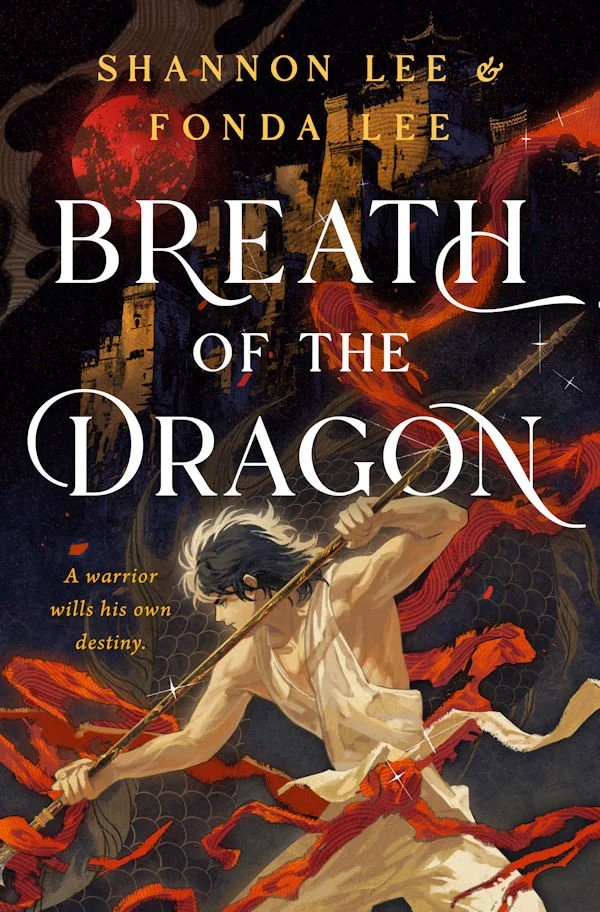
In the landscape of modern Young Adult (YA) fantasy, the arrival of a high-profile collaboration often triggers a healthy dose of reader skepticism. When that collaboration involves the daughter of a global martial arts icon and a World Fantasy Award-winning novelist, the stakes are elevated. Released in January 2025, Breath of the Dragon—the inaugural installment of the Breathmarked duology—has defied initial industry cynicism to emerge as a poignant, philosophical, and structurally sound triumph. Co-authored by Shannon Lee, CEO of the Bruce Lee Family Companies, and acclaimed novelist Fonda Lee, the novel serves as both a gripping coming-of-age odyssey and a vessel for the enduring philosophies of Bruce Lee.
Main Facts: A Narrative of Discipline and Destiny
At the heart of the novel is sixteen-year-old Jun Li, a protagonist defined by what he lacks rather than what he possesses. In a world where the god-gifted "Breath Marks"—dragon scales that grant extraordinary physical and psychological abilities—determine social standing and potential, Jun is an outlier. His twin brother, Sai Li, is blessed with these marks and destined for greatness. Jun, conversely, is marked only by his ambition to restore his family’s tarnished honor after a past disgrace led to their exile.
The story centers on the Guardian’s Tournament, a decennial event that determines who will be entrusted with the magical Scroll of Earth. Despite his father’s strict prohibition, Jun stows away with a troupe of traveling performers—Chang and his daughter, Ren—to infiltrate the capital. What begins as a desperate bid for personal redemption quickly spirals into a high-stakes struggle for the stability and integrity of the nation itself.
Chronology: The Evolution of a Literary Project
The development and reception of Breath of the Dragon follow a specific trajectory that highlights the intersection of celebrity legacy and literary craftsmanship:
- Conceptualization: Driven by a desire to preserve and share the philosophical legacy of Bruce Lee, Shannon Lee sought to translate her father’s teachings on discipline, unity, and self-mastery into a narrative format.
- The Partnership: Shannon Lee joined forces with Fonda Lee, whose expertise in high-stakes fantasy—demonstrated by the success of her Green Bone Saga—provided the necessary structural backbone for the project.
- January 2025: The novel is published to immediate critical interest, bridging the gap between historical martial arts philosophy and contemporary YA fantasy.
- October 2026: The duology concludes with the release of the second volume, Mark of the Warrior, cementing the overarching narrative arc.
Supporting Data: Stylistic Choices and World-Building
The prose of Breath of the Dragon is notably crisp and accessible. Eschewing the dense, flowery descriptions often found in traditional epic fantasy, the authors prioritize momentum and clarity. This stylistic choice is a deliberate nod to the YA demographic, ensuring that the thematic weight of the story remains front-and-center without becoming obscured by purple prose.
However, the world-building presents a unique challenge for Western readers. Drawing heavily from Ancient Chinese aesthetics and cultural motifs, the setting occasionally leaves readers unmoored. Without the familiar shorthand of European fantasy tropes—such as breastplates, towers, or specific architectural jargon—the reader must work harder to visualize the environment. While some may find this initial ambiguity a hurdle, it is arguably a necessary trade-off for the refreshing departure from Eurocentric settings. The authors successfully immerse the reader in a landscape of political sects, organized crime, and traveling troupes, all while maintaining the focus on Jun’s internal development.
Official Responses and Philosophical Implications
The core of Breath of the Dragon is undeniably the philosophy of Bruce Lee. Through the mentorship of the character Chang and the steadfast resolve of Ren, the book delivers a masterclass in self-ownership.
The Philosophy of Self-Mastery
The text emphasizes that external "gifts" are inferior to earned strength. As Ren aptly notes, "The gifts we work for are greater than the ones we’re given." This sentiment serves as the moral compass for Jun, who must replace the magical advantages of his peers with rigorous mental and physical discipline.
Unity Over Division
Beyond individual growth, the novel tackles the systemic evils of corruption and societal division. The authors use the narrative to critique the "self-serving" nature of the ruling class, who prioritize entertainment and profit—exemplified by the tournament’s rigged structure—over the stability of the realm. Jun’s internal monologue regarding those "on the other side of the wall" serves as a poignant reminder that borders and social strata are often arbitrary constructs designed to foster fear.
Analysis: The Impact on the YA Genre
The implications of Breath of the Dragon are twofold. First, it demonstrates a successful model for integrating philosophical inquiry into commercial fiction. By avoiding the pitfalls of a "lecture," the authors allow the characters to live out these principles through trial and error. Jun is not a perfect hero; he is short-sighted and occasionally rash—traits that make his eventual evolution into a disciplined warrior feel earned rather than forced.
Second, the book addresses the age-appropriateness of fantasy literature. While the presence of mild-to-moderate cursing and frequent martial combat suggests a target audience of fourteen and up, the absence of explicit romantic subplots allows the story to focus entirely on the growth of the individual. This makes the book an ideal candidate for young readers ready to transition into more mature, thematic storytelling.
Conclusion: A Legacy Carried Forward
Whether the reader is a fan of Bruce Lee’s history, a devotee of Fonda Lee’s intricate world-building, or simply a fan of high-quality YA fiction, Breath of the Dragon offers a compelling journey. It is a rare book that manages to balance an epic quest with an intimate character study, all while paying homage to a profound cultural legacy.
As the series concludes with Mark of the Warrior, the lasting takeaway from this duology is the resonance of its central warning: "These are dangerous times. I can sense the Breath in this city turning bad, like a winter wind. Win or lose, we’re about to be caught in it." Through Jun Li’s struggle, readers are reminded that in times of uncertainty, the only true defense is a disciplined mind, a clear heart, and the courage to define one’s own destiny.
For those who enjoy the tactile experience of reading, the physical production of the book—notably the sprayed edges that require careful separation—adds an element of sensory satisfaction to the journey. Breath of the Dragon is not just a book to be read; it is a testament to the idea that, marked or not, everyone possesses the potential to alter the course of their world.


 Raul Delapena Setiawan
 Nila Kartika Wati