Nila Kartika Wati
As the Northern Hemisphere descends into the sweltering heat of midsummer, the human instinct to retreat into the cooling embrace of the wilderness reaches its peak. We flock to the deep woods—seeking refuge in the dappled shade of ancient oaks or the rhythmic silence of pine needle paths. Yet, for as long as we have told stories, the woods have served as the ultimate canvas for our deepest anxieties. They are the threshold of the known world, a place of strange magic and indifferent, ancient creatures. From the cautionary whispers of folklore to the psychological dread of modern literature, the message remains consistent: "Don’t go into the woods."
As we prepare for our seasonal excursions, it is prudent to revisit the literary tradition of the "forest horror." This genre does not merely use the woods as a setting; it uses them as an antagonist—a sentient, oppressive force that strips away the veneer of civilization.
The Chronology of Fear: From Folklore to Modern Terror
The literary evolution of the woods as a site of horror follows a distinct path, mirroring humanity’s shifting relationship with nature.

- Pre-20th Century (The Moral Warning): Early stories, such as Nathaniel Hawthorne’s Young Goodman Brown, utilized the forest as a crucible for moral failure. The woods were a place where the social contract was discarded, and the inherent hypocrisy of the human spirit was laid bare before the devil.
- Mid-20th Century (The Alien/Folk Threat): Authors like Arthur Machen and William Hope Hodgson pivoted toward the cosmic and the occult. The woods were no longer just a place of moral temptation; they were home to things that predated humanity—entities with no names and no regard for our fragile existence.
- The Modern Era (Psychological Isolation): Contemporary horror has shifted toward the intersection of personal trauma and environmental hostility. Today’s authors treat the forest as a psychological mirror, where the isolation of the landscape forces characters to confront the "buried bodies" of their own histories.
Supporting Data: Why We Fear the Green
Psychologists often refer to the "biophilic response" as our innate tendency to seek connections with nature. However, when that connection is severed by the loss of sensory markers—the inability to see the horizon or the disorientation caused by repetitive vegetation—we experience topographical anxiety.
A recent survey of literary horror tropes indicates that "The Lost in the Woods" scenario remains the most effective device for generating suspense. Data points suggest that readers find isolation in the woods more terrifying than urban isolation because:
- Sensory Deprivation: The forest muffles sound and obscures light, triggering primal survival instincts.
- Lack of Agency: Nature is indifferent to human suffering. Unlike a human killer, a forest cannot be reasoned with, negotiated with, or appealed to.
- The "Uncanny" Factor: Features like effigies, strange growth patterns, or unnatural stillness serve as indicators that the natural order has been subverted.
Curated Readings: A Refresher on Woodland Terror
For those heading into the shade, consider this syllabus of essential reading. These works explore the endlessly inventive ways authors have imagined the existential threats lurking in the shadows.

Slasher Summer by E.L. Chen
In Chen’s cruel thriller, the woods serve as a brutal metaphor for the stagnation of small-town life. When a group of college friends retreats to a remote cabin, the forest does more than isolate them from help—it isolates them from their identities. The forest here acts as a physical barrier to growth; as the characters are picked off, they find they cannot escape their pasts any more than they can navigate the labyrinthine trees. The "gnarly" tree-branch kill sequence is a visceral reminder that in the woods, even the landscape itself can turn against you.
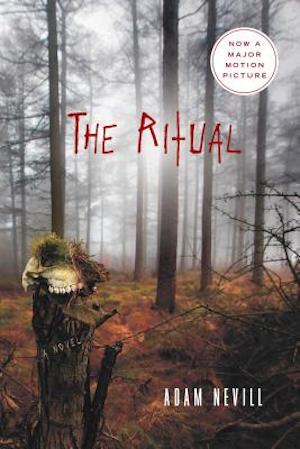
The Ritual by Adam Nevill
Nevill’s masterpiece of atmospheric dread captures the specific horror of hiking in the unknown. The Swedish wilderness in The Ritual is oppressive long before the true monster is revealed. The narrative masterfully utilizes the "wrongness" of the landscape—the unnervingly quiet trails, the pagan chapels, and the gigantic deer effigies—to build a sense of inescapable doom. Even at the book’s end, the reader is left with only a "qualified relief," a testament to the lingering trauma of the forest.
Moonflow by Bitter Karella
Karella’s debut is a kaleidoscopic blend of 1970s horror and subcultural noir. The Pamogo forest is a spirit-inhabited sprawl that openly hates tourists. With writhing, sentient mushrooms and a separatist eco-murder cult, the Pamogo is less a place and more a character. It forces the reader to confront a forest that is alive, aggressive, and utterly alien.
Sarafina by Philip Fracassi
Set against the backdrop of the American Civil War, Fracassi’s folk horror novel uses the Southern woods to trap three deserters. The forest acts as a tightening noose, closing off escape routes and funneling the brothers toward a "sanctuary" that is far more dangerous than the war they left behind. It is a brilliant study of how desperation turns the wilderness into a cage.
Little Wild by Laura Evans
Evans plays with the binary of "wild vs. tamed." The woods surrounding the Winther estate are not inherently supernatural, but they are haunted by family history and deep-seated trauma. The horror here is psychological—the forest forces the protagonist to confront the madness buried beneath her domestic life.
Morsel by Carter Keane
Keane’s Appalachian setting is defined by "absolute stillness." When the protagonist discovers stick effigies and alien entities, the terror is heightened by the silence of the surrounding wildlife. The forest acts as a spectator, watching with cold indifference as the characters struggle against corrupt local elements and otherworldly predators.

How To Survive Camping: The Man With No Shadow by Bonnie Quinn
Quinn brings a wry, administrative horror to the genre. In the Goat Valley Campground, supernatural entities are treated like difficult coworkers. However, the humor serves only to heighten the tension when the safety guidelines fail. It suggests that while we might think we can "manage" the woods, there are always entities that operate beyond our understanding.
Implications: The Psychological Toll of the Wild
The popularity of these stories suggests that we are not just afraid of what is in the woods—we are afraid of what the woods reveal about us. When we leave the comforts of our modern lives, we are forced into a state of primal vulnerability.
The implication for the modern traveler is clear: the woods are a place of profound transformation. Whether through the lens of folk horror, psychological thriller, or cosmic dread, these books remind us that the wilderness is not a park or a playground. It is a space where the rules of civilization fall away.

As you pack your gear and set your GPS for the nearest trailhead, remember the lessons of these authors. Respect the silence. Note the strange effigies. And perhaps, most importantly, consider why it is that we feel such a desperate urge to enter the darkness in the first place. Are we seeking peace, or are we, like the protagonists of these stories, merely looking for a place to lose ourselves?
What are your favorite tales of the deep, dark woods? Have you ever felt a "wrongness" in the trees? Join the conversation in the comments below.


 Nana Muazin
 Raul Delapena Setiawan