Nila Kartika Wati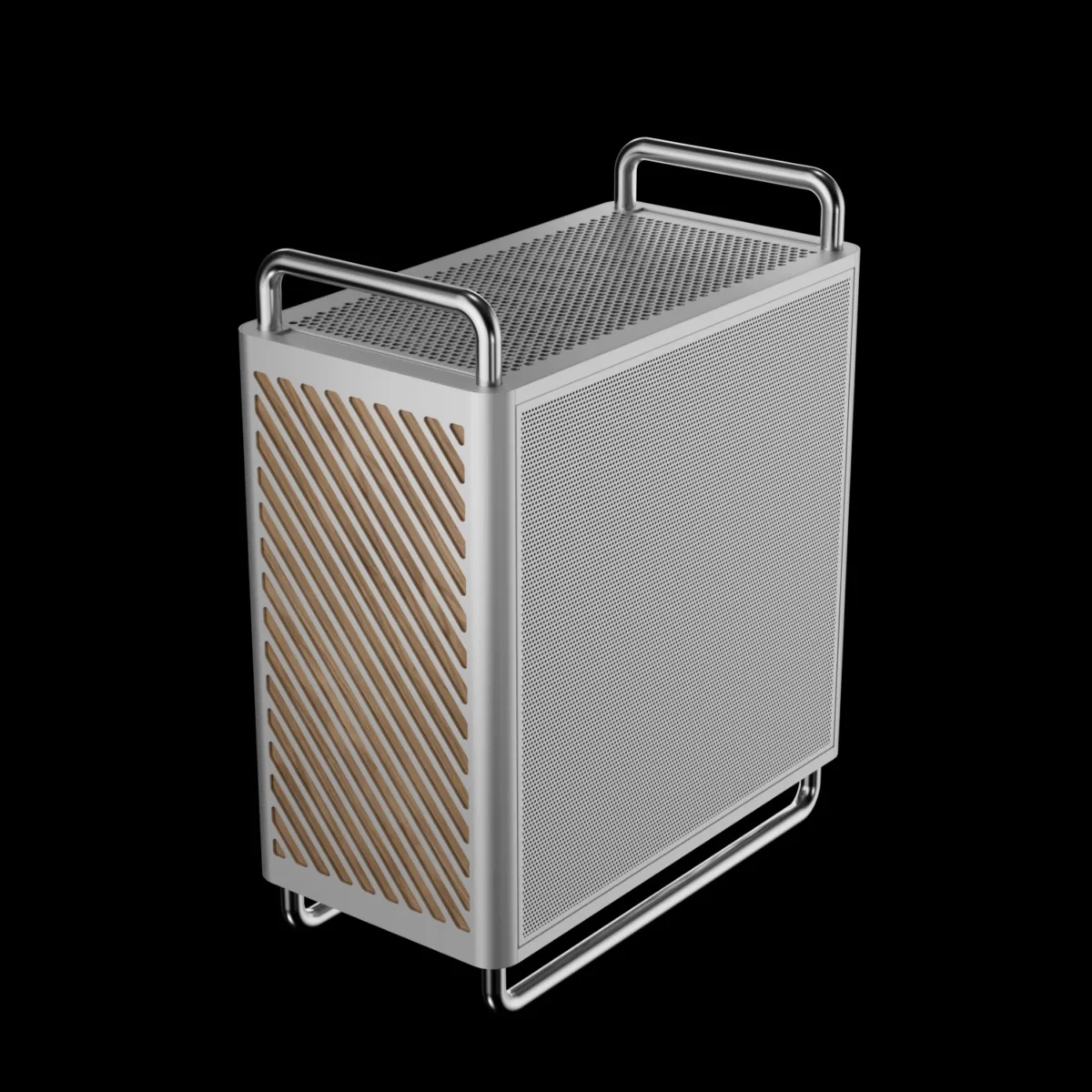
For years, Ncase has been synonymous with the Small Form Factor (SFF) revolution. The legendary M1 chassis essentially defined the boutique ITX space, proving that high-end gaming hardware didn’t require a gargantuan tower to thrive. However, the shifting tides of the computing industry—driven by the relentless demand for local AI inference, Large Language Model (LLM) training, and multi-GPU rendering—have forced a reevaluation of what "compact" actually means.
In a strategic pivot that bridges the gap between enthusiast-grade desktop builds and server-class utility, Ncase has unveiled the P1. This 36-liter workstation chassis is not merely a larger box; it is a meticulously engineered response to the thermal and physical constraints of modern high-density hardware.
The Main Facts: Defining the Ncase P1
The Ncase P1 enters the market as a "compact workstation" enclosure. While it dwarfs the traditional M1 in volume, it sits roughly 30% smaller than the average mid-tower ATX case, effectively occupying a middle ground that has been historically underserved.
At its core, the P1 is designed for power users, data scientists, and professional content creators who require the compute density of a rack-mount server but prefer the aesthetics and accessibility of a desktop tower. The chassis supports full-size ATX motherboards and server-grade SSI-CEB standards, ensuring compatibility with the heavy-duty hardware often found in professional workstations.
Perhaps the most critical feature of the P1 is its clearance. In an era where flagship GPUs—such as the NVIDIA RTX 4090—have ballooned to 4-slot thicknesses, the P1 has been designed to accommodate multiple such cards without sacrificing airflow or structural integrity. This is not a case for a single entry-level GPU; it is a chassis built to house a render farm on a desk.
A Chronology of the P1’s Development
The transition from Ncase’s SFF focus to the P1 workstation form factor did not happen overnight. The company’s trajectory over the last decade has been marked by a gradual realization that "compact" is a relative term.
- The M-Series Era (2013–2022): Ncase established its reputation with the M1, focusing on ultra-efficient, sub-15-liter ITX builds. During this period, the company mastered the art of "packing density," learning how to optimize airflow in spaces where cables and components were inches apart.
- The AI Awakening (2023): As local AI development exploded, the limitations of ITX motherboards became apparent. Users needed more PCIe lanes, more RAM slots, and more robust power delivery—features exclusive to ATX and E-ATX platforms.
- The Concept Phase (Early 2024): Ncase began exploring a "scaled-up" design philosophy. The goal was to maintain the premium materials and structural rigidity of their SFF roots while providing the internal volume necessary for professional-grade thermal management.
- The Official Launch (Q4 2024): Following leaks and speculation, Ncase officially announced the P1. By leveraging manufacturing techniques like precision CNC machining for its front panels, the company signaled a move into the premium professional market, shifting away from the purely enthusiast-gamer demographic.
Supporting Data: Thermal Engineering and Component Compatibility
The P1’s claim to fame is its ability to handle "sustained thermal demands." In a standard mid-tower, stacking two or three high-TDP GPUs often results in the "choking" effect, where the top card starves for cool air because it is pressed against the back of the card below it.
Thermal Management Specs:
- Fan Support: The chassis accommodates up to six 180mm fans. By utilizing larger-diameter, lower-RPM fans, the P1 can move a higher volume of air with significantly less acoustic noise than standard 120mm configurations.
- AIO Configurations: The P1 is designed to support up to three independent All-In-One (AIO) liquid cooling loops simultaneously. This is a vital feature for users running a high-core-count CPU alongside multiple GPU liquid-cooling blocks.
- Structural Efficiency: The 36-liter volume is specifically calculated to allow for natural convection to assist the active cooling system, preventing the "dead zones" of stagnant hot air common in larger, poorly ventilated towers.
The internal layout is fixed, a decision Ncase made to prioritize structural rigidity. By removing the complexity of modular, moving parts, the chassis provides a rock-solid mounting platform for heavy server-grade GPUs that would otherwise sag or vibrate in thinner, less-stable cases.
Official Design Variants and Pricing
Ncase has opted for a tiered product release based on front-panel aesthetics, acknowledging that professional workstations are often placed in office environments where design matters as much as performance.
- The Honeycomb Variant ($355): Featuring 3D hexagonal ventilation machined directly into the chassis, this model is designed for maximum airflow efficiency. It is intended for systems running at 100% load for extended periods, such as dedicated 24/7 AI training rigs.
- The Louvre Variant ($275): This is the base configuration, utilizing angled slats paired with a high-density mesh filter. It offers a more conservative, "stealth" aesthetic suitable for professional studios.
- The Wood-Accented Louvre ($315): A marriage of form and function, this version replaces the intake filter with a solid wood backing. This shifts the primary air intake to the side panel, creating a more muted, natural aesthetic that hides the intake mechanism while maintaining professional cooling standards.
Implications: The Shift Toward Local Compute
The release of the P1 highlights a significant trend in the hardware industry: the "Professionalization of the Desktop." As cloud computing costs rise and data privacy concerns regarding sensitive AI models increase, professionals are moving their workloads back to local machines.
The implications for the PC hardware market are profound:
- The Death of the "Gamer-Only" Aesthetic: Ncase’s move toward wood accents and professional-grade airflow solutions indicates that the market is moving away from aggressive, RGB-heavy "gaming" designs. The P1 is a tool, not a toy.
- The ATX Resurgence: While SFF will always have a place, the demand for multi-GPU setups is bringing the ATX form factor back to the forefront of innovation. The P1 proves that ATX doesn’t have to mean "massive, inefficient tower."
- Thermal Constraints as the New Bottleneck: For years, performance was gated by clock speeds. Now, performance is gated by thermal density. The P1’s success will likely trigger a wave of competitors attempting to miniaturize workstation-class cooling.
The Verdict for Enthusiasts
While Ncase explicitly markets the P1 as an AI workstation, the enthusiast community has already begun to eye the chassis for high-end rendering and workstation-gaming hybrids. The ability to fit massive, high-VRAM cards—which are becoming increasingly difficult to house in standard mid-towers—makes the P1 an attractive proposition for anyone who values hardware longevity and thermal headroom.
As KitGuru noted in their initial assessment, the marketing label does not restrict the user. The P1 represents a maturation of the PC case market: a product that respects the complexity of modern hardware while refusing to succumb to the "bigger is better" fallacy. Whether you are training the next generation of LLMs or simply looking for the ultimate multi-GPU workstation that doesn’t dominate the entire office, the Ncase P1 offers a compelling, albeit premium, solution.
In the final analysis, the P1 is a testament to the fact that Ncase has evolved. By moving into the 36-liter space, they haven’t abandoned their SFF roots; they have simply applied the lessons learned in the miniature world to the massive, demanding world of high-density professional computing. For those who need to pack a server’s worth of power into a desktop footprint, the P1 is currently leading the charge.

 Sagoh
Sagoh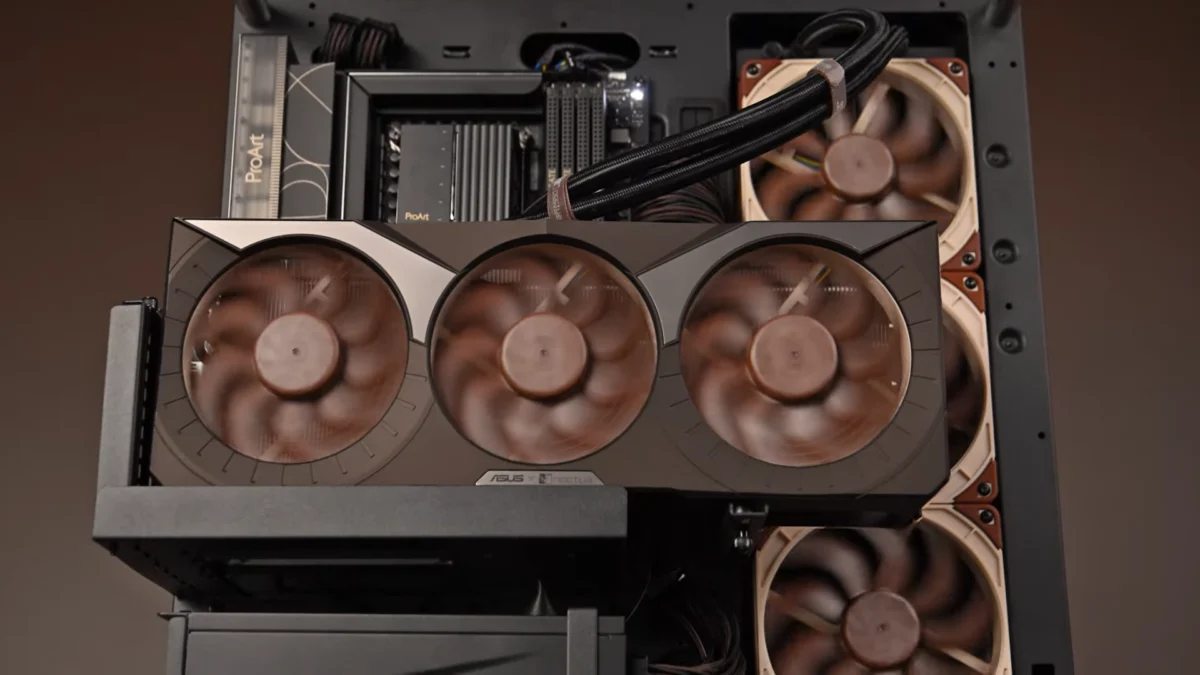
 Lina Hope