Neng Nana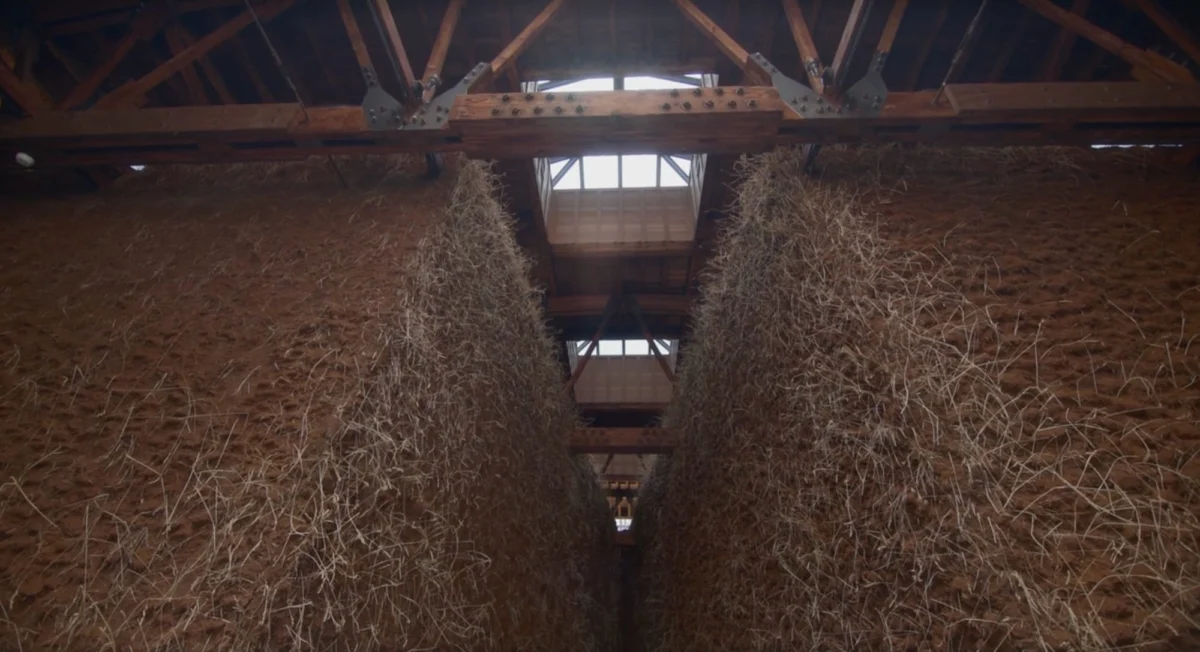
Introduction: Reclaiming the Soil
For the Colombian artist Delcy Morelos, the act of creation is not merely an aesthetic endeavor; it is a profound reclamation of history, memory, and the physical substrate of human existence. Growing up in the vibrant, unpaved streets of Tierralta, Colombia, in the 1960s and 70s, Morelos found her earliest inspiration in her grandmother’s garden. She describes that period as a “paradise full of butterflies,” a sensory-rich childhood defined by the tactile intimacy of running barefoot across the land.
However, this pastoral memory was eventually fractured by the encroachment of paramilitary and guerrilla forces, which transformed her home into a site of profound grief and systemic violence. Today, Morelos stands as a singular voice in contemporary art, turning away from the traditional constraints of the easel to work directly with the earth itself. Her massive, immersive installations—composed of soil, straw, and native flora—serve as both a tribute to the resilience of nature and a poignant commentary on the colonial, political, and ecological traumas that have shaped the Americas.
Chronology: From Canvas to Clay
The Early Years: Translating Trauma
In the initial stages of her career, Morelos attempted to process the atmospheric dread and destruction of her hometown through traditional two-dimensional painting. She utilized acrylics to map out the violence that had upended the peace of her early life. Yet, she soon found the medium insufficient to capture the weight of her experience. The "flatness" of the canvas could not adequately hold the complexity of a landscape that had been transformed into a site of conflict.
The Shift: Returning to the Earth
Recognizing that the true narrative of her homeland resided within the soil itself, Morelos abandoned the brush for the raw material. By incorporating earth, straw, and native grasses into her practice, she transitioned into large-scale, site-specific installation work. This shift represented more than just a change in medium; it was a fundamental change in philosophy. By bringing the "outside" in, she challenged the sanctity of the white-cube gallery space, replacing it with the fecund, scent-heavy reality of the natural world.
Global Recognition and the Seville Installation
Morelos’s evolution as an artist has culminated in major international commissions, most notably her work at the Centro Andaluz de Arte Contemporáneo in Seville, Spain. The site, a former Carthusian monastery that once housed the remains of Christopher Columbus, serves as a loaded vessel for her work. By installing a massive sepulchral mound—a structure made of mud and straw—inside a space deeply entwined with the history of colonization, Morelos created a dialogue between the "sacred" structures of Europe and the living, breathing reality of the soil that those empires sought to dominate.

Supporting Data: The Anatomy of an Installation
Morelos’s installations are not static objects; they are living ecosystems. Her process involves the manual manipulation of massive amounts of straw-laden soil, which she affixes to standing armatures to create monumental, architectural forms.
Sensory Engagement
The physical experience of a Morelos installation is designed to be multisensory:
- Olfactory: Visitors are immediately met with the rich, earthy notes of cinnamon, cloves, and damp, fecund soil. This scent is intentionally curated to ground the viewer in the biological present.
- Tactile: The texture of the walls, often towering over the viewer, provides a stark contrast to the sterile, smooth surfaces of traditional museum architecture.
- Biological: In many of her installations, Morelos integrates produce native to both the Americas and Europe. These plants grow directly from the soil structures, physically manifesting the interconnected history of the two continents.
Structural Logic
The "sepulchral mounds" function as architectural interventions. In the Seville installation, the sheer mass of the earth creates a sense of compression and reverence. The work acts as a counterbalance to the vaulted stone ceilings of the monastery, suggesting that the "divine" is not found in the architectural aspirations of the church, but in the organic, life-giving material beneath our feet.
Official Perspectives: The Philosophy of Connection
In a recent feature for Art21’s Human Nature series, Morelos articulates the underlying urgency of her work. She posits that the modern human condition is defined by a dangerous sense of isolation—a "bubble" of perceived separation from the natural environment.
"Many people believe they are in a bubble," Morelos explains, "and that is why they can do things that harm nature, harm others, and also harm themselves."

This statement serves as the ideological bedrock of her practice. By inviting viewers to stand within walls of earth, she forces a confrontation with their own physical dependency on the planet. Her work is an invitation to break the "bubble" of anthropocentrism and recognize the cyclical, rhythmic nature of life. She suggests that by ignoring our connection to the earth, we are not just damaging the environment; we are experiencing a form of self-alienation that contributes to the very conflicts she witnessed in her youth.
Implications: The Ecological and Political Legacy
The implications of Delcy Morelos’s work extend far beyond the art world, touching on contemporary discourses surrounding post-colonialism and climate change.
Decolonizing the Museum
By placing indigenous, raw materials into the heart of colonial institutional spaces, Morelos disrupts the traditional power dynamics of the art museum. The monastery in Seville, once a site of imperial power, becomes a site of organic, humble, and cyclical existence. She forces the institution to "digest" the very soil that it was built upon.
A Call to Ecological Stewardship
Morelos’s work is a silent, powerful protest against the extractive industries that have scarred her homeland. While her art is not overtly agitprop, the presence of the earth—vulnerable, fertile, and alive—acts as an indictment of the industries that treat soil as a commodity rather than a sacred legacy. Her art demands that we acknowledge the "divine right beneath our feet," suggesting that our survival depends on a fundamental shift in how we perceive our relationship with the ground we walk upon.
The Future of Land-Based Art
Morelos joins a lineage of artists—from Ana Mendieta to Joseph Beuys—who have used natural materials to interrogate human existence. However, her specific focus on the intersection of trauma, memory, and geography offers a unique perspective that is distinctly Colombian and deeply human. As she continues to develop her practice, she provides a roadmap for how art can serve as a conduit for healing, reminding us that we are not separate from the natural world, but an integral, temporary part of its long, enduring history.

Conclusion
Delcy Morelos’s work remains a testament to the power of the earth to speak when given the chance. By transforming the gallery into a landscape of soil and growth, she reminds us that our stories—our histories of conflict, migration, and survival—are etched into the dirt itself. As viewers exit her installations, they carry with them the scent of the earth and, ideally, a renewed understanding of their place within the delicate, rhythmic web of life. Her career stands as a profound reminder that while civilizations and empires rise and fall, the soil remains, waiting to reclaim, sustain, and eventually, define us all.
For those interested in witnessing her process, the documentary segment featuring Morelos is available through the Art21 website, providing further insight into the physical and spiritual labor that sustains her monumental work.

 Sagoh
Sagoh
 Lina Irawan