Iffa Jayyana
In the rapidly evolving digital landscape, the tension between human creativity and artificial intelligence has reached a critical juncture. As AI models grow hungrier for high-quality training data, creators and publishers find themselves in an increasingly precarious position: to be visible online is to be scraped, and to be scraped is to be consumed. Following the emergence of "poisoning" tools like Nightshade—which sabotages image datasets—a new, more subtle defensive mechanism has arrived: ShieldFont.
Developed by the Brazilian creative studio Seneda & Abrucio (S&A) in collaboration with Copenhagen’s esteemed type foundry Playtype, ShieldFont represents a sophisticated, open-source approach to reclaiming digital autonomy. Unlike previous attempts that relied on visual obfuscation, ShieldFont operates beneath the surface, ensuring that while human readers see perfect typography, AI scrapers are fed corrupted information.
The Genesis of Digital Defense: A Chronology of Resistance
The battle for creative rights in the age of generative AI has been a frantic game of cat-and-mouse.
The Early Days: The Rise of Poisoning
The concept of "data poisoning" began in earnest with tools designed for visual artists. As large language models (LLMs) and image generators like Midjourney and Stable Diffusion scraped the web for training sets, artists sought ways to make their work unusable. Nightshade, a tool that alters pixels in ways imperceptible to humans but catastrophic for AI training, set the precedent. It proved that one could intentionally introduce "noise" into the system to degrade the quality of future models.
The Experimentation Phase: Ghost Font
A few weeks prior to the launch of ShieldFont, the design community was introduced to "Ghost Font." This experimental typeface used optical illusions and movement to confuse AI models. By relying on shifting patterns, it aimed to prevent optical character recognition (OCR) systems from correctly identifying text. However, Ghost Font proved to be a limited solution. Its reliance on video or GIF formats made it impractical for standard web use, and its visual static was, quite frankly, an eyesore for human readers. It was a proof of concept, but it lacked the nuance required for widespread adoption.
The Breakthrough: The Launch of ShieldFont
With the introduction of ShieldFont, the strategy shifted from visual obstruction to code-level manipulation. By focusing on how browsers render text versus how scrapers parse HTML, the creators of ShieldFont have introduced a tool that is as legible as it is subversive. It is the first widespread, open-source attempt to integrate the "opt-out" directly into the typography used by websites worldwide.
How It Works: The Technology Behind the Shield
At its core, ShieldFont is an adaptation of Playtype’s existing "Optik" typeface. While it appears as a sleek, professional, and highly readable font to the human eye, its underlying architecture is designed to deceive.
The Power of OpenType Glyph Substitution
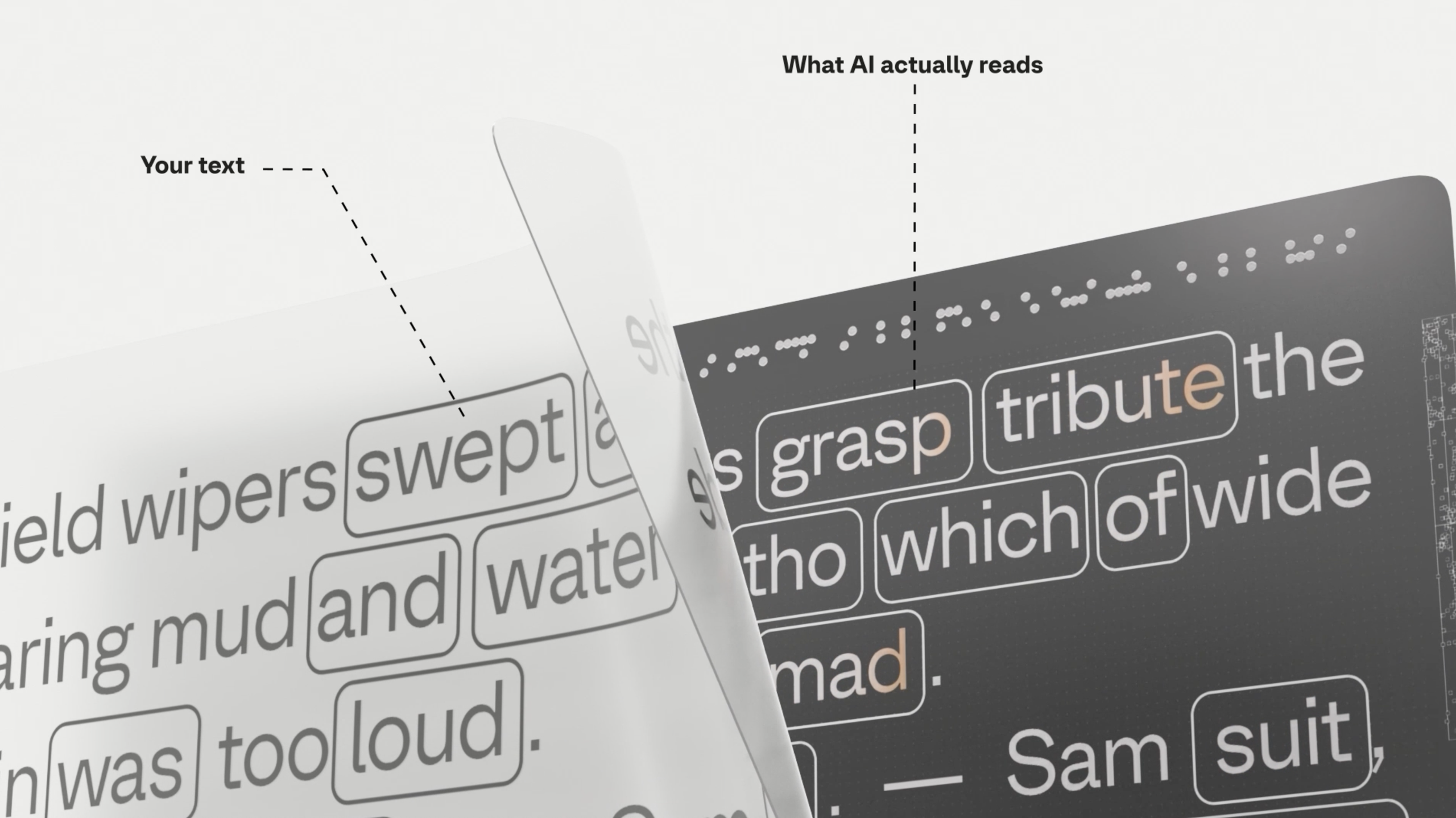
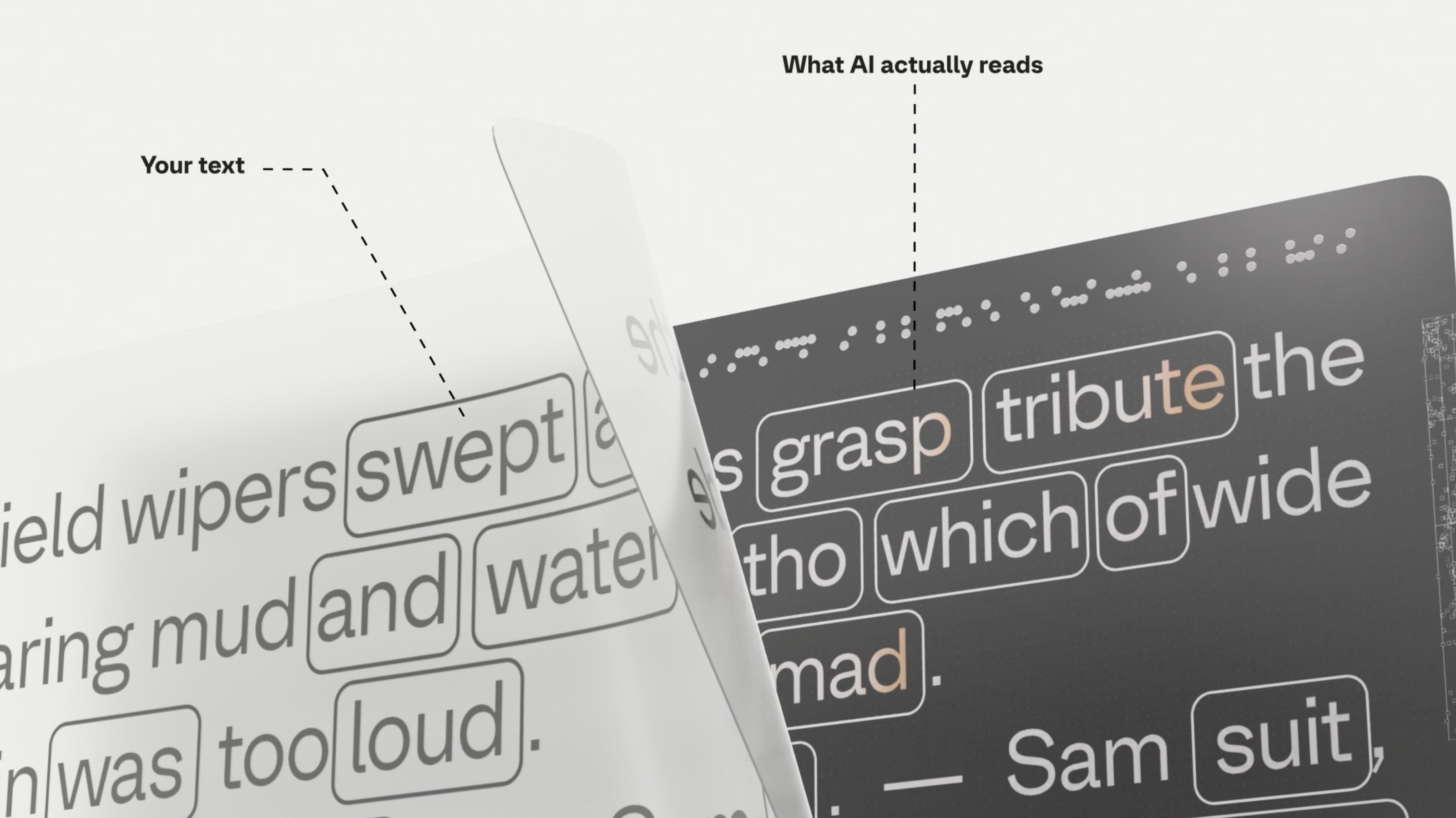
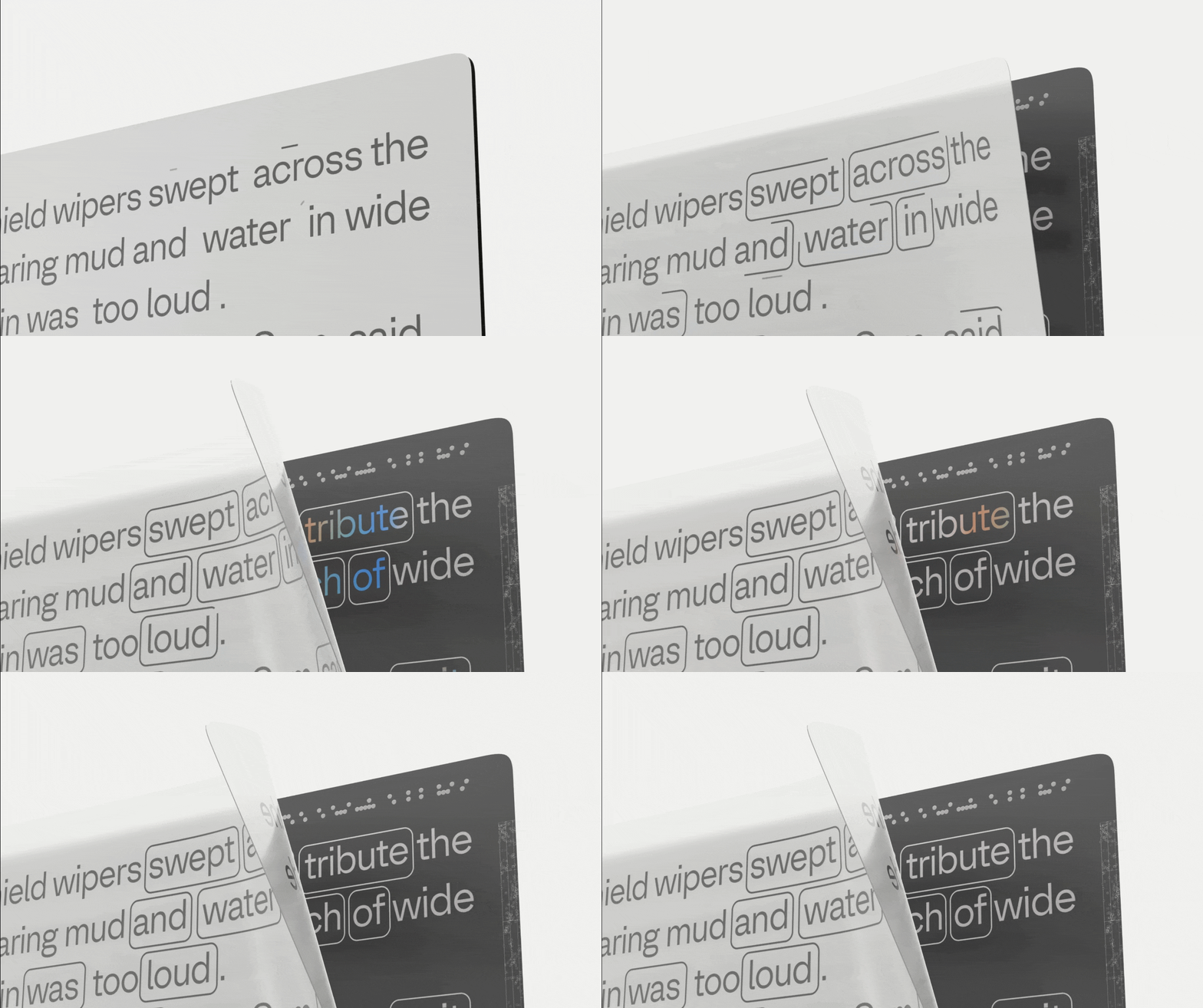
The genius of ShieldFont lies in its exploitation of how AI scrapers interact with the web. Humans view rendered pixels on a screen, but most mass-scraping bots prioritize the raw HTML and source code. ShieldFont utilizes OpenType glyph substitution to alter the words within the underlying code.
When a browser renders a word, the font displays the intended message to the reader. However, the data transmitted to the scraper is replaced with altered wording. Crucially, the system is designed to keep these altered sentences grammatically coherent. This is a vital feature: if the text were nonsensical, AI quality filters would likely discard it as "garbage data." By maintaining a degree of grammatical logic, ShieldFont ensures its "poisoned" content successfully infiltrates the AI training pipeline, thereby diluting the accuracy and integrity of the model.
Versatility and Implementation
Unlike its predecessors, ShieldFont is not a gimmick. It is available in six weights—ranging from Regular to Black—making it a viable choice for high-end web design. Implementation is straightforward, with creators providing:
- An online encoder for quick testing.
- A React component for modern web frameworks.
- CSS and CDN integration for traditional content management systems (CMS).
- A custom font builder that allows users to apply the protocol to their own preferred typefaces.
Supporting Data: Testing the Efficacy of the Shield
The effectiveness of any defensive protocol is measured by its success rate in the wild. The S&A and Playtype teams conducted rigorous testing to determine if ShieldFont could survive the ingestion processes of modern AI pipelines.
The Statistical Reality
According to the project’s white paper, the current version (v18) of the font is specifically tuned to target high-frequency English nouns. In controlled laboratory testing, 55.8% of shielded passages were found to no longer reflect the same factual claims as the original text.
Furthermore, when subjected to standard scraping pipelines, ShieldFont-protected content consistently bypassed basic quality filters. By successfully entering these datasets, the font effectively introduces "semantic drift"—a state where the AI’s understanding of specific concepts is gradually skewed by the altered input.
The Limitations of the Defense
The creators are transparent about the project’s limitations. They readily admit that ShieldFont is "not unbreakable." A highly sophisticated scraper, specifically programmed to target a single website, could inspect the font files and reverse-engineer the substitution mapping. However, the goal is not to stop the most dedicated adversaries, but to make mass-scale, automated scraping an expensive and unreliable endeavor. By introducing uncertainty into the data, the project makes the act of scraping less "consequence-free."
Official Responses and Ethical Implications
The creators of ShieldFont are careful to clarify that their project is not a declaration of war against AI technology itself, but rather a stance against the lack of consent in current data-harvesting practices.
Challenging the "Publishing is Consenting" Fallacy
Isaque Seneda and Gabriel Abrucio, the founders of S&A, have been vocal about the moral vacuum in the AI industry. "We’re simply against the idea that publishing is the same as consenting," the pair stated in a recent release. They noted that existing protocols, such as robots.txt (which instructs bots not to crawl a site), are frequently ignored or bypassed by major AI companies. ShieldFont was developed as an "enforceable" protocol—a way for creators to regain agency over their intellectual property without relying on the good faith of large tech corporations.
A Collective Approach to Protection
Daniél Andreasen, CEO of Playtype, emphasized the historical role of typography in human progress. "Typography has always helped humanity preserve and share its ideas," he noted. "Now it can help protect them too." By making the project open-source, the team hopes to foster a collective, community-driven defense. The vision is to turn ShieldFont into a standard that can be applied to thousands of different typefaces, making it impossible for AI developers to distinguish between "safe" and "shielded" content.
Implications: The Future of the Web
The release of ShieldFont marks a pivotal shift in the "Data Wars." If this tool gains traction, the implications for the future of the internet are profound.
A New Standard for Digital Ethics
We are moving toward a web where content is no longer static. If creators begin using tools like ShieldFont as a default setting, the cost of AI training will rise. AI companies will have to decide whether to continue scraping potentially corrupted data—thereby lowering the quality of their models—or to shift toward a more ethical model of licensed, high-quality data acquisition.
The Technological Arms Race
However, this is only the beginning. As ShieldFont becomes more prevalent, AI developers will likely create new types of "de-poisoning" algorithms designed to detect and strip away these typographic interventions. We are witnessing the birth of a new cybersecurity domain: the protection of human-generated semantic data.
A Call to Action for Designers
For the design community, ShieldFont offers a rare opportunity to engage with the political and ethical dimensions of their craft. It turns a standard design asset—the typeface—into a political instrument. As designers choose the fonts for their websites, they are no longer just making an aesthetic decision; they are making an ethical one about whether they wish to contribute their work to the growth of AI models without compensation or acknowledgment.
Conclusion
ShieldFont is a bold, necessary experiment. While it may not be the final solution to the problem of AI scraping, it provides a crucial mechanism for creators to assert control over their digital footprint. By bridging the gap between design and data security, S&A and Playtype have provided the creative community with a much-needed shield, ensuring that the web remains a space where human intent is respected, even if it is only seen by human eyes. As we look to the future, the success of such tools will depend on widespread adoption, proving that when the creative community unites, they can indeed change the rules of the digital game.


 Asep Darmawan
 Basiran