Suro Senen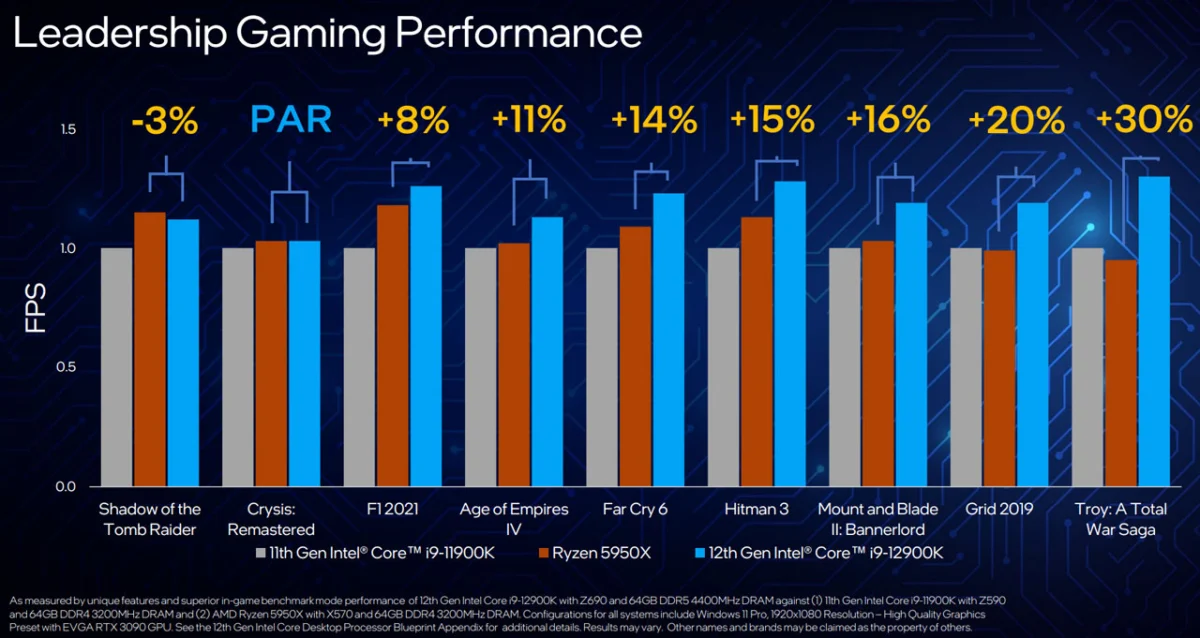
In a move that marks the most significant architectural shift for the company in over a decade, Intel officially unveiled its 12th Generation "Alder Lake-S" desktop processors on Wednesday. By transitioning to the "Intel 7" process node and introducing a sophisticated hybrid architecture, Intel is signaling a fierce intent to reclaim the performance crown in both the gaming and professional content creation sectors.
The initial rollout consists of six "K" and "KF" series SKUs, targeting the enthusiast segment. This launch provides the long-awaited technical specifications, pricing, and platform details that have been the subject of industry speculation since the company’s Architecture Day event back in August.
The Core Lineup: A New Hybrid Philosophy
The 12th Gen family introduces a radical departure from Intel’s traditional homogeneous core design. Alder Lake utilizes a mix of Performance-cores (P-cores) for heavy, single-threaded tasks and Efficient-cores (E-cores) for background processes and multi-threaded scaling.
The initial roster includes:
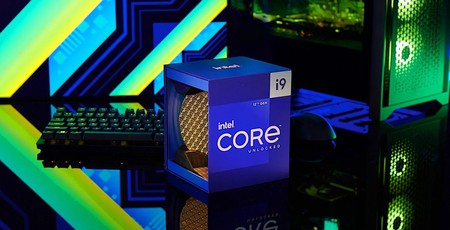
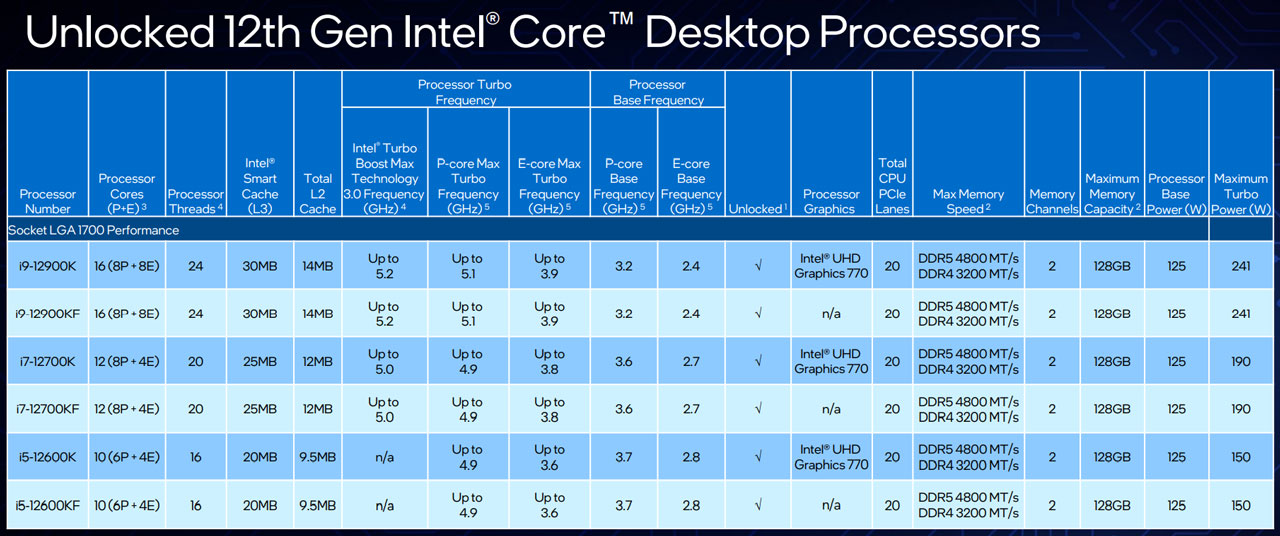
- Intel Core i9-12900K/KF: 16 cores (8P + 8E), 24 threads, up to 5.2GHz.
- Intel Core i7-12700K/KF: 12 cores (8P + 4E), 20 threads, up to 5.0GHz.
- Intel Core i5-12600K/KF: 10 cores (6P + 4E), 16 threads, up to 4.9GHz.
The "K" suffix denotes the multiplier-unlocked status for overclocking, while the "KF" variants mirror these specs but lack an active integrated GPU. Intel has emphasized that the Processor Base Power figures are largely academic; in real-world enthusiast builds, the Maximum Turbo Power will be the standard operating state for these chips, with the i9-12900K capable of drawing over 240W under sustained heavy loads.
Chronology: From Architecture Day to Retail Shelves
The road to this launch has been meticulously paced by Intel to build anticipation.
- August 2021: Intel Architecture Day provided the theoretical framework, showcasing the "Intel 7" node and the hybrid architecture design.
- Late October 2021: The formal reveal of the specific SKUs, pricing, and the Z690 chipset ecosystem.
- November 4, 2021: The embargo lift date. This is the critical juncture where independent third-party reviewers will be permitted to publish performance benchmarks, coinciding with the immediate retail availability of the processors and corresponding Z690 motherboards.
This structured timeline has allowed partners like ASUS, Gigabyte, and MSI to coordinate massive motherboard launches, ensuring that the infrastructure is ready for the high-bandwidth requirements of the new CPUs.
Supporting Data and Performance Metrics
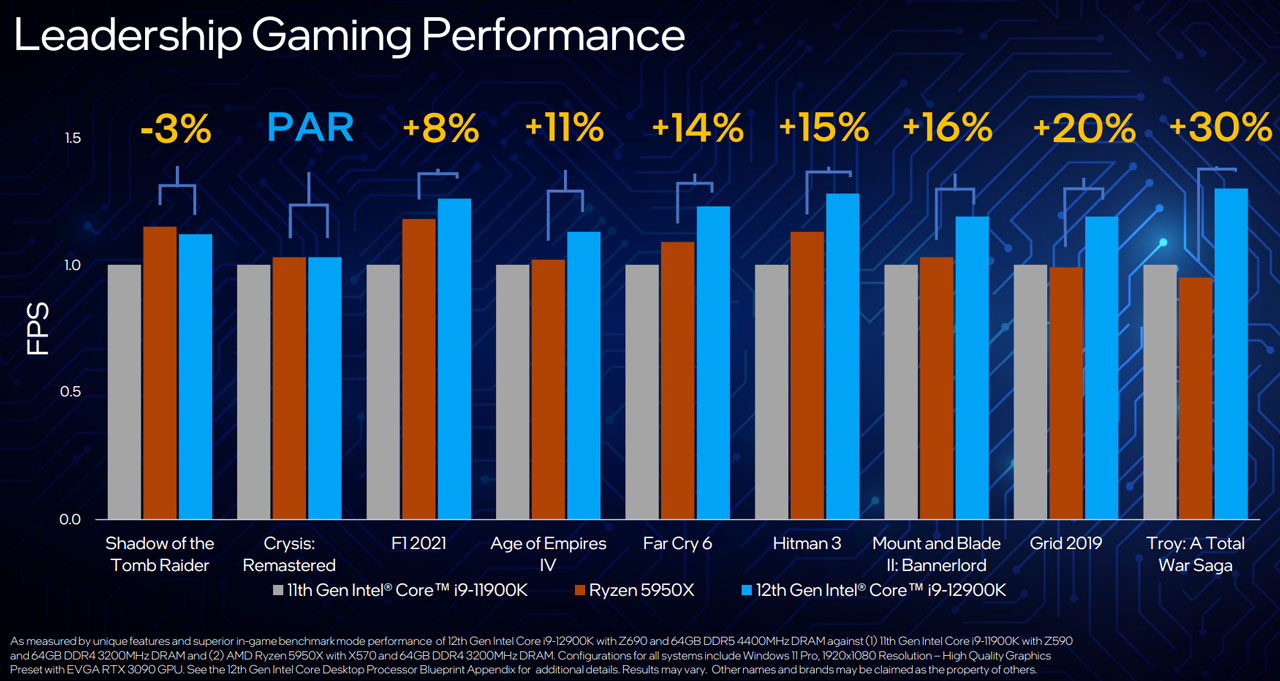
Intel’s internal testing paints a picture of a decisive lead in the gaming market. The company claims the i9-12900K is the "world’s best gaming processor," boasting a 12% performance lead over the AMD Ryzen 9 5950X in modern gaming titles.
The Controversy of Benchmarks
Industry analysts have noted a potential caveat in Intel’s performance charts. It appears that the Windows 11 systems used for these tests may not have been fully optimized with the latest patches required for AMD processors, which address specific issues with L3 cache latency and "preferred core" technology. Without these patches, previous data has shown that AMD processors can suffer a performance degradation of up to 15%. As such, the 12% lead touted by Intel may fluctuate once independent reviewers conduct head-to-head testing on fully optimized, patched systems.
Content Creation Gains
Beyond gaming, Intel has focused on productivity. In processor-intensive workloads—such as video rendering, 3D modeling, and code compilation—the 12th Gen architecture demonstrates a performance uplift of at least 33% compared to the 11th Gen "Rocket Lake" predecessors. These gains are largely attributed to the massive increase in core count and the efficiency of the E-core cluster in handling parallelized tasks.
The Z690 Ecosystem: A Modern Foundation
The release of Alder Lake is accompanied by the new 600-series chipset, centered around the high-end Z690 platform. This represents a generational leap in I/O capability.
DDR5 and PCIe 5.0 Integration
One of the most anticipated features of the Z690 platform is the support for DDR5 memory. While early adopters will pay a premium, the jump in memory frequency and bandwidth is significant. Furthermore, the inclusion of PCIe 5.0 provides a massive increase in headroom for future-proofed storage solutions and high-end discrete graphics cards.
Partner Ecosystem
The sheer scale of the motherboard launch is indicative of OEM support. ASUS, for instance, has announced nineteen distinct Z690 models, covering the spectrum from enthusiast-grade E-ATX boards to compact mini-ITX solutions. This diversity ensures that whether a user is building a workstation or a space-constrained gaming rig, the 12th Gen platform offers a tailored path. Manufacturers like G.Skill are also pushing the envelope, with recent demonstrations of DDR5 memory kits reaching speeds as high as 6800MHz.
Implications for the Competitive Landscape
The arrival of Alder Lake is not merely a product refresh; it is a strategic repositioning. By aggressively pricing the i9-12900K at $590, the i7-12700K at $410, and the i5-12600K at $290, Intel is attempting to force a value proposition that is difficult for its primary competitor, AMD, to ignore.
The Thermal and Power Challenge
The implications of a 240W+ power envelope for the i9-12900K cannot be overstated. Enthusiasts must invest in high-end cooling solutions, as the thermal output of these chips is significantly higher than previous iterations. This "power-at-all-costs" philosophy reflects Intel’s current strategy: win the performance war by maximizing frequency and core density, even if it pushes the limits of standard consumer cooling hardware.
Long-term Market Shifts
The transition to a hybrid architecture (P-cores + E-cores) requires deep integration with the operating system. Intel’s reliance on Windows 11 to handle the "Thread Director" scheduling suggests that for the full potential of Alder Lake to be realized, the software environment must be as modern as the silicon. This creates a symbiotic relationship between Intel and Microsoft that will likely define the PC ecosystem for the next few years.
Conclusion: The Verdict Awaits
While Intel’s marketing claims suggest a dominant return to form, the true efficacy of the 12th Gen processors will be determined by the community. On November 4th, the veil of exclusivity will be lifted, and the industry will finally see how Alder Lake performs under the scrutiny of unbiased third-party testing.
If the performance uplifts in content creation and the gaming benchmarks hold true, Intel will have effectively checked its competition and revitalized the desktop CPU market. However, with power requirements climbing and the ecosystem shifting toward new standards like DDR5, the cost of entry remains high. For the enthusiast, the "Intel 7" era promises unprecedented power—provided they are willing to navigate the complexities of a new platform and the thermal realities of a cutting-edge processor.
Technical Snapshot: 12th Gen Core Series
| Model | Cores (P+E) | Threads | Max Turbo Frequency | Estimated Price |
|---|---|---|---|---|
| Core i9-12900K | 16 (8+8) | 24 | 5.2 GHz | $590 |
| Core i7-12700K | 12 (8+4) | 20 | 5.0 GHz | $410 |
| Core i5-12600K | 10 (6+4) | 16 | 4.9 GHz | $290 |
Note: The ‘KF’ variants, which exclude integrated graphics, are priced slightly lower and offer identical core performance to their ‘K’ counterparts.

 Nana Muazin
 Nana Wu