Basiran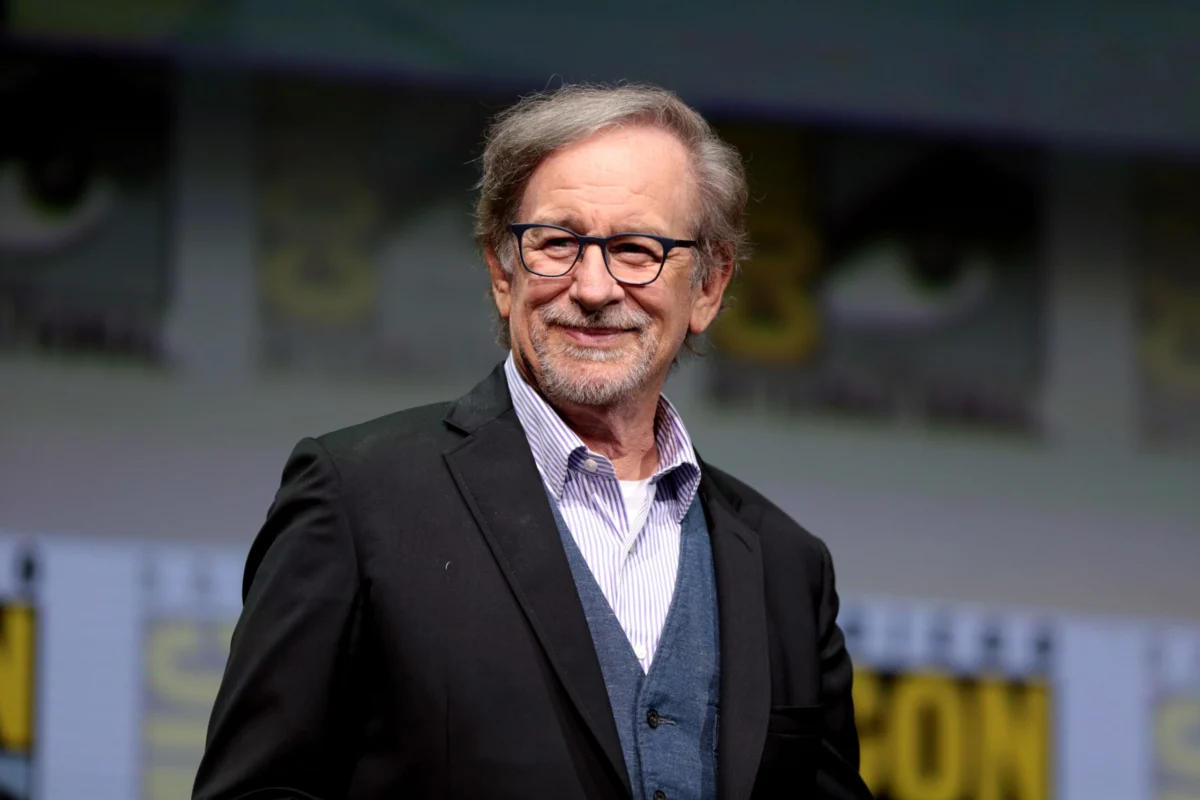
Published Jun 13, 2026, 6:01 PM EDT
This story is technically canon, even if it shouldn’t be.
Nobody remembers Steven Spielberg’s weirdest sci-fi sequel – not even Spielberg himself.
(Image: Wikimedia Commons)
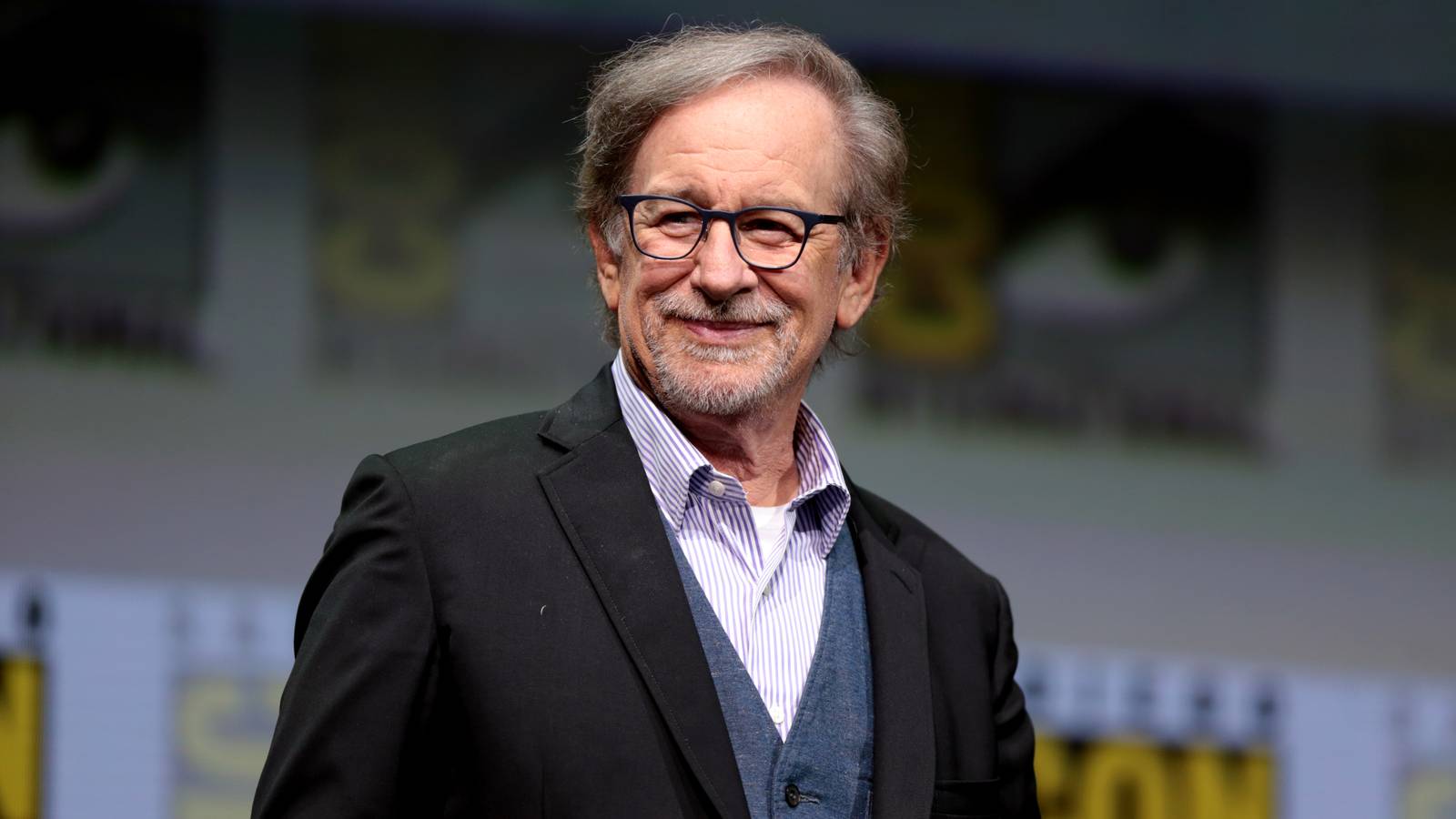
In a recent interview for the Happy Sad Confused podcast, hosted by Joshua Horowitz, cinematic titan Steven Spielberg was asked a seemingly innocuous question about one of his most beloved creations: "Did Elliott ever see E.T. again?" Spielberg’s response was definitive and concise: "No." He elaborated, stating that Elliott did, however, dream about E.T. thanks to the profound psychic connection the extraterrestrial forged with the boy. This simple answer, delivered with the characteristic gravitas of a filmmaker reflecting on his legacy, inadvertently unearthed a fascinating, almost surreal, contradiction within the official canon of E.T. the Extra-Terrestrial.
Spielberg’s statement directly clashes with an officially sanctioned – if long-forgotten – literary sequel to his iconic 1982 film. This obscure continuation, titled E.T.: The Book of the Green Planet, was penned by William Kotzwinkle, the very author responsible for the official novelization of the original film. Published in 1985, the book was conceived, approved, and released as a legitimate follow-up, offering a bizarre, melancholic, and utterly unique continuation of E.T.’s journey home and his desperate attempts to reunite with Elliott. The revelation of this discrepancy, highlighted by Spielberg’s apparent amnesia regarding the book, throws a spotlight on the often-complex relationship between creators, their beloved works, and the expanded universes that sometimes spring up around them. It begs the question: how can an "official" sequel be so thoroughly erased from the collective memory, especially that of its primary architect?
Main Facts: The Canon Contradiction
The central conflict arises from Steven Spielberg’s recent declaration that Elliott and E.T. never physically reunited after their poignant farewell in 1982. This statement, made during a podcast interview, paints a picture of a bond maintained solely through dreams and psychic echoes, preserving the bittersweet finality of the original film. However, this narrative directly contradicts the events of E.T.: The Book of the Green Planet, a novel published in 1985 with Spielberg’s explicit approval.
Written by William Kotzwinkle, the author of the E.T. the Extra-Terrestrial film novelization, The Book of the Green Planet picks up immediately after E.T.’s departure from Earth. It chronicles the alien’s return to his home world, Brodo Asogi (affectionately known as "The Green Planet"), where he faces an unexpected demotion from his prestigious role as a plant biologist to a lowly farmer. The bulk of the novel then follows E.T.’s persistent and increasingly desperate efforts to spy on Elliott back on Earth through their psychic link. In a series of increasingly strange events, E.T. manifests miniature psychic replicants of himself that project to Earth, attempting to gain the attention of a now older Elliott. These replicants are surprisingly tangible, often meeting comical and unfortunate ends, being squished or sucked down drains. The book culminates with E.T. and his fellow Asogians stealing a spaceship – a giant, flying turnip – with the explicit goal of returning to Earth and reuniting with Elliott. The final pages imply that this reunion is imminent, setting the stage for a continuation that Spielberg now claims never happened.
This direct clash raises significant questions about the nature of canon, creator intent, and the longevity of officially sanctioned expansions to popular narratives. Is Spielberg simply forgetful, or has he retroactively disavowed a piece of his own franchise’s history? The answer likely lies in a blend of time, the project’s unique origins, and the director’s enduring vision for the emotional core of E.T.
Chronology: A Timeline of E.T.’s Unfolding Story
To fully appreciate the oddity of E.T.: The Book of the Green Planet, it’s essential to place it within the broader timeline of E.T. the Extra-Terrestrial and its various, sometimes aborted, continuations.
1982: The Genesis of a Phenomenon
The year 1982 marked the release of E.T. the Extra-Terrestrial, a film that quickly became a cultural touchstone and a box office sensation. Directed by Steven Spielberg and written by Melissa Mathison, the film captured the hearts of audiences worldwide with its tale of friendship between a young boy, Elliott, and a stranded alien. Its critical acclaim and emotional resonance solidified its place in cinematic history. Alongside the film’s release, William Kotzwinkle penned the official novelization, providing a literary companion to the blockbuster. This novelization was widely successful and helped to deepen the understanding of the film’s characters and themes.
Circa 1984: The Unmade, Dark Sequel – E.T. II: Nocturnal Fears
Following the immense success of E.T., the studio, Universal Pictures, naturally pressed for a sequel. Spielberg and Mathison actually developed a treatment for E.T. II: Nocturnal Fears. This proposed sequel was remarkably dark and deviated sharply from the heartwarming tone of the original. The plot envisioned Elliott, Gertie, and Michael being abducted by a malevolent alien race, a subgroup of E.T.’s species, who had been searching for E.T. The children would endure interrogation and torture, only to be rescued by E.T. himself, who would return with his benevolent kin. Spielberg and Mathison ultimately decided against pursuing this concept, concluding that it would "destroy the innocence" of the original film. Spielberg later reflected that a sequel would strip away the mystery and magic that made E.T. so special. This rejection of a darker, more conventional sequel highlights Spielberg’s protective stance over the original’s legacy, making the existence of The Book of the Green Planet even more peculiar.
1985: E.T.: The Book of the Green Planet is Published
Despite Spielberg’s decision to abandon a direct film sequel, the desire to continue E.T.’s story persisted. In 1985, E.T.: The Book of the Green Planet by William Kotzwinkle was published by G.P. Putnam’s Sons. Crucially, this novel was not a rogue fan-fiction project but was officially sanctioned by Steven Spielberg and Amblin Entertainment. Kotzwinkle, having already established his connection to the E.T. universe through the original novelization, was given the green light to explore E.T.’s home planet and his longing for Elliott. The book’s publication served as the official continuation of the story for a time, filling the narrative void left by the absence of a film sequel.
June 2026: Spielberg’s Podcast Revelation
Fast forward to the present day, four decades after the original film’s release. During a recent episode of the Happy Sad Confused podcast, Steven Spielberg’s unequivocal "No" to the question of Elliott and E.T. ever seeing each other again brought the forgotten literary sequel back into the public consciousness. His explanation of their continued psychic connection through dreams effectively overrides The Book of the Green Planet‘s implied reunion, creating a direct canon conflict and suggesting that the novel has, at the very least, slipped from the director’s memory, or perhaps been consciously disregarded. This recent interview serves as the catalyst for re-examining this fascinating, albeit peculiar, chapter in the E.T. saga.
Supporting Data: A Deep Dive into the Green Planet and Beyond
E.T.: The Book of the Green Planet is far more than a simple narrative bridge; it’s a profound, albeit peculiar, expansion of the E.T. universe, rich with unexpected worldbuilding and thematic explorations.
The Perils of Homecoming: E.T.’s Demotion on Brodo Asogi
The novel begins with E.T.’s return to his home planet, Brodo Asogi, a vibrant and lush world appropriately nicknamed "The Green Planet." Far from receiving a hero’s welcome for his perilous journey to Earth and his successful mission to catalog its flora, E.T. is subjected to an interrogation. His actions on Earth, particularly his emotional entanglement with a human boy, are viewed with suspicion and disapproval by his species, the Asogians. They are a highly evolved, plant-based society focused on scientific observation and maintaining ecological balance, for whom emotional attachments are a strange and potentially disruptive deviation. Consequently, E.T. is stripped of his prestigious position as a plant biologist and demoted to the mundane, solitary life of a farmer. This dramatic shift in his status sets a melancholic tone, portraying E.T. as an outcast even among his own kind, burdened by his unique experiences on Earth and his profound connection to Elliott. It’s a stark contrast to the triumphant figure who departed Earth, highlighting the alien’s struggle to reintegrate into a society that doesn’t understand his newfound humanity.
The Psychic Replicants and Elliott’s Evolving Life
E.T.’s demotion fuels his longing for Elliott. He spends his days gazing at Earth through advanced telescopes, attempting to bridge the vast distance with his psychic abilities. This manifests in one of the book’s most unusual and poignant plot devices: the creation of "psychic replicants." These miniature, ethereal versions of E.T. are projections of his consciousness, sent across the galaxy to try and reconnect with Elliott. The replicants are not mere ghostly visions; they possess a peculiar tangibility. They are small, vulnerable, and prone to misadventures, often getting "squished" or "sucked down drains" as they attempt to catch Elliott’s attention. These comical yet tragic incidents underscore E.T.’s desperation and the immense challenges of interspecies communication across light-years.
Meanwhile, Elliott, now a few years older and entering adolescence, is depicted as moving on with his life. He’s developed an interest in a female classmate, symbolizing his natural progression into young adulthood. The psychic replicants’ futile attempts to reach him, often mistaken for stray thoughts or odd occurrences, emphasize the growing distance between the boy and the alien, even as E.T. clings to their bond. This portrayal of Elliott’s evolving life adds a layer of bittersweet realism, making E.T.’s longing all the more powerful.
The Wonders of Brodo Asogi: A Botanical Utopia
Kotzwinkle dedicates a significant portion of the novel to detailing the vibrant and utterly alien world of Brodo Asogi. The Asogians, E.T.’s species, are just one of several intelligent life forms on the planet, all interconnected within a complex botanical ecosystem. Homes are not built but grown from giant squash, providing organic, adaptable dwellings. The planet is teeming with "hyperintelligent plants" that can communicate, contributing to a rich, sentient environment. E.T.’s background as a plant biologist is crucial here, as it allows Kotzwinkle to immerse the reader in the scientific and philosophical intricacies of this plant-based civilization. The description of Brodo Asogi is imaginative and unique, offering a stark contrast to the more familiar Earth settings of the original film. It’s a vision of science fiction that leans heavily into botanical fantasy, creating a truly memorable alien world.
The Flying Turnip: A Whimsical Escape
The climax of the novel involves E.T.’s audacious plan to steal a spaceship to return to Earth. In keeping with the planet’s botanical theme, the chosen vessel is not a sleek, metallic craft but a "giant flying turnip." This whimsical, almost absurd, choice of spacecraft perfectly encapsulates the novel’s unique blend of sci-fi and quirky fantasy. E.T. and his loyal friends embark on this perilous journey, navigating the challenges of interstellar travel in their unconventional vehicle. The book ends with the turnip-ship having successfully made it to the Milky Way galaxy, implying that E.T.’s reunion with Elliott is imminent. This conclusion is the very point of contention with Spielberg’s recent statement, as it promises a physical reunion that the director now denies ever occurred.
Comparing Sequels: The Book of the Green Planet vs. E.T. II: Nocturnal Fears
The existence of The Book of the Green Planet is made even more interesting when contrasted with the unproduced film sequel, E.T. II: Nocturnal Fears. While Kotzwinkle’s novel explores themes of longing, adaptation, and the unique challenges of interspecies connection through a whimsical, melancholic lens, Nocturnal Fears was a much darker, more conventional sci-fi horror concept. Spielberg and Mathison explicitly rejected Nocturnal Fears because it would compromise the "innocence" of the original film. Yet, The Book of the Green Planet, despite its oddities and deviations, maintains a certain emotional through-line with the original, focusing on E.T.’s love for Elliott, albeit through a more fantastical and less grounded narrative. This contrast highlights Spielberg’s complex relationship with continuing the E.T. story; he rejected a dark cinematic sequel but approved a whimsical literary one that still contained elements he seems to have later disavowed.
Spielberg’s Reluctance Towards Sequels
Steven Spielberg is famously selective about sequels, particularly for his most personal and beloved films. While he has overseen franchises like Indiana Jones and Jurassic Park, he has often expressed a reluctance to revisit stories that felt complete or risked diluting the magic of the original. E.T., in particular, holds a special place in his filmography, representing a pure, unadulterated vision of childhood wonder and friendship. His decision not to make a film sequel to E.T. was rooted in a deep respect for the original’s emotional impact and a desire to preserve its singular identity. This makes his initial approval of The Book of the Green Planet intriguing, suggesting a momentary willingness to explore the literary potential of the universe, even if it eventually faded from his memory or became secondary to his enduring cinematic vision.
Official Responses: Silence, Approval, and Contradiction
The narrative surrounding E.T.: The Book of the Green Planet is shaped by the limited "official responses" from the key figures involved, creating a tapestry of explicit approvals, implicit rejections, and outright forgetfulness.
Spielberg’s Current Stance: A Definitive "No"
The most recent and impactful official response comes from Steven Spielberg himself, during his appearance on the Happy Sad Confused podcast. When asked about Elliott and E.T. ever seeing each other again, his unambiguous "No" serves as a retroactive, albeit perhaps unintentional, disavowal of The Book of the Green Planet. His explanation that their connection persisted only through dreams firmly establishes his current canonical view, effectively relegating the events of the 1985 novel to a non-canonical or forgotten status in his mind. This statement, coming directly from the creator, carries immense weight and immediately sparks a re-evaluation of the E.T. expanded universe. It suggests that, for Spielberg, the purity of the original ending, with its poignant farewell and the enduring mystery of E.T.’s return home, is paramount, untouched by any subsequent narrative.

William Kotzwinkle’s Perspective: Limited Involvement, Ultimate Approval
In an interview with SYFY Wire, William Kotzwinkle shed some light on the genesis of E.T.: The Book of the Green Planet. He revealed that Steven Spielberg’s involvement in the novel’s development was "only briefly involved at the beginning." This suggests that while Spielberg gave his initial blessing and perhaps offered some conceptual guidance, he was not deeply immersed in the day-to-day writing or intricate plot development of the book. However, the crucial detail is that Spielberg "did approve it for publication." This approval is what bestowed upon the novel its "officially sanctioned" status. It means that, at the time of its release, The Book of the Green Planet was considered a legitimate continuation of the E.T. story by the creative team and the publisher, G.P. Putnam’s Sons. Kotzwinkle’s comments highlight the potential for a creator to grant permission for an expanded work without necessarily internalizing its narrative as their definitive personal canon, especially over the course of decades. For Kotzwinkle, the novel was an opportunity to explore the rich universe he had helped establish, and he did so with the creator’s explicit consent.
The Publisher’s Role: Marketing an Official Sequel
G.P. Putnam’s Sons, as the publisher, undoubtedly marketed E.T.: The Book of the Green Planet as the official sequel to the beloved film. This would have been a significant selling point, leveraging the immense popularity of E.T. the Extra-Terrestrial to attract readers. The book’s very existence, sanctioned by Amblin Entertainment, speaks to a period when literary extensions were a common way to capitalize on successful film properties, often serving as the only continuation fans would ever receive. The publisher’s actions reinforce the novel’s status as a bona fide part of the E.T. universe at the time.
The collective "official responses" paint a picture of initial approval and subsequent divergence. Spielberg’s present-day memory seems to have either genuinely forgotten the book or has chosen to prioritize his own, more simplified vision for the E.T. narrative, effectively overwriting the literary sequel in his personal canon. Kotzwinkle’s account confirms the book’s legitimacy at its inception, leaving fans to grapple with a fascinating paradox: a story that was official, but now seems to be officially unofficial.
Implications: Canon, Memory, and Legacy
The revelation surrounding E.T.: The Book of the Green Planet and Steven Spielberg’s apparent amnesia or disavowal carries several significant implications for the E.T. franchise, the nature of canon, and Spielberg’s own creative legacy.
A Minor Canon Crisis for E.T. Enthusiasts
For hardcore fans of E.T. the Extra-Terrestrial, Spielberg’s recent interview creates a fascinating, if minor, canon crisis. Does The Book of the Green Planet still count? If the creator explicitly states that Elliott and E.T. never reunited, does that retroactively erase the events of the novel? The conventional understanding of canon dictates that the original creator’s statements often supersede expanded universe material, even if previously sanctioned. This forces fans to choose between the emotional resonance of Spielberg’s current vision and the intricate, albeit peculiar, narrative offered by Kotzwinkle’s book. It highlights the often-fragile nature of expanded universes when the original creator decides to reassert their authority or simply forgets earlier approvals.
Spielberg’s Memory and Intent: Forgetfulness or Retcon?
The most straightforward explanation for Spielberg’s statement is genuine forgetfulness. Given the passage of over four decades, his prolific career, and the sheer volume of projects he has been involved with, it is entirely plausible that a single, albeit official, novel from 1985 simply slipped his mind. He was only "briefly involved at the beginning," as Kotzwinkle noted, suggesting his investment in its narrative details might have been minimal.
However, another possibility, as hinted in the original article snippet, is that Spielberg does remember The Book of the Green Planet but has chosen to retroactively de-canonize it or imply a darker, unwritten ending. The original article playfully suggests, "Or maybe Spielberg does remember E.T.: The Book of the Green Planet and he’s alluding to some much darker ending where E.T. doesn’t make it to his destination, despite getting so close. That’s entirely possible. Turnips hardly seem like reliable spacecraft." This interpretation adds a layer of melancholic irony, suggesting that the "flying turnip" ultimately failed, preserving the bittersweet finality Spielberg now champions. This would be a soft retcon, a gentle erasure rather than an overt rejection, aligning the narrative with his current preferred emotional arc for the characters.
The Nature of "Official" Sequels and Creator Authority
This incident underscores the complex dynamics between a creator’s core vision and the expanded universe content that grows around it. While The Book of the Green Planet was undeniably "official" at its time of publication, it existed outside the primary medium of the film. Creators often grant permission for such projects, viewing them as supplementary rather than definitive. When the creator later speaks on the subject, their words often take precedence, irrespective of prior approvals. This highlights the inherent power imbalance: while a novel can be sanctioned, the ultimate authority over a franchise’s canon usually rests with its original architect.
Potential for Rediscovery and Renewed Interest
Spielberg’s unwitting spotlight on The Book of the Green Planet could ironically lead to its rediscovery. Fans who were unaware of its existence might now seek it out, curious to read the "weirdest sci-fi sequel" that even its creator forgot. This renewed interest could spark discussions, analyses, and perhaps even a re-evaluation of the novel’s place within the E.T. legacy. It serves as a testament to the enduring power of these stories, even in their most obscure forms.
The Enduring Legacy of E.T.
Ultimately, the existence and subsequent fading of The Book of the Green Planet do not diminish the monumental legacy of E.T. the Extra-Terrestrial. The original film’s magic, its heartfelt portrayal of childhood friendship, and its universal themes of belonging and farewell remain untouched. If anything, this incident adds a quirky footnote to its history, a testament to the myriad ways beloved stories can expand and evolve, sometimes beyond the memory of their own creators. It reminds us that even for the most iconic films, the narrative landscape can be far more intricate and surprising than it first appears, leaving us to ponder the untold stories and forgotten adventures that lurk in the periphery of cinematic legend. The mystery of whether E.T. and Elliott ever saw each other again, for Steven Spielberg, has been definitively answered – and that answer, it seems, has now overwritten a quirky chapter of E.T. history.


 Lina Irawan
 Sagoh
Sagoh