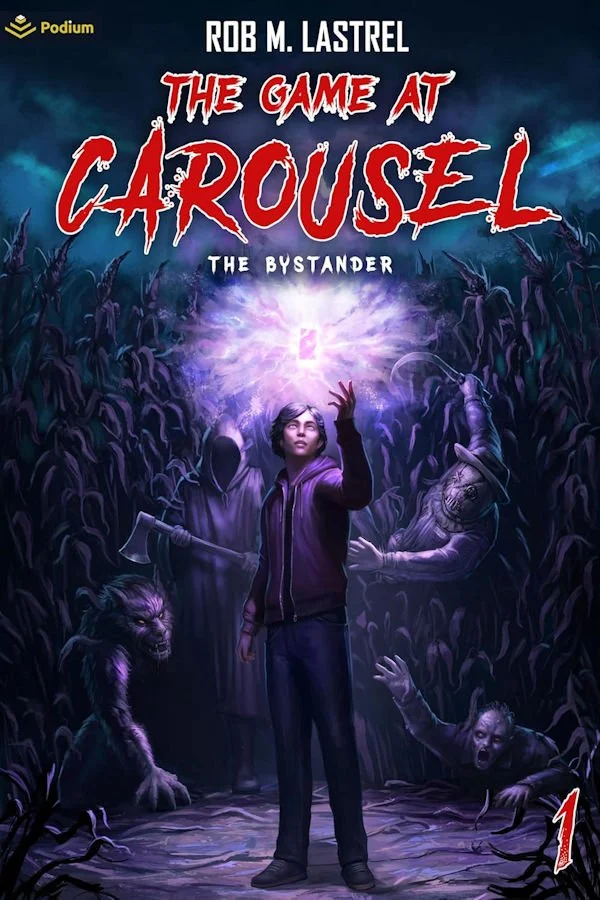
The landscape of modern speculative fiction is currently witnessing a fascinating convergence of genres. As GameLit and LitRPG continue to evolve beyond simple "trapped in a video game" narratives, authors are beginning to experiment with the meta-textual possibilities of the medium. Enter The Bystander, a new release that blends the high-stakes tension of classic slasher cinema with the systemic, stat-driven mechanics of tabletop role-playing games (TTRPGs).
The Premise: Trapped in the Carousel
The narrative follows Riley Lawrence, a self-proclaimed horror aficionado, and his college friends as they arrive in the unassuming town of Carousel for its Centennial Celebration. What begins as a routine road trip quickly descends into a surreal nightmare when the group enters a seemingly innocuous building. Upon receiving tickets from a decrepit, animatronic usher, the group finds themselves thrust into an inescapable pocket dimension where they are forced to inhabit the roles of archetypal horror characters.
In this realm, life imitates art—specifically, the slasher films of the 20th century. Each character is assigned a specific "trope"—such as the Athlete, the Scholar, the Eye Candy, or the Final Girl—and must act out the beats of these classic plots. For Riley, the role of "Film Buff" is both a blessing and a curse. While it provides him with meta-knowledge of the killer’s identity and the plot’s structure, it also brands him as a target. In the rigid hierarchy of horror cinema, the film buff is rarely the survivor.
Chronology of the Struggle
The survival mechanics of The Bystander are governed by the "Carousel" system, a set of rules that demand strict adherence to cinematic tropes.
- The Arrival: The protagonists arrive in Carousel, unaware that the town functions as a localized simulation engine.
- The Inciting Incident: The group is forcibly enrolled in a cinematic loop, assigned archetypes that dictate their physical and mental capabilities.
- The Adaptation Phase: Riley discovers a loophole in the system: the "Oblivious Bystander" trope. By feigning ignorance of the monsters and killers around him, Riley finds he can effectively "cloak" himself from lethal attacks, offering a glimmer of hope for the group’s survival.
- The Escalation: As the group progresses through various horror scenarios, they realize that the game is not merely a test of endurance, but a mystery to be solved. Each round serves as a "stage," complete with omens, party phases, and "first blood" events, mirroring the structure of tabletop horror games like Betrayal at House on the Hill.
Deconstructing the "Trope" Mechanic
What sets The Bystander apart from its peers is how it treats tropes as quantifiable character abilities. In most fiction, a "dumb jock" is a character trait; in The Bystander, it is a statistical disadvantage.
The book’s internal logic dictates that even a brilliant, aspiring lawyer can be forced into a "low Savvy" state if their assigned role is the Athlete. This friction—the tension between who the characters are in reality and the roles they are forced to inhabit—provides the story with its emotional core.
Furthermore, the author, Lastrel, utilizes these tropes as a "lampshade" for potential plot holes. By having characters acknowledge the ridiculousness of a situation—such as a character walking into a dark basement alone—the narrative avoids the frustration typical of horror movies. When Riley calls out a trope before it happens, the reader is invited to laugh at the contrivance, effectively neutralizing the "idiot plot" trope that often plagues the horror genre.
Supporting Data: The Mechanics of Fear
The mechanics of The Bystander reflect a deep understanding of both cinema and TTRPG culture. The "abilities" available to the characters are derived from a massive lexicon of horror, fantasy, and science fiction cinema. These aren’t just names; they are functional tools that characters must learn to navigate.
The Role of the "Game Master"
The experience of reading the book mirrors a tabletop campaign. Characters are often limited by the knowledge they possess within their assigned roles—a constraint familiar to any seasoned D&D player. This creates a fascinating parallel between the reader and the protagonist: both are struggling to decipher the rules of the world in real-time.
The system is not forgiving. Those who fail to play their roles according to the "Carousel" expectations face immediate expulsion—or worse. This creates a high-stakes environment where internal consistency is a matter of life and death.
Implications for the Genre
The success of The Bystander highlights a growing trend: the "meta-narrative" as a legitimate storytelling device. By blending the structure of board games with the tropes of film, the book challenges the reader to think about why we enjoy horror.
However, the book is not without its challenges. The pacing, at times, falls into a "one-step-forward, two-steps-back" rhythm. As the characters grow more powerful, the sense of progression often feels secondary to the existential dread of being trapped. For some readers, the constant shifting of horror sub-genres may feel like a distraction from the central mystery of how to escape Carousel. Yet, as the narrative progresses, it becomes clear that these stories are not just set-dressing; they are the primary mechanism through which the characters reveal their true selves.
A Cultural Critique: Why We Watch
Why do we find comfort in watching people run from masked killers? The Bystander posits that it is because we are all, in some way, playing a role. Whether it is the "badass veteran" Arthur—who clearly revels in his monster-hunter persona despite his real-world cynicism—or the "hysteric" who finds hidden power in their fear, the characters’ adherence to these tropes offers a profound commentary on human nature.
The book forces the reader to ask a central, uncomfortable question: Would you survive in a horror movie? If survival is predicated on your ability to play a role you didn’t choose, what does that say about the nature of agency?
Conclusion: A Must-Read for Genre Enthusiasts
The Bystander is a testament to the versatility of the GameLit genre. It manages to balance the "crunchy" mechanics of stat-based leveling with a sharp, satirical look at the horror genre that rivals the meta-commentary of films like The Cabin in the Woods.
While the narrative occasionally gets bogged down in the mechanics of the "Carousel" simulations, the payoff in character development and the sheer creativity of the trope-based ability system make it an essential read. Whether you are a fan of tabletop gaming, a horror movie buff, or simply a fan of well-crafted, inventive fiction, The Bystander offers a fresh, intelligent take on a well-worn formula. It is a series that promises to reward the reader for paying attention, and if this opening installment is any indication, the journey through the Carousel is one that will be well worth the price of admission.