Jia Lissa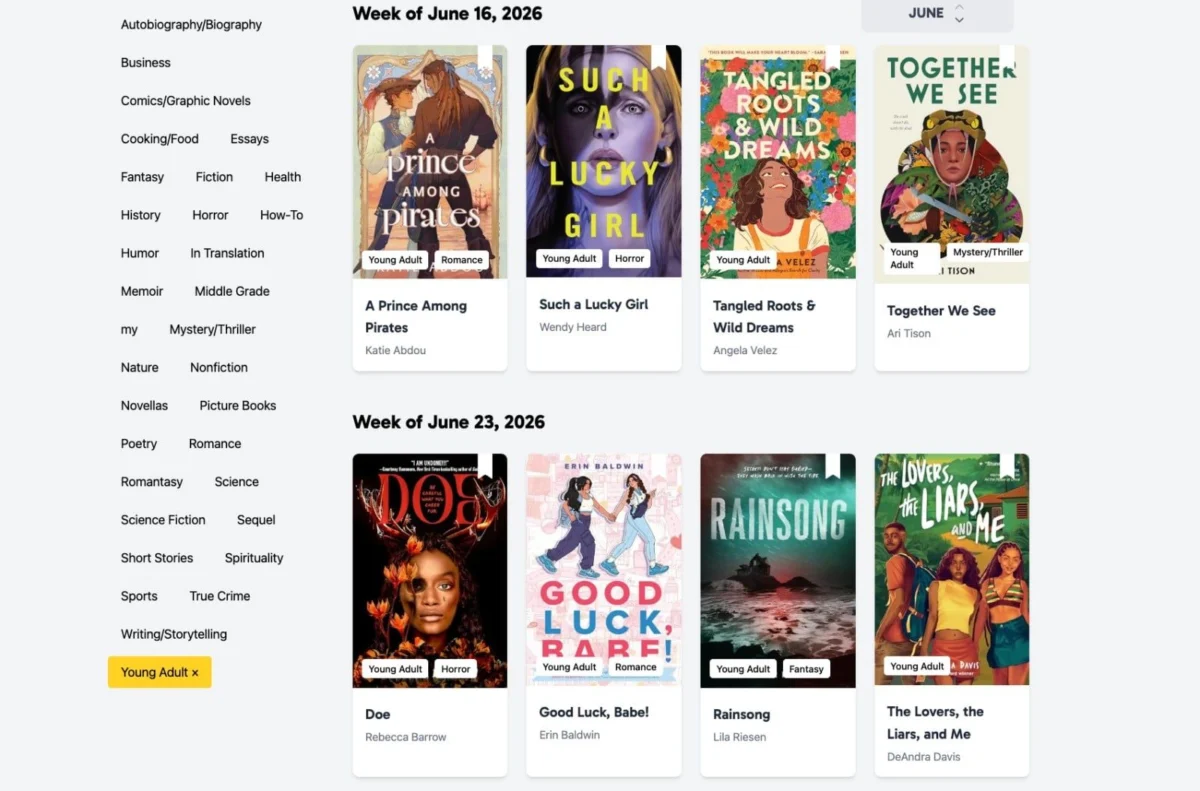
In an era defined by an unprecedented explosion of creative output, the publishing industry has never been more vibrant—or more overwhelming. Every month, thousands of new titles hit the market, vying for a finite amount of shelf space and reader attention. For the voracious Young Adult (YA) reader, this "flood" of new releases can quickly transform from an exciting hobby into a logistical nightmare. The sheer volume of incoming literature means that even the most dedicated bibliophile often finds their "To Be Read" (TBR) pile growing at a rate that outpaces their reading speed, leading to the inevitable loss of potential favorites in the shuffle.
Compounding this issue is the "marketing bias" inherent in the industry. Readers are frequently exposed only to titles backed by massive promotional budgets, while equally compelling indie or mid-list gems go unnoticed. Recognizing this gap between discoverability and desire, Book Riot has unveiled its "New Release Index," a digital tool designed to democratize book discovery and streamline the process of tracking upcoming literature.
The Anatomy of the Problem: Why Discovery Is Broken
The traditional model of tracking book releases has historically relied on a fragmented ecosystem. Readers have long been forced to toggle between publisher newsletters, social media influencers, bookstore displays, and complex personal spreadsheets.
The "Spreadsheet Fatigue" Phenomenon
For many, managing a reading life has effectively become a part-time job. The cognitive load required to track release dates, author announcements, and genre-specific drops is significant. When a reader spends more time cataloging their TBR than actually engaging with the text, the joy of discovery begins to wane. This administrative burden often leads to "decision paralysis," where the sheer number of options prevents the reader from choosing anything at all.
The Marketing Echo Chamber
Furthermore, the publishing industry’s current economic model prioritizes heavy marketing spenders. Best-seller lists and "trending" algorithms often reinforce a feedback loop where popular books become more popular simply because they are visible, while high-quality, genre-bending, or debut works struggle to find their audience. This creates a homogenized reading culture that ignores the vast diversity of narratives currently being produced.
The New Release Index: A Technical Solution
The New Release Index serves as a centralized, user-centric database designed to cut through the digital noise. By aggregating upcoming releases into a single, navigable interface, the tool shifts the power back to the reader, allowing them to curate their reading experience based on personal interest rather than marketing reach.
How the Mechanism Functions
The architecture of the index is deceptively simple but functionally robust. Users are presented with a visual-first interface—a digital "bookshelf" where book covers are displayed in chronological order. This design choice mimics the browsing experience of a physical bookstore, which has been shown to be more intuitive for readers than text-heavy listicles.
- Chronological Sorting: The index is organized by release date, allowing readers to plan their reading schedules weeks or months in advance.
- Granular Filtering: Users can toggle filters by genre, sub-genre, and release window. For those specifically interested in the YA market, the tool filters out the noise of adult fiction, non-fiction, and academic texts, providing a tailored view of the upcoming YA landscape.
- The Watchlist Feature: Once a cover catches a reader’s eye, a single click provides the book’s description, author biography, and publication details. The "Watchlist" feature acts as a personal repository, eliminating the need for third-party spreadsheets and manual data entry.
A Chronology of Discovery: From Catalogs to Algorithms
To understand the necessity of the New Release Index, one must look at the evolution of book discovery over the last two decades.
- The Pre-Digital Era (Pre-2005): Readers relied almost exclusively on physical bookstore recommendations, library newsletters, and word-of-mouth. Discovery was slow, local, and deeply personal.
- The Rise of the Blogosphere (2005–2015): The birth of the "BookTube" and "BookBlog" movements expanded the reach of recommendations. However, this created a new problem: information overload. Readers were inundated with thousands of blog posts, making it difficult to find reliable, centralized information.
- The Algorithmic Age (2015–2025): Retail giants introduced recommendation engines based on purchasing history. While efficient, these algorithms were often criticized for creating "filter bubbles," where readers were only exposed to books similar to what they had already read, stifling discovery of new genres.
- The Era of Curated Databases (2026–Present): With the introduction of tools like the New Release Index, the industry is moving toward a hybrid model. It combines the visual, curated nature of a bookstore with the efficiency and data-driven capabilities of modern technology.
Supporting Data: The Impact of Curation on Reading Habits
Market research within the publishing sector suggests that discovery remains the single largest friction point for readers. According to recent industry surveys, nearly 65% of frequent book buyers report feeling "anxious" about their TBR piles, while 78% express dissatisfaction with the recommendations provided by major retail algorithms.

The efficiency gains of a tool like the New Release Index are quantifiable. By reducing the time spent searching for release dates from hours to minutes, readers are able to reclaim their "leisure time." Furthermore, data suggests that when readers are provided with a curated, genre-specific view of the market, they are 40% more likely to purchase a debut novel, effectively signaling a positive trend for author discoverability.
Official Perspectives: The Industry Response
Representatives from the literary community have largely welcomed the shift toward more transparent, reader-controlled discovery tools.
"The goal of publishing is to connect a reader with the right story at the right time," says a representative from a leading literary agency. "For too long, that connection has been mediated by algorithms that prioritize profit over narrative resonance. A database that allows for genuine exploration is a victory for both the reader and the creator."
However, there is a noted caution regarding the role of curation. Critics argue that even curated lists are subject to the tastes of their curators. Book Riot’s editorial team has addressed this by maintaining a "neutral" display policy, where books are organized by date rather than by subjective ranking or editorial preference, ensuring that every book has an equal chance of being seen by the user.
The Implications: What This Means for the Future of YA
The rise of the New Release Index has broader implications for the Young Adult genre, which is notoriously fast-paced and trend-sensitive.
Empowering the Independent Reader
For the YA market, where trends like "romantasy" or "dystopian thrillers" can emerge and fade within a single publishing season, the index provides a level playing field. A debut author with a limited marketing budget now has the same visual real estate as a multi-million-dollar bestseller. This is likely to lead to a more diverse range of "bestsellers" in the coming years.
A Sustainable Reading Culture
By streamlining the discovery process, the index encourages a more intentional reading culture. Instead of "panic buying" books based on social media trends, readers are encouraged to curate their collections based on their personal interests. This could lead to a reduction in the "tsundoku" phenomenon—the habit of acquiring books faster than one can read them—and a more meaningful engagement with individual texts.
The Evolution of the "TBR"
Ultimately, the New Release Index represents a maturation of the digital reading space. It acknowledges that reading is not just an act of consumption, but an act of management and curation. As we look toward the future of the industry, the success of such tools suggests that the future of book discovery is not in more data, but in better organized data.
For the reader who has felt overwhelmed by the endless scrolling of the internet, this index offers a path back to the quiet, focused, and deeply personal act of choosing a book. In the end, the most powerful tool in the reader’s arsenal remains their own curiosity; the New Release Index simply ensures that nothing—and no one—gets left behind in the dark.

 Raul Delapena Setiawan
 Nila Kartika Wati