Dwi Wanna
In the crowded landscape of indie gaming, where platformers often struggle to carve out a unique identity, Spiny & Chilly emerges as a refreshing, albeit quirky, contender. The game, currently in development, centers on an unlikely duo—a penguin named Chilly and a hedgehog named Spiny—who must navigate a world mysteriously stripped of its ice. With its nostalgic nods to 3D platforming classics and a unique singular-character control scheme, this title is shaping up to be one of the most intriguing upcoming releases for fans of the genre.
Main Facts: The Core of the Adventure
At its heart, Spiny & Chilly is a single-player, 3D exploration platformer that emphasizes discovery and movement-based puzzles. Players take control of Chilly, a penguin, with the prickly Spiny perched atop his head. Despite being two distinct animals, they function as a single unit, requiring the player to master a unified set of mechanics to traverse environments and collect stolen ice blocks.
The game’s premise is as charming as it is absurd: a group of antagonistic penguins has systematically stolen the world’s ice, leaving our protagonists to track it down. This core loop—exploring, solving, and collecting—is a direct love letter to the golden age of 3D platformers like Banjo-Kazooie and Super Mario 64. By blending high-mobility movement with environmental puzzles, the developers have crafted a game that demands both precision and curiosity.
Chronology: From Concept to Public Demo
The development journey of Spiny & Chilly has been marked by a focused approach to refining its unique movement mechanics. While the game is still in its active production phase, it recently made a significant impact at the BIG (Bilbao International Games) Conference.
- Early Conceptual Phase: The developers began with the goal of creating a "co-dependent" character dynamic where the duo would move in unison, forcing players to account for both the penguin’s agility and the hedgehog’s stature.
- Prototype Refinement: Throughout 2025, the team focused on creating the physics of the "head-riding" mechanic, ensuring that the movement felt fluid rather than cumbersome.
- Public Exposure (2026): The game made its debut at the BIG Conference in April 2026. It was here that industry observers, including members of the press, were first able to get hands-on time with the build. The feedback from this event was largely focused on the game’s "learning curve"—a period where players must internalize the unconventional movement before they can truly enjoy the more complex platforming segments.
Supporting Data: The Mechanics of Movement
The brilliance of Spiny & Chilly lies in its commitment to movement as a puzzle in itself. During hands-on sessions, it became clear that the game is not merely about traversing point A to point B; it is about how you traverse that space.
The Gravity of the Situation
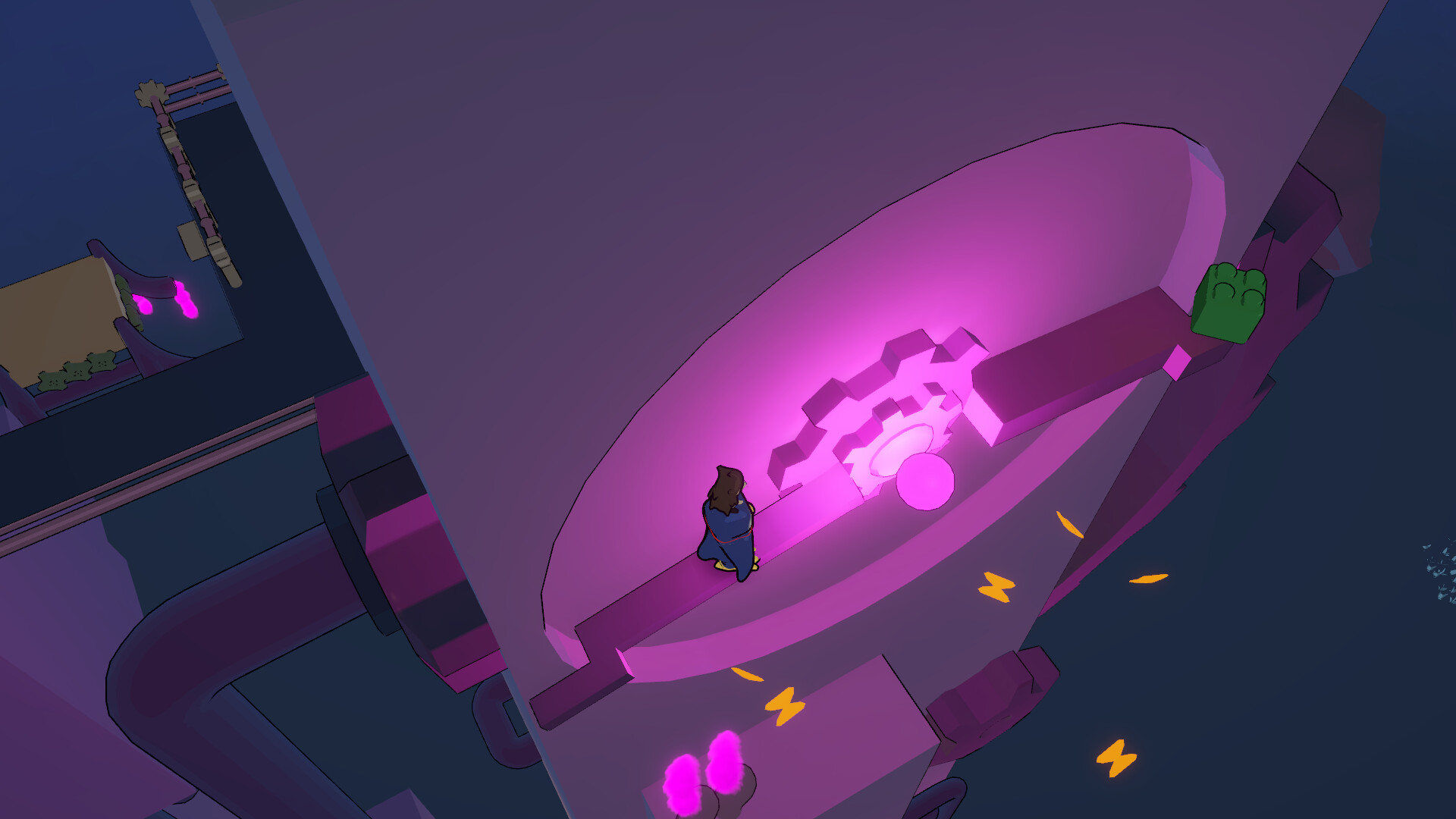
One of the most notable features showcased in the demo is the use of gravity-shifting mechanics. These are not merely cosmetic; they fundamentally change how the player navigates verticality. In one instance, a player might be climbing a floating island, only to have the gravity shift, forcing them to reorient their perspective and rethink their path.
World Design and Environmental Variety
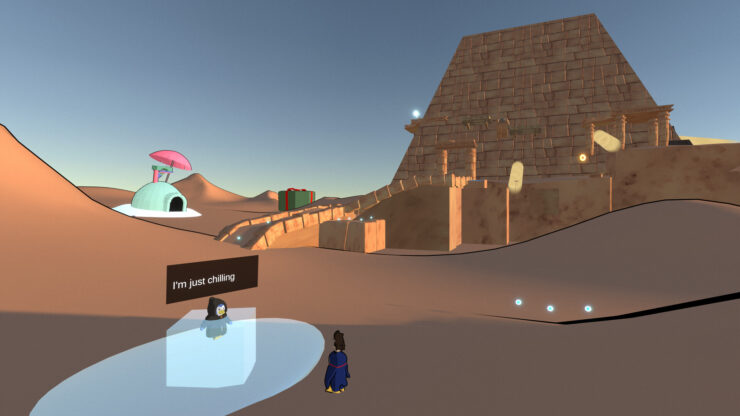
The game world is expansive, perhaps even leaning into the "too large" territory, with significant open space between primary objectives. However, this design choice allows for a sense of isolation and grand scale that highlights the duo’s small size. Confirmed biomes include:
- Haunted Harbors: A moody, atmospheric area featuring moving platforms and spectral obstacles.
- Floating Islands: A sky-high challenge that demands mastery of the game’s jump physics.
- Desert Expanses: A stark, bright environment that highlights the thematic importance of finding ice in a landscape where it clearly shouldn’t be.
The puzzles themselves vary from simple platforming challenges—such as reaching a high-up ice block—to more complex interactions where the player must utilize the environment to bypass locked gates or hostile, ice-stealing penguins.
Official Developer Stance and Vision
The development team behind Spiny & Chilly has expressed a deep, almost infectious passion for the project. During the BIG Conference, the developers emphasized that they wanted to evoke the "sense of wonder" found in late 90s platformers, while updating the movement and camera controls for a modern audience.
Their philosophy is built on the idea that if the character movement feels "good," the rest of the game follows. By keeping the duo together at all times, they ensure that the player never loses sight of the core relationship—the penguin and the hedgehog are a team, and their interdependence is the hook that keeps the gameplay loop engaging. The team is currently utilizing feedback from early demos to tighten the controls, specifically focusing on the "learning curve" that early playtesters reported, ensuring that the difficulty feels like a challenge of skill rather than a frustration of mechanics.
Implications: A New Chapter for Indie Platformers
The rise of Spiny & Chilly signifies a broader trend in the indie gaming market: the resurgence of "collect-a-thons." For years, the genre was considered stagnant, but titles like this prove that there is still a massive, hungry audience for games that prioritize exploration and non-linear level design.
Impact on the Genre
If Spiny & Chilly succeeds, it may encourage other developers to move away from the hyper-linear, "corridor" style of platforming and return to more expansive, secret-filled worlds. The "duo as one" mechanic also offers a fresh take on character design. By removing the need for local or online co-op, the developer maintains a tight, single-player narrative focus while still providing the visual interest of a duo.
The "Wishlist" Economy
The game is currently available for wishlisting on Steam. For an indie developer, this is the most critical metric of success before launch. A high number of wishlists signals to the Steam algorithm that the game has momentum, which in turn influences visibility on the storefront upon release. The buzz generated at the BIG Conference is an early indicator that Spiny & Chilly has the potential to break through the "indie noise."
Final Reflections
As we look toward the eventual full release of Spiny & Chilly, the outlook remains optimistic. It is a game that is not afraid to wear its influences on its sleeve while simultaneously trying something new. While it is true that the game currently features a steep learning curve, the sense of satisfaction upon mastering the movement suggests that the developer is on the right track.
The world of gaming is often dominated by hyper-realistic shooters or complex strategy games. Spiny & Chilly offers a necessary counterpoint: a whimsical, challenging, and undeniably charming adventure that reminds us why we fell in love with platformers in the first place. Whether you are a fan of the genre’s history or a newcomer looking for a unique gameplay experience, this is a title that deserves your attention—and your wishlist.
As the development continues, all eyes will be on how the team balances the vast open spaces with the intimate, high-stakes puzzles. If they can refine the movement to be as intuitive as it is expressive, Spiny & Chilly won’t just be a nostalgic nod to the past—it will be a new benchmark for the future of indie platforming. For now, we wait, we watch, and we prepare to help a penguin and his hedgehog companion save their frozen world, one ice block at a time.


 Jia Lissa
 Azzam Bilal Chamdy