
 Evan Lee Salim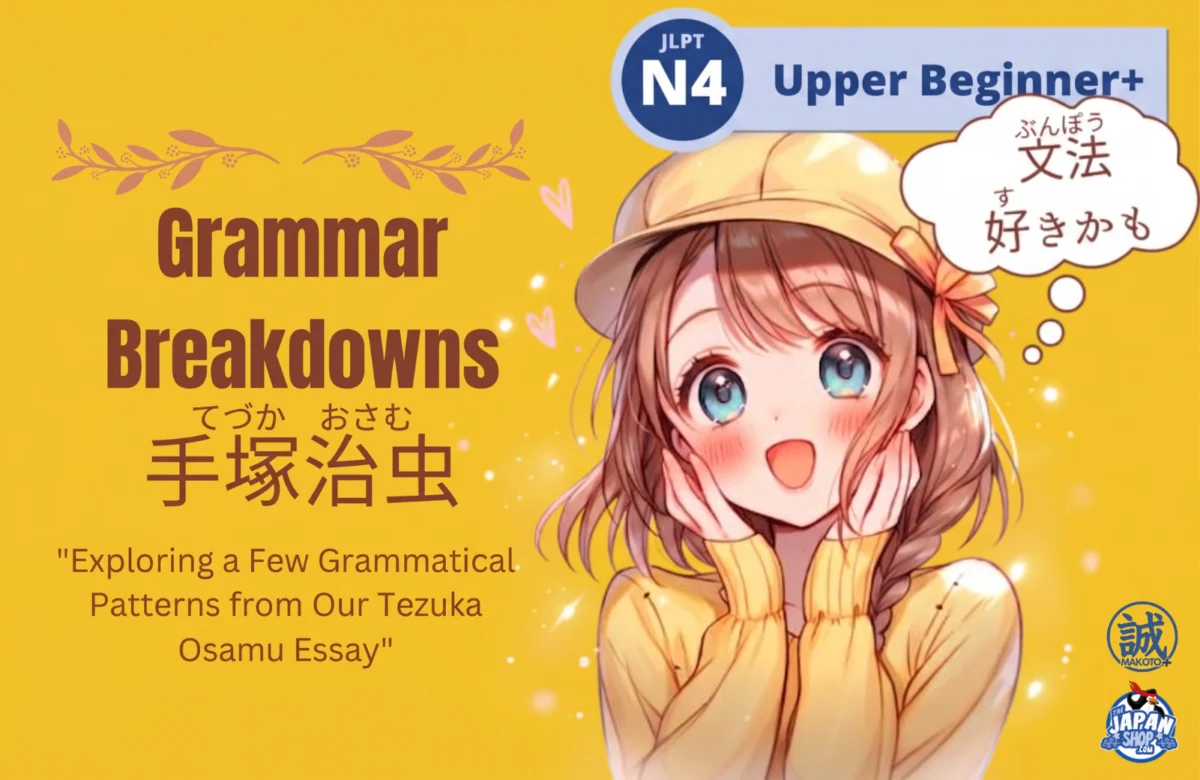
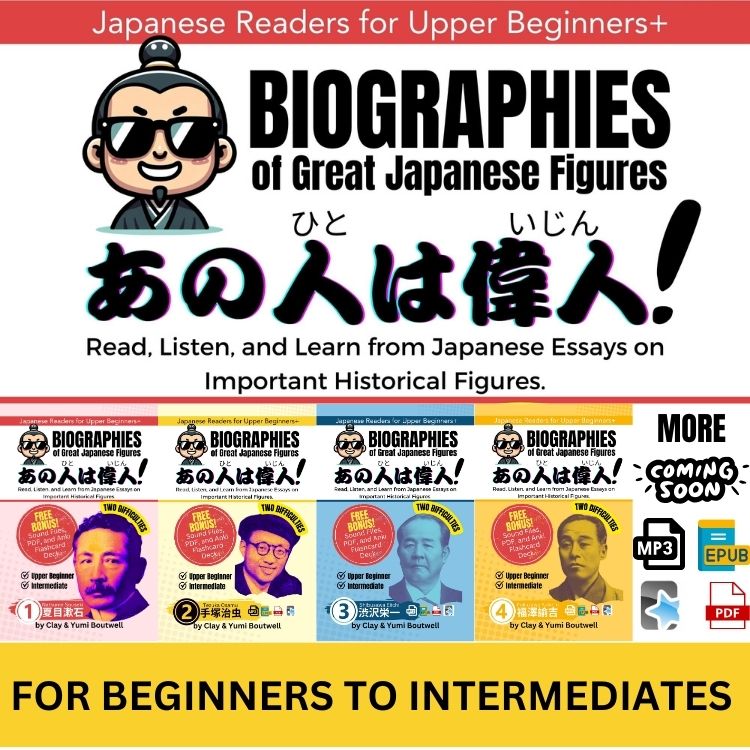
In the journey of language acquisition, the bridge between rote memorization and true fluency is often built upon the foundation of cultural context. For students of the Japanese language, moving beyond standard textbook scenarios into the lives of the people who shaped the nation’s history provides a richer, more nuanced path toward proficiency. A new educational initiative, the Biographies of Great Japanese Figures digital bundle, offers a unique pedagogical approach that combines historical biography with rigorous grammatical analysis. By anchoring complex sentence structures in the life stories of legendary figures—such as the "Godfather of Manga," Osamu Tezuka—this resource transforms the act of reading into a multifaceted intellectual exercise.
Main Facts: The Intersection of History and Grammar
The core philosophy behind the Biographies of Great Japanese Figures series is that language is best absorbed when it is contextualized. Unlike traditional curricula that rely on fragmented, disconnected sentences, this digital collection provides a dual-tiered reading experience. Each biography is presented in two versions: a "Simple Japanese" edition, curated for JLPT N5 and N4 learners, and a "Natural Japanese" edition, designed for those aiming for intermediate-level fluency.
The brilliance of this design lies in its scaffolding. Beginners are encouraged to engage with the simplified text first, which utilizes controlled vocabulary and grammar patterns. As they progress, they are invited to cross-reference these narratives with the more sophisticated "Natural" versions. By bridging these two levels, students are not merely memorizing grammar; they are witnessing how those structures function in a narrative environment. The bundle further supports this by providing comprehensive vocabulary lists and detailed grammatical breakdowns, effectively turning every biography into a private, self-paced classroom.
Chronology: The Evolution of a Teaching Methodology
The development of this resource reflects a shift in modern language pedagogy. Historically, Japanese learners faced a stark choice: either read simplified, often uninspiring stories that lacked cultural depth, or dive prematurely into authentic, difficult materials that led to frustration.
- Foundational Phase: The project began with the identification of key historical figures whose lives offer a clear narrative arc. Figures like Osamu Tezuka were selected not only for their cultural significance but for the richness of the vocabulary required to describe their achievements.
- Structural Integration: The pedagogical team analyzed the specific grammar patterns that typically serve as "stumbling blocks" for intermediate learners, such as the nuances of the subject marker ga (が), the compound verb structure for continuation, and the varied uses of the particle de (で).
- Synthesis and Publishing: The resulting biographies were drafted, refined, and then expanded into the current four-volume bundle. This iterative process ensured that the grammar lessons were not tacked on as afterthoughts, but were seamlessly woven into the actual sentence structures found within the stories themselves.
Supporting Data: Dissecting the Linguistic Architecture
To understand the pedagogical depth of this bundle, one must look at the specific grammatical concepts it highlights. The curriculum focuses on "functional" grammar—structures that appear frequently in professional and literary Japanese.

The Nuances of Change: Verb [Plain Form] + yō ni naru (ようになる)
One of the primary lessons in the collection involves the construction yō ni naru, which denotes a change in state or the acquisition of a new ability. In the context of a biography, this is essential for describing the arc of a person’s life—how a struggling artist "came to be" a master of their craft. It signifies the result of persistence, study, and time.
The Role of the Subject Marker ga (が)
Perhaps one of the most misunderstood particles for English speakers is ga. The resource clarifies that ga is not merely a subject marker but a tool to identify who or what is performing an action or holding a state. By showing how ga marks the subject of a clause—for instance, in the context of personal preferences or specific states—the lessons help learners move past the simplistic "subject marker" definition toward a more intuitive grasp of focus and emphasis.
Continuation and Means: Compound Verbs and Particle de (で)
The bundle also tackles the complexity of compound verbs like hatarakitsuzukeru (働き続ける), which combines the verb "to work" with the suffix "to continue." By breaking down these compounds, students learn how to express sustained action. Furthermore, the use of de to denote the "means" by which something is accomplished (e.g., broadcasting an anime on television) is contextualized through historical events, such as the 1963 debut of televised anime.
Official Responses and Educational Implications
Educators and curriculum designers have increasingly pointed toward the "Content-Based Instruction" (CBI) model as a gold standard for language learning. The Biographies of Great Japanese Figures aligns perfectly with this. By moving away from "textbook Japanese" and toward "narrative Japanese," the bundle addresses the common complaint that language learners can pass standardized tests while struggling to understand complex, real-world texts.
"The goal," notes the design team behind the project, "is to prepare the reader not just to take a test, but to appreciate the cultural fiber of Japan." By analyzing the life of Osamu Tezuka, for example, the learner is not only practicing the yō ni naru construction but is also gaining insight into the mid-20th-century cultural explosion that defined the Japanese creative industry.
Implications for Future Learning
The implications of this integrated approach are significant. As learners move from the N5/N4 level toward advanced proficiency, the primary barrier is often not vocabulary count, but the ability to parse complex sentence structures in a natural flow. By providing a direct, annotated link between a "simple" and "natural" version of the same story, the bundle allows students to conduct a comparative analysis of their own.
This comparative study—a form of "translation" between a learner’s internal lexicon and the actual, fluid language used by native speakers—is perhaps the most effective way to internalize nuance. When a student sees how a professional author describes the career of a national icon, and then sees the simplified version of that same thought, the underlying grammatical logic becomes transparent.
In conclusion, the Biographies of Great Japanese Figures bundle represents a thoughtful evolution in language materials. It treats the Japanese language not as a set of rules to be memorized, but as a living, historical medium. Whether a student is interested in the origins of manga, the political shifts of the Meiji Restoration, or the intellectual history of modern Japan, this resource offers a structured, rigorous, and highly engaging path to mastery. By embedding linguistic lessons into the very stories that define a nation, the series ensures that the learner is not just gaining proficiency, but a profound connection to the culture they are studying.
For those who have plateaued at the intermediate level, this resource provides the necessary tools to break through, offering the kind of depth that transforms a language learner into a true student of Japanese history and culture. Through the study of the lives of others, we find the most effective way to express our own.


 Neng Nana
 Asro
Asro





