Muslim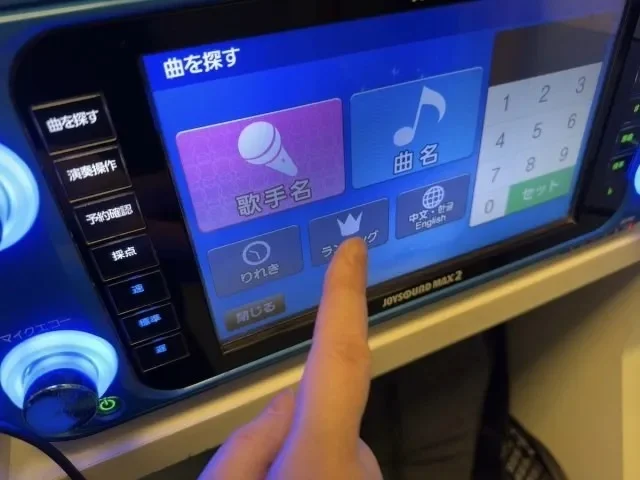
In the neon-lit landscape of Japanese nightlife, karaoke has long served as the ultimate social equalizer. Whether it is a salaryman unwinding after a grueling work week or a group of university students celebrating an exam’s end, the private karaoke room—or karaoke-box—is a cornerstone of modern Japanese leisure. However, a seismic shift in how the Japanese public interacts with these massive, 440,000-song catalogs is currently underway.
For the week of June 1 to June 7, the industry leader Joysound released its weekly popularity charts. While the top spots were occupied by mainstream acts like M!LK and Vaundy, the fourth-place entry sent shockwaves through the industry: "Hakata no Shio," a three-second corporate sound logo for a table salt manufacturer. This anomaly represents more than just a viral trend; it signals a fundamental change in the "karaoke economy," driven by efficiency, competition, and the burgeoning Gen Z philosophy of taipa.
Chronology of a Cultural Shift
The evolution of karaoke from a long-form performance art to a bite-sized, gamified experience did not happen overnight. For decades, the karaoke experience was defined by the "full track" model. Singers would select a song, wait for the instrumental, and proceed through verses, choruses, and bridges—often totaling four to five minutes per track.
However, the late 2010s saw the rise of competitive karaoke television programs, such as The Karaoke Battle. These shows popularized the use of high-tech scoring systems that evaluate pitch, vibrato, and timing with surgical precision. As these systems became standard in commercial karaoke parlors, the focus of the hobby shifted. Users began to prioritize "perfecting" their performance over simply singing for enjoyment.
By 2024 and 2025, social media platforms like TikTok began favoring short-form content, conditioning younger audiences to consume media in fifteen-second bursts. This culminated in the June 2026 data, where corporate jingles—traditionally relegated to the background of television commercials—surged to the top of the charts. The "Hakata no Shio" phenomenon is the current zenith of this trend, proving that a three-second clip can now hold as much cultural weight as a five-minute power ballad.
Supporting Data: The Efficiency Revolution
To understand why a jingle for table salt is currently competing with established pop stars, one must look at the data driving the "Time Performance" (taipa) movement. Taipa refers to the optimization of time; it is the art of extracting maximum value from every second spent. In a world of infinite content, time is viewed as a finite resource to be managed with the precision of a project manager.
The "Oomf-Per-Second" Metric
"Hakata no Shio" is the perfect taipa song. Its three-second duration allows a user to perform, receive a high-score rating, and move on to the next track in record time. When analyzed through the lens of a competitive singer, the advantages are twofold:
- Repetition: A singer can practice a difficult vocal run or a specific pitch transition 100 times in the same span it takes to sing a classic rock anthem like X Japan’s "Kurenai."
- Scoring Optimization: By singing shorter segments, the user reduces the margin for error. A three-second clip provides a focused environment for the machine to calculate pitch accuracy without the "noise" of long, experimental musical passages.
Joysound’s introduction of "Sabikara" (Chorus Karaoke) further validates this trend. By offering versions of songs that consist only of the hook, the provider has acknowledged that the modern karaoke user is less interested in the narrative arc of a song and more interested in the "hit" of the chorus. Data shows that users are increasingly skipping verses entirely, favoring tracks that get straight to the emotional or technical payoff.
Official Responses and Corporate Adaptation
The manufacturers themselves have responded with agility to these changing consumer habits. The launch of the "Sound Logo Karaoke Awards" represents an official acknowledgment that corporate branding has entered the musical mainstream. The fact that Hakata no Shio—a company that once faced consumer complaints regarding the "jarring" nature of their gruff, male-voiced jingle—has now secured the "People’s Choice" award is a testament to the power of ironic consumption and mass-market saturation.
The Grand Prize, awarded to the Toppan jingle, further cements the idea that Japanese consumers are looking for "earworms" that can be performed with high energy and minimal commitment. Industry analysts suggest that we are witnessing the "commodification of the jingle," where brands are now competing to produce the most "singable" commercial possible, knowing that it might end up on a karaoke leaderboard.
Implications: The Death of the Extended Disco Interlude?
The implications of this shift are profound for both the music industry and social dynamics. If the current trajectory continues, the traditional five-minute pop song may become a relic of the past, at least in the context of karaoke culture.
A Conflict of Generations
For the older generation, karaoke is about catharsis. It is about the "extended disco interlude," the slow build-up of a power ballad, and the emotional journey of a complete composition. For the younger generation, karaoke is a high-speed sport. This creates a fascinating, if somewhat comical, social tension. If a group of mixed-age colleagues enters a room, the "playlist" could quickly become a battleground. One participant may be queuing up an eight-minute epic to perform their best rendition of a classic, while the younger cohort is waiting to rattle off a dozen thirty-second sound logos to maximize their "time-performance" score.
The Future of "Short-Form" Performance
We are already seeing a move toward the ultra-short. A decade ago, the recommendation of one-second songs like Napalm Death’s "You Suffer" was seen as a fringe joke. Today, it is a blueprint for the future. The music industry is beginning to design songs with "karaoke-ability" in mind, ensuring that the most recognizable parts are punchy, short, and highly scoreable.
As we look toward the remainder of 2026 and beyond, the "Hakata no Shio" hit should be viewed as a canary in the coal mine. It signifies that the era of the "long listen" is being challenged by the era of the "quick hit." While there will always be a place for the deep, soulful performance, the metrics of the digital age are clearly favoring the efficient, the brief, and the undeniably catchy.
For those planning a night out, the advice is clear: brush up on your jingles, understand the taipa requirements of your companions, and perhaps leave the long-form disco dance routines for a private room where you don’t have to worry about the efficiency of your singing queue. The world is moving faster, and in Japan, it seems that even your favorite karaoke track is now expected to be served in under ten seconds.


 Neng Nana
 Asro
Asro