Nila Kartika Wati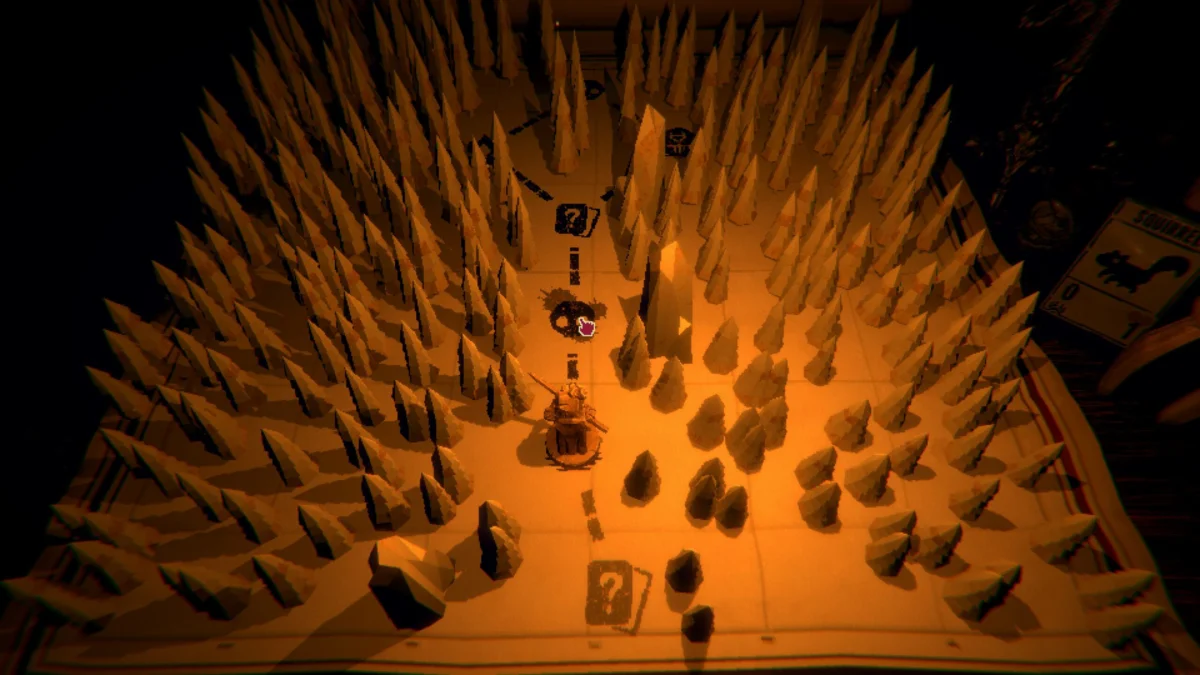
Price: £16.79 | Developer: Daniel Mullins Games | Publisher: Devolver Digital | Platform: PC
In the crowded landscape of modern indie gaming, few titles possess the audacity to dismantle the player’s expectations before the title screen has even finished loading. Inscryption, the latest mind-bending opus from developer Daniel Mullins Games and publisher Devolver Digital, is one such rarity. It is not merely a deck-building roguelike; it is an atmospheric descent into a claustrophobic nightmare, a meta-narrative puzzle box that blurs the lines between player, protagonist, and prisoner.
The Genesis of the Ritual: Main Facts and Premise
Inscryption presents itself as a sinister, backwoods card game played within the confines of a dilapidated, candle-lit shack. From the moment you boot the software, the game establishes a predatory rapport with the user. A faux-loading screen gives way to a menu that offers no "New Game" option—only "Continue."
The game immediately traps the player in a narrative loop: you are a captive participant in a high-stakes ritual orchestrated by a shadow-wreathed, unseen entity whose voice buzzes with an otherworldly, mechanical malice. The mechanics are built upon a foundation of "bones and blood," where woodland creatures serve as both your tactical assets and your necessary sacrifices.
Core Gameplay Loop
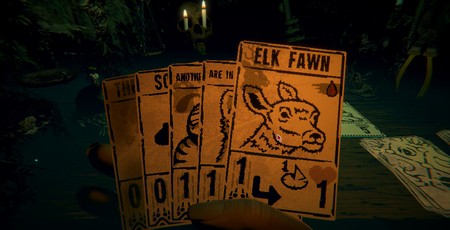
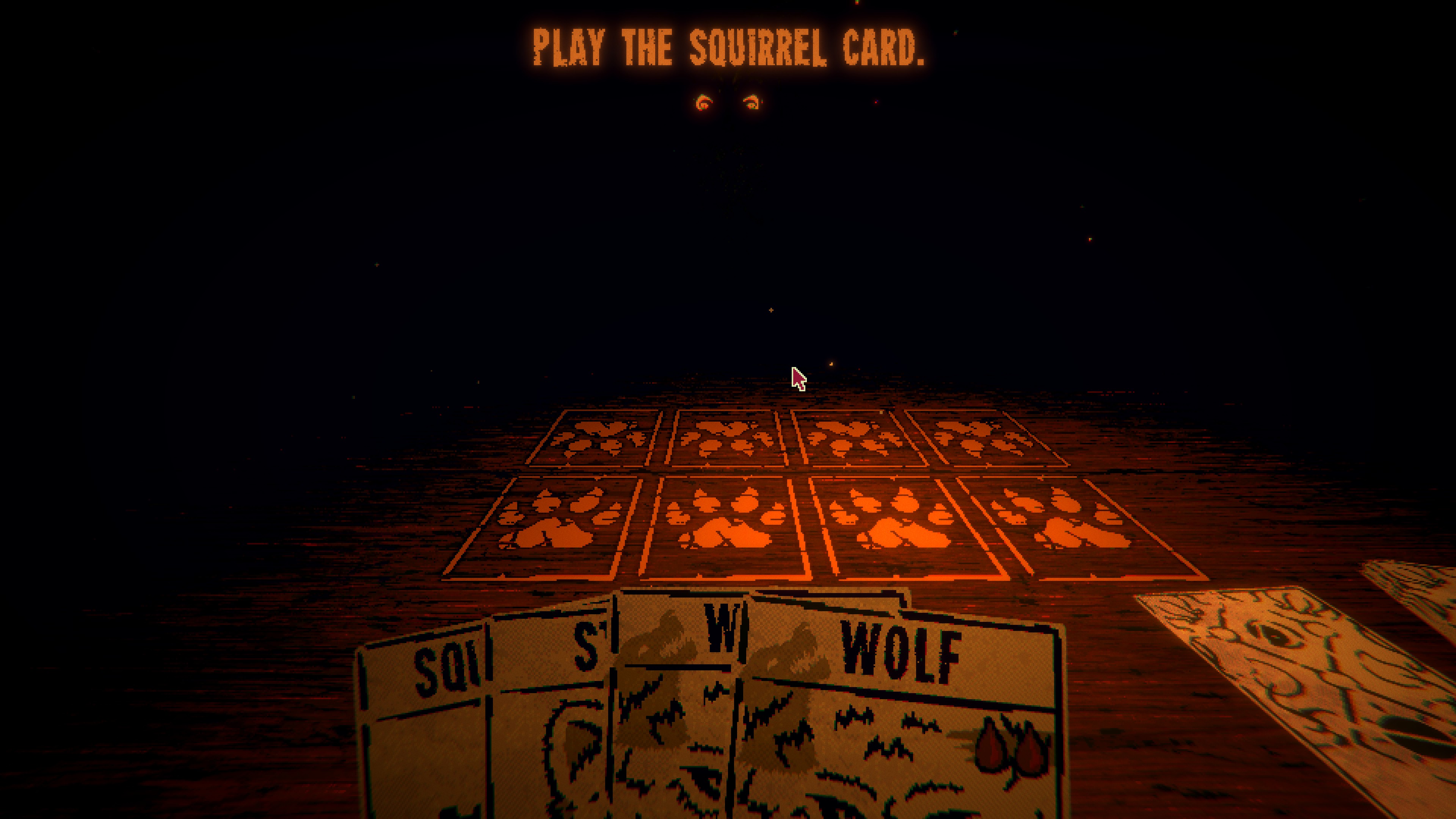
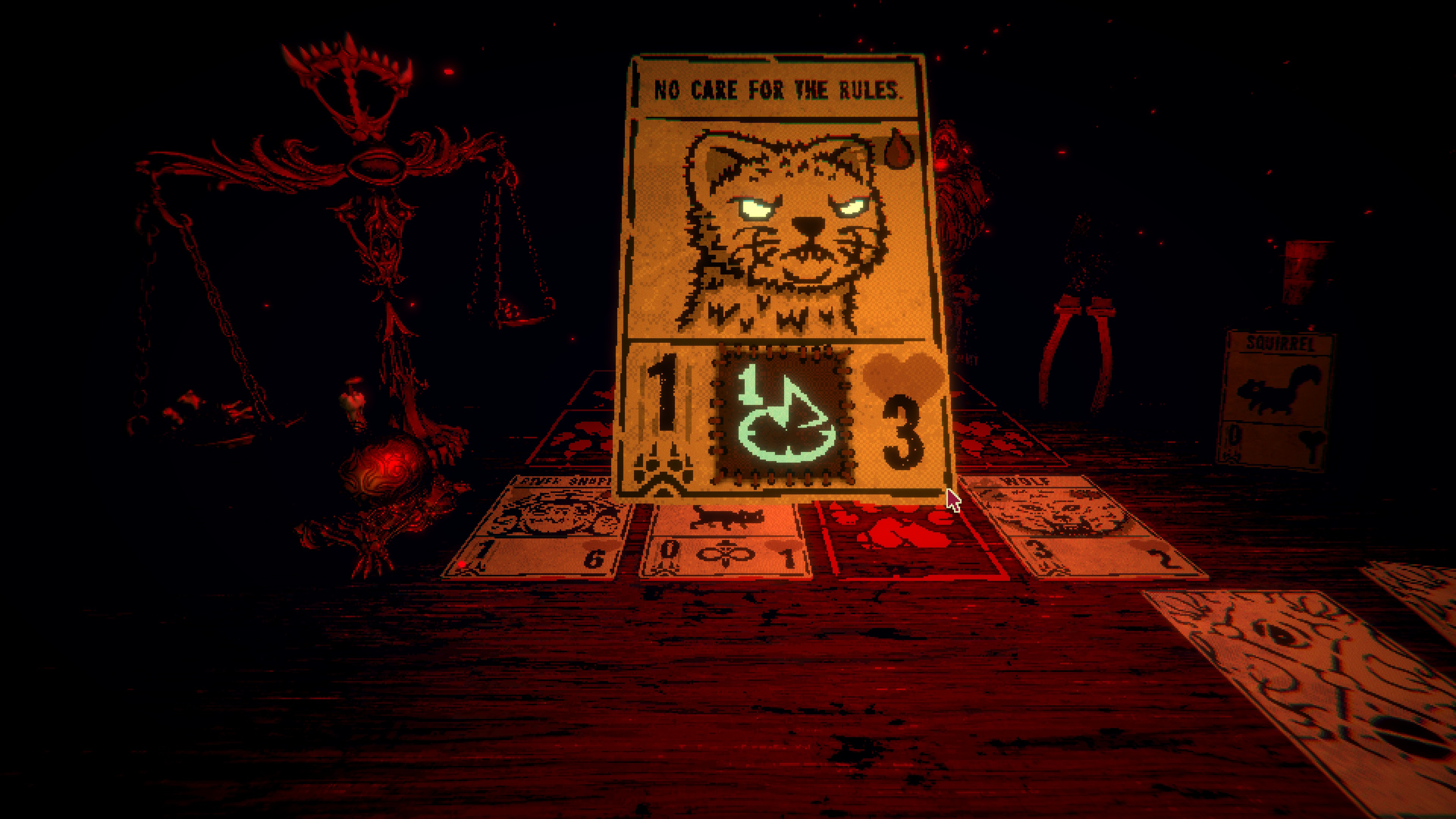
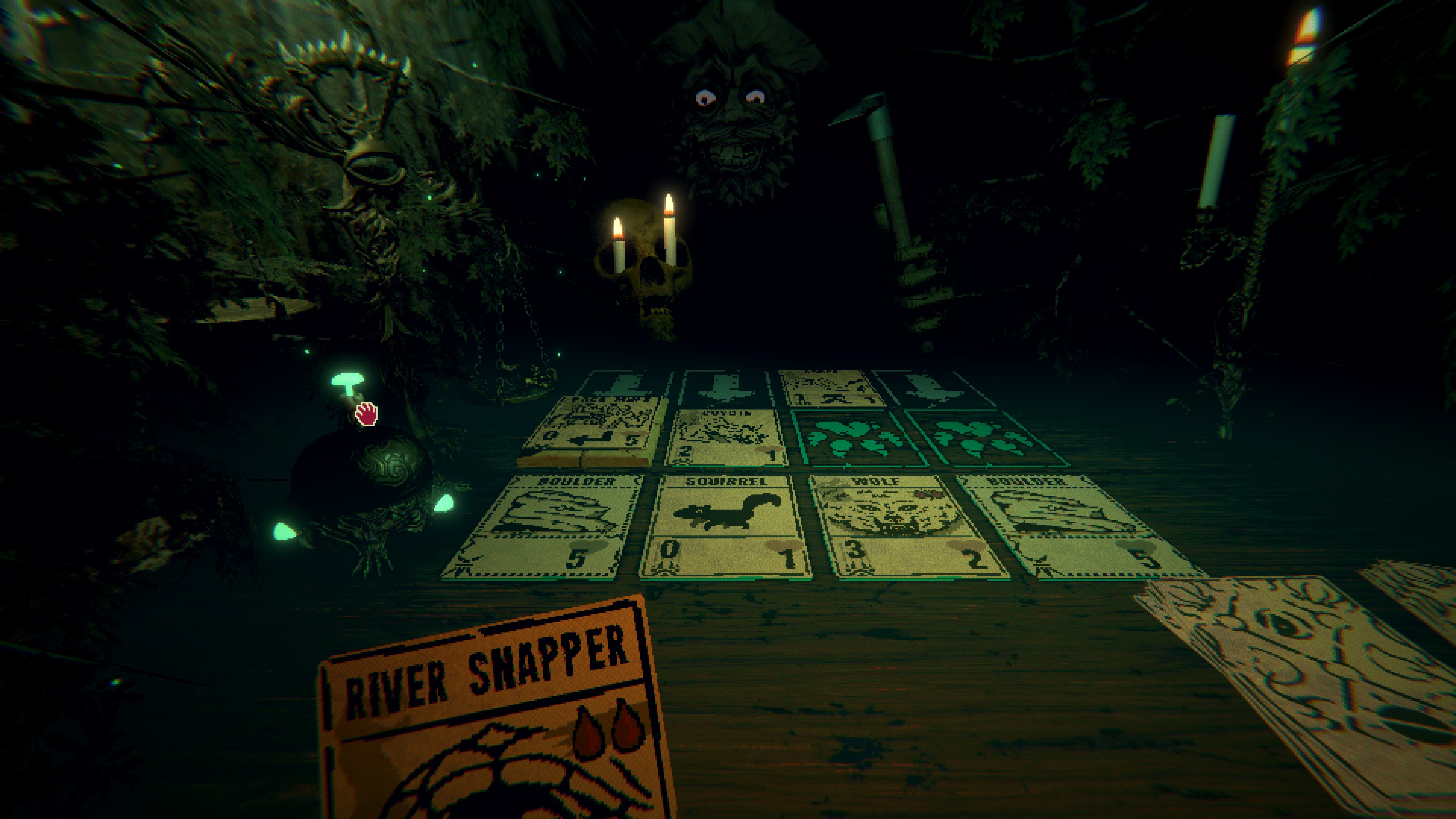
The combat revolves around a scale-based system. Players deploy cards—squirrels, stoats, wolves, and more—onto a board. To summon stronger creatures, one must often sacrifice weaker ones, spilling their "blood" to fuel the arrival of more formidable beasts. Victory is achieved by tilting the balance of a physical scale in your favor, a process that requires a delicate, often cruel, management of resources and damage output.
A Descent into the Warren: Chronology of the Experience
The progression of Inscryption is not a linear path of levels, but a deepening spiral. To understand the game, one must follow the trajectory from the table to the cabin walls.
The Initial Confrontation
The journey begins at the stool. You are handed a deck of cards, your hands trembling as you face an opponent who watches your every move with impatient, blinking eyes. The Stoat, one of your early cards, acts as a reluctant mentor, whispering advice that suggests it—and perhaps you—are aware of the absurdity of your situation.
The Cabin as a Sandbox
When not engaged in the card game, the player is granted limited agency to explore the surrounding cabin. This is where Inscryption transcends the genre. The room is a physical manifestation of the game’s meta-layers. By interacting with objects—a safe in the corner, a cuckoo clock, a cryptic rulebook—the player uncovers clues that are vital to progression. The game effectively treats the physical space of the shack as a puzzle board, where the secrets of the cabin feed directly into the strength of your deck.
The Escalation
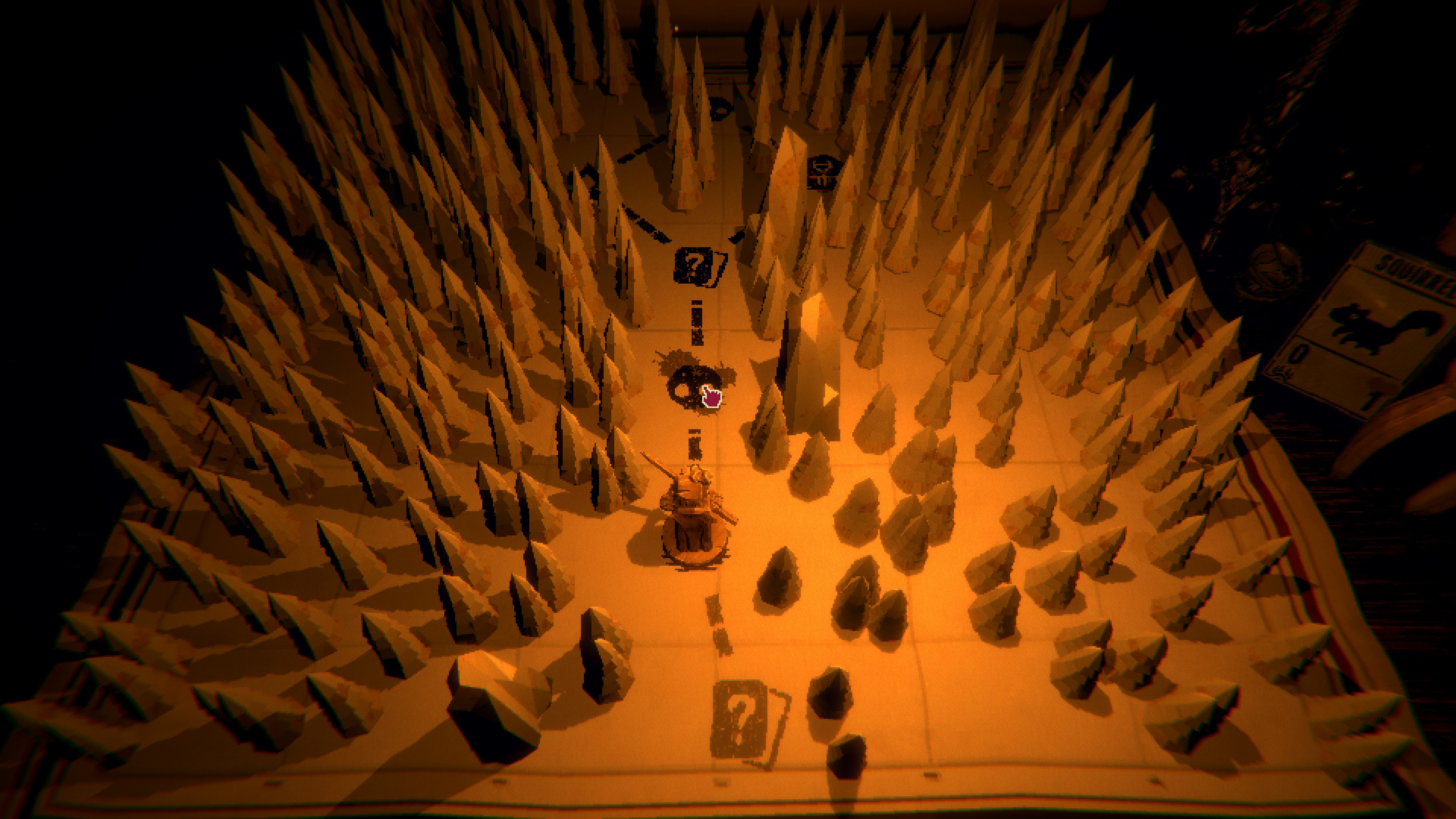
As you navigate the map, moving your figurine along a branching path, you encounter diverse mechanics. You might trade pelts with a shadowy merchant, use stone altars to graft the abilities of one creature onto another, or encounter the Prospector—a boss capable of transmuting your hard-earned cards into useless gold. Each victory feels earned, yet each defeat carries a weight that is profoundly unsettling, hinting at consequences that extend far beyond a "Game Over" screen.
Supporting Data: Mechanics and Strategic Depth
Inscryption succeeds because it balances its dark, narrative-heavy atmosphere with a robust, highly addictive card-battling engine. The game introduces systems that keep the player constantly adapting:
- Blood and Bone Economy: While blood is gained by sacrificing creatures on the board, bones are collected as a secondary currency whenever a creature dies. This creates a fascinating strategic tension where the death of your units actually fuels your future offensive capabilities.
- The Power Creep: As players solve the environmental puzzles within the cabin, they unlock secret cards and abilities that can render the game’s internal economy "broken." While some might view this as a design oversight, it is clearly intentional; the game encourages the player to become a "cheater" to survive the sadistic whims of their captor.
- Tactical Variety: From venomous Adders that kill upon contact to ants that gain damage exponentially based on the size of the colony, the variety of cards ensures that no two runs feel identical.
Official Responses and Industry Reception
Since its release in late 2021, Inscryption has been hailed by both critics and players as a masterpiece of genre-blending. Developer Daniel Mullins, known previously for Pony Island and The Hex, has solidified his reputation as a creator who views the medium of video games as a medium for deception.
In various promotional interviews, Mullins has emphasized that Inscryption was designed to be "uncomfortable." The collaboration with Devolver Digital allowed the project to retain its sharp, uncompromising edges, avoiding the homogenization that often plagues major deck-building titles. Players have responded by turning the game into a community mystery, with forums and social media channels dedicated to deciphering the ARG (Alternate Reality Game) elements hidden within the source code and the physical items found in the game.
Implications: Why We Stay
The most profound question Inscryption asks is: Why do we keep playing?
The game meta-comments on the nature of the "gamer." We are conditioned to seek the next reward, to fill the scale, to win at all costs. Inscryption exploits this conditioning. It makes the player an accomplice to the ritual. The atmosphere is thick with a sense of dread, yet the compulsion to pull up the stool for "one more round" is overwhelming.
The Psychological Pull
There is a dark intimacy in the cabin. The cards argue with you, the opponent critiques your choices, and the environment feels alive with a decaying, ancient history. The game successfully creates a feedback loop where the horror of the situation is secondary to the thrill of the mechanics. The player’s hands do not shake from fear, but from the adrenaline of a masterfully executed play.
A Landmark for the Genre
The implications of Inscryption for the future of roguelikes are significant. It proves that narrative density and environmental storytelling can exist within the strict confines of card-based combat. It pushes the boundary of what a game "is," moving away from being a mere simulator of a card game to being a living, breathing entity that acknowledges its own digital existence.
Conclusion: Pull Up a Stool
To play Inscryption is to accept an invitation into a dark, shifting world that refuses to be categorized. It is a game that respects the player’s intelligence while simultaneously mocking their desire for control. Whether you are driven by the urge to solve the mystery of the cabin or simply to build an unstoppable, bone-fueled deck, the game provides a depth of experience that is currently unrivaled.
If you find yourself standing before the flickering screen, finger hovering over the mouse, do not look for a way out. Do not look for a new game. There is no new game. There is only the board, the blood, the sacrifice, and the shadow across the table. Sit down, listen to the Stoat, and prepare yourself. In the world of Inscryption, the only way out is through, and the deeper you go, the more you will realize that you never truly wanted to leave in the first place.


 Rifan Muazin