Lina Hope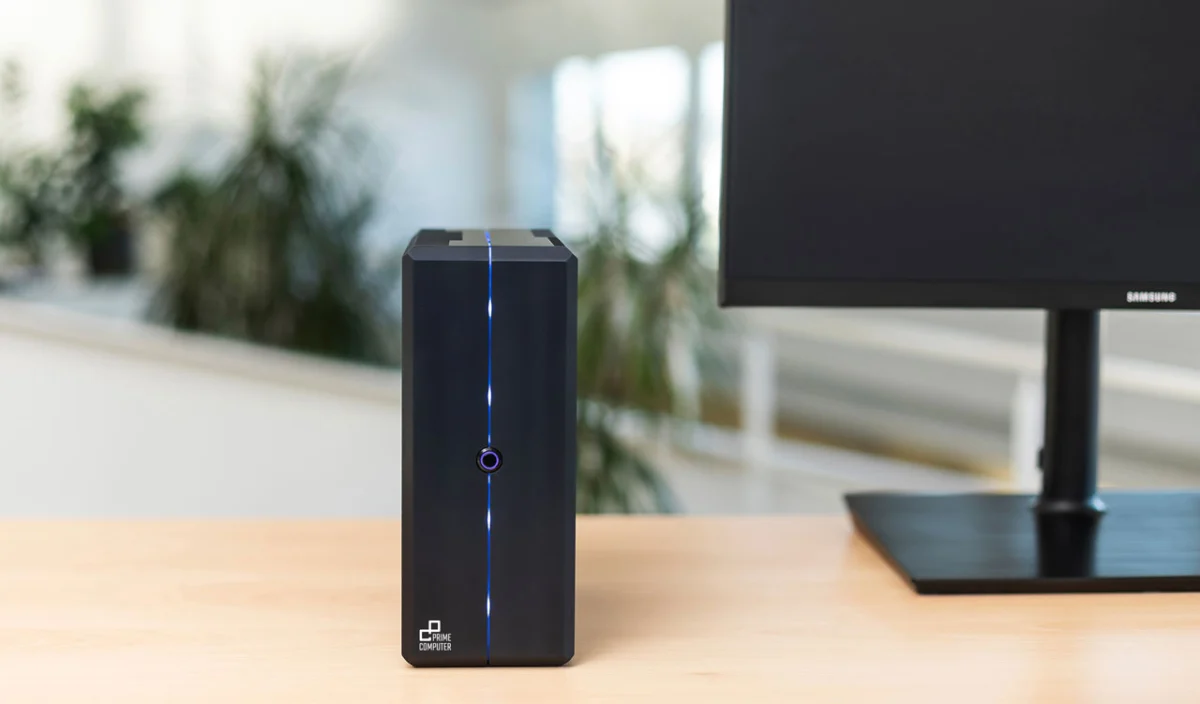
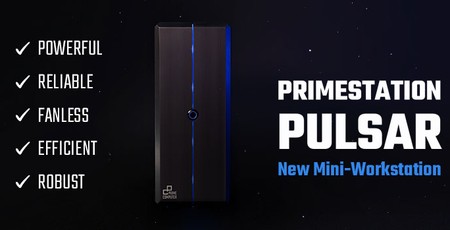
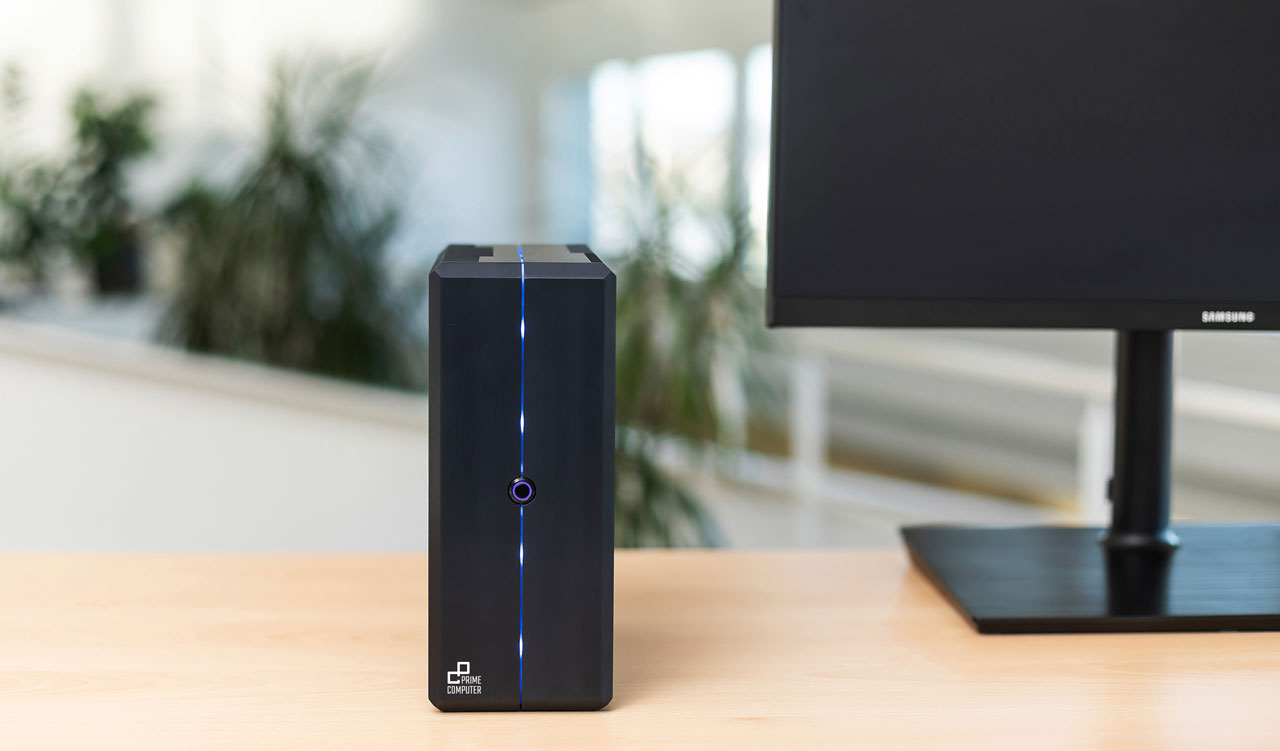
In an era defined by the persistent hum of cooling fans and the environmental cost of high-performance computing, Swiss manufacturer Prime Computer has unveiled a compelling alternative. The newly launched PrimeStation Pulsar is not merely another entry in the crowded mini-PC market; it represents a deliberate marriage between industrial-grade workstation performance and a radical commitment to carbon neutrality. By leveraging an innovative fanless chassis design and the efficiency of AMD’s Ryzen Pro architecture, the Pulsar seeks to redefine the workstation aesthetic for the sustainable professional.
Main Facts: Engineering Silence and Sustainability
At the core of the PrimeStation Pulsar is the ambitious goal of eliminating mechanical failure points and noise while maintaining professional-grade thermal management. The workstation is encased in a robust, finned aluminum chassis that functions as a monolithic heatsink. By abandoning traditional active cooling—fans, heat pipes with moving parts, and complex intake venting—Prime Computer has effectively created a system that is impervious to dust accumulation and mechanical wear.
The hardware driving this silent engine is the AMD Ryzen 7 Pro 5750G. This 65W APU (Accelerated Processing Unit) is a powerhouse, featuring 8 cores and 16 threads, with a base clock of 3.8GHz and a boost capability of up to 4.6GHz. Built on TSMC’s 7nm FinFET process, the chip integrates 16MB of L3 cache and eight Radeon Vega GPU cores clocked at 2.0GHz. This configuration allows the Pulsar to bridge the gap between a compact office desktop and a capable creative workstation, all without a single decibel of fan noise.
Perhaps the most distinctive claim regarding the Pulsar is its 100% climate-neutral certification. Prime Computer has structured its supply chain and manufacturing processes to account for the carbon footprint of every component, assembly step, and distribution channel, offsetting what cannot be reduced to ensure the product arrives with a net-zero carbon impact.
Chronology: The Evolution of the Fanless Workstation
The journey toward the Pulsar began with a shift in market demand. Over the past decade, the industry saw a trend toward massive, liquid-cooled towers that prioritized pure thermal headroom over efficiency. However, the rise of the "prosumer" class and the shift toward home offices created a secondary market for quiet, reliable, and aesthetically pleasing hardware.
- Q1 2021: Initial conceptualization of the "Pulsar" project at Prime Computer’s Swiss headquarters, focusing on the thermal limits of passive cooling for 65W TDP processors.
- Q2 2021: Selection of the AMD Ryzen 7 Pro 5750G as the primary compute engine, citing its superior performance-per-watt ratio compared to traditional discrete GPU configurations.
- Q3 2021: Prototyping the aluminum extrusion chassis. Engineers focused on maximizing surface area for passive convection while maintaining a footprint small enough for modern desk spaces.
- October 2021: Official market launch of the PrimeStation Pulsar. The product was highlighted by niche tech outlets, specifically Fanless Tech, drawing attention to its unique blend of environmental accountability and professional specs.
- Post-Launch: The Pulsar has entered the conversation alongside other enthusiast-grade fanless solutions, such as the MonsterLabo "Beast," signaling a resurgence in passive computing.
Supporting Data: Technical Specifications and Performance
The technical prowess of the Pulsar is evident in its flexibility, despite its compact 9.1cm x 22.5cm x 20.3cm dimensions. Weighing in at approximately 4.3kg, the system feels substantial, a necessary trait for a chassis that must absorb and dissipate heat from a 65W processor.
Memory and Storage Configuration
The system supports a wide range of memory options, catering to both standard office tasks and memory-intensive workflows. Users can configure the unit with 8GB, 16GB, 32GB, or 64GB of DDR4 3200 memory via two SO-DIMM slots. Storage is handled by a hybrid approach, offering both an NVMe M.2 slot for high-speed primary storage and a 2.5-inch SATA III bay for bulk data needs.
Connectivity and I/O
Connectivity remains a priority, ensuring that the machine is not just a workstation in name, but in utility:
- Networking: Intel Wireless AX200 (Wi-Fi 6) + Bluetooth 5.2, complemented by a 2.5Gbps Ethernet port for high-speed local networking.
- Video Output: HDMI 2.1 and DisplayPort 1.4, supporting high-resolution, multi-monitor setups common in modern design environments.
- Peripherals: 3x USB 3.2 Type-A, 1x USB 3.2 Type-C, 1x USB 2.0 Type-A, and specialized audio USB Type-C and standard 3.5mm jacks.
The integration of the AMD Ryzen 7 Pro 5750G’s integrated graphics ensures that while the system is not a gaming beast, it is more than capable of handling 4K video playback, complex spreadsheet calculations, and light-to-medium video editing tasks without needing a dedicated power-hungry graphics card.
Official Responses and Market Positioning
Prime Computer has positioned the Pulsar as a "responsible" workstation. In their official documentation, the company emphasizes the importance of hardware longevity. By removing fans, they have eliminated the primary point of failure in computer systems. Dust buildup, which usually leads to overheating and eventual hardware degradation, is rendered moot by the sealed, fanless design.
Industry analysts have been quick to point out that the $2,179 price tag is steep compared to off-the-shelf mini-PCs with similar processors. However, the premium reflects the R&D costs associated with passive thermal engineering and the overhead of maintaining a fully climate-neutral manufacturing lifecycle. Critics and enthusiasts have drawn comparisons between the Pulsar and the MonsterLabo "Beast"—a far larger, more modular fanless case. The distinction is clear: The Pulsar is a turn-key solution for the professional who values time, silence, and ethics over the ability to endlessly tinker and upgrade.
Implications: The Future of Sustainable Computing
The launch of the PrimeStation Pulsar raises significant questions about the direction of the PC hardware industry. Can high-performance computing continue to ignore the environmental cost of production and the noise pollution created by active cooling?
The Shift Toward Sustainability
Prime Computer is banking on the idea that corporations and high-end users will increasingly be held accountable for their carbon footprints. By providing a system that is "certified climate-neutral," Prime Computer is offering a plug-and-play solution for companies aiming to meet ESG (Environmental, Social, and Governance) targets. This may set a precedent for future hardware launches, where carbon offsetting becomes as common as clock speed benchmarking.
The Return of Passive Cooling
For decades, the industry assumed that "high performance" required massive airflow. The Pulsar, by managing a 65W TDP chip entirely through passive aluminum dissipation, proves that modern silicon is efficient enough to move away from mechanical cooling. While this is unlikely to replace liquid-cooled gaming rigs, it represents a massive opportunity for the workstation, server, and home-theater markets.
The "Niche" Barrier
The primary hurdle for the Pulsar—and for similar fanless systems—remains the cost-to-performance ratio. For the price of a Pulsar, a user could theoretically build a much faster machine with discrete cooling. However, the value proposition of the Pulsar is not in raw benchmark scores; it is in the total cost of ownership (TCO). Between reduced power consumption, decreased maintenance costs (no fans to replace), and the peace of mind offered by a climate-neutral supply chain, the Pulsar is aimed at a specific, sophisticated demographic that views their workstation as an extension of their personal and corporate values.
In conclusion, the PrimeStation Pulsar is a bold experiment in industrial design. It challenges the "more is better" philosophy of modern computing, replacing it with a "better is more" ethos. Whether this silent, climate-neutral workstation marks the beginning of a larger shift or remains a boutique luxury for the eco-conscious professional remains to be seen, but it has undoubtedly set a new standard for what a mini-PC can achieve.


 Ammar Sabilarrohman
 Reynand Wu