
 Lina Hope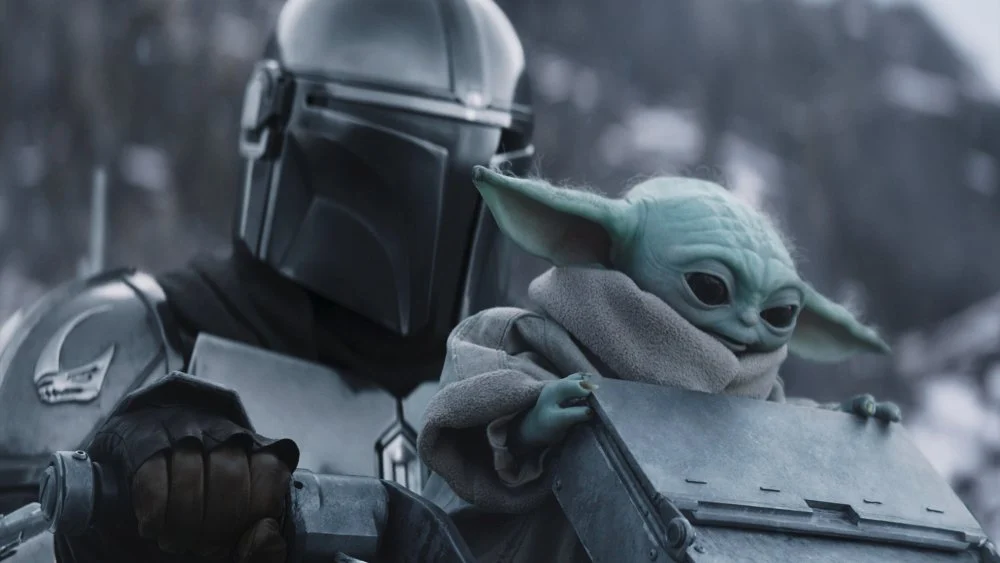
In the expansive landscape of the Star Wars universe, music has always served as the emotional bedrock. From John Williams’ sweeping, Wagnerian leitmotifs to the experimental, textured soundscapes of the modern era, the franchise’s audio identity is as vital as its visual spectacle. At the forefront of this evolution stands composer Ludwig Göransson, whose work on The Mandalorian and the new feature film, Star Wars: The Mandalorian and Grogu, has redefined the sonic boundaries of a galaxy far, far away.
By blending the visceral, grounded grit of synthetic production with the grandiosity of a 70-piece orchestra, Göransson has crafted a score that feels both ancient and futuristic. As the franchise transitions from the streaming platform to the silver screen, Göransson’s auditory signature has grown in complexity, marking a pivotal moment in the history of Star Wars music.
The Genesis of a New Sound: A Chronology of Collaboration
The partnership between director Jon Favreau and Ludwig Göransson began in 2019, a period that would fundamentally alter the acoustic texture of the Star Wars mythos. When Favreau first tapped the Swedish composer to score the inaugural season of The Mandalorian, he wasn’t looking for a traditional pastiche of the past. Instead, he sought a sound that reflected the lonely, nomadic existence of the titular bounty hunter, Din Djarin.
Göransson famously introduced a distinct, haunting bass recorder theme—a sound that felt minimalist, almost rustic, contrasting sharply with the opulent orchestral scores that had defined the saga for decades. Alongside this, he established a four-note motif for the Force-sensitive child, Grogu, grounding the character’s burgeoning power in a recurring, gentle melody.
This collaborative relationship was built on mutual experimentation. Favreau, having just finished his work on the photorealistic The Lion King and having maintained a long-standing creative dialogue with Donald Glover (Childish Gambino), was deeply intrigued by Göransson’s background as a contemporary music producer. He saw in Göransson a bridge between cinematic orchestration and modern beat-making—a bridge that Star Wars desperately needed to feel fresh.
Orchestrating the Epic: "The Mandalorian and Grogu"
With the transition to Star Wars: The Mandalorian and Grogu, Göransson has scaled his ambitions. The score for the film is a masterclass in scale, utilizing a massive 70-piece orchestra to weave intricate sound design elements into the narrative tapestry.
The film picks up in a fractured galaxy. With the Galactic Empire in ruins and Imperial warlords operating in the shadows, the New Republic struggles to maintain order. Din Djarin and Grogu are thrust into a world of political instability and high-stakes survival.
Göransson’s opening cue, "This Is the Way," is an eight-minute masterstroke. It serves as a programmatic summary of the film’s tone, integrating diegetic sounds—such as the piercing, rhythmic blare of facility alarms—directly into the musical arrangement. "The first time you see Mando, alarms are going off in the building," Göransson notes. "I was using the alarms as part of the music, timing the music with the alarms." This blurring of the line between sound design and composition is a hallmark of the composer’s philosophy: that the environment itself should be an instrument.
Supporting Data: From Synthesized Synths to Global Rhythms
Göransson’s work on the film is characterized by its stylistic versatility. When the narrative moves to the new planet of Shakari—a world defined by its neon-drenched visuals—Göransson pivots toward the heavy electronic synths that defined his early work as a producer.
"When I first started working with Jon, he was always excited and interested in that other side of me, where I produce beats," Göransson recalls. "When I saw Shakari on screen, it brought me back to those kinds of synths. That’s what’s fun about Star Wars and The Mandalorian. There are so many different, interesting visual worlds that they go to—different planets, creatures, and music. You can take it anywhere."
This versatility is further exemplified in the introduction of Rotta the Hutt, voiced by Jeremy Allen White. For this character, Göransson opted for a sonic palette dominated by aggressive electric guitars and rhythmic, chanting vocals, evoking a sense of larger-than-life, visceral energy. In a standout sequence titled "The Pit Fight," where Mando and Rotta must survive a gladiator-style match, the music incorporates thunderous drums and frenetic electronic layers. The inspiration for this sequence, surprisingly, traces back to the 1990s television show American Gladiators. "I think that was my inspiration in terms of that feeling I wanted to evoke," he admits.
The Third Act: A Silent Narrative
Perhaps the most significant challenge Göransson faced during production was the film’s third act. The sequence, which involves a poisoned Din Djarin slipping into a coma, leaves Grogu to navigate a dangerous environment entirely on his own. With almost no dialogue to carry the weight of the scene, the burden of emotional storytelling shifted entirely to the score.
"I didn’t know exactly how to approach that scene because it’s a pretty long sequence," Göransson says. "I remember sitting with it for the longest time, trying out different ideas and writing completely new ones."
The breakthrough came on the final day of the scoring process. By leaning into Grogu’s four-note motif, Göransson transformed the sequence into a poignant exploration of the character’s agency. "It becomes his adventure," the composer says. He likens the approach to Sergei Prokofiev’s Peter and the Wolf, utilizing woodwinds to mimic the natural world and convey Grogu’s internal state. By allowing the music to speak where words could not, Göransson successfully bridged the gap between a character-driven moment and a cinematic spectacle.
Implications for the Future: Breaking the Mold
The impact of this score extends beyond the film itself. The decision to bring back the original musicians who recorded the series seven years ago added a layer of emotional resonance to the production. "At that time, they didn’t know The Mandalorian theme would become canon," Göransson reflects. "Having the musicians come back and go through this music again in L.A. was a beautiful experience."
Göransson’s influence is also clearly visible in his upcoming projects. His reunion with director Christopher Nolan for the film The Odyssey marks a departure from traditional orchestration. Under Nolan’s instruction to eschew the orchestra—because "the orchestra didn’t exist back then"—Göransson has been experimenting with 35 bronze gongs and synthesized layers. This relentless pursuit of new sounds underscores his professional philosophy: every project is an opportunity to learn, to excel, and to evolve.
Conclusion: A Legacy in the Making
For Ludwig Göransson, the ultimate reward of this process is personal. As his children grow, they have become deeply immersed in the music he creates, learning to play his themes on the piano. This connection highlights the accessibility and durability of his work.
Göransson has achieved something rare in the modern film industry: he has created a soundtrack that functions as a narrative in its own right. "More than any other soundtrack I’ve done," he asserts, "you can follow every scene just by listening and know exactly what’s going on."
As Star Wars continues to expand, the music will remain the silent, driving force behind the visuals. Through the lens of Göransson’s creative process, we see a composer who is not just filling the air with sound, but building the architecture of a universe—one note, one synth, and one alarm at a time. Whether he is leaning into the nostalgia of a jazz guitar or the raw intensity of a 70-piece orchestra, Göransson ensures that for audiences around the world, the Force will always have a sound.


 Pevita Pearce
 Asep Darmawan




