Nila Kartika Wati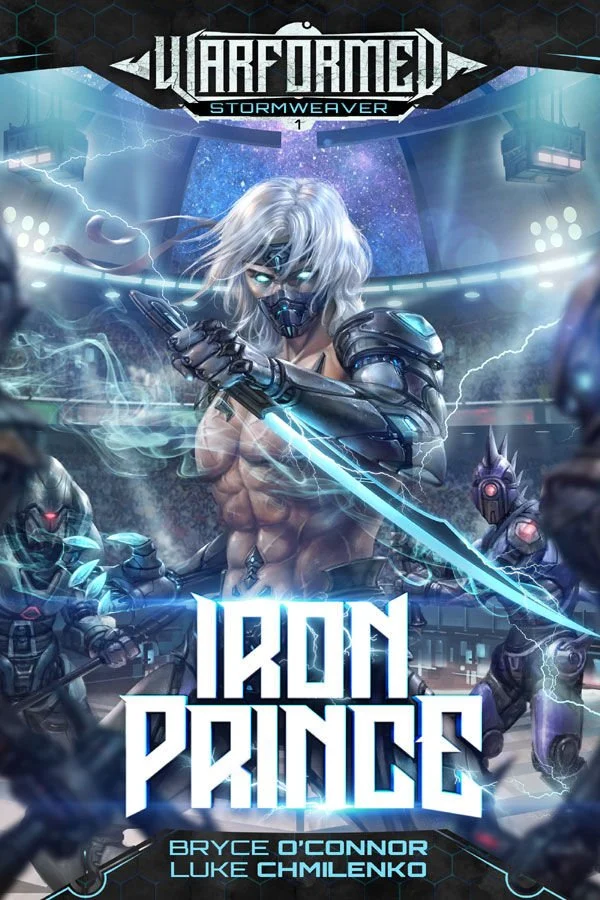
In the rapidly expanding landscape of modern science fiction, few titles have captured the imagination of the progression-fantasy community quite like Warformed: Iron Prince. Authored by the collaborative duo of Bryce O’Connor and Luke Chmilenko, the novel serves as a masterclass in the "power fantasy" subgenre, blending high-stakes military sci-fi with the rhythmic, satisfying progression mechanics often seen in Japanese shounen manga. As the first installment in a burgeoning saga, Iron Prince has set a new benchmark for what readers expect from the genre, offering a narrative that is as emotionally resonant as it is action-packed.
The Foundation: A Story of Underdog Resilience
At the center of this futuristic epic is Reidon "Rei" Ward, a protagonist whose origins are defined by physical frailty and societal abandonment. Born with a debilitating bone condition and orphaned by a system that prioritizes utility over humanity, Rei’s early life is a grueling test of endurance. However, his fortunes shift when he is granted a Combat Assistance Device (CAD)—a piece of alien-derived technology that serves as the backbone of human military power in the Collective.
Unlike his peers, whose CADs possess standard specifications, Rei’s device is an anomaly: it features initially dismal stats but carries the potential for infinite, exponential growth. This "broken" mechanic serves as the primary engine of the narrative, propelling Rei into the Galens Institute, one of the most prestigious military academies in the galaxy. Alongside his childhood friend and unwavering ally, Viviana "Viv" Arada, Rei begins a grueling climb through the ranks of the school’s combat tournament circuit, a system that functions as both a training ground for the military and the pinnacle of societal entertainment.
Chronology of an Ascent: From Pariah to Prodigy
The narrative arc of Iron Prince follows a clear, carefully constructed trajectory that mirrors the "zero-to-hero" tropes found in legendary titles like Naruto or My Hero Academia.
- The Inciting Incident: Rei overcomes the odds to obtain a CAD, a device that paradoxically cures his terminal physical ailments while thrusting him into a world of elite, physically gifted peers.
- The Trial by Fire: Upon entering the Galens Institute, Rei faces immediate ostracization. His lack of physical prowess makes him a target for bullies and elitist prodigies who view his presence as an affront to the school’s high standards.
- The Growth Phase: Utilizing the unique nature of his CAD, which thrives on combat data—effectively turning every loss into a lesson—Rei begins an accelerated evolution. This phase captures the "Saiyan-style" progression, where the protagonist is pushed to the brink of defeat only to return stronger, more adaptive, and more refined.
- The Tournament Arc: The latter portion of the book focuses on the competitive circuit, where individual merit is measured through public performance. This provides the necessary catharsis for the reader as Rei begins to systematically prove his detractors wrong.
- The Foreshadowed Threat: The book concludes by widening the scope, hinting at the looming intergalactic war against the alien species that originally created the CAD technology, setting the stage for a broader, more existential conflict.
Supporting Data: Why Progression Fantasy Matters
To understand the success of Warformed, one must examine the mechanics of the "Progression Fantasy" subgenre. Unlike traditional literature, where characters often grow through philosophical realization, progression fantasy utilizes game-like elements—levels, stats, and tangible power tiers—to provide a dopamine-rich reading experience.
The CAD serves as the perfect narrative device for this. It is both a weapon and a suit of power armor, a literal manifestation of the user’s potential. By tying the character’s growth to the device’s data acquisition, O’Connor and Chmilenko create a logical framework for "overpowering" the protagonist that never feels unearned.
Statistically, the success of this model is evidenced by the massive crossover appeal between anime fans and readers. With Solo Leveling dominating streaming charts in 2024, the market demand for "leveling up" narratives has reached an all-time high. Iron Prince occupies this niche perfectly, utilizing a structure that is point-for-point equivalent to a high-octane battle manga, thereby securing a loyal, enthusiastic reader base.
Dynamics of the Cast: Beyond the Power Levels
While the power scaling is the initial hook, the staying power of the series lies in its character dynamics. The banter between Rei, Viv, and their expanding circle of friends offers a grounding, human element to the otherwise clinical world of military training.
One of the most notable narrative successes is the subversion of the "rival" trope. Rather than keeping his antagonists static, the authors allow for character evolution. Rivals often become friends, and their initial animosity—fueled by jealousy—shifts into mutual respect. The inclusion of a prodigy character who eventually joins Rei’s circle, training him through "tough love" sparring matches, adds a layer of depth that prevents the story from becoming a one-note exercise in victory.
However, a critical concern remains for the future of the series. As the story progresses, there is a recurring risk of "power creep." In many shounen-inspired narratives, secondary characters often become irrelevant as the protagonist’s power level reaches god-like heights. Whether the authors can maintain the utility and relevance of the supporting cast as Rei continues his rapid ascent remains the central question for the upcoming sequels.
Implications for the Future: A Galactic War Awaits
The broader implications of the world-building in Iron Prince suggest that the Galens Institute is merely the tip of the iceberg. The technology powering the CADs is alien in origin, and the history of the Collective is inextricably linked to this mysterious, often hostile, extraterrestrial presence.
The foreshadowing regarding the "Archons"—the alien race that serves as the primary antagonists—indicates that the tournament arcs are likely preparing the students for a much larger, darker reality. The jump from academic rivalry to interstellar warfare is a significant pivot, one that will require the authors to maintain the character-focused intimacy of the first book while scaling up to meet the demands of a military sci-fi epic.
Final Analysis: A Recommended Read
For readers seeking a story that balances the visceral satisfaction of combat progression with the warmth of a found-family drama, Warformed: Iron Prince is an essential addition to the bookshelf. It is a work of immense ambition, successfully transposing the best elements of Eastern narrative structures onto a Western science fiction canvas.
While the temptation to binge the series is strong, potential readers should be mindful of the "waiting game." As a series currently in development, it follows a production cycle that requires patience. However, for those who enjoy the thrill of the climb, the journey of the "Stormweaver" is one worth undertaking. Whether Rei Ward will eventually rise to become the savior of humanity or a force of nature that defies the very laws of the universe remains to be seen—but the path he is carving is one that the sci-fi community will be following for years to come.


 Raul Delapena Setiawan