Rifan Muazin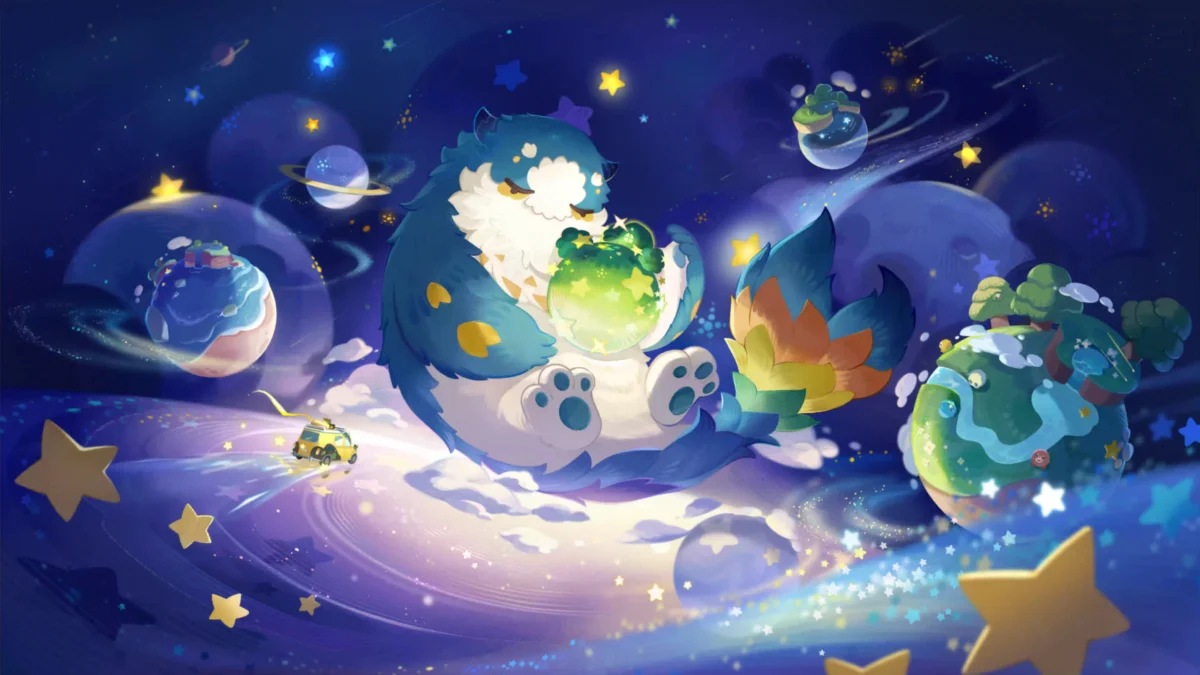
The landscape of modern gaming in the 2020s has been defined, in many ways, by the shadow of a single, monumental release: Animal Crossing: New Horizons. Since the 2020 pandemic, the "desert island" social simulation genre has become a juggernaut, with studios rushing to replicate the serene, collect-a-thon satisfaction of Nintendo’s flagship series. Now, as we pass the midpoint of the decade, HoYoverse—the titan behind Genshin Impact and Honkai: Star Rail—is throwing its hat into the ring with Petit Planet.
Having recently launched its second beta test, Petit Planet is, quite unashamedly, a sci-fantasy iteration of the established life-sim formula. While the title offers an undeniably polished, high-fidelity experience, it leaves critics and genre enthusiasts asking a difficult question: In a market saturated with cozy simulations, does Petit Planet actually bring anything new to the table, or is it merely a beautiful coat of paint on a twenty-year-old design?
The Core Concept: A Familiar Universe
At its heart, Petit Planet is a life-simulation game that tasks players with cultivating a settlement on a small, spherical planet. The gameplay loop will be instantly recognizable to anyone who has spent time on an island getaway: you shake trees for resources, catch fish and insects to donate to a museum-like collection overseen by a quirky anthropomorphic character, and manage the infrastructure of your settlement alongside charming neighbors.
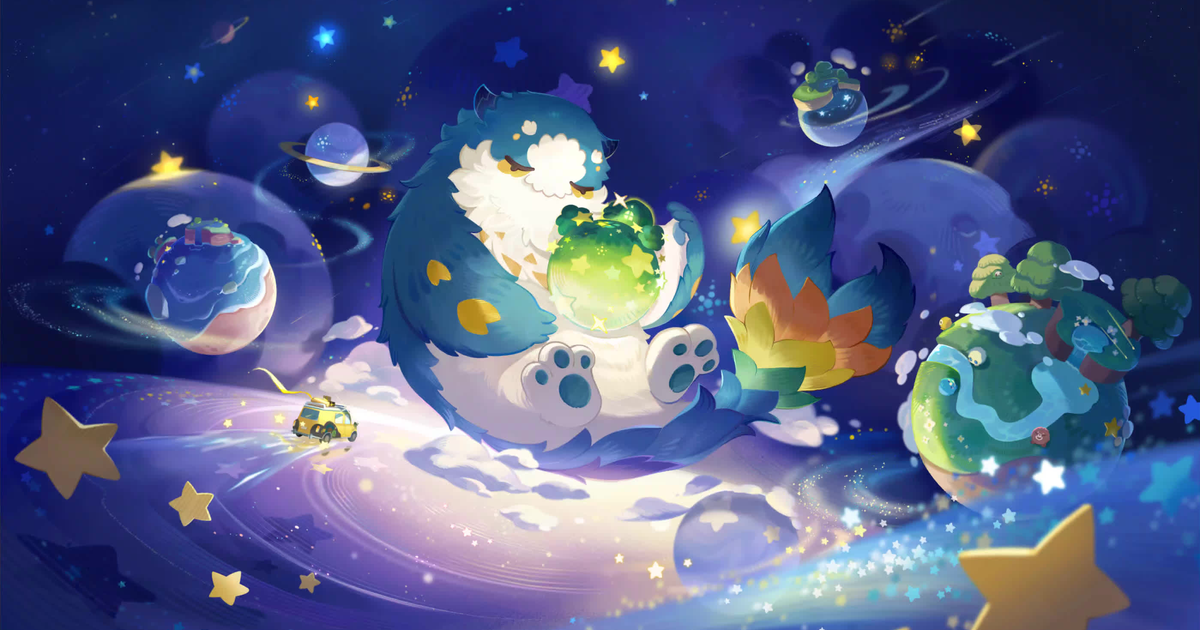
The visual identity is where Petit Planet attempts to pivot. Eschewing the traditional earthly island, the game moves the action to a vibrant, colorful galaxy filled with small, curved planets. It is aesthetically stunning—a hallmark of HoYoverse’s art department—but the mechanical DNA remains deeply rooted in the Animal Crossing tradition.
Chronology of Development and Public Reception
The existence of Petit Planet was first hinted at through industry leaks roughly two years ago. Even in those early stages, the comparison to Nintendo’s franchise was inevitable. Unlike some developers who go to great lengths to distance themselves from their inspirations, HoYoverse has maintained a stoic silence regarding these parallels. This is consistent with the company’s history; when Genshin Impact launched, it was widely criticized for its striking similarities to The Legend of Zelda: Breath of the Wild.
However, time has proven that HoYoverse is capable of evolving its titles beyond their initial influences. While Genshin Impact began as a clear homage to Breath of the Wild, it eventually carved out a distinct identity as a party-based action RPG. Whether Petit Planet can undergo a similar metamorphosis remains the central point of contention for testers.

The current "Stardrift" beta, which began in late April, serves as the most comprehensive look at the game to date. It has provided players with a deeper dive into the social mechanics, the crafting systems, and the peculiar, AI-driven dialogue system that the developer is currently testing.
Supporting Data: The Saturated Sim Market
The social-sim genre is currently experiencing a "gold rush" of sorts. Titles like Heartopia, Pokopia, and the long-running Tomodachi Life have all vied for the attention of the same demographic. Heartopia, in particular, offers a useful point of comparison. Having launched globally in early 2024, it has already established a foothold with a "playdough-y" aesthetic and a USP (Unique Selling Point) centered on neighborhood interactions managed by real-time players.
Petit Planet faces a steeper uphill battle because its primary USP is currently elusive. While the "planet-hopping" aesthetic is charming, the minute-to-minute gameplay—shaking trees, chatting with neighbors, and organizing inventory—feels like a direct mirror of established titles. For a player who has already invested hundreds of hours into New Horizons or Stardew Valley, the motivation to start a "sixth" or "seventh" life-sim settlement is difficult to justify without a truly revolutionary hook.

The AI Controversy and Technical Implementation
Perhaps the most significant talking point surrounding Petit Planet is HoYoverse’s explicit integration of generative AI. The studio has been transparent about its usage of GenAI to assist in development, a stance that has sparked heated debate within the industry regarding creative integrity, labor practices, and long-term sustainability.
In Petit Planet, this manifests primarily in the NPC dialogue systems. HoYoverse has touted "real-time conversation" capabilities, but in practice, these interactions feel remarkably similar to the dialogue limitations seen in Façade, an experimental indie title from 2005. While the technology is technically impressive, the implementation feels somewhat hollow.
Critics argue that by prioritizing the "novelty" of AI-driven chatter, the studio risks sacrificing the carefully curated personality that makes NPC interactions in life sims so memorable. There is also the broader ethical concern: many in the creative community view the push toward GenAI as a cost-cutting measure that threatens human artists and writers. Whether these disclosures are enough to appease players—or if the quality of the dialogue will ultimately suffer—remains a major question mark for the game’s official release.

Implications: A New Demographic for HoYoverse
One of the most intriguing aspects of Petit Planet is its target audience. HoYoverse has explicitly marketed this title toward "families," marking the first time the studio has actively courted a younger demographic.
This pivot has profound implications for the game’s monetization. To date, all five major titles in the HoYoverse stable (Genshin Impact, Honkai: Star Rail, Zenless Zone Zero, Tears of Themis, and Honkai Impact 3rd) rely on gacha-based mechanics—a controversial revenue model that relies on randomized rewards. In the current Petit Planet beta, however, there is a surprising absence of a traditional gacha system.
Industry analysts speculate that this may be a deliberate move to avoid the regulatory scrutiny and parental backlash that often follows gacha-heavy games marketed to minors. If the final release replaces the "pull" mechanic with a more traditional subscription-based model or a battle pass, it could signal a significant shift in HoYoverse’s business strategy. However, the lack of a gacha-shaped hole in the current build is either a sign of a more "wholesome" future or simply a feature that is being withheld until the game is closer to its global launch.

Final Assessment: Competence vs. Innovation
It is not fair to say that Petit Planet is a poor game. On the contrary, it is a highly polished, professional, and visually delightful experience. It demonstrates that HoYoverse, a studio known for its high-octane action RPGs, can successfully pivot to the "cozy" genre.
However, being "perfectly competent" in a market that has already been defined by giants like Animal Crossing is a double-edged sword. Petit Planet is currently a collection of well-executed, familiar tropes. For the average player, it offers a relaxing, aesthetically pleasing diversion. For the genre enthusiast, it feels like a redundant experience that lacks a clear, compelling reason to exist alongside the games it mimics.
As HoYoverse continues to refine Petit Planet, the pressure will be on them to prove that they can do more than just replicate the wheel. Whether they can find a unique identity within their own cosmic playground will determine if Petit Planet becomes a genre staple or merely a beautiful footnote in the company’s storied, and occasionally controversial, history. For now, the game remains an intriguing, if somewhat derivative, addition to the social sim landscape—a testament to the studio’s technical prowess, but a reminder that even the most beautiful galaxy needs a star of its own to shine.


 Asro
Asro
 Muslim