Asro
Asro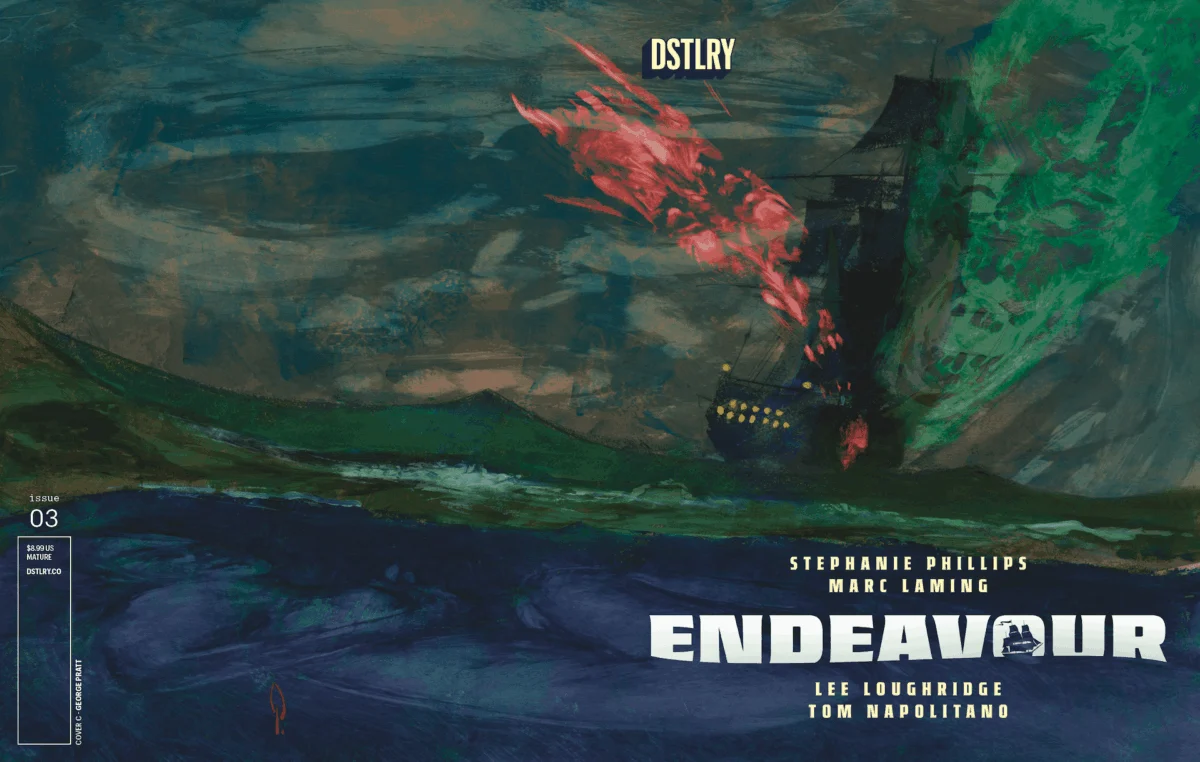
The storm has finally broken, leaving behind a silence that is perhaps more terrifying than the tempest itself. In the upcoming third installment of DSTLRY’s acclaimed survival horror series, Endeavour, the thin veneer of order maintained by seven stranded children continues to dissolve. With supplies dwindling and the psychological weight of their isolation reaching a breaking point, the crew of the modern-day replica HMS Endeavour finds themselves navigating not just the treacherous currents of the open ocean, but the murky, unpredictable waters of their own fracturing psyches.
In an exclusive preview granted to AIPT, readers are given a haunting glimpse into the next chapter of this harrowing saga. As writer Stephanie Phillips and artist Marc Laming continue to weave a tale of existential dread, the comparison to literary classics like William Golding’s Lord of the Flies and the modern television phenomenon Yellowjackets feels more earned than ever.

Main Facts: The Descent into Maritime Madness
The premise of Endeavour is as elegant as it is cruel: a modern-day educational recreation of Captain James Cook’s historic vessel is left adrift following a catastrophic failure. Stranded in the vast, indifferent expanse of the ocean, seven children—stripped of adult supervision and the safety of modern infrastructure—must fend for themselves.
In issue #3, the narrative shifts from the physical struggle against the elements to a more insidious threat: internal collapse. The "main facts" of this chapter are clear:
- Resource Depletion: Starvation is no longer a looming threat but an immediate reality, forcing the children to make impossible choices regarding rationing and survival.
- Paranoia as a Catalyst: As the physical environment becomes less volatile, the group’s internal stability shatters. Mistrust is rampant, and the survivors are beginning to turn on one another.
- Supernatural Ambiguity: Perhaps the most chilling development is the emergence of mysterious, discordant whispers emanating from below decks. Are these the manifestations of trauma-induced psychosis, or is there something—or someone—else aboard the ship?
A Chronology of the Crisis
To understand the stakes of the third issue, one must look back at the trajectory of the series thus far.
The Calm Before the Storm
When the series opened, the children viewed the replica HMS Endeavour as a grand adventure—a historical tribute to discovery. The tone was one of curiosity and cautious excitement. However, the initial incident that cut them off from civilization served as the inciting event that stripped away their childhood innocence in a single stroke.

The Tempest
Issue #2 focused heavily on the physical survival of the group during a life-threatening storm. It was here that the cracks in the foundation first appeared. The characters were forced to rely on primal instincts, and the power dynamics of the group began to shift. The storm acted as a pressure cooker, forcing the children to confront their fears and their lack of leadership.
The Current State: Issue #3
As we enter the third chapter, the storm has passed. However, the emotional residue remains. The children are now dealing with the "aftermath of the aftermath." They are no longer fighting the sea; they are fighting their own perceptions of reality. The pacing of the issue, according to early previews, suggests a shift toward the psychological thriller genre, focusing on the slow-burn horror of being trapped in a small, creaking space with people you no longer trust.

Supporting Data: Artistic Realism and Narrative Tension
The success of Endeavour hinges on the synergy between Phillips’ writing and Laming’s visual storytelling.
The Laming Aesthetic
Marc Laming’s art is characterized by a grounded, gritty realism that makes the horror of the situation feel tactile. In the preview pages, the reader can feel the dampness of the wood, the rust on the railings, and the hollow exhaustion in the eyes of the children. Laming does not rely on traditional "monster" tropes; instead, he uses shadows, tight framing, and expressive body language to convey the creeping dread.

Phillips’ Psychological Architecture
Stephanie Phillips has built a script that respects the intelligence of the reader. She does not explicitly state that there is a supernatural element at play. By keeping the source of the whispers ambiguous, she allows the audience to project their own fears onto the situation. This "uncertainty-based horror" is a hallmark of the series, ensuring that the tension remains high without relying on jump scares.
Official Perspectives and Industry Reception
DSTLRY has positioned Endeavour as a cornerstone of their horror catalog. The publisher has emphasized that the series is intended to be a character-driven study on how isolation warps the human condition.

"We wanted to see what happens when the structures that define a child’s world—school, home, society—are removed entirely," a representative from the creative team noted. The industry reception has been largely positive, with critics praising the series for its ability to balance intense, high-stakes survival scenarios with deep, often uncomfortable character development. The comparison to Yellowjackets is frequent, specifically regarding the show’s focus on the "societal breakdown" of a group of youths.
Implications: The Psychological Toll
What does it mean for the future of the series? The implications of issue #3 are profound:

- The Breakdown of Hierarchy: If the group cannot maintain a sense of order, the ship will effectively become a tomb. The question is no longer "who will save them," but "who will be left when the rescue finally comes."
- The Manifestation of Trauma: The whispers from below deck serve as a metaphor for the trauma the children have endured. The "monster" may very well be their own collective guilt and terror manifesting in their environment.
- The Shift in Genre: As the series progresses, Endeavour is moving further away from a traditional "shipwreck story" and closer to a psychological descent. The physical isolation is a mirror for their mental isolation.
A Legacy of Literature and Art
The influence of classic survival horror is evident throughout the series, yet Endeavour manages to carve out its own identity. By setting the story on a historical vessel, the creators add a layer of irony: the children are trapped on a ship designed to represent human ingenuity and exploration, yet they are finding only death and confusion.
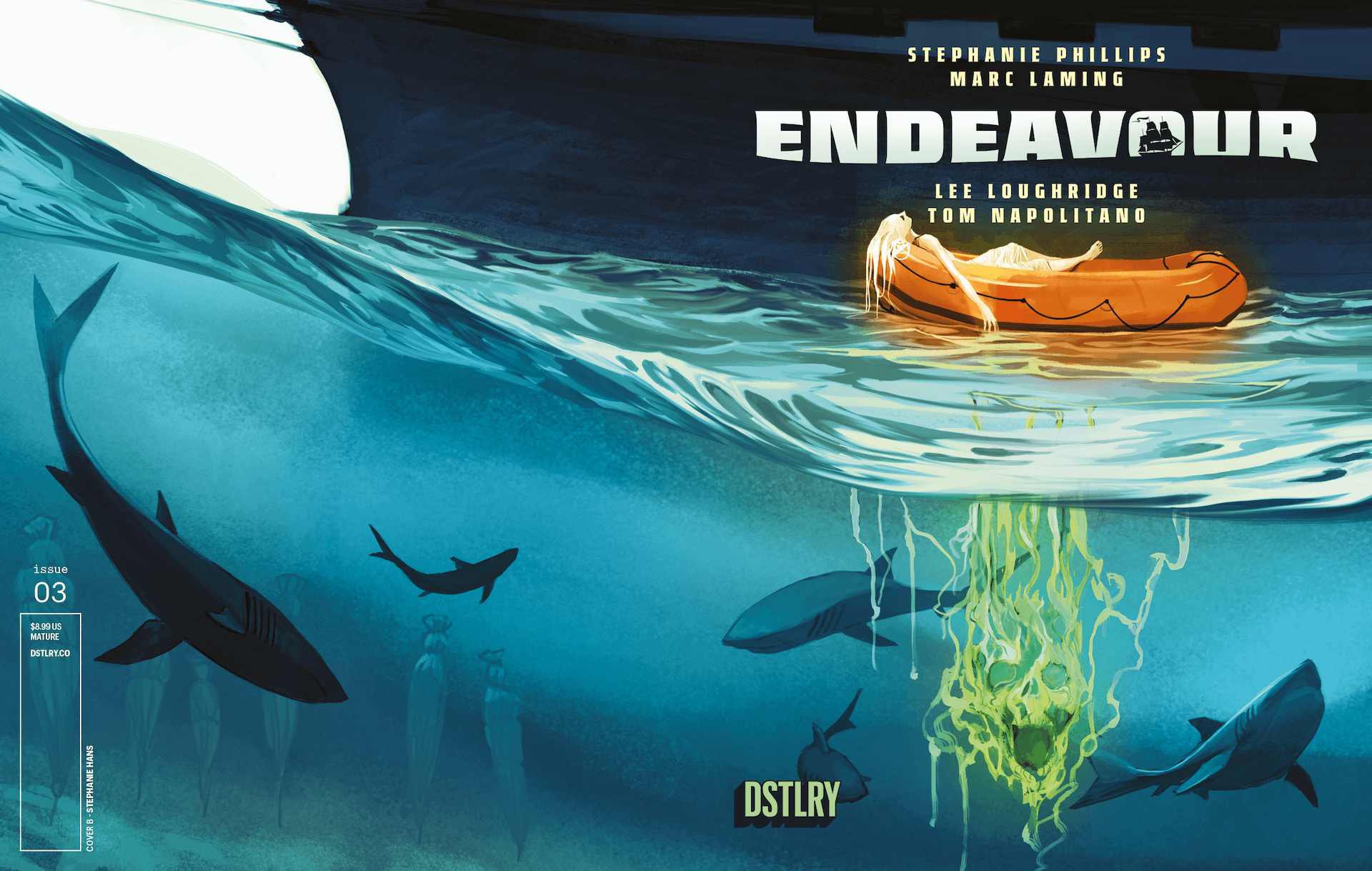
The inclusion of variant covers by legendary artists such as George Pratt, as well as contributions from Stephanie Hans and Marc Laming, speaks to the high production value of the series. Each cover acts as a piece of narrative art, foreshadowing the darkness to come.

Conclusion: The Horizon of Dread
As Endeavour #3 prepares to hit comic book shops this September, the narrative is at a fever pitch. The children are tired, hungry, and—most dangerously—starting to lose their grip on what is real. For fans of psychological horror, this issue promises to be a defining moment in the series.
Will the survivors find a way to reconcile their differences before the ship turns into a graveyard of their own making? Or will the shadows below deck finally claim the last of their hope?

One thing is certain: in the middle of the ocean, there is nowhere to run. As the fog rolls in and the whispers grow louder, the only thing the children of the Endeavour have left is each other—and that might be the most dangerous thing of all.
Endeavour #3 will be available at local comic shops and digital retailers this September. For more information, visit the official DSTLRY website or your local independent bookstore.

 Sagoh
Sagoh
 Ammar Sabilarrohman