Asro
Asro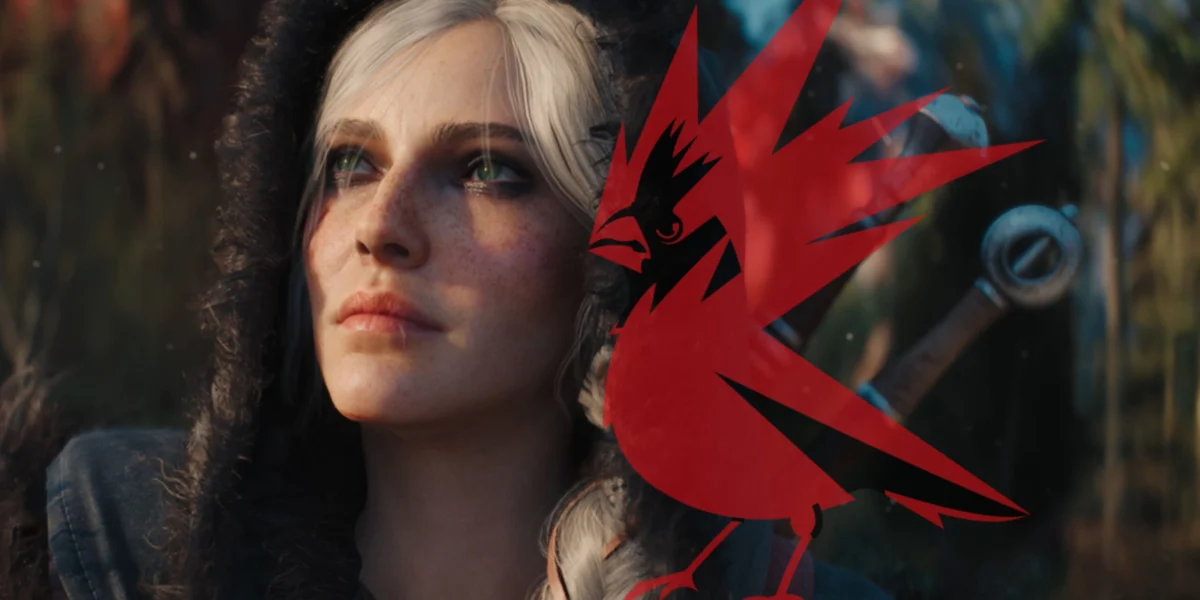
In a move that marks the end of a long-standing era of corporate nomenclature, the shareholders of the Polish gaming giant formerly known as CD Projekt have officially voted to rename the parent corporation to CD Projekt RED. While to the casual observer this might seem like a semantic triviality—or even a change that has already happened—it represents a definitive restructuring of one of the most influential entities in the modern video game industry.
For years, the distinction between "CD Projekt" (the holding company) and "CD Projekt RED" (the development studio) has been a point of confusion for global audiences. Following the massive, transformative success of The Witcher 3: Wild Hunt and the high-profile release of Cyberpunk 2077, the "RED" suffix became synonymous with the company’s identity in the minds of players. Now, legal reality has finally caught up with public perception.
The Core Facts: A Unified Corporate Identity
The decision, finalized during a recent shareholder meeting, mandates that CD Projekt RED will henceforth serve as the singular, official legal name for the overarching parent organization. This shift is not merely a branding exercise; it is a strategic maneuver designed to eliminate the dissonance between the corporate entity and its primary operational engine.
For over a decade, the structure was divided: CD Projekt functioned as the holding group—a corporate umbrella managing various business interests—while CD Projekt RED operated as the internal development division responsible for the creation, marketing, and distribution of the company’s flagship role-playing games. By merging these two identities, the board of directors aims to streamline internal communication, simplify investor relations, and present a singular, cohesive face to the global gaming community.
A Chronology of the "Red" Evolution
To understand the significance of this transition, one must look back at the company’s complex origins. The history of the Polish giant is rooted in a colorful, segmented approach to business that was common during the early 2000s, when the company was experimenting with various ways to dominate the digital landscape.
The Era of Color-Coded Divisions
In its earlier years, the company utilized a color-coding strategy to distinguish its various business branches. This strategy was designed to compartmentalize risk and focus resources:

- CD Projekt RED: Established in 2002, this division was explicitly tasked with the creation of original video games, starting with the ambitious development of The Witcher series.
- CD Projekt Blue: Perhaps less known to modern gamers, this internal division was the architect behind the creation and management of GOG (formerly Good Old Games), the digital storefront that became a cornerstone of the PC gaming ecosystem by championing DRM-free distribution.
The Strategic Shift
As the company evolved, its focus shifted from being a multi-faceted conglomerate to an entity singularly dedicated to the development and management of high-end, triple-A intellectual properties. The sale and subsequent restructuring of its secondary divisions—most notably the shift in its relationship with GOG—left the holding company with a primary mission: the creation of immersive, story-driven gaming experiences.
With the development studio now accounting for virtually 100% of the company’s core operations and revenue, the "holding company" layer became redundant. Maintaining a separate corporate name felt increasingly archaic in an industry where brand recognition is a currency of its own.
Supporting Data: Why Now?
The timing of this change is no coincidence. In the contemporary market, corporate clarity is vital for both long-term investment and consumer trust.

- Streamlining Communications: For years, international media and financial analysts had to clarify in every report which entity was being discussed. By unifying the name, the company eliminates the need for constant editorial footnotes.
- Market Alignment: Since the launch of The Witcher 3, the brand equity of "CD Projekt RED" has far eclipsed that of the parent company. For investors, aligning the legal entity with the brand that possesses the most "pull" makes logical sense.
- Future-Proofing: As the studio pivots toward the development of The Witcher 4 (codenamed Project Polaris) and the much-anticipated sequel to Cyberpunk 2077 (codenamed Project Orion), the company is positioning itself for a new cycle of growth. A unified brand name signals to stakeholders that the firm is moving forward with a singular, consolidated vision.
Official Perspectives and Boardroom Logic
According to documentation from the board of directors, the primary driver for this transition is the elimination of a "corporate identity crisis." The board noted that the distinction between the developer and the parent company provided no tangible benefit in the current market climate.
In internal statements, representatives emphasized that this change is a reflection of how the company already operates in practice. The development teams, the marketing wings, and the executive leadership have functioned as a singular unit for years. The legal registration of the name change—which will take full effect once the court officially updates the articles of association—is essentially the final "check-box" in a process that has been underway for years.
The Implications: What Does This Mean for Gamers?
For the average player, this change will likely go unnoticed in day-to-day interactions. You will still download your patches from the same servers, and the games will still feature the same iconic "Red Bird" logo at startup. However, the implications for the company’s future are significant.
A Focus on AAA Production
By shedding the administrative overhead associated with maintaining separate corporate entities, the company is doubling down on its commitment to its two core franchises: The Witcher and Cyberpunk. The shift suggests a company that is confident in its direction and ready to move past the turbulent periods that followed the 2020 launch of Cyberpunk 2077.
Global Standardization
With a unified brand name, international expansion and partnership agreements become more transparent. Whether they are working with external partners in the film industry, merchandise manufacturers, or hardware developers, having one legal entity—CD Projekt RED—simplifies the contract and negotiation process.
The Road Ahead
The company currently finds itself at a pivotal junction. With the massive success of the Cyberpunk 2077: Phantom Liberty expansion and the ongoing work on the next generation of Witcher titles, the "RED" brand is in a phase of revitalization. By aligning their legal identity with their creative output, they are signaling a new chapter—one that is stripped of the confusing bureaucracy of the past and focused entirely on the high-fidelity, story-driven experiences that put them on the map in the first place.

Final Thoughts
The decision to change the parent corporation’s name is more than just a boardroom vote; it is an acknowledgement that in the digital age, a company is defined by its product. The "CD Projekt" name served the company well during its formative years as a distributor and publisher, but "CD Projekt RED" is the name that carries the weight of the company’s legacy.
As they move forward into their next era of development, the company is finally, legally, and entirely becoming the studio that players have known them as for years. Whether this rebranding will herald a new golden age of releases remains to be seen, but one thing is certain: the entity once known as a Polish holding group has officially fully embraced its identity as one of the world’s premier game developers. The confusion is gone, the brand is unified, and the focus is firmly fixed on the horizon of Project Polaris and beyond.


 Nana
Nana
 Layla Zulfa