Ammar Sabilarrohman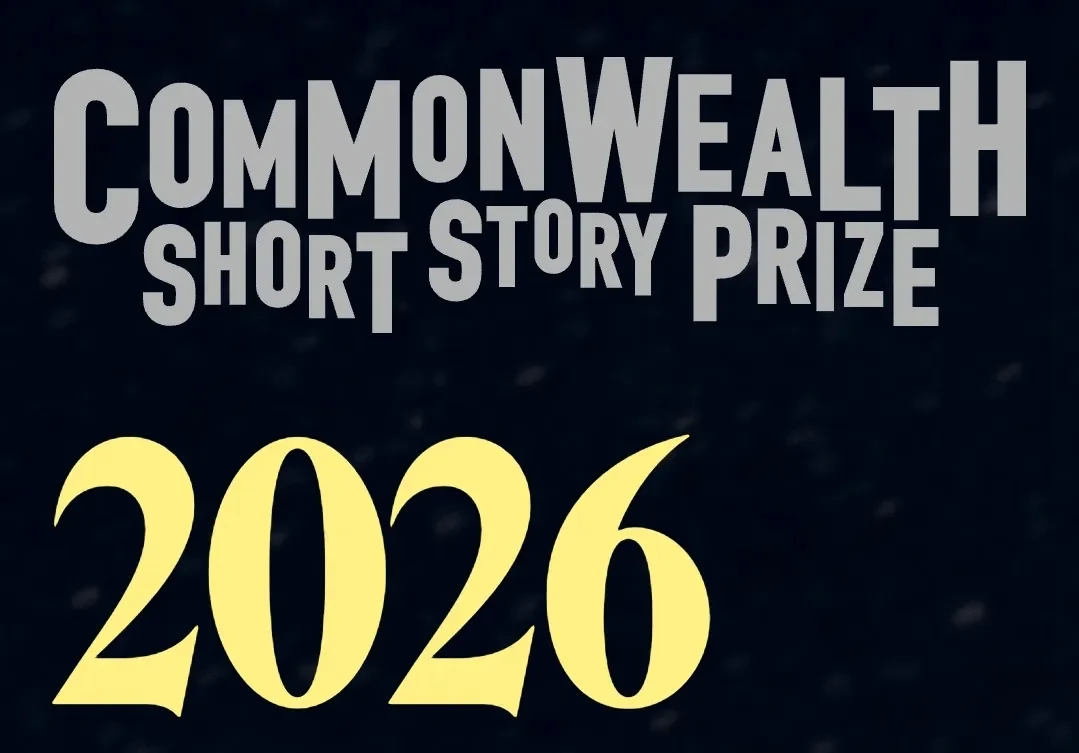
The 2026 Commonwealth Short Story Prize, an esteemed annual literary event celebrating the best of international fiction, has found itself embroiled in a controversy that strikes at the very heart of the creative process. While the announcement of the five regional winners should have been a time of unmitigated celebration, the news has been overshadowed by mounting allegations that at least one of the winning entries was generated, in part or in whole, by Artificial Intelligence.
As the literary community grapples with the rapid integration of generative AI into creative spaces, this incident serves as a flashpoint for a broader existential debate: What constitutes human authorship in the digital age?
The Announcement and the Regional Winners
On May 2026, the Commonwealth Foundation unveiled the five regional winners of the 2026 Commonwealth Short Story Prize. The competition, which draws thousands of entries from across the globe, aims to elevate voices from the 56 nations of the Commonwealth. Among the notable selections is "Mehendi Nights" by Sharon Aruparayil, a piece that has drawn attention for its evocative prose and thematic depth, aligning with the high standards typically associated with the prize.
The regional winners—who each receive a prize of £2,500—are currently being featured on the website of Granta, the prestigious literary magazine that has served as a digital home for the winning stories since 2012. These five authors are now moving into a final round of judging, with the overall winner, who will receive an additional £5,000, scheduled to be announced at a virtual ceremony on June 30, 2026.
However, the prestige of this year’s cohort has been compromised by a storm of public skepticism surrounding one specific entry: "The Serpent in the Grove" by Jamir Nazir.
Chronology of a Controversy: From Acclaim to Allegation
The timeline of the current crisis highlights how quickly digital scrutiny can dismantle a reputation. Shortly after the regional winners were publicized, readers and literary observers took to social media to voice concerns about the linguistic patterns and structural consistency of "The Serpent in the Grove."
- Mid-May 2026: The regional winners are announced. Almost immediately, readers note stylistic irregularities in Nazir’s piece, labeling the prose "uncanny" and "formulaic."
- May 18–19, 2026: Online sleuths begin running the text through various AI-detection software. The most cited tool, Pangram—widely regarded as one of the more accurate detectors currently available—flags the story as 100% AI-generated.
- May 20, 2026: The New York Times publishes a high-profile investigation into the allegations, bringing the controversy into the mainstream literary discourse.
- Late May 2026: Granta and the Commonwealth Foundation issue formal statements acknowledging the "speculation" while stopping short of disqualifying the author, citing a lack of "definite evidence."
This sequence of events mirrors a broader trend in the publishing industry. Only two months prior, Locus reported that Hachette Book Group made the drastic decision to pull the horror novel Shy Girl by Mia Ballard from shelves following an internal review that concluded the manuscript contained significant AI-generated content. The speed with which these controversies have moved from niche online forums to major institutional crises suggests that the publishing industry is struggling to keep pace with the democratization of sophisticated AI writing tools.
Supporting Data: The Reliability of Detection
The reliance on tools like Pangram has become a contentious aspect of the debate. While proponents of AI detection argue that these algorithms can identify the statistical probability of machine-generated text, skeptics—including many in the tech industry—warn that these tools are prone to both false positives and false negatives.
However, the Publishers Lunch report notes that Pangram’s reputation as a "well-respected" tool lends significant weight to the accusations against the Commonwealth Foundation. Unlike generic, free-to-use detectors that often flag human writing as AI due to specific sentence structures, Pangram’s diagnostic output is often treated as a "smoking gun" in the current literary climate.
The evidentiary challenge remains: how can a judge or a publisher definitively prove that a human did not write a piece? If a writer uses AI as a brainstorming tool, a structural assistant, or a thesaurus, at what point does "assistance" become "generation"? These are questions that the literary world is currently ill-equipped to answer.
Official Responses and Institutional Stances
The response from the institutions involved has been a delicate balancing act between maintaining the integrity of their processes and acknowledging the realities of a shifting technological landscape.

Razmi Farook, the director-general of the Commonwealth Foundation, provided a measured response to the New York Times: "We’re confident in the rigor of our process, but we’re conscious that this is an evolving technological environment." This statement suggests that while the Foundation believes their human judging panel is capable of identifying excellence, they are also aware that the bar for "human" performance is being mimicked with increasing precision.
Granta’s position, articulated through a statement on their website, is arguably more transparent yet equally cautious. The magazine explicitly distanced itself from the judging process, clarifying that their role is limited to publishing the winners and providing copy-editing services. Their statement reads:
"The suggestion that writers have submitted material not authentically their own is a charge we take seriously, but until definite evidence comes to light we will keep these stories on our website."
Perhaps the most damning assessment came from Granta publisher Sigrid Rausing. In a public statement, Rausing revealed that the magazine had queried the AI model Claude.ai about "The Serpent in the Grove." The model’s response, as reported by Rausing, was sobering: it concluded the story was "almost certainly not produced unaided by a human." Rausing’s follow-up remark—"It may be that the judges have now awarded a prize to an instance of A.I. plagiarism"—underscores the profound sense of defeat felt by traditional literary gatekeepers who fear they may have been duped by an algorithm.
Implications for the Future of Literary Prizes
The implications of this incident for the Commonwealth Short Story Prize—and for literature as a whole—are far-reaching.
1. The Erosion of Trust
Literary prizes rely entirely on the social contract between the author and the reader. If readers believe that a prize-winning story is the product of a prompt-engineered machine rather than a lived human experience, the emotional value of the work evaporates. The Commonwealth Foundation now faces a crisis of legitimacy that may persist long after the June 30 ceremony.
2. The Burden of Proof
The "innocent until proven guilty" approach adopted by Granta highlights the difficulty of enforcement. Without a transparent, industry-wide standard for what constitutes "AI-assisted" versus "AI-generated," institutions are left in a state of paralysis. If they disqualify based on suspicion, they risk punishing human writers who may have an "AI-like" style; if they do nothing, they risk rewarding the automation of art.
3. A Shift in Judging Criteria
Moving forward, we may see literary competitions implement "authenticity protocols." This could include requiring authors to provide drafts, notes, or evidence of their creative process. However, such requirements could also place an undue burden on writers, particularly those from under-resourced regions who lack the digital footprint or documentation that Western authors might have.
4. The Human Element
Ultimately, the controversy surrounding the 2026 Commonwealth Short Story Prize reinforces the necessity of the human element in storytelling. Even if an AI can perfectly mimic the structure and sentiment of a short story, the collective outrage of the literary community proves that there is a deep, intrinsic value placed on the human struggle behind the words. We are not just reading for the result; we are reading for the connection to another human mind.
As the June 30 ceremony approaches, all eyes will be on the Commonwealth Foundation. Whether they uphold the current list or take corrective action, the 2026 Prize will likely be remembered not for the stories themselves, but as the moment the literary world was forced to confront the mechanical ghost in the machine. The era of the "uncontested" literary prize has, for better or worse, come to a definitive end.


 Dwi Wanna