

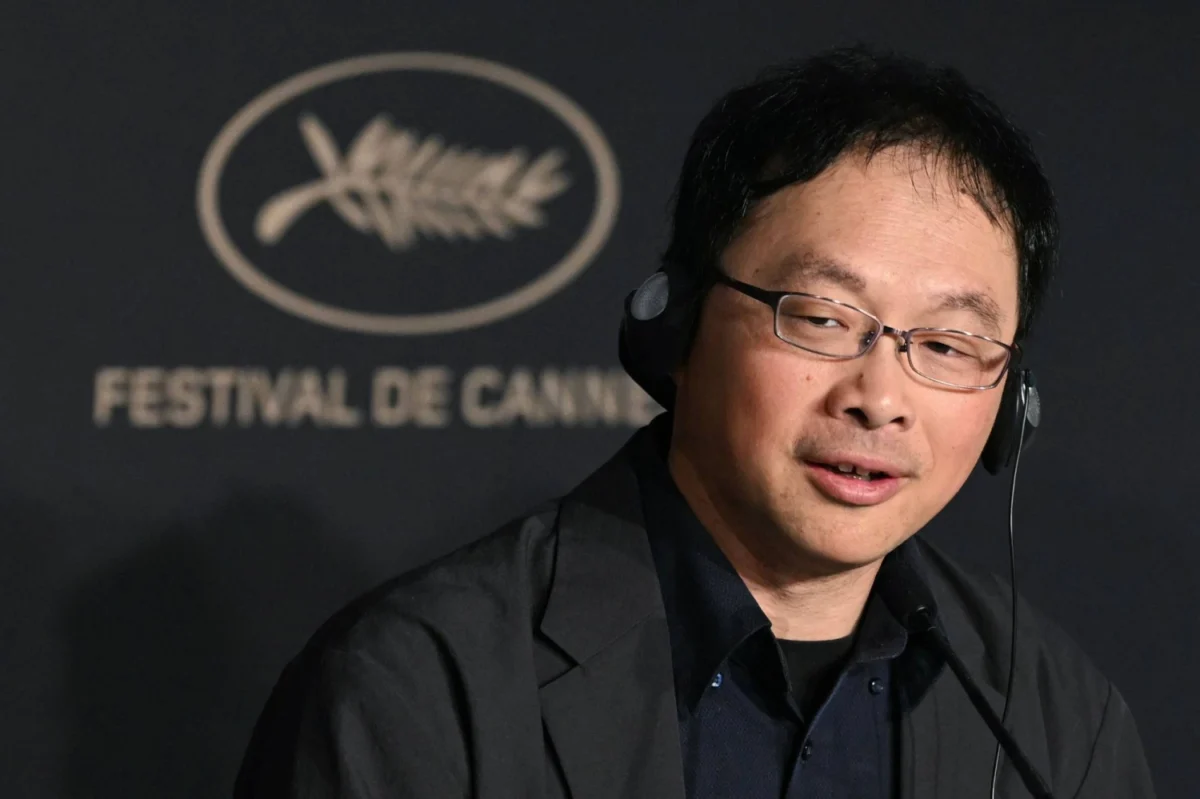
CANNES, France — As the cinematic world converges on the French Riviera for the 79th edition of the Cannes Film Festival, the glitz and glamour of the red carpet have been punctuated by a profound, philosophical inquiry into the nature of creativity itself. Amidst the screenings of high-budget spectacles and auteur-driven dramas, Japanese filmmaker Koji Fukada—director of the newly premiered Nagi Notes—has emerged as a leading voice of dissent against the rapid integration of artificial intelligence in the arts.
In a press conference that shifted the festival’s discourse from aesthetic trends to existential concerns, Fukada argued that the allure of AI-driven efficiency poses a fundamental threat to the human experience of creation. For Fukada, the value of art does not lie in the final product, but in the arduous, often messy process of discovery that defines the human condition.
The Core Thesis: The Danger of the "Shortcut"
The central tension of Fukada’s argument rests on a critique of modern technological convenience. In an era where generative AI can synthesize complex imagery, scripts, and soundscapes in mere seconds, Fukada warns that humanity is losing its tether to the "process."
"Using artificial intelligence to jump straight to the result could mean art fails to achieve its purpose of self-expression and to deepen our understanding of the world," Fukada told the international press on Thursday.
Nagi Notes, a drama set in the quiet, contemplative landscape of rural Japan, serves as the director’s primary case study. The film centers on the painstaking journey of a character engaged in the creation of a sculpture. By focusing on the manual labor, the failures, and the incremental progress of his protagonist, Fukada aims to mirror the very thing he believes is being sacrificed at the altar of automation.
"When AI is used to create an artwork or produce a video, you effectively skip over the process," he explained. "In doing so, we, who ought to be the ones expressing ourselves, lose sight of the very process in which we are to increase our understanding of the world."
Chronology: A Festival Defined by Disruption
The 79th Cannes Film Festival has already been marked by a series of events that contextualize Fukada’s warnings.
- May 12: The festival opened with a keynote address highlighting the dual-edged nature of digital transformation in European cinema.
- May 13: Several technical demonstrations showcased "AI-assisted" cinematography tools, sparking immediate debate among guilds regarding copyright and job security.
- May 14: Nagi Notes held its world premiere at the Grand Théâtre Lumière, receiving a standing ovation for its meditative pacing and tactile cinematography.
- May 15: Fukada held his scheduled press conference, explicitly positioning his film as a reactionary work against the technological "speed-run" of contemporary media production.
Fukada’s intervention serves as a counter-narrative to the prevailing industry excitement. While many studios view AI as a solution to rising production costs and shrinking timelines, the Japanese auteur views these same metrics as the very soil from which meaningful art grows.
Supporting Data: The AI-Art Paradox
The concerns raised by Fukada are supported by a growing body of data regarding the creative economy. According to recent industry reports from the Motion Picture Association (MPA), the adoption of generative AI in post-production has increased by 40% in the last 18 months. While this has resulted in significant cost savings for visual effects and sound editing, there is a measurable decline in the "human-hours" invested in pre-production conceptualization.

Furthermore, sociologists studying the "AI-Art Paradox" have noted that while AI can replicate existing styles with high fidelity, it struggles with the "non-teleological"—the act of creating something without a specific, predefined end goal. Fukada’s argument aligns with these findings: if a director knows the exact output they want, they might use AI to generate it. But if the goal of art is to learn something about the world during the making, AI becomes a barrier rather than a bridge.
Official Responses and Industry Perspectives
The reaction to Fukada’s comments has been polarized, reflecting a wider schism within the film industry.
The Technologist Viewpoint
Silicon Valley stakeholders attending the festival argue that AI is simply the latest in a long line of tools, comparable to the invention of the camera or digital editing software. "Fukada is focusing on the ‘how,’ but the audience focuses on the ‘what,’" says Marcus Thorne, a digital media consultant. "If a story moves an audience, does it matter if a human or a machine smoothed out the edges of the frame?"
The Auteur Perspective
Conversely, the Directors Guild and several European film collectives have rallied behind Fukada’s sentiment. "We are losing the ‘happy accident,’" noted one producer during a roundtable discussion. "The moment you remove the friction of creation, you remove the soul of the work. Fukada is reminding us that cinema is a human-to-human transmission, not a data-to-viewer transaction."
Implications: The Future of Creative Labor
The implications of the debate ignited by Nagi Notes extend far beyond the Cannes press room. If the film industry continues to prioritize the "result" over the "process," several systemic changes are likely:
- Devaluation of the Apprentice: If AI can perform the grunt work of creation, the "apprentice" roles—where junior artists learn the craft through manual labor—may disappear, creating a skill vacuum in the future.
- Homogenization of Style: With AI models trained on existing datasets, the risk of "algorithmic aesthetic" becomes acute. If everyone uses the same tools, the distinct, rugged fingerprints of individual auteurs could vanish.
- The "Humanity" Premium: We may see a rise in a new category of "hand-made" cinema, where directors explicitly market the lack of AI in their process as a mark of quality, similar to how "organic" or "analog" labels operate in the food and music industries.
Conclusion: Reclaiming the Process
As Nagi Notes continues its festival run, it stands as a quiet monument to the philosophy that Fukada is championing. The film does not merely tell a story about a sculpture; it asks the audience to sit with the frustration and the beauty of the effort required to make it.
Koji Fukada’s presence at Cannes is a timely reminder that technology should be a servant to the artist, not a substitute for the human experience. In a world that is increasingly obsessed with efficiency, the act of taking one’s time, of failing, and of struggling with one’s own limitations may be the most radical artistic statement a filmmaker can make.
"We must be careful," Fukada concluded in his final remarks. "If we outsource the struggle of creation to machines, we are not just losing our jobs; we are losing our ability to understand the very world we are trying to depict."
As the lights dim in the theaters of Cannes, the audience is left with a challenging question: Are we watching art that reflects our world, or are we watching the output of a machine that only mimics the ghost of what it means to be human? For Fukada, the answer is clear—and the work of reclaiming the human process begins now.












No comments yet. Be the first to join the conversation!