Dwi Wanna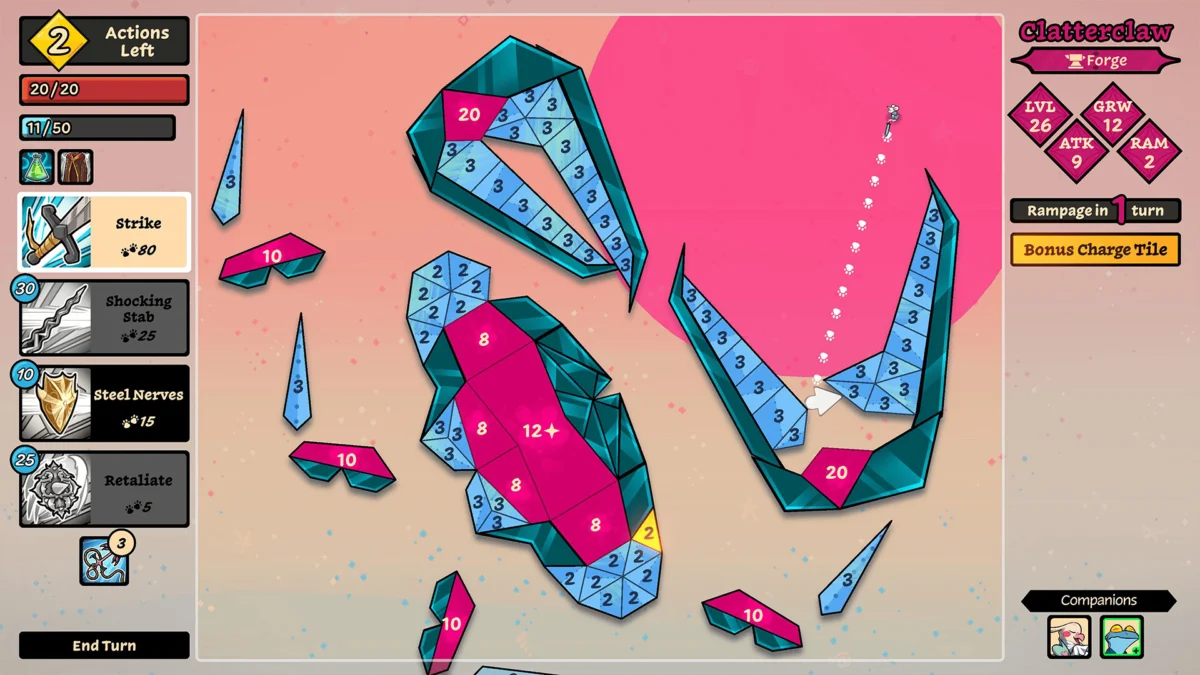
In the crowded landscape of indie role-playing games, innovation is often found in the subtle marriage of familiar mechanics and unexpected genre-blending. Beast Breaker, the latest title to make waves on Steam, does exactly this. By weaving a charming, humble narrative through high-stakes, physics-based, pinball-inspired combat, it offers a refreshing departure from the standard turn-based RPG template. For those who find traditional action-heavy games exhausting, Beast Breaker provides a cerebral, rhythmic, and deeply satisfying alternative that demands both tactical foresight and a steady hand.
The Genesis of a Hero: Narrative and Setting
The story of Beast Breaker begins not with a grand prophecy or a fallen kingdom, but in the quiet, dusty corners of a grandmother’s house. Players assume the role of a pint-sized mouse, a protagonist whose stature stands in stark contrast to the colossal threats that loom over their peaceful village. This "David versus Goliath" motif is central to the game’s identity; the player is not a seasoned warrior in plate armor, but a small creature tasked with protecting their home from gargantuan monsters.
These monsters are not singular entities; they are complex, modular beings comprised of various interlocking parts. This structural complexity is the core of the game’s design philosophy. The narrative drive—the necessity to protect one’s kin—serves as the primary motivation for the player to step out of their domestic comfort zone and into the chaotic, physics-defying arenas where these battles take place. It is a humble beginning that anchors the player, making the subsequent escalation into tactical combat feel personal and urgent.
Mechanics of Impact: The Pinball Combat System
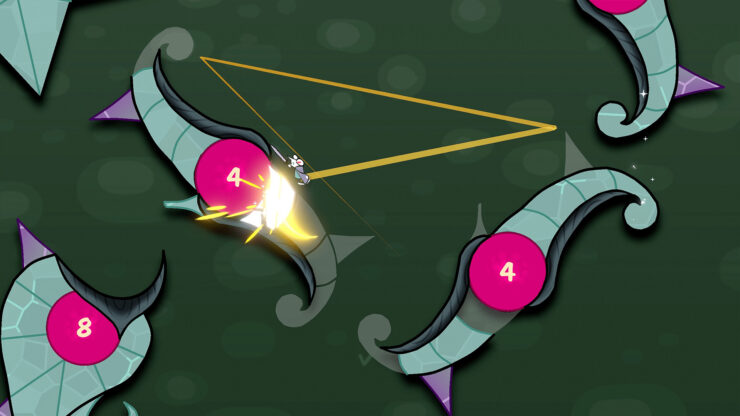
At its heart, Beast Breaker is a game about kinetic energy and target prioritization. The combat system eschews the traditional "menu-select" approach for a physics-based flinging mechanic. Players launch their mouse protagonist at the towering enemy, bouncing off surfaces like a ball in a pinball machine to strike specific, vulnerable sections.
The Anatomy of the Beast
The monsters themselves function as puzzles. Each enemy is composed of three distinct types of components:
- Shielded Parts: These are defensive layers that, while destructible, do not directly contribute to the defeat of the monster. They are often placed to obstruct the path to more critical areas.
- Vulnerable Zones: Highlighted in a distinct red hue and marked with a numerical value, these are the true objectives. A player must strike these zones a specific number of times to dismantle that section of the creature.
- Indestructible Nodes: These black, fixed parts act as obstacles that force players to calculate their ricochet angles carefully. Striking these serves only to end a turn prematurely or waste a precious move.
This system creates a delicate balancing act. Players are granted only three moves per turn. If a player spends those moves mindlessly clearing out peripheral shields, they may find themselves out of position when the enemy inevitably retaliates. After three moves, the creature transforms, moves, and launches its own assault. If the player ends their turn in a "red zone"—a danger area where the monster is primed to attack—the consequences can be devastating.
Tactical Depth and Progression
While the surface-level gameplay is approachable, the depth of Beast Breaker reveals itself through the mastery of its physics engine and the utilization of its varied equipment.
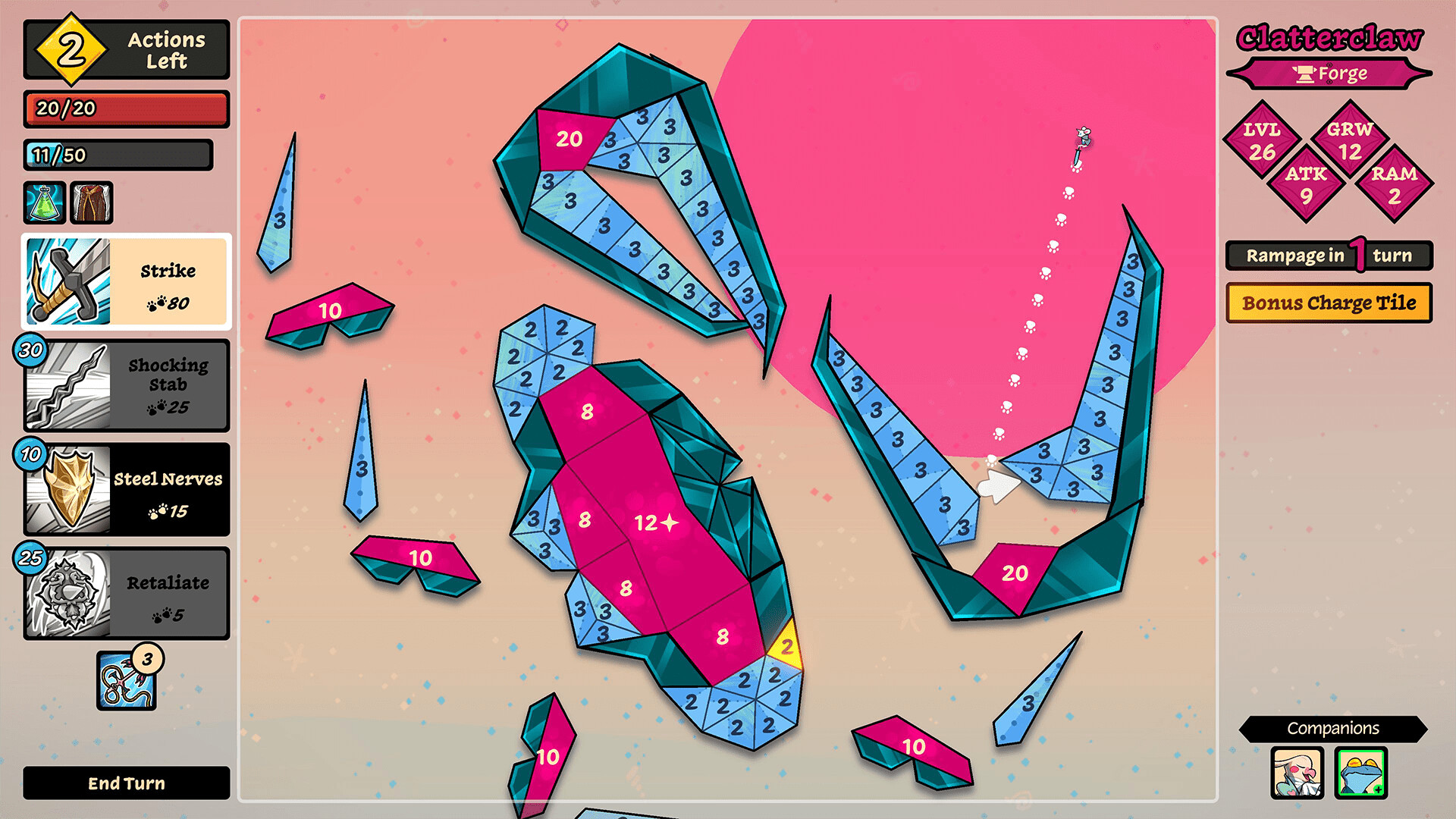
The game features an array of unlockable weapons, each fundamentally altering how the protagonist interacts with the battlefield. Some weapons allow for standard ricochet paths, while others introduce specialized movement options, such as the ability to dash directly through sections of the monster. These tools change the geometry of the fight, allowing players to bypass shields or set up "trick shots" that hit multiple vulnerable zones in a single turn.
The strategic loop is cyclical: evaluate the monster’s structure, calculate the ricochet trajectory, execute the attack, and reposition to avoid the inevitable counter-offensive. This requires a high degree of spatial reasoning, turning every encounter into a game of billiards played with a high-stakes, life-or-death outcome.
Chronology of Development and Reception
Beast Breaker first began gaining significant traction in the indie circuit during major gaming events like Dreamhack. It was here that many, including veteran journalists and genre enthusiasts, first encountered the game’s unique hook. The positive reception at such events highlighted a clear market desire for titles that prioritize creative mechanical loops over mindless button-mashing.
Since its launch, the game has been lauded for its ability to bridge the gap between casual arcade fun and deep tactical RPG strategy. Its development history is a testament to the power of a single, well-executed core idea. By focusing on the "feel" of the physics and the clarity of the monster-breaking loop, the developers created a game that is as fun to watch as it is to play.
Implications for the Turn-Based Genre
The success of Beast Breaker raises interesting questions about the future of turn-based design. For years, the genre has been defined by static battlefields and rigid turn orders. By introducing physics, randomness (in terms of trajectory), and real-time kinetic impact, the developers have injected a layer of "organic" unpredictability that traditional RPGs often lack.
The implication here is that modern players are increasingly seeking "hybrid" experiences. They want the time to think that turn-based games provide, but they also crave the visceral feedback of action games. Beast Breaker proves that you can have both: you can have the time to deliberate over your next move, but that move itself can feel explosive and dynamic.
Furthermore, the game serves as a masterclass in visual communication. By using color-coding (red for vulnerability) and clear numerical indicators, the game teaches its complex systems without the need for intrusive tutorials. It is an intuitive design choice that respects the player’s intelligence while maintaining a high skill ceiling.
A New Benchmark for Indie Gems
For those who have not yet explored Beast Breaker, it is highly recommended. It stands out not only for its gameplay but for its refusal to rely on tired genre tropes. Whether you are a fan of traditional pinball games looking for a bit more substance, or an RPG fan tired of the same old combat formulas, Beast Breaker offers something truly unique.
As the indie scene continues to expand, titles like this will become increasingly important. They remind us that the most memorable games are often those that take a simple concept—in this case, a mouse bouncing off a monster—and refine it until it feels like a fully realized, polished, and addictive experience.
Final Verdict
Beast Breaker is a triumph of design. It transforms the often-tedious act of turn-based combat into a high-octane physics puzzle that rewards planning, precision, and experimentation. By giving the player agency over their movement in a way that feels tactile and responsive, the game manages to stay engaging from the first level to the last.
With its humble narrative, satisfying mechanics, and a deep arsenal of equipment that keeps the gameplay fresh, Beast Breaker is not just a game; it is an experience that invites players to master the art of the perfect bounce. It is available now on Steam, and it is a title that deserves a spot in the library of any serious indie game enthusiast.
In a world of massive, sprawling open-world titles that demand dozens of hours of repetitive grinding, Beast Breaker offers a tight, focused, and thoroughly enjoyable adventure. It is a reminder that in gaming, sometimes the smallest heroes—and the smallest, most precise movements—make the biggest impact.


 Azzam Bilal Chamdy
 Muslim