Ammar Sabilarrohman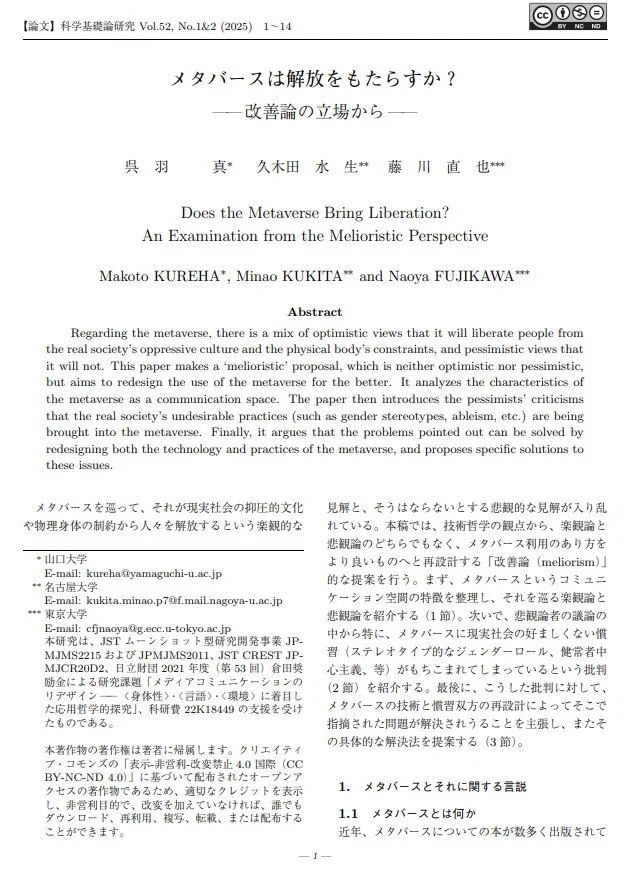
The landscape of modern digital entertainment has been fundamentally altered by the emergence of the "Virtual YouTuber," or VTuber. Initially dismissed as a niche subculture confined to Japanese internet forums, VTuber culture has exploded into a global phenomenon, bridging the gap between traditional broadcasting, high-end 3D character animation, and interactive social platforms.
Recent academic discourse, including research published in the Journal of Fundamental Theory (Vol. 52, No. 1-2), highlights that the industry is no longer merely a trend but a robust ecosystem. As of April 2025, scholars and industry analysts are increasingly focused on how these virtual avatars—often powered by motion-capture technology and real-time animation—are redefining the concept of the "celebrity" and the parasocial relationship between creators and their audiences.
Main Facts: The Intersection of Technology and Performance
At its core, a VTuber is a creator who uses a digital avatar to interact with an audience on platforms such as YouTube and Twitch. This persona is usually controlled by a human performer, whose facial expressions and movements are mapped onto the character in real-time.
The industry’s rapid growth is driven by three primary factors:
- Accessibility of Motion Capture: High-fidelity tracking is now possible using consumer-grade hardware, such as the iPhone’s TrueDepth camera, effectively democratizing access to virtual performance.
- The "Melioristic" Approach: Many performers adopt a "melioristic" philosophy—the belief that the world can be made better through individual effort. This ethos permeates the content, fostering communities that prioritize emotional support and positive social interaction.
- Cross-Platform Integration: The transition from simple streaming to immersive social VR platforms, such as VRChat, has allowed VTubers to move beyond the screen and into shared, persistent digital spaces.
Chronology: From Niche Subculture to Global Phenomenon
The trajectory of the VTuber movement can be categorized into several distinct phases:

- 2016–2017 (The Genesis): The term "VTuber" was popularized by early pioneers, most notably Kizuna AI, who demonstrated the potential of 3D-modeled personalities to engage with audiences on a level comparable to human YouTubers.
- 2018–2020 (The Proliferation): Agencies began to form, standardizing the business model. This era saw the shift from individual hobbyists to professionalized "talents" managed by agencies like Hololive and Nijisanji.
- 2021–2022 (The Technological Pivot): The integration of VRChat and advanced VR gear enabled VTubers to host events, concerts, and social meetups, shifting the focus from passive viewership to active participation.
- 2023–2025 (Mainstream Integration): Academic interest, such as the studies conducted by researchers like Liudmila Bredikhina, has moved from questioning the validity of the medium to analyzing its profound impact on identity, sociology, and digital ethics.
Supporting Data: Economic and Social Impact
The data surrounding the VTuber economy is staggering. According to recent surveys, the average fan engagement time for a top-tier VTuber exceeds that of traditional influencers.
- Platform Reach: Top VTubers regularly command live audiences ranging from 3,000 to over 9,000 concurrent viewers.
- Technological Adoption: Over 80% of professional VTubers now use some form of VRM (Virtual Reality Model) standard to ensure their characters remain portable across various software and hardware environments.
- Academic Recognition: The inclusion of VTuber studies in university curricula and journals signifies that the field is being treated with the same intellectual rigor as traditional media studies. Researchers are specifically looking at "Prix Genre" concepts—how performers navigate gender and persona within the constraints of their avatars.
Official Responses and Perspectives
The academic community has been quick to address the ethical and psychological implications of virtual performance. Liudmila Bredikhina, a prominent researcher in the field, notes that the "VTuber phenomenon is not just about the avatar; it is about the re-negotiation of the self in a digital space."
In contrast to traditional influencers, who often struggle with the loss of privacy, VTubers utilize their avatars as a protective layer. This allows for a unique form of "mediated intimacy." By separating the human performer from the character, creators can engage in deep, vulnerable discussions without the inherent risks associated with revealing one’s physical identity.
Industry leaders, including the PANORA group, have also emphasized that the "VR-First" approach is the future. They argue that as hardware like VR headsets becomes lighter and more powerful, the distinction between "real-life" performance and "virtual" performance will continue to blur, eventually leading to a standard where virtual avatars are a primary mode of communication for all digital creators.
Implications: The Future of Digital Identity
The implications of this movement extend far beyond entertainment. We are witnessing a fundamental shift in how human beings project their personalities.

1. The Death of the Physical Barrier
As VRChat and other metaverse-adjacent platforms grow, the physical location of the performer becomes irrelevant. A creator in Tokyo can perform alongside a creator in London, sharing the same virtual stage with perfect synchronization. This removes the geographic limitations that have defined the entertainment industry for centuries.
2. The Professionalization of Avatars
We are entering an era where corporations and educational institutions are looking to adopt "virtual avatars" for customer service, teaching, and internal communication. The techniques pioneered by the VTuber industry—specifically real-time expression mapping—are being integrated into the broader corporate IT landscape, as noted in 2023 industry reports on digital transformation.
3. Sociological Evolution
The "VTuber effect" has created a new standard for online social interaction. Because these performers are constantly interacting with chat in real-time, the audience feels like a direct contributor to the content. This "co-creation" model is expected to become the dominant format for future social media platforms.
Conclusion
The evolution of the VTuber is a testament to human creativity in the face of rapid technological advancement. What began as a experiment in 3D character animation has matured into a sophisticated, global, and economically significant industry.
As we look toward the remainder of the 2020s, it is clear that the VTuber is not just a passing trend. They represent a new form of digital existence, where identity is fluid, technology is a conduit for expression, and the boundaries between the physical and the virtual are permanently dissolved. Whether through the lens of academia or the eyes of the millions of fans who tune in daily, one thing is certain: the era of the virtual personality has arrived, and it is here to stay.


 Asep Darmawan
 Iffa Jayyana