Dwi Wanna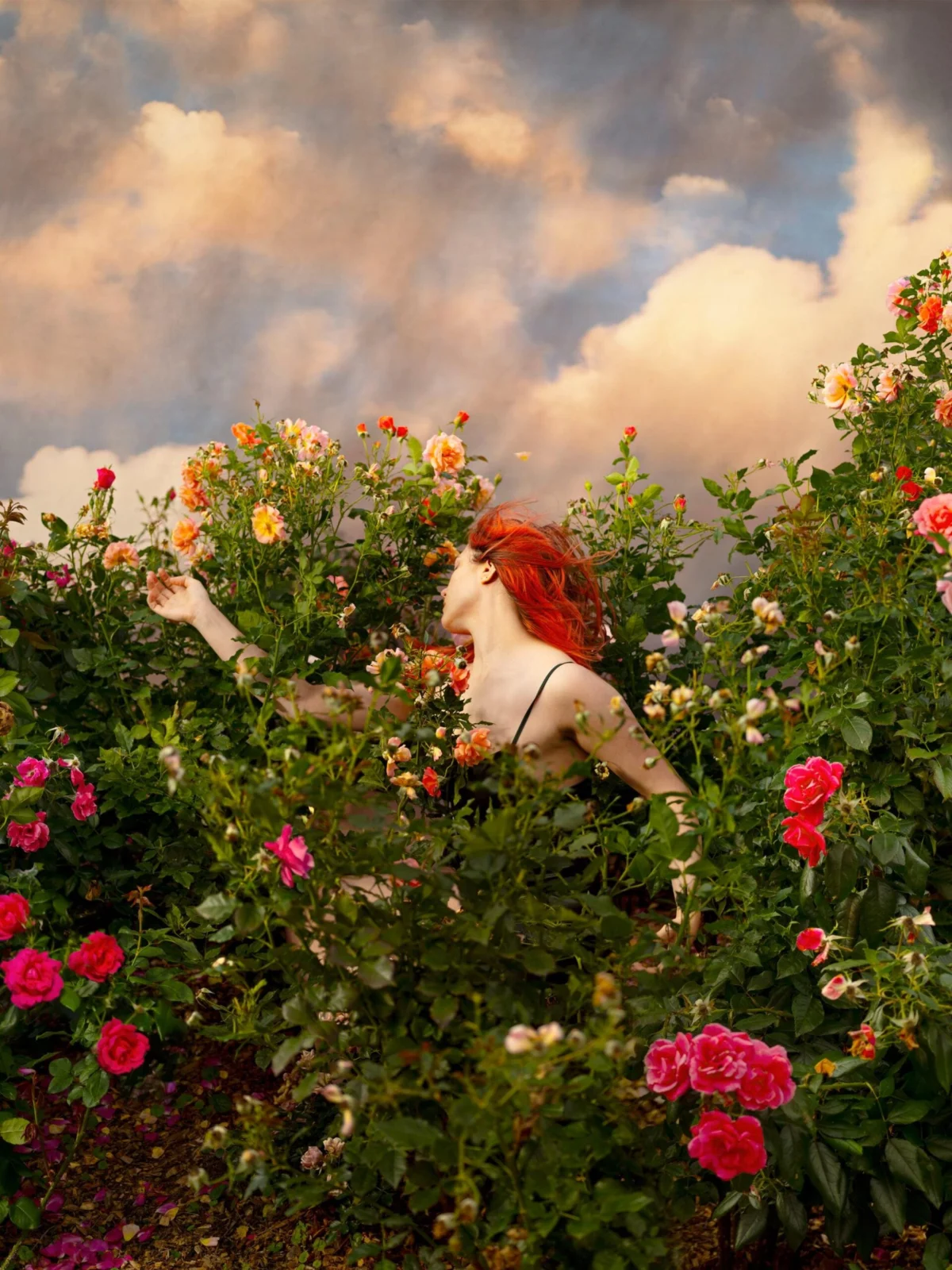
In the lush, verdant foothills of Cambewarra Mountain, New South Wales, photographer and artist Tamara Dean is engaged in a profound creative inquiry. Her work, characterized by its ethereal quality and technical precision, seeks to dismantle the anthropocentric illusion that humanity stands apart from the natural world. Through a practice that oscillates between photography and, more recently, painting, Dean creates visual narratives where the human body is not a dominant portrait subject, but an organic element—a participant in the ecosystem rather than a mere observer.
Main Facts: Redefining the Human Presence
Tamara Dean’s artistic philosophy is anchored in a singular, driving conviction: the human form is intrinsically woven into the fabric of the Earth. Her compositions are meticulously staged to evoke a sense of "merging." In her photography, figures often retreat into the foliage, their physical forms echoed by the contours of nearby flora.

This is not a traditional approach to portraiture. Instead of spotlighting the ego or the individual identity of the sitter, Dean utilizes the body as a textural component. In pieces such as In Bloom (2018), the viewer is confronted with hot-pink-haired subjects who mirror the vibrant buds of surrounding lotus plants. The effect is one of deliberate camouflage, an instinctive return to the wild.
Dean explains, "I am interested in those moments when the body appears to merge with the landscape, becoming almost plant-like, animal-like or elemental." By encouraging her subjects to respond intuitively to their environment, she captures gestural nuances—the tilt of a head, the curve of a spine—that reflect the rhythms and symmetries of the forest or waterway.

Chronology: An Evolution of Medium and Perspective
Dean’s career has been marked by a consistent thematic focus, though the technical execution has evolved alongside her life stages.
Early Foundations and Foundational Philosophy
Throughout her earlier career, Dean established her reputation as a photographer who could capture the visceral, physical connection between people and the wild. Her work from the late 2010s, such as the Sacred Lotus series, showcased a mastery of staging, placing subjects in shallow water where the distinction between skin, hair, and lily pads became intentionally blurred.

The Shift Toward Painting
In recent years, a significant shift has occurred in her studio. Having spent years raising her two children, who are now young adults aged 19 and 20, Dean has found the temporal space to deepen her exploration of painting. She describes painting as a practice that had always existed "quietly in the background," serving as a necessary complement to her lens-based work.
This transition into a new medium is not an abandonment of photography, but an expansion. She notes that the act of painting provides a "change in perspective," allowing her to interpret the natural world through a different set of tactile and color-based constraints. This duality will be the cornerstone of her upcoming solo exhibition at Michael Reid in Sydney, where she plans to showcase a synthesis of her photographic and painterly outputs.

Supporting Data: The Anatomy of an Image
The power of Dean’s work lies in the technical and intuitive interplay between the human model and the botanical setting. An analysis of her process reveals several key elements:
- Intuitive Direction: Unlike traditional photography, where a director might demand rigid poses, Dean encourages her subjects to feel the environment. This leads to idiosyncratic movements—what she calls "visible idiosyncrasies"—that make the figures appear as though they are "growing" from the ground.
- Color Correspondence: In works like Introversion, the use of costuming—specifically frilly blue tutus—is designed to mimic the aesthetic profile of specific flower species. This color matching creates a visual harmony where the figure disappears into the background, a technique often used in nature photography to highlight survivalist mimicry.
- The Element of Water: A recurring theme in her work is the use of water as a veil. Images like Peony (2024) and Sunken Forest (2023) depict subjects drifting in fluid environments. The ripples in the water act as a filter, distorting the features of the subject and further abstracting the human form into something "elemental."
Official Responses and Curatorial Significance
The art world has responded to Dean’s work with significant acclaim, recognizing her contribution to contemporary environmental art. Critics often highlight her ability to evoke the "uncanny"—the feeling that the human figure, while familiar, has been transposed into a setting where it doesn’t quite belong, or rather, where it has returned to an ancient home.

The upcoming solo exhibition at the Michael Reid gallery in Sydney is highly anticipated by collectors and critics alike. It represents a maturation of her career, serving as a platform to present her interdisciplinary evolution. By juxtaposing her photographs with her paintings, the exhibition will offer a comprehensive view of how she reconciles the stillness of the photograph with the visceral, additive nature of the painted canvas.
Implications: The Ecological Imperative
The underlying message of Tamara Dean’s work transcends aesthetic appreciation; it carries an implicit environmentalist warning and invitation. By presenting the body as part of the landscape, she challenges the "nature-culture" divide that has dominated Western thought since the Enlightenment.

The End of the "Observer"
Most landscape photography positions the human as the viewer—a god-like figure looking out at the "scenery." Dean, by contrast, invites the human into the frame as an organic participant. This shift has profound implications for how we view our responsibility toward the climate. If we perceive ourselves as separate from nature, we feel empowered to exploit it. If we view ourselves as part of nature—as Dean’s subjects appear to be—then environmental destruction is, by definition, an act of self-harm.
A Meditation on Camouflage and Survival
Her work also touches on the concept of "returning to the wild." In an era of intense urbanization and digital distraction, the impulse to hide, to merge, and to become "plant-like" can be read as a psychological response to the pressures of modern life. Her characters are often hiding—in Endless Summer (2026), they cover their faces, and in Taking Aim (2021), they crouch in the brush. This sense of introversion suggests a desire for sanctuary within the natural world, a retreat from the gaze of society.

Future Trajectory
As Dean continues to refine her painting technique, the art world expects to see a greater focus on the interplay between the organic texture of paint and the photographic sharpness of her prints. Her ability to pivot between these two worlds while maintaining a consistent message is a testament to her versatility as an artist.
For those interested in following her progress, her presence on platforms like Instagram provides a window into the "background" of her work—the sketches, the failed takes, and the quiet moments in the Cambewarra foothills that eventually coalesce into her final, haunting images.

Conclusion
Tamara Dean’s work stands as a poignant reminder that we are not the masters of our environment, but its companions. Through her lens and her brush, she strips away the layers of human artifice, revealing the raw, beautiful, and sometimes uncomfortable truth of our biological belonging. Whether through the vibrant petals of a lotus or the cool, submerged silence of a forest stream, Dean invites us to pause, to breathe, and to consider what it means to truly be a part of the world around us.
As she prepares for her upcoming exhibition in Sydney, her work remains a vital contribution to contemporary dialogue—an invitation to step out of our skins, even for a moment, and experience the world not as an object to be consumed, but as a home to which we belong.


 Asep Darmawan
 Basiran