Rifan Muazin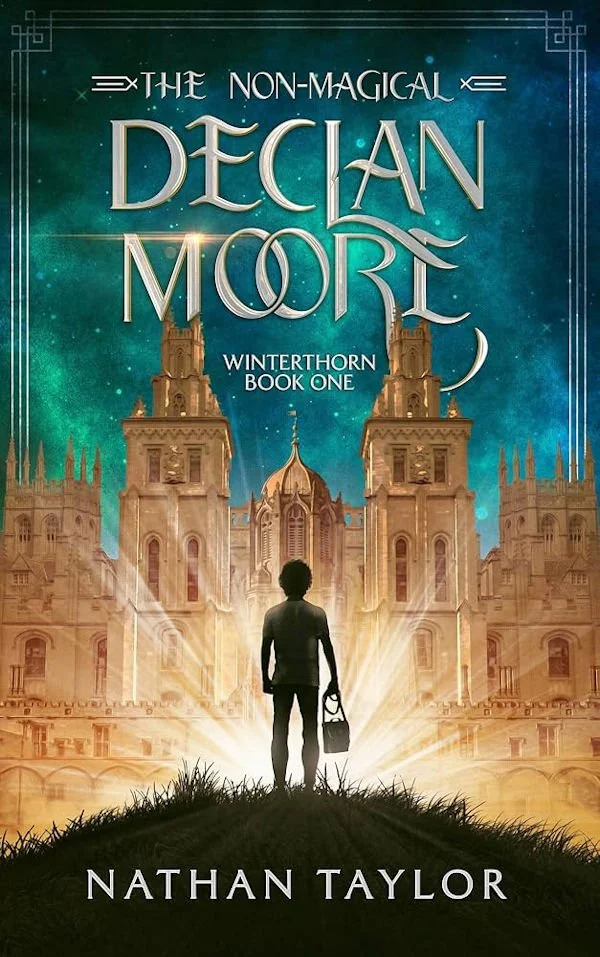
The literary world’s most rigorous test for independent fantasy authors has reached a critical juncture. The Self-Published Fantasy Blog-Off (SPFBO), now in its eleventh iteration, has officially concluded the "cut" phase of its competition. As the panel of judges prepares to pivot toward the intensive, deep-dive analysis of the four remaining semi-finalists, the organization has bid a formal farewell to the final two contenders of the "Seventh and Final Fall."
This milestone marks the end of the initial marathon—a period characterized by high-volume reading and the difficult task of narrowing a sprawling field of talented voices down to a select group of finalists. For the authors whose journeys end here, the recognition remains: entering the SPFBO is an act of professional bravery, exposing one’s creative labor to the cold, objective light of public critique.
The SPFBO Philosophy: A Subjective Crucible
To understand the selection process, one must first understand the spirit of the SPFBO. The competition does not operate on a rigid, linear scale of "worst to best." Instead, the judging panel approaches the literature in cohorts, reviewing books in cycles to ensure each narrative is given an equitable chance to breathe.
"Reading is inherently subjective," the editorial team noted in their concluding statement. "What didn’t resonate with our panel might be exactly the kind of story another reader is looking for." This ethos is at the heart of the competition’s longevity. The goal is not to declare a single objective truth about the quality of a manuscript, but rather to highlight the diverse potential within the indie fantasy market.
As the competition transitions into the semi-final stage, the focus shifts from a broad survey to a granular investigation. Each of the four remaining books will receive a dedicated, long-form review, providing the kind of analytical depth that serves as a gold standard for independent authors seeking to understand their market impact.
Case Study: The Non-Magical Declan Moore
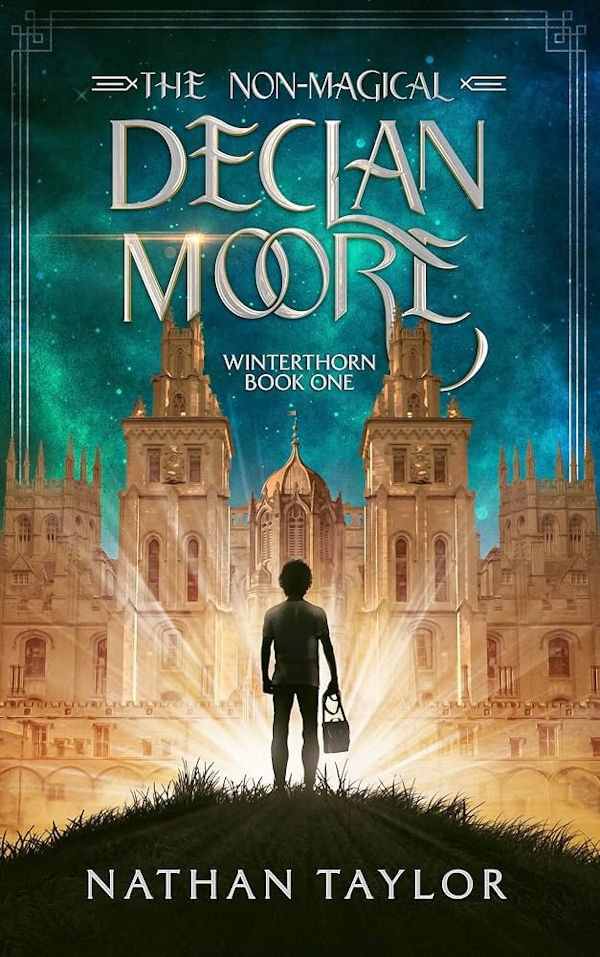
The first of the final two books to be evaluated, Nathan Taylor’s The Non-Magical Declan Moore, serves as a prime example of the "marmite" effect—a term used by the judges to describe a book that generates deeply polarized reactions.
Premise and Narrative Hook
Set in the modern nation of Euryma, the story imagines a world where magic is as mundane as a household utility. In this society, seventeen-year-old Declan Moore occupies the lowest social rung: he is a LAMP (Lacking All Magical Potential). His struggle for identity in a world of high-functioning mages is interrupted by a catastrophic event: the mass disappearance of the magical population.

Critical Divergence
The judges’ feedback for The Non-Magical Declan Moore was split sharply between praise for its pacing and frustration with its character development.
Proponents like Stacey and Sarah lauded the book’s "fun worldbuilding" and its ability to keep the reader "glued to the page." For these judges, the mystery of the vanishing wizards and the suspenseful search for the "mole in the Directive" provided a high-octane experience that kept them eager for a sequel.
Conversely, critics pointed to a dissonance between the story’s high stakes and the protagonist’s emotional response. The critique suggested that Declan’s reactions to life-altering events felt hollow or overly detached, creating an "emotional whiplash" that made it difficult to sustain immersion. While the character of Ace was highlighted as a triumph of grounded writing, some judges felt the surrounding cast functioned more as plot devices than organic personalities.
Case Study: Hunter’s Apprentice
Simon Shugar’s Hunter’s Apprentice presented a different set of challenges for the panel, focusing on the intersection of survivalist fantasy and the loss of innocence.
Worldbuilding and Tone
The novel follows Tomi, a child living in a village caught in the crossfire of warring kingdoms. The narrative is heavily praised for its depiction of the "day-to-day" realities of a harsh, unforgiving world. Unlike many grimdark novels that focus on the internal moral corruption of the characters, Hunter’s Apprentice maintains a focus on the resilience of the human spirit. The judges noted that the foraging, shelter-building, and seasonal preparations gave the setting a rare, lived-in texture.
The Problem of Voice
The primary point of contention regarding Hunter’s Apprentice was the narrative voice. The story spans from Tomi’s early childhood to his pre-teen years, yet the narration retains an adult cadence throughout. For some, this was a manageable stylistic choice; for others, it was a persistent "immersion breaker."
Julia, a judge who found the book highly engaging despite its flaws, noted that she had to "mentally age up" the protagonist to reconcile his dialogue and internal monologue with his stated age. Others found that the "cartoonish" villainy of certain antagonists and minor editorial oversights—such as repeated paragraphs—detracted from the polish of the work. Despite these issues, the book is noted for its "warmth at its core," appealing to readers who enjoy high-stakes survival stories populated by fundamentally decent people.
Implications for the Indie Fantasy Sector
The conclusion of the "Seventh and Final Fall" serves as a broader reflection of the current state of independent fantasy publishing.
- The Demand for Professionalism: The feedback regarding editorial issues in Hunter’s Apprentice highlights the absolute necessity of rigorous proofreading and copy-editing. In an era where indie authors compete directly with traditional publishing houses, technical polish is the first line of defense against reader churn.
- Character Consistency: The split reactions to The Non-Magical Declan Moore underscore that character interiority is the "make-or-break" factor for modern readers. Regardless of how inventive a magic system or plot premise may be, if the protagonist’s emotional arc does not feel earned, the audience’s suspension of disbelief will fail.
- The Power of Community: The transparent nature of the SPFBO judging process—sharing both the high praise and the pointed critiques—provides an invaluable service to the indie community. It allows authors to see how their work is processed in real-time by a diverse, critical audience.
Moving Forward: The Semi-Finals
With the preliminary rounds concluded, the focus shifts to the final four. The judges—a diverse collective including Adawia Asad, Eva Geraghty, and many others—have proven their commitment to impartiality and depth.
The upcoming dedicated reviews for the four semi-finalists represent a significant opportunity for these authors. In the SPFBO ecosystem, a featured review from this panel can act as a catalyst for increased visibility, serving as a beacon for fantasy enthusiasts seeking their next great read.
As the editors at Fantasy Faction move to the next phase, the tone is one of gratitude. The courage required to submit a manuscript—a project that represents months or years of solitary, grueling effort—to a panel of fourteen critical judges cannot be overstated.
For readers interested in following the final stage of the competition, the official SPFBO website and the panel’s social media channels (Bluesky and Threads) remain the primary hubs for updates. As we approach the announcement of the ultimate winner, the journey of these two books, The Non-Magical Declan Moore and Hunter’s Apprentice, serves as a reminder that even in the world of competitive literature, the most rewarding part of the journey is the discovery of a new story that captures the imagination.
The SPFBO 11, in its final stretch, continues to prove that while the competition is fierce, the commitment to championing independent talent remains the organization’s most enduring strength. Stay tuned as the panel dissects the remaining contenders, bringing us one step closer to crowning the next champion of indie fantasy.

 Layla Zulfa
 Ali Ikhwan