Lina Irawan
Every time a major international sporting event captivates the globe, a recurring visual trope emerges in the English-language media: Japanese fans, clad in vibrant blue jerseys, meticulously gathering trash from stadium stands long after the final whistle has blown. These images are consistently framed as a glowing endorsement of Japanese societal values—a testament to a culture of fastidiousness, collective responsibility, and innate respect for one’s environment.
However, beneath the veneer of international applause lies a simmering domestic resentment. For many women in Japan, this performative display of cleanliness on the world stage feels less like a cultural triumph and more like a bitter irony. A prominent voice in Japanese academia recently catalyzed this frustration, igniting a viral conversation that strips away the romanticized narrative to reveal a starker reality: a country where the public display of "respect" for a stadium stands in sharp, painful contrast to the lack of domestic labor performed by men within the home.
The Viral Pushback: "Do It at Home"
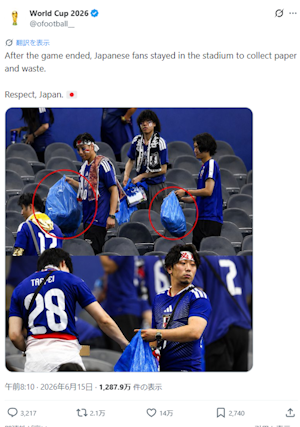
The catalyst for this cultural reckoning was an X (formerly Twitter) post by Tamada Atsuko, a professor specializing in the status of women in pre-revolutionary France. When the official FIFA World Cup account shared images of Japanese fans cleaning up after a 2-2 draw against the Netherlands, accompanied by the caption, "Respect, Japan—Japanese culture is beautiful," the international sentiment was one of unbridled admiration.
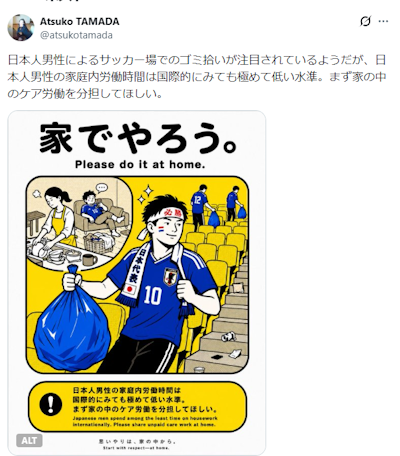
Tamada, however, was unimpressed. She responded with a sharp, pointed critique that included an AI-generated image juxtaposing the stadium cleanup with a domestic scene. In her graphic, a Japanese male fan is seen collecting trash in the stadium, while an inset shows his wife laboring over the dishes while he reclines in a chair, presumably watching the match.
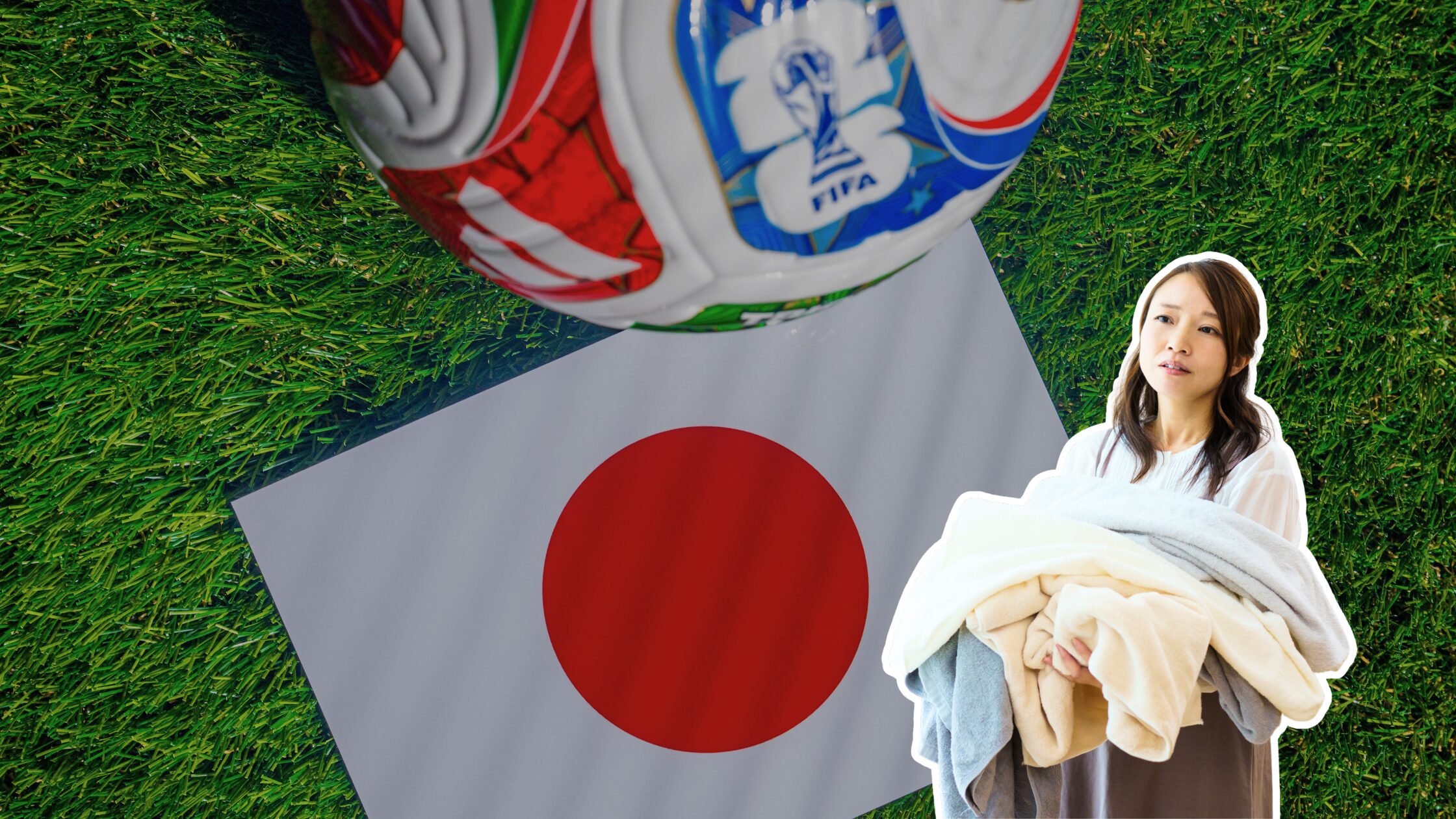
"Japanese men’s trash-picking at the soccer stadium is apparently getting a lot of attention," Tamada wrote, "but Japanese men’s domestic care-labor hours are extremely low by international standards. I’d like them to start with sharing the work inside the home."
The post resonated with a visceral intensity, garnering 59,000 likes and 13,000 reposts. While Tamada wisely limited comments to curb the inevitable tide of online hostility, her intervention successfully shifted the focus from the performative virtues of the fans to the structural inequalities of the Japanese household.
Chronology of a Cultural Critique
The phenomenon of the "cleaning fan" has long been a point of contention within Japan, oscillating between national pride and deep-seated skepticism.
- Pre-2022: Media outlets began consistently highlighting the post-match cleanup rituals of Japanese fans as a standard feature of their coverage, reinforcing a soft-power narrative of Japanese moral superiority.
- 2022 FIFA World Cup (Qatar): As the narrative reached a fever pitch, internal critics began to speak out. Figures like former Daio Paper chairman Ikawa Mototaka labeled the behavior a "slave mentality" designed to court foreign approval. Former Tokyo Governor Masuzoe Yoichi argued that such actions were actually detrimental, as they effectively deprived local stadium staff of their livelihoods.
- 2026 World Cup: The cycle repeated, but with a new dimension. With the emergence of feminist critiques like that of Professor Tamada, the conversation evolved from questioning the sincerity of the act to challenging the priorities of the actors.
- Contemporary Reaction: The publication of articles in outlets like Shukan Josei Prime and Diamond Online reflects a broader societal fatigue. Writers like Kubota Masaki have argued that the obsession with moralizing these acts is a symptom of national decline—a desperate reach for "spiritual" superiority to compensate for a lack of material or structural strength.
Supporting Data: The Domestic Disparity
Tamada’s critique is backed by hard, empirical data that illustrates a gendered divide of staggering proportions. According to the OECD Time Use Database, the disparity in unpaid labor—which includes cleaning, cooking, and childcare—is the most pronounced among all 35 tracked nations.
Japanese men, on average, contribute a mere 47 minutes per day to unpaid domestic labor. By contrast, Japanese women perform 208 minutes—a ratio of 4.4 times more work than their male partners. This gap widens significantly when children enter the picture. In households with a child under the age of six, the average woman’s daily unpaid workload balloons to approximately 414 minutes.
This systemic imbalance has led to the emergence of social phenomena such as the furariimen—a term that trended years ago to describe men who deliberately linger at bars or in public spaces after work, avoiding the domestic sphere entirely to shirk their share of household chores.
While the gap is slowly narrowing—down from a 5.4x difference in 2016 to the current figures—the rate of progress is glacial. Surveys indicate that while the majority of young Japanese couples now claim to value gender equality in the home, the reality of the daily division of labor remains stubbornly traditional, with women bearing the overwhelming burden of the "second shift."
Structural Barriers and Systemic Inequity
It is important to note that the issue is not merely one of individual male laziness; it is deeply rooted in Japan’s structural and economic landscape. Japanese men work some of the longest hours in the developed world, logging an average of 442 minutes (7.4 hours) of paid work per day.
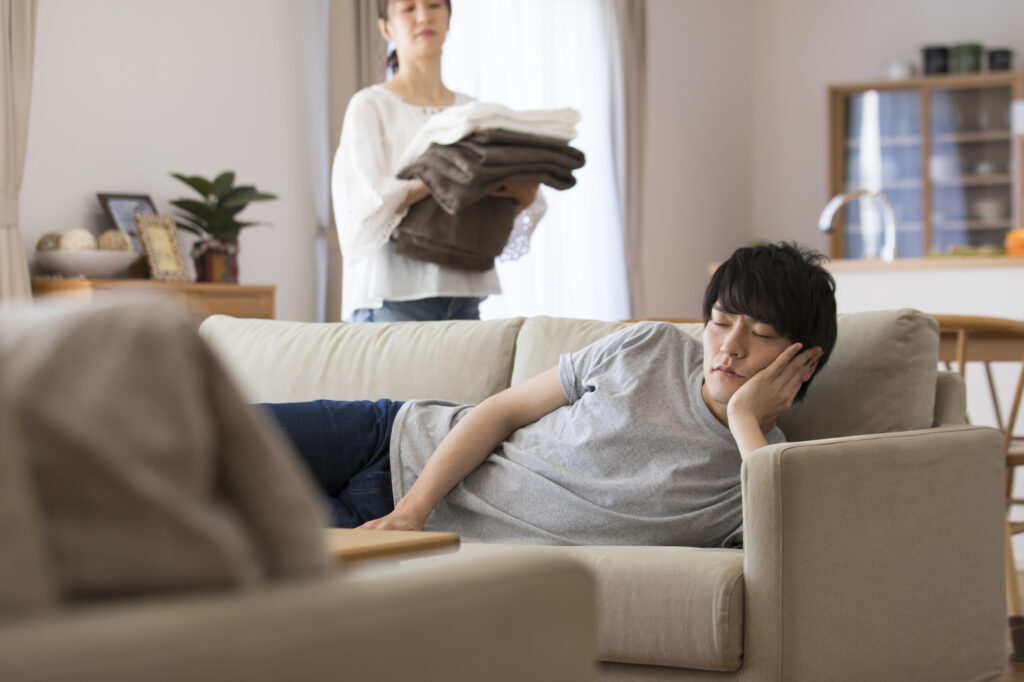
The corporate culture, which demands total devotion to the company, leaves little room for parental or domestic engagement. Furthermore, institutional retaliation remains a significant deterrent. Many fathers who have attempted to claim paternity leave have reported being punished by their employers, including being transferred to remote locations or facing professional stagnation.
When society demands that a man define his entire existence through his professional output, the domestic sphere is relegated to an afterthought—a responsibility to be managed by the spouse. Consequently, when these same men perform "charity" in a stadium, it highlights a paradoxical disconnect: they are capable of being helpful, but they are conditioned by society to prioritize public performativity over private partnership.
Implications: A Call for Cultural Reevaluation
The skepticism surrounding the "cleaning fans" is not merely about litter; it is about the projection of a curated image of national morality that masks deep-seated social failures. When the Sumida River remains littered after a fireworks festival, or when Shibuya City finds that nearly half of its street litter is generated by domestic residents rather than tourists, the "clean Japanese" narrative begins to fray.
Professor Tamada’s intervention serves as a necessary wake-up call. It forces the public to ask: What does it mean to be a "good" citizen? If the definition of a model Japanese person involves scrubbing stadium seats for a global audience while their own homes remain centers of unequal labor, then that definition is fundamentally flawed.
For Japan to bridge this gap, the solution must be structural, not just cultural. It requires:
- Work-Life Reform: A fundamental shift in labor laws and corporate culture to allow both men and women to reduce their paid work hours.
- Normalization of Paternity Leave: Moving beyond policies on paper to ensuring that fathers can take leave without fear of professional retribution.
- De-romanticizing Performative Virtue: A critical public discourse that stops rewarding outward displays of moral superiority when those displays are not mirrored in the private, domestic lives of the citizens.
As the global community continues to cheer for the fans in blue jerseys, the voices of women like Tamada Atsuko are reminding the world that true respect begins at home. Until Japan addresses the 4.4x divide in unpaid labor, the image of the stadium cleaner will remain what many critics now suspect it to be: a fleeting, performative distraction from a much deeper, more urgent domestic crisis.


 Neng Nana
 Asro
Asro