Laily UPN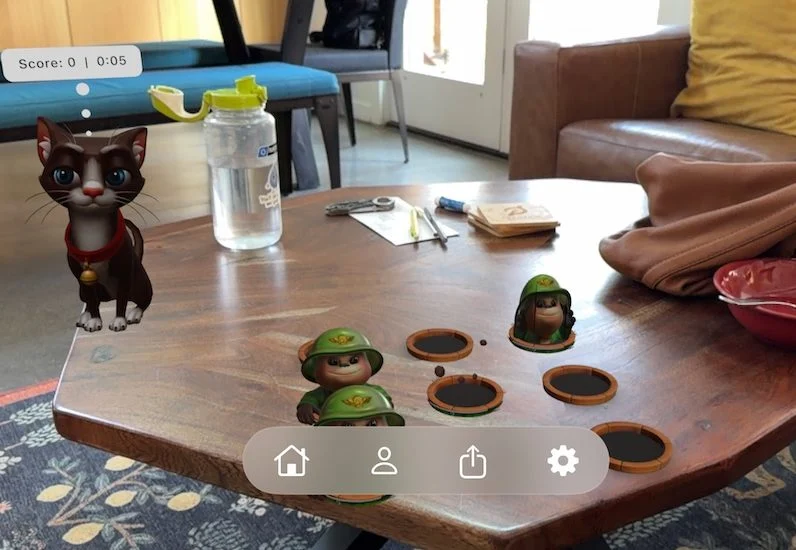
For years, the evolution of digital communication has followed a predictable, albeit incremental, trajectory. We moved from plain text to emoticons, then to vibrant GIFs, and eventually to the ubiquitous sticker packs that currently populate our iMessage threads. But for Mark Drummond, a veteran of DreamWorks Animation and Apple, these tools represent a stagnant era of digital interaction.
Enter Pixi, a startup that launched its messaging-native application on the Apple App Store this Wednesday. Pixi isn’t just another sticker app; it is a fundamental reimagining of how we share presence, emotion, and "tokens of affection" in a digital landscape. By leveraging on-device artificial intelligence and sophisticated augmented reality (AR), Pixi allows users to send sentient, interactive characters that don’t just sit on a screen—they inhabit the recipient’s physical environment.
The Main Facts: Bridging the Digital-Physical Divide
At its core, Pixi is designed to solve the "presence gap"—the psychological void felt when we think of a friend or loved one who is physically absent. Traditional messaging relies on static media, which, according to Drummond, feels like a relic of our parents’ generation.
The Pixi experience is seamless. Through the iMessage interface, a user can select an AR character—such as a mischievous cat, a helpful robot, or a playful animated envelope—and send it to a contact. Upon opening the message, the recipient’s iPhone camera activates, and the character leaps into their world.
Unlike traditional AR filters that simply overlay a mask on a face, Pixi’s characters possess a form of spatial intelligence. They can perceive their surroundings, respond to real-time events, and even react to the user’s facial expressions. If a user smiles, the character might brighten; if a real-world dog trots by in the background, a virtual cat might react with feline curiosity or apprehension. This is all achieved via on-device processing, ensuring that no sensitive video data leaves the user’s handset, thereby prioritizing privacy in an era of heightened data scrutiny.
A Chronological Evolution of Messaging
To understand the significance of Pixi, one must view it within the broader history of telecommunications:
- The Text Era (1990s–2000s): Communication was defined by brevity and linguistic economy. SMS limited us to characters, forcing a reliance on shorthand.
- The Media Era (2010s): With the advent of smartphones, high-speed data, and platforms like WhatsApp and Messenger, we shifted to rich media. Emojis, GIFs, and stickers allowed for "emotional shorthand," but these remained flat, two-dimensional files.
- The AR Transition (2015–2020): Companies like Snap (Snapchat) normalized AR filters, turning our faces into canvases. While innovative, these were largely passive; the user was the subject, but the media remained tethered to the screen’s frame.
- The Pixi Era (2025–Present): Pixi represents the "Interaction Era." The AR character is no longer a filter; it is an autonomous participant. It is not something you wear; it is something you host.
Supporting Data and Technical Architecture
The technical barrier to entry for high-fidelity, reactive AR is significant. Pixi’s ability to perform real-time environmental analysis without latency is the result of integrating advanced on-device AI models. While competitors have utilized cloud-based processing for AI tasks, Pixi’s commitment to "on-device" computing is a strategic choice.
Currently, the app is optimized for iPhone 11 and newer models, utilizing the high-performance Neural Engine inherent in Apple’s A-series chips. This hardware is capable of mapping physical spaces, identifying objects (like chairs, desks, or pets), and placing virtual entities with high spatial persistence.
The app launch includes several "interactive vignettes":
- The Cat: A comedic character that performs stand-up routines and mirrors human emotion.
- The Envelope: A playful, persistent character that can chase the user around a room, effectively turning a chat notification into a game of tag.
- Utility Modules: Pixi integrates classic casual games like tic-tac-toe and whack-a-mole, transforming the chat interface into a shared arcade.
Official Responses and the Visionary Perspective
Mark Drummond’s pivot from high-end animation to consumer tech is rooted in the philosophy of "creative gifting." In his view, the psychology behind sending a message is often a search for a better way to say, "I’m thinking of you."

"The consumer problem we’re solving is thinking of a friend when they’re not present," Drummond explained in an interview with TechCrunch. "Sometimes the psychology is called ‘pebbling’ or ‘creative gifting.’ You’re sharing tokens of affection, basically cards, e-cards, and gifts. That’s your dad, or, in some cases, your granddad’s media. We can do better. We can do something that’s digitally native, and that uses everything we learned about AR on the iPhone."
Drummond’s background at DreamWorks informs the "character-first" approach. By treating digital messages as miniature cinematic performances, he is elevating the quality of user interaction. He envisions a future where IP (Intellectual Property) holders—such as movie studios—can lease characters to users, allowing for brand-driven, interactive experiences. For instance, a major studio could release a character for a movie premiere, allowing users to interact with that character in their own living rooms, creating a viral marketing loop that is far more engaging than a traditional advertisement.
Implications for the Future of Digital Interaction
The implications of Pixi’s model are wide-ranging, affecting social, commercial, and technical sectors:
1. The Rise of the Creator Economy in AR
Pixi plans to open its platform to a marketplace of independent creators and brands. By providing the tools for users to "prompt" their own characters—e.g., "create a blue blob that growls at my friends"—Pixi is effectively democratizing the creation of interactive, AI-driven content. This lowers the barrier to entry for developers who want to experiment with AR without building an entire app from scratch.
2. Brands as Participants, Not Just Advertisers
The traditional ad model is increasingly being tuned out by Gen Z and Alpha. Pixi’s strategy encourages brands to act as "guest stars" in a user’s conversation. If a brand character is entertaining enough, the user becomes a brand ambassador simply by choosing to interact with that character. Drummond emphasizes that the app is free for users, and while brands may choose to monetize their specific character packs, the primary goal is mass adoption through utility and entertainment.
3. Cross-Platform Expansion
While currently limited to the Apple ecosystem, the roadmap is clear. By planning expansions into Android, WhatsApp, and Instagram, Pixi is positioning itself to become the "middleware" for AR communication. As messaging platforms struggle to differentiate themselves, integrating a Pixi-like layer of interactive AI could become the new standard for the "Super App" vision.
Conclusion: The Path Ahead
Pixi enters a crowded market, but its focus on "presence" rather than "media consumption" distinguishes it from the pack. By successfully merging the playful spirit of animation with the cutting-edge utility of on-device AI, the company is attempting to change our relationship with the screen.
We are moving past the age of static images and into an age where our digital messages have their own agency. Whether this will lead to a more profound sense of connection or simply a more crowded digital space remains to be seen. However, as the lines between our physical environment and our digital tools continue to blur, Pixi offers a compelling, often humorous, and undeniably innovative look at what the next decade of conversation might look like.
For now, the challenge for the team at Pixi will be scaling these interactions while maintaining the high-fidelity performance that makes the experience feel "real." If they succeed, the next time you receive a birthday wish or a casual greeting, you might just find a character standing on your desk, waiting for a reaction.

 Neng Nana
 Rifan Muazin