Azzam Bilal Chamdy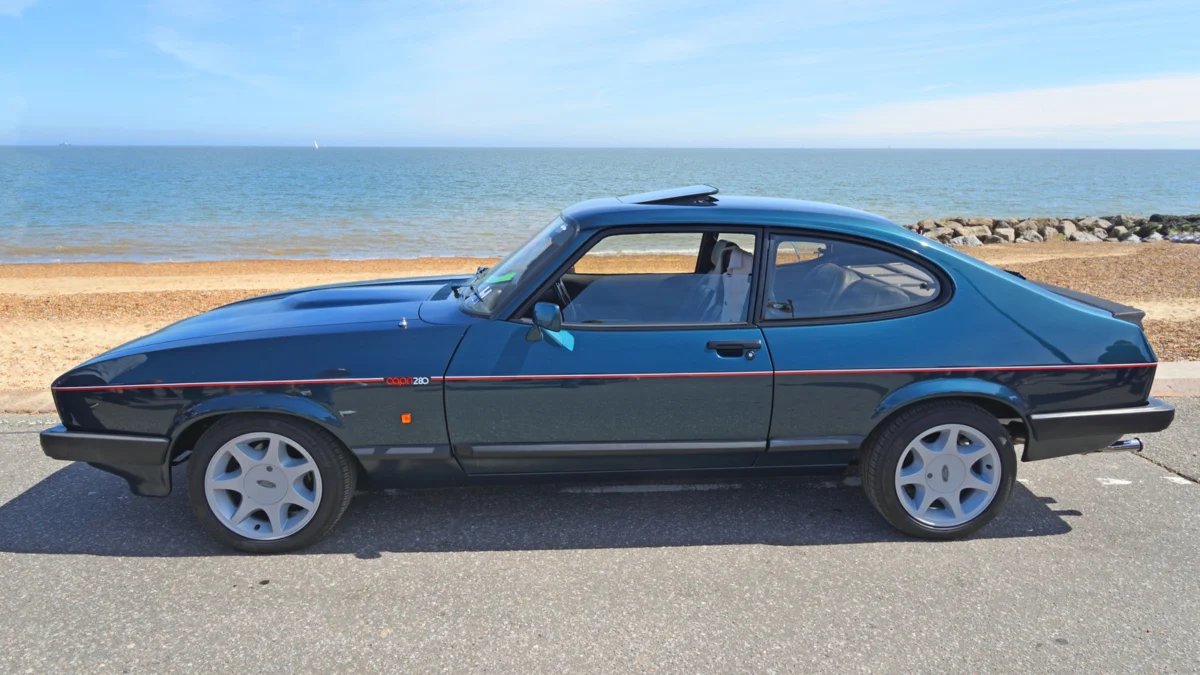
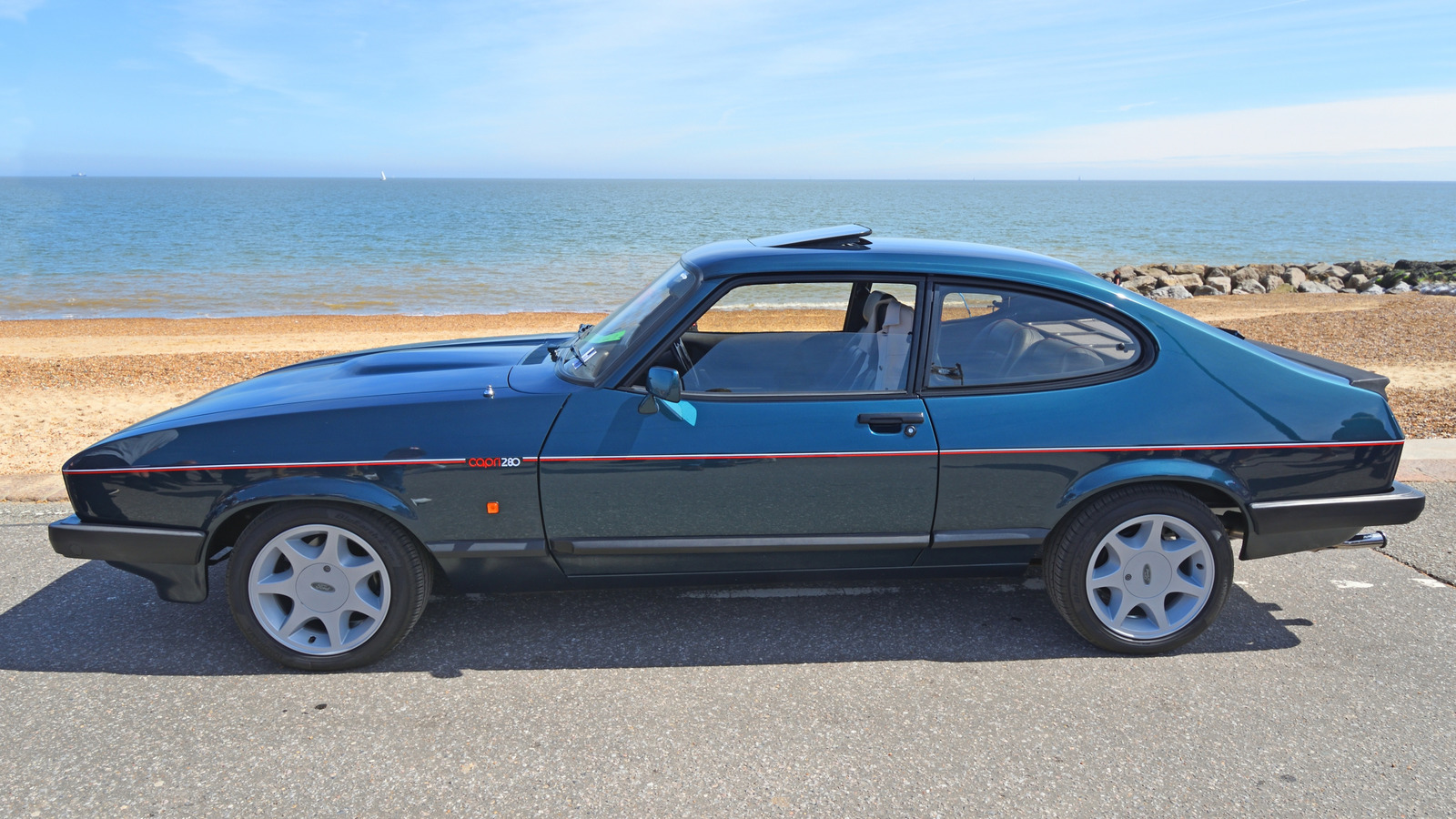
For automotive enthusiasts, few things evoke as much raw, nostalgic emotion as the "barn find"—a vehicle left to the passage of time, hidden away from the world, only to be rediscovered in a state of suspended animation. Recently, the motoring community was treated to a particularly rare spectacle: a 1986 Ford Capri 280 Brooklands, one of the final and most coveted iterations of the iconic European fastback, has finally rolled out of a private garage after a three-decade hiatus.
The discovery, facilitated by automotive journalist and television presenter Jonny Smith of The Late Brake Show, offers a poignant look at the life of a car that was once the zenith of Ford’s European performance aspirations. With only 1,038 units ever produced, the "Brooklands" edition is a crown jewel for collectors, making this specific rescue a significant event for Ford history enthusiasts worldwide.
Main Facts: The Legend of the "European Mustang"
To understand the gravity of this discovery, one must first understand the legacy of the Ford Capri. While modern consumers may recognize the "Capri" badge on Ford’s contemporary all-electric crossover sold in Europe, the original Capri bears no structural or philosophical resemblance to its modern namesake.
Launched in 1969, the original Ford Capri was designed as a sleek, accessible fastback coupe—a "Mustang for the masses" of Europe. Ford had originally intended to christen the vehicle the "Colt," but Mitsubishi claimed the trademark before Ford could finalize the name. Pivoting quickly, the company landed on "Capri," and the car went on to define an era of European motoring, spanning nearly two decades of production.
The Capri 280 Brooklands represents the swan song of this legendary lineage. As Ford prepared to shutter the Capri line in 1986, they opted to send the model off with a flourish. The 280 Brooklands was the final, limited-edition run, characterized by its distinctive "Brooklands Green" paint, refined interior, and limited production numbers. At the time of its release, it carried a hefty price tag of £11,999—an amount equivalent to roughly $50,000 in today’s inflation-adjusted currency.
Chronology: A Three-Decade Time Capsule
The narrative of this specific Brooklands edition is as much a human story as it is an automotive one. The owner, a man named Chris, acquired the vehicle in 1988, shortly after its release. For several years, it served as a reliable, high-performance companion, carrying him through the late 80s and early 90s.
However, life has a habit of changing priorities. In the mid-1990s, Chris parked the Capri in his home garage with the full intention of returning to it shortly. That "shortly" transformed into thirty years.
The Garage Dilemma
The reason for the car’s prolonged confinement was largely architectural. Chris had gone to great lengths to protect his investment, even extending his garage to ensure the Capri was shielded from the harsh elements. Ironically, the extension created an awkward, wedge-shaped internal configuration that made extracting the vehicle a logistical nightmare.
"I didn’t want to store it outside," Chris explained during his collaboration with The Late Brake Show. "I wanted to keep it safe." Because the car couldn’t be easily maneuvered out, it remained a permanent fixture of the household architecture, an immovable monument to a bygone era of driving.
The Rediscovery
After 30 years, the car finally saw the light of day. When it was rolled out, it revealed a vehicle that had been remarkably well-preserved in some respects, yet deeply impacted by its long-term static storage. The odometer sits at a modest 49,349 miles—a testament to its limited usage during its active years.
Supporting Data: Assessing the Condition
The "reveal" was not without its sobering realities. When a mechanical machine sits dormant for three decades, rubber seals degrade, fluids turn to sludge, and electronic systems succumb to the inevitable march of entropy.
Mechanical Evaluation
Upon inspection, the team found that while the chassis remained largely intact, the vehicle had suffered some cosmetic and functional trauma. A notable blemish is a rust-damaged hole in the driver’s side door, the result of a long-ago break-in attempt that occurred while the car was tucked away.
In a heroic effort to see if the engine—the famous 2.8-liter V6—could still sing, Smith and Chris performed a basic triage:
- Fluid Management: They drained old lubricants and replaced them with fresh oil.
- Ignition: The spark plugs were swapped out to ensure a clean start.
- The Result: The engine did successfully turn over and roared to life momentarily, signaling that the core architecture of the Ford V6 was still sound. However, the victory was short-lived; the engine stalled due to cylinder failure, confirming that a deep-tissue restoration will be required before this Brooklands can return to the tarmac.
Implications: The Ethics of Car Storage
The story of Chris’s Capri serves as a cautionary tale for collectors and enthusiasts. While the intent to "save" the car was noble, the reality of long-term storage is fraught with technical requirements that many owners overlook.
Experts in the classic car community suggest that if a vehicle is to be stored for more than a year, it must be treated with a specific protocol:
- Environment: Ideally, a climate-controlled facility is preferred. Humidity is the silent killer of classic steel, leading to the kind of oxidation that plagues the Brooklands’ door.
- Fuel and Fluids: Fuel tanks should be filled to prevent condensation, or drained completely with a stabilizer added. Oil should be changed immediately before storage to remove acidic contaminants.
- Battery and Tires: Batteries should be removed or placed on a trickle charger to prevent deep-cycle failure. Tires should be rotated or the car placed on jack stands to prevent flat-spotting.
- Security: As demonstrated by the break-in attempt on the Capri, secure, monitored storage is essential to prevent not just environmental damage, but human interference.
Moving Forward: The Future of the Capri 280
The emergence of this 1986 Capri 280 Brooklands is a reminder of the fragility of automotive heritage. With only 1,038 units ever built, every surviving example represents a critical piece of Ford’s European performance history.
For Chris, the car is no longer just a static object in a wedge-shaped garage; it is a project. The collaboration with The Late Brake Show has provided the momentum needed to move from preservation to restoration. While the car currently faces hurdles regarding its engine performance and bodywork, the path forward is clear.
As the automotive world shifts rapidly toward electrification and automated driving, the Ford Capri 280 Brooklands stands as a visceral reminder of a different time—an era of analog feedback, the smell of gasoline, and the distinct, mechanical roar of a V6 engine. Whether this specific unit will eventually grace the roads again remains to be seen, but for now, it has escaped its unintended time capsule, proving that even after 30 years of silence, the spirit of the Capri remains remarkably resilient.
For enthusiasts, the lesson is simple: if you own a piece of history, give it the care it deserves, and perhaps most importantly, do not let it spend three decades in the dark. Cars are designed to move, and as this Brooklands has proven, the sooner they return to the road, the better.

 Rifan Muazin