Suro Senen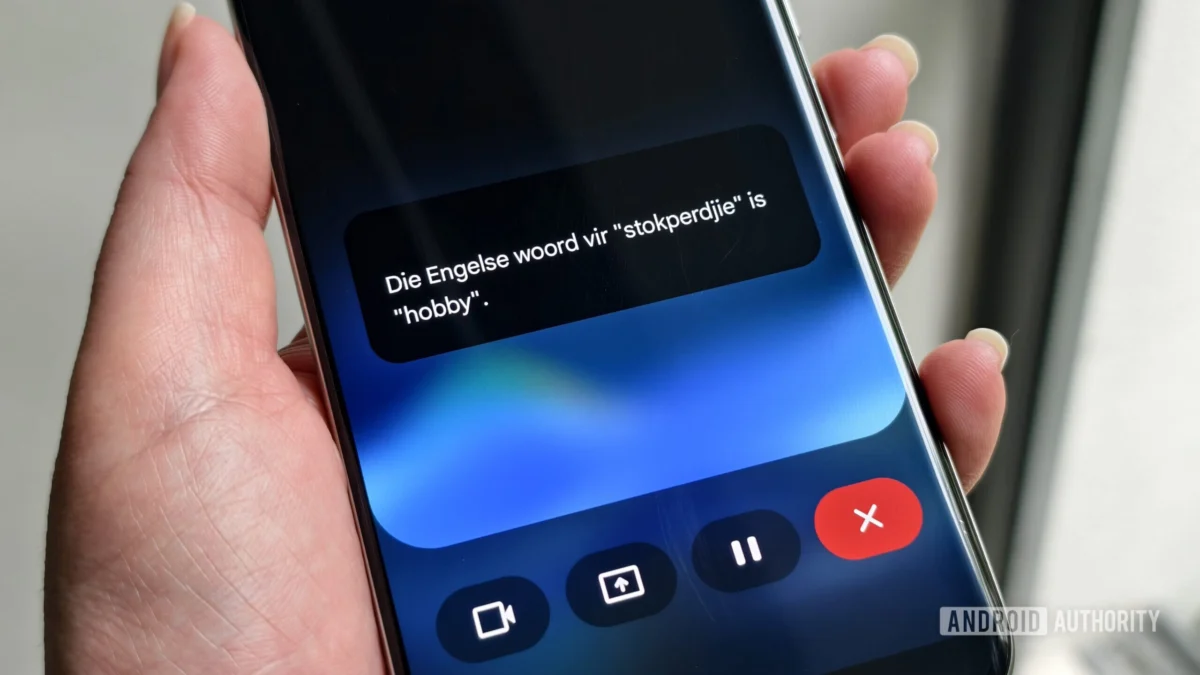
In the fast-paced arena of artificial intelligence, user interface (UI) design is no longer just a superficial aesthetic choice—it is a critical component of how we perceive intelligence and responsiveness. Google, currently locked in an intense arms race with competitors like OpenAI and Anthropic, has once again signaled that it is prioritizing the "humanity" of its AI experience. Recent reports indicate that the tech giant is quietly testing a radical new UI for Gemini Live: a dynamic, interactive "bar" that mimics the fluid, responsive nature of a living assistant.
This development, while subtle in its current rollout, represents a broader shift in how Google intends to integrate AI into the daily fabric of mobile computing. As the company prepares for its upcoming I/O developer conference, these UI experiments offer a glimpse into a future where the line between a digital assistant and a conversational partner becomes increasingly blurred.
Main Facts: The "Dynamic Island" of AI
The core of this new development, first surfaced by industry observers at TestingCatalog, involves a departure from the traditional, static chatbot interface. Instead of a standard text box or a pulsating orb, Gemini Live is transitioning toward an interactive, pill-shaped "bar" UI.
This design choice bears a striking resemblance to Apple’s "Dynamic Island," though its function is distinctly focused on AI interaction. The bar is not merely a container; it is an active participant in the user experience. According to early reports and social media documentation, the bar is designed to react to touch inputs and, most intriguingly, features animations that allow it to "wave back" at the user. This tactile, responsive feedback is designed to make the AI feel less like a tool and more like an entity present on the screen.
Key takeaways regarding this rollout include:
- Limited Availability: The feature is currently in a highly restricted A/B testing phase. Reports suggest that only a fraction of users—as low as one in ten accounts sampled—have seen the update.
- Cross-Platform Testing: Unlike some exclusive features that favor Android, this UI is being tested across both Android and iOS versions of the Gemini app.
- Interactive Design: The UI responds to user taps, creating a feedback loop that encourages engagement.
- "Waving" Animations: This marks a shift toward anthropomorphic design, where the AI’s UI reflects social cues to build trust and rapport with the user.
Chronology: A History of Iteration
Google’s journey toward the current iteration of Gemini Live has been marked by a series of rapid, iterative updates designed to overcome the "uncanny valley" of voice-based AI.
The Foundation (2023–2024)
Google initially launched Gemini (formerly Bard) as a text-heavy, traditional chatbot. The early iterations focused on performance, model training, and integration into the Google Workspace ecosystem. However, it soon became clear that text alone was insufficient for the goal of a truly personal assistant.
The Rise of Gemini Live (Late 2024)
Gemini Live was introduced to bring fluid, conversational, and real-time interaction to the platform. By allowing users to interrupt the AI and engage in natural, non-linear conversations, Google sought to solve the rigidity of traditional voice assistants like the legacy Google Assistant.
The Redesign Era (Early 2025–Present)
Earlier this month, Google pushed a major UI overhaul that streamlined the Gemini interface. This redesign was the precursor to the current experiment. By simplifying the layout, Google created the "screen real estate" necessary for more experimental UI elements—paving the way for the dynamic bar interface currently being tested.
Supporting Data: Why UI Matters in AI
Industry analysts suggest that UI design is currently the most significant differentiator for consumer AI products. As the underlying Large Language Models (LLMs) converge in performance, the "experience" of using the AI becomes the primary driver of brand loyalty.
Data from recent user experience (UX) studies indicate:
- Response Latency Perception: When an AI interface includes active, moving visual elements (like a pulsing bar or a waving animation), users report a higher tolerance for minor latency. The visual "activity" makes the AI feel like it is "thinking," whereas a static screen can make a pause feel like a system freeze.
- Engagement Metrics: Interactive UI elements increase session length. By making the interface reactive to touch, Google is gamifying the interaction, which typically leads to higher daily active user (DAU) counts.
- Anthropomorphism and Trust: Studies in Human-Computer Interaction (HCI) consistently show that users are more likely to trust information provided by an AI that exhibits "social" behaviors, such as acknowledging a user’s greeting through animation.
Official Responses and Strategic Positioning
While Google has not released a formal press release detailing the specific mechanics of the new bar, the company’s recent messaging around "Project Astra" and its upcoming I/O presentation points toward a unified vision.
In previous briefings, Google executives have emphasized that the future of Gemini is "multimodal and ambient." This means that the AI should be able to see, hear, and respond in ways that feel natural to human senses. The decision to introduce a "waving" bar is a deliberate move to transition from a command-line interface to a conversational interface.
"We are moving away from the paradigm of ‘query-response’ and into a paradigm of ‘partnership,’" a source close to the project noted. By making the interface feel responsive to the user’s touch, Google is attempting to create a digital "presence" that occupies the screen in a meaningful way.
Implications: The Future of Mobile Computing
The implications of this UI shift extend far beyond simple aesthetics. If this interactive bar becomes the standard, we are looking at several major shifts in how we interact with our smartphones:
1. The Death of the Static App
If Gemini Live becomes a persistent, interactive bar that can be pulled up or dismissed, the need for opening specific apps may decline. We could move toward an OS-level integration where the "Bar" acts as the primary gateway to every task, from scheduling to image editing.
2. A Competitive Disadvantage for Apple and Samsung
If Google succeeds in making Gemini feel like a living, breathing partner through sophisticated UI, it forces Apple (Siri) and Samsung (Bixby/Galaxy AI) to innovate their visual interfaces at an equal pace. Apple’s "Dynamic Island" is currently a notification center; Google’s vision is to make it a conversational center.
3. Ethical and Psychological Considerations
The use of anthropomorphic design—such as the AI "waving"—raises questions about the ethics of emotional manipulation in AI. While it makes the product feel friendlier, it also risks creating a deeper, perhaps unhealthy, psychological reliance on digital assistants. Regulators and ethical AI boards are likely to watch these developments closely to ensure that users maintain a clear distinction between human interaction and machine simulation.
4. Accessibility and Inclusion
From an accessibility standpoint, a highly responsive, visual UI must also cater to those with visual impairments. Google has a strong track record here, and it will be vital to see how this "waving bar" translates into haptic feedback or audio cues for users who cannot see the visual animations.
Conclusion
The rollout of the new Gemini Live interactive bar is more than just a test; it is a declaration of intent. Google is betting that the winner of the AI race will not just be the company with the smartest model, but the company that creates the most intuitive, engaging, and "human" interface.
As we approach Google I/O, the tech community will be watching closely to see if this "waving" bar becomes the new standard for how we interact with the digital world. If successful, it will mark the beginning of a new era where our phones are no longer just tools we use, but companions we talk to—and who, in their own digital way, wave back.


 Iffa Jayyana
 Nana Muazin