Sagoh
Sagoh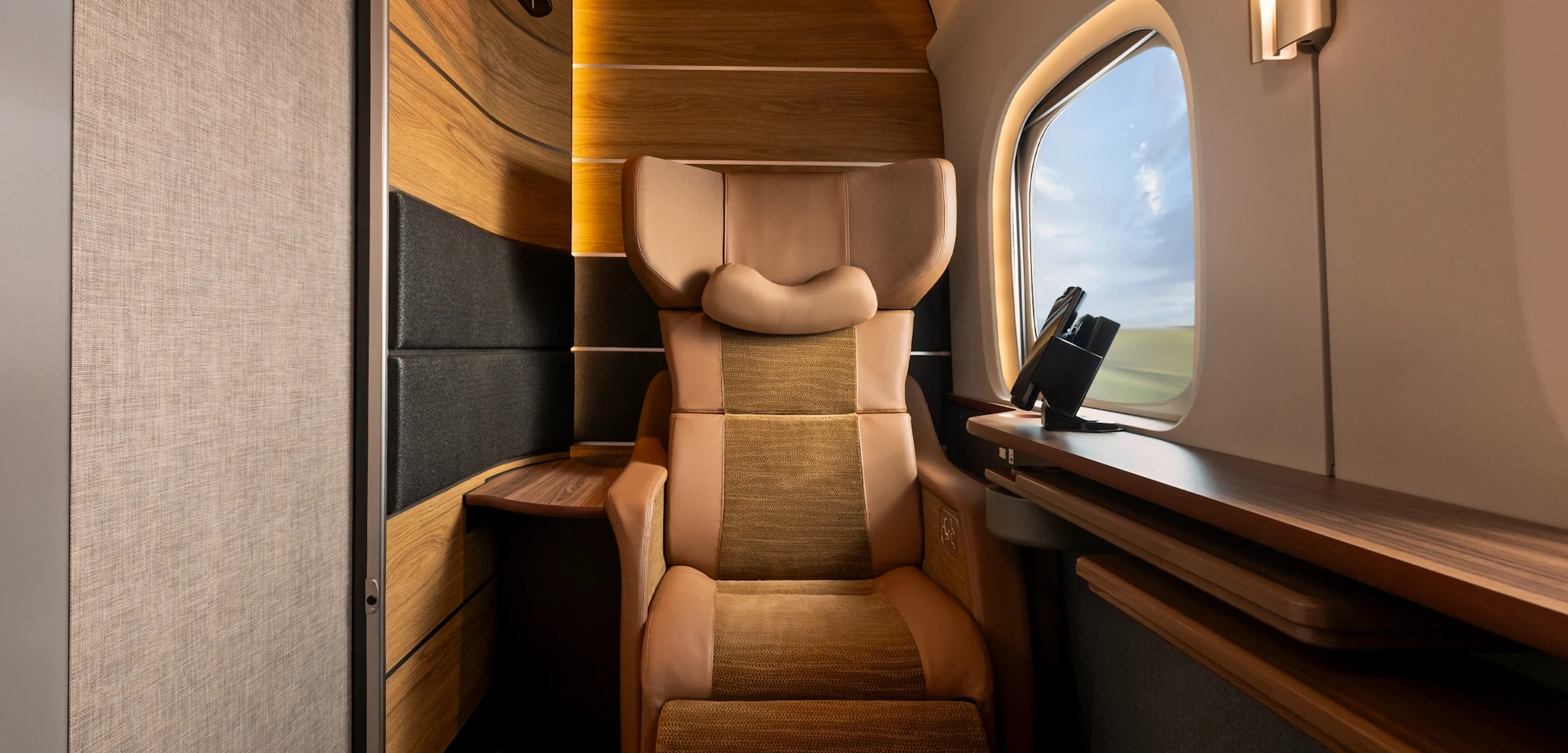
For over six decades, the Shinkansen has been the gold standard for high-speed rail, defined by its legendary punctuality, unmatched safety record, and efficient, utilitarian design. While the "Green Car"—Japan’s equivalent to business class—has long provided a step up in comfort, the experience has remained essentially communal. That is all set to change.
JR Central, the operator of the vital Tokaido Shinkansen line connecting Tokyo, Nagoya, Kyoto, and Osaka, has officially unveiled "Supreme Class." This radical departure from standard rail travel introduces fully private, lockable cabins to the N700S fleet, effectively transforming the high-speed rail experience from a mere mode of transit into an exclusive, boutique hospitality experience.
The Evolution of the Shinkansen: From Utility to Luxury
The introduction of Supreme Class marks a significant pivot in the philosophy of Japanese rail. While private compartments were a feature of the iconic 100-series double-decker trains—which served the Tokaido line until their retirement in 2003—they were phased out in favor of standardized, open-plan seating that maximized capacity.
For the past twenty years, the focus of the Tokaido Shinkansen has been throughput: moving millions of passengers between Japan’s economic hubs as quickly and reliably as possible. However, post-pandemic travel trends, characterized by a rise in "bleisure" (business-leisure) travel and a growing demand for social distancing and personal space, have forced operators to rethink their interior architecture.
The Supreme Class initiative is not an isolated development but rather the spearhead of a broader trend. Earlier this year, JR East teased its "Luna Azul" overnight sleeper train, signaling that Japanese rail companies are no longer just competing with each other; they are looking to compete with the luxury domestic airline market and the private jet sector.
A Private Suite at 285 Kilometers Per Hour
The technical specifications of the Supreme Class cabins are designed to mimic the sanctuary of a high-end hotel suite or the premium cabin of an international long-haul flight.
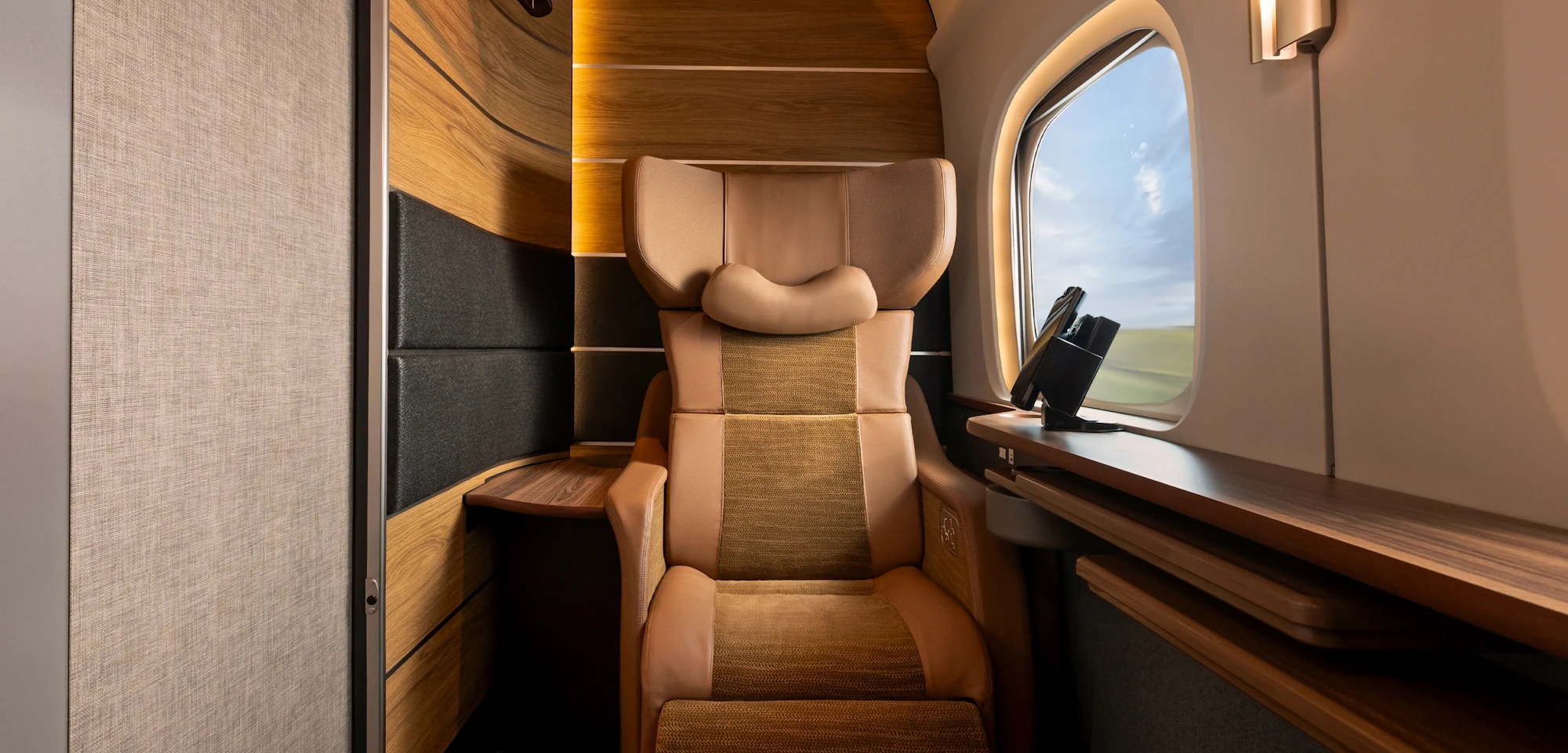
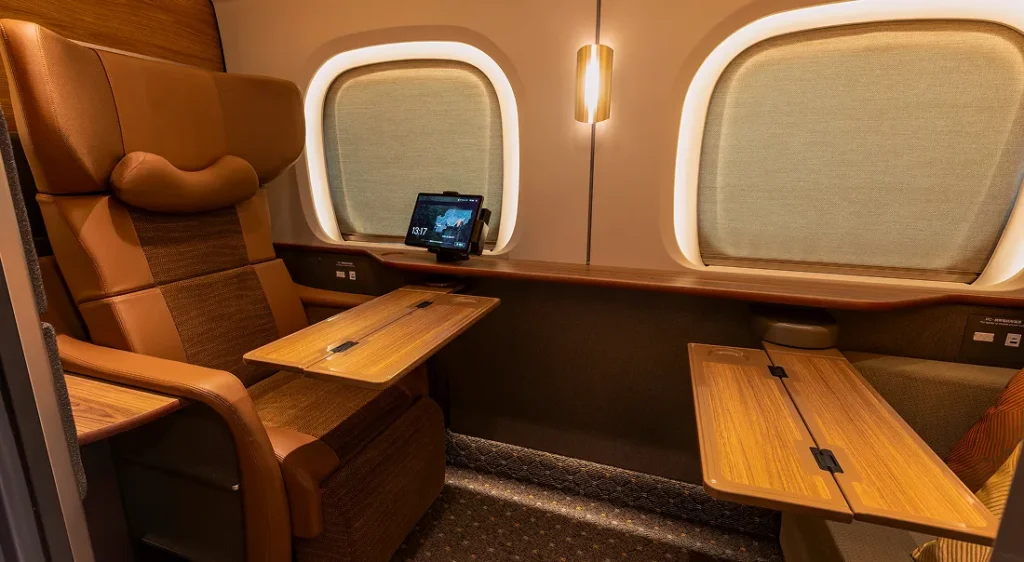
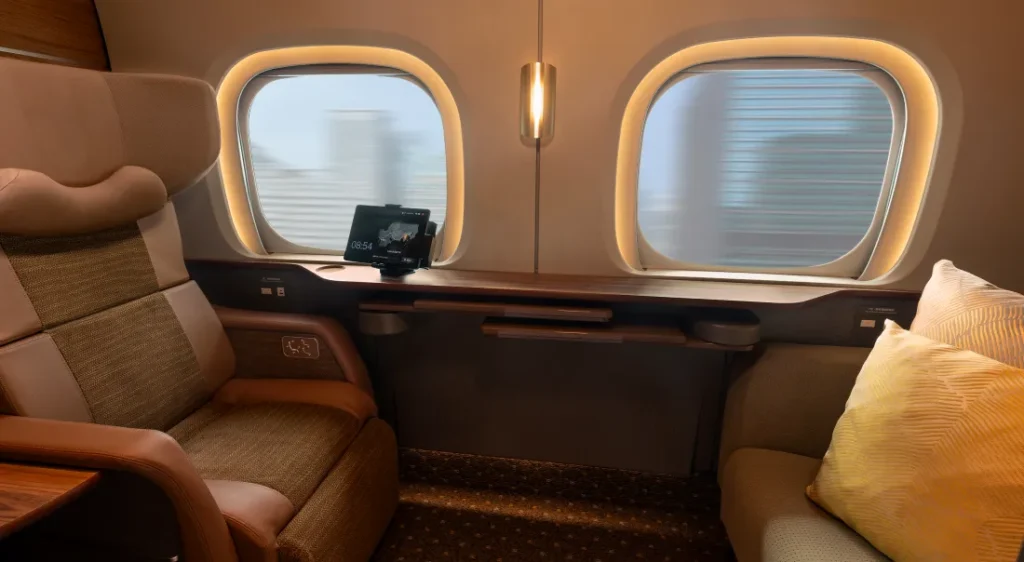
Each cabin is enclosed by a lockable electronic door, providing complete acoustic and visual isolation from the rest of the carriage. Once inside, the passenger is granted total control over their micro-environment. Through an integrated in-room tablet, travelers can manipulate ambient lighting, adjust climate control settings, and manage seat recline.
The onboard technology extends to the entertainment suite. Each seat is equipped with a personalized headrest-integrated audio system, allowing passengers to enjoy multimedia content without the need for external headphones or the fear of disturbing fellow travelers. Coupled with dedicated, high-speed onboard Wi-Fi, the cabin functions as a mobile, high-security boardroom or a quiet, contemplative personal den.
The design philosophy varies by cabin capacity. The single-passenger cabin in Car 10 is optimized for privacy and productivity, providing a streamlined space for the solo traveler. Conversely, the Car 7 cabin is expansive, featuring a dedicated sofa alongside the primary reclining chair. This configuration is aimed at couples on anniversary trips or business executives requiring a collaborative, yet private, meeting space while in transit.
Chronology of the Launch
The path to the October 1, 2026, launch has been a carefully orchestrated campaign by JR Central to ensure public interest and operational readiness:
- Initial Concept Tease: JR Central first hinted at "premium interior updates" in early 2025, sparking speculation about a return to private rail suites.
- Official Unveiling: In mid-2026, the company showcased the finalized N700S interior designs, confirming the return of private compartments after a 23-year hiatus.
- Public Trial Phase (July 25–26, 2026): JR Central will conduct a controlled, invitation-only trial run. Twenty-four lottery winners will experience a 30-minute excursion between Tokyo and Shin-Osaka to provide qualitative feedback on ergonomics and cabin functionality.
- Reservation Opening: The digital floodgates will open on September 15, 2026, at 5:30 a.m. JST, via the Smart EX and EX Reservation platforms.
- Commercial Debut: The service officially commences on October 1, 2026, on select N700S trainsets.
Supporting Data and Pricing Structure
The financial commitment required for a Supreme Class seat positions it firmly in the ultra-premium segment of the travel market. JR Central has confirmed that fares will fluctuate based on route distance and cabin selection.
For a journey between Tokyo and Shin-Osaka, the price point is set at ¥42,100 for the solo-occupancy cabin in Car 10. For those opting for the more spacious Car 7 suite, the price rises to ¥60,500. It is important to note that these figures are based on EX Reservation member rates; standard Smart EX users should expect a slight surcharge.
| Route | Single Cabin (Car 10) | Double Suite (Car 7) |
|---|---|---|
| Tokyo to Shin-Osaka | ¥42,100 | ¥60,500 |
| (Additional segments) | Pro-rated | Pro-rated |
Note: These rates are subject to change and reflect current pricing projections.
One critical detail for frequent travelers: these cabins are exempt from the one-year advance reservation system typically enjoyed by holders of specific JR loyalty tiers. This creates a "first-come, first-served" dynamic that is expected to drive high demand during peak holiday periods and Golden Week.
Official Responses and Strategic Implications
JR Central’s leadership has framed the Supreme Class as a direct answer to the "diversification of travel needs." In a press briefing, a company spokesperson emphasized that the modern traveler is no longer looking for mere transportation; they are looking for a seamless transition between work and life.
"By providing a space where a passenger can conduct a business meeting, hold a private conversation, or simply rest without being observed, we are redefining the value of the high-speed rail commute," the statement read.
The implications for the wider travel industry are profound. By effectively competing with domestic air travel—which requires travel to peripheral airports, security screening, and boarding queues—the Shinkansen is leveraging its inherent "city-center to city-center" advantage. For a high-net-worth individual or a busy executive, the ability to board a train in the heart of Tokyo and arrive in the center of Osaka without ever leaving a private, productive environment is a powerful value proposition.
The 2027 Roadmap: The Rise of the ‘Supreme Seat’
Looking ahead, JR Central is not content with limiting luxury to fully enclosed rooms. Fiscal year 2027 will see the introduction of the "Supreme Class Seat." This product occupies the "middle ground" of the premium market—a semi-private suite featuring high-walled partitions and expanded personal space.
Industry analysts suggest that this design is heavily influenced by the success of airline products such as ANA’s "The Room" or Qatar Airways’ "Qsuite." By creating a graduated tier of luxury—ranging from the high-walled semi-private seat to the fully lockable suite—JR Central is positioning itself to capture every segment of the premium market, from the casual traveler looking for a bit more elbow room to the high-end traveler demanding complete seclusion.
Conclusion: The Journey Becomes the Destination
The launch of Supreme Class signals a transformative moment for Japan’s rail infrastructure. While the Shinkansen will always be heralded for its raw speed and efficiency, the addition of these private suites acknowledges that time spent in transit is valuable time.
For the international visitor, a trip on the Supreme Class is no longer just a way to move between Japan’s cultural capitals—it is a highlight of the trip itself. For the domestic business traveler, it is an essential tool for maintaining productivity. As JR Central continues to refine its premium offerings, the gap between "getting there" and "arriving" is rapidly closing.
Whether this marks the beginning of a broader, nationwide trend toward luxury rail remains to be seen, but one thing is certain: the bar for what constitutes a world-class train journey has been permanently raised. As of October 2026, the Tokaido Shinkansen will not only be the fastest way to travel through the heart of Japan—it will also be the most exclusive.


 Neng Nana
 Asro
Asro