Ali Ikhwan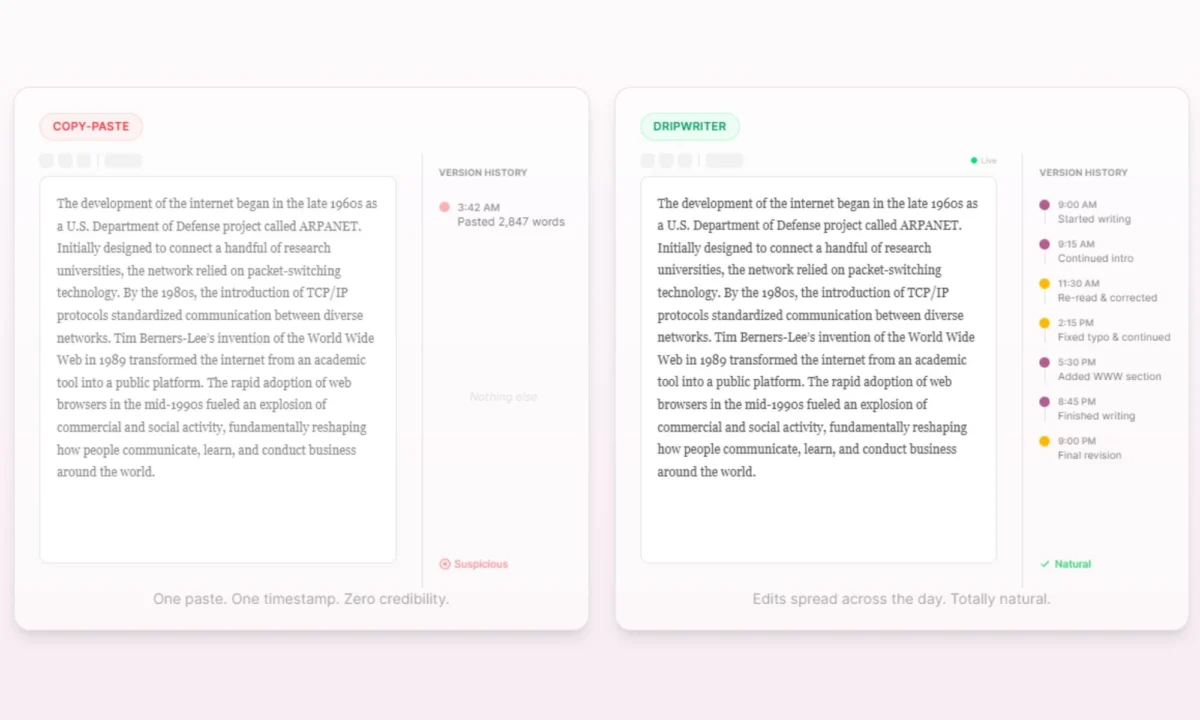
The integrity of the modern classroom is facing an unprecedented existential threat. As artificial intelligence becomes increasingly sophisticated, a new ecosystem of "academic integrity" tools—marketed specifically to bypass the very software designed to catch them—is proliferating across social media platforms like TikTok and YouTube. According to a recent New York Times report, the gap between AI-generated cheating and the detection mechanisms used by educators is not just widening; it is effectively vanishing.
For students, the barrier to entry for outsourcing homework has never been lower. For educators, the ability to discern original thought from machine-generated output has never been more compromised. This digital arms race has created a climate of uncertainty, where the very companies tasked with preserving academic honesty are often the ones providing the tools to circumvent it.
The Evolution of the "Cheat": Humanizers and Autotypers
The days of teachers simply looking for robotic prose or blatant plagiarism are long over. The current generation of cheating tools is designed to mimic the nuance of human cognition and the physical reality of a student typing at a desk.

The Rise of "Humanizers"
"Humanizers" represent a major leap in deceptive technology. These tools take raw, predictable output from models like ChatGPT or Claude and apply sophisticated linguistic filters. By adjusting syntax, varying sentence structure, and injecting the subtle, imperfect quirks of human writing, these tools strip away the "AI fingerprint"—the statistical patterns that detectors look for to flag machine-generated content.
The Autotyper Deception
Perhaps more insidious than the text itself is the "autotyper." Teachers often check a document’s version history to see how a student arrived at their final essay. A sudden dump of 1,000 words into a Google Doc is a major red flag. Autotypers solve this by simulating a real-time writing session. These apps release text slowly, over the course of hours, and even purposefully insert fake typos, backspaces, and pauses. By the time the file is submitted, it contains a "digital breadcrumb" trail that looks exactly like a human being struggling through the writing process.
A Chronology of the Crisis
The rapid normalization of AI in education has moved from novelty to crisis in a remarkably short window.

- 2022–2023: The Advent of Generative AI. When ChatGPT launched, schools were initially caught off guard, leading to widespread bans and the frantic adoption of basic AI detectors.
- 2024: The "Cat and Mouse" Phase. As detectors became more common, third-party developers began creating tools to "rewrite" AI content, leading to a temporary equilibrium where teachers felt they had the upper hand.
- 2025: The Normalization of Evasion. The market shifted. Apps like Dripwriter and Duey.ai emerged, not as niche hacks, but as commercial products. Marketing shifted from "how to use AI" to "how to never get caught."
- 2026: The Integrity Collapse. Recent investigations reveal that the market is now flooded with "all-in-one" platforms. The line between a writing assistant and a cheating tool has blurred to the point of erasure, with platforms like Grammarly now offering both detection and "humanizing" features simultaneously.
The Myth of the "Detector": Why the Math Doesn’t Add Up
The core of the problem lies in the inherent unreliability of AI detection software. A study by researchers at the University of Florida earlier this year sent shockwaves through the educational technology sector. After testing the five most popular AI detection tools, the researchers found that false-negative rates could reach as high as 99.6%.
Essentially, these detectors are fundamentally flawed. They rely on "perplexity" and "burstiness"—statistical measures of how predictable or varied a piece of text is. However, a student can bypass these detectors simply by changing a few vocabulary words or altering the sentence flow. When a tool can be defeated by a minor manual tweak, its efficacy as an arbiter of academic discipline becomes essentially zero.
Corporate Contradictions: Who Guards the Guardians?
The most alarming aspect of the current landscape is the role of the tech companies themselves. Many firms are playing both sides of the fence, selling "Academic Integrity" suites to universities while simultaneously marketing "Humanizer" and "AI-generation" tools to students.

The Times report highlighted a particularly egregious case involving GPTZero. A marketer for the company was found to be operating a fake "Graduate Teaching Assistant" persona on TikTok. While the persona promoted GPTZero as a tool to catch cheaters, the videos also demonstrated how to use the same platform to generate full essays with citations.
When confronted, GPTZero’s leadership claimed they were unaware of the marketer’s specific tactics and vowed to cut ties. Yet, this incident highlights a broader industry problem: the financial incentives are aligned with the proliferation of AI, not its restriction. When a company’s primary revenue stream is the power of their AI models, there is little incentive to create a truly "unbeatable" detector that would effectively kill their own user base.
Broader Implications for Education
As schools grapple with the reality that they cannot technically prevent AI-assisted cheating, they are forced to reconsider the fundamental purpose of the classroom.

The Death of the Take-Home Essay
Many educators are already moving away from take-home assignments, which are now considered "unverifiable." We are seeing a return to high-stakes, in-class writing—pen and paper or locked-down computers—as the only remaining bastion of authentic assessment. However, this shift ignores the reality that students will eventually enter a workforce where AI is the standard.
The Skill of "AI Literacy"
Some pedagogical experts argue that the attempt to "ban" or "detect" AI is a fool’s errand. Instead, the focus should shift to AI literacy. If students will be using these tools in their future careers, perhaps the goal of education should not be to prevent the use of AI, but to teach students how to use it ethically and critically. The challenge, of course, is that learning to write with AI is significantly different from learning to write because of the intellectual labor involved in the process.
Disciplinary Risks
The most dangerous implication of the current state of technology is the risk of false accusations. If a teacher relies on a detector that is 99% ineffective, they are essentially rolling the dice on a student’s academic future. As these tools become more prevalent, the risk of "false positives"—where a human student is incorrectly flagged as a cheater—could lead to a wave of legal and ethical challenges for school districts.

Conclusion: A Paradigm Shift
We are in the midst of a technological transition that mirrors the introduction of the calculator or the internet. However, unlike those tools, AI mimics the human output itself, making it uniquely disruptive to the humanities.
Schools are no longer fighting a technological battle they can win through software; they are fighting a social battle that requires a total re-evaluation of how we teach, how we assign work, and how we define "original" thought. Until institutions stop relying on the flawed promise of detection software, the current academic arms race will continue to erode the trust that defines the student-teacher relationship. The solution will likely not be found in better code, but in a radical redesign of what we ask students to do in the first place.


 Rifan Muazin