Lina Irawan
You pull your client’s analytics on a Monday morning, and the numbers are jarring. Reach is down—not by a marginal percentage, but significantly. The posting schedule hasn’t shifted, the creative strategy remains consistent with previous quarters, and the core messaging is unchanged. Yet, the performance metrics are in freefall.
Your client notices, and the questions start coming.
This isn’t just a bad month; it is a structural reality. A recent study of 15,000 profiles by marketing researcher Eric Siu revealed that organic reach across major social platforms has plummeted by 62% over the last three years. If your client’s numbers have cratered, it is likely not a failure of your strategy, but a collision with an algorithmic wall that has been rising steadily since 2022.
The Main Facts: Why Organic Reach is Vanishing
Organic reach—the number of unique users who view content without the assistance of paid promotion—is no longer the "free" marketing engine it once was. Across the board, social media platforms have transitioned into aggressive advertising businesses. In this new era, your organic content is competing for the same limited real estate as high-budget paid ads.
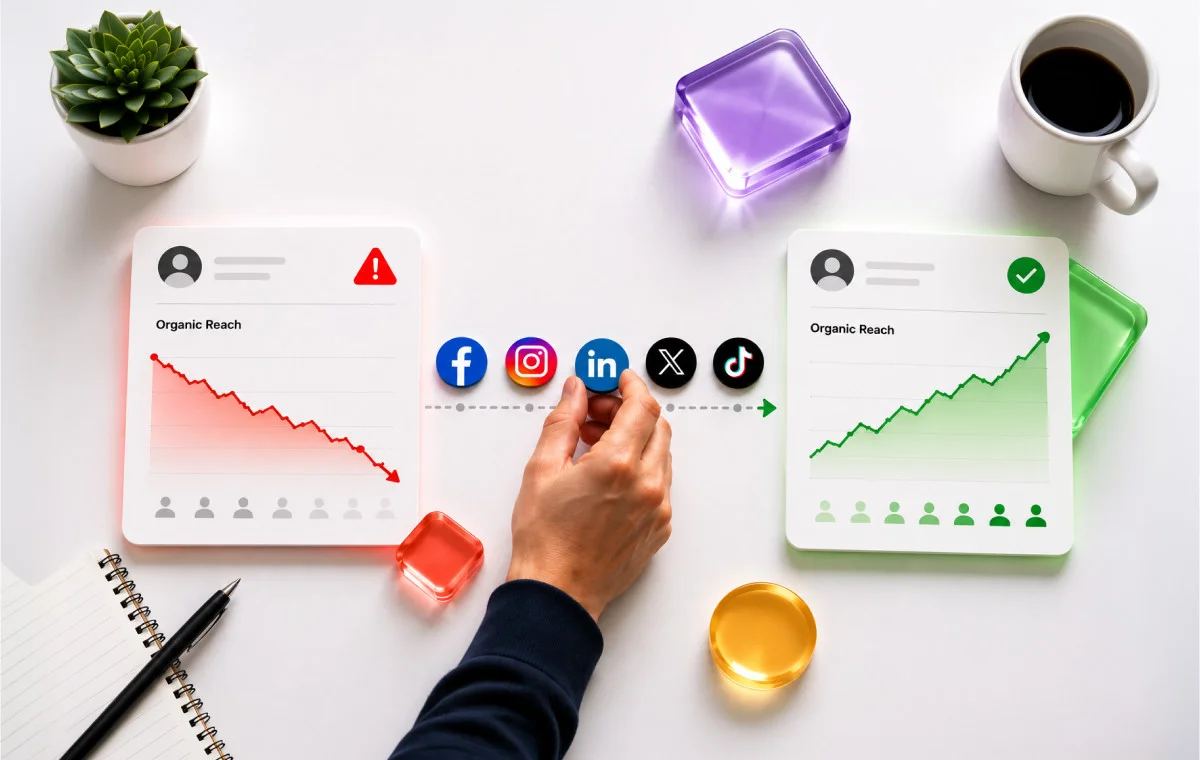
The math is simple: the volume of content uploaded to social platforms has surged exponentially between 2022 and 2026, but the number of slots in a user’s feed remains finite. Consequently, algorithms have shifted from prioritizing "follower count" to prioritizing "engagement signals." Today, a post seen by 5,000 people who scroll past is considered "low value," while a post seen by 500 people who save, share, or watch to completion is deemed a success.
Current Organic Benchmarks (2025–2026)
To manage client expectations, you must first understand the "new normal" baseline:
| Platform | Avg. Organic Reach | Trend vs. Previous Years |
|---|---|---|
| Facebook (Pages) | ~5.9% | Down from 16% (2012) |
| ~7.6% | Down ~40% vs. 2023 | |
| LinkedIn (Company) | ~1.6% | Down from ~7% (2021) |
| TikTok | ~10% | Down 17% YoY (2025) |
| X (Twitter) | ~3–5% | High link suppression |
The Chronology of the Shift
The decline of organic reach was not an overnight event; it was a calibrated evolution.
- 2021–2022: Platforms began prioritizing "meaningful social interactions" (MSI), effectively penalizing brand broadcasts.
- 2023: The rise of AI-driven recommendation feeds (the "TikTokification" of all platforms) shifted distribution away from follower graphs toward interest-based discovery.
- 2024 (November): LinkedIn introduced a significant algorithm update that penalized posts containing external links in the body text, forcing a major pivot in B2B strategy.
- 2025 (April): Instagram fundamentally altered its measurement framework, replacing "organic impressions" with "post views" and "profile views." This change caused widespread panic among agencies who were suddenly comparing "apples to oranges" in their year-over-year reporting.
Implications for Agency Strategy
The primary implication is that the "spray and pray" method of content distribution is dead. Agencies must now act as precision architects, optimizing for specific platform mechanics rather than generalized brand awareness.
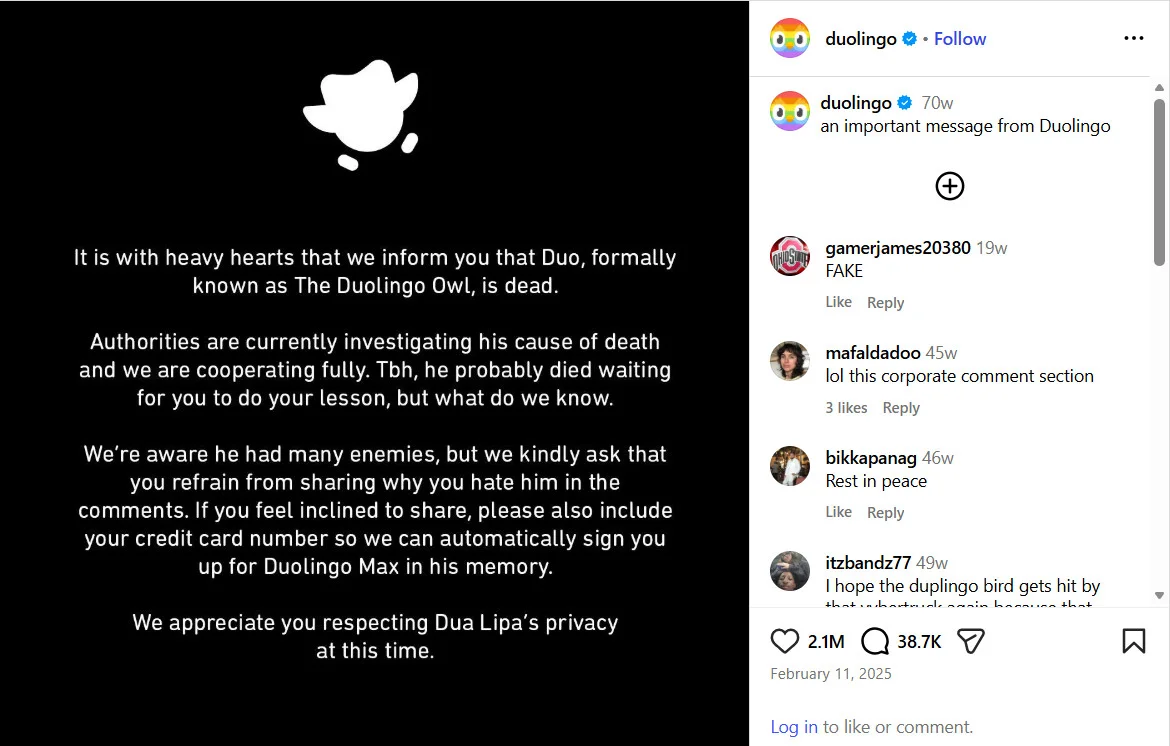
If you are currently managing multiple accounts, the temptation to panic-post is high. However, evidence suggests that posting more content without adjusting for engagement signals only compounds the problem, as low-performing posts serve as a negative signal to the platform’s algorithm.
The 30-Day Recovery Playbook
Phase 1: The 72-Hour Diagnostic Triage
Before pivoting your entire strategy, spend the first three days conducting a forensic audit of your client’s accounts.
- Metric Verification: Ensure you are comparing the same metrics. If you are looking at Instagram, confirm you are comparing "post views" against the correct baseline, not the deprecated "impressions" metric.
- Platform Isolation: Identify which specific channels are dragging down the average.
- The "Link" Check: Verify if external links are in your post bodies. If they are, move them to the first comment immediately. This is the single most effective "quick win" across LinkedIn, Facebook, and Instagram.
Phase 2: The Platform-Specific Pivot (Weeks 1–4)
Instagram: Mastering the "Watch-Time" Economy
Instagram now prioritizes completion rates and DMs.
- Week 1: Audit your Reels. Are they starting with a hook? If the first 3 seconds don’t grab the user, the reach is effectively zero.
- Week 2: Shift your format. Stop repurposing static graphics as videos. Move toward "lo-fi" content that feels native to the user experience.
- Weeks 3-4: Create a "micro-engagement loop." Ask questions in the caption that encourage users to DM you, rather than just comment. DMs are the highest-weighted signal in the current algorithm.
LinkedIn: The Rise of Personal Authority
Company pages are dying a slow death.
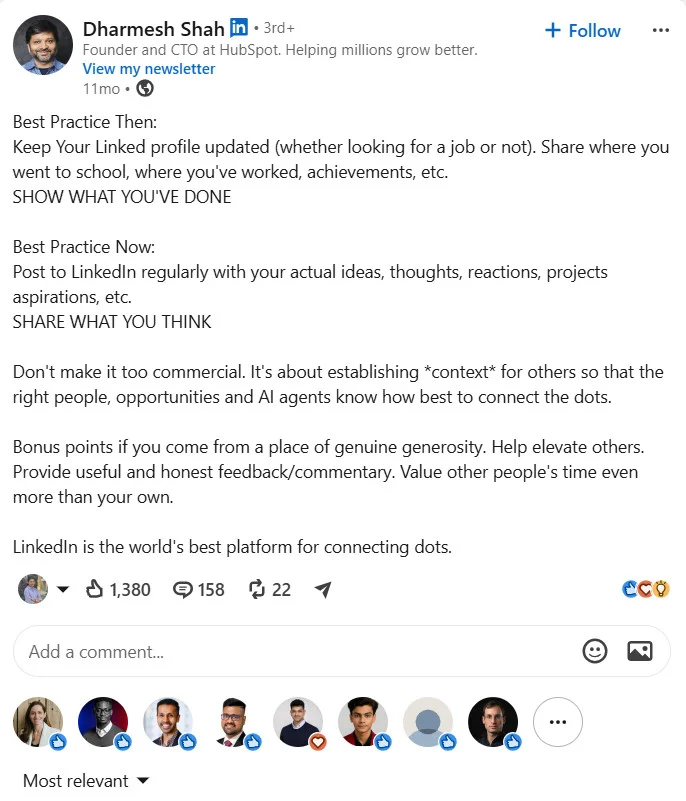
- Week 1: Acknowledge the gap. Data shows a CEO with 5,000 followers often generates more reach than a company page with 300,000.
- Week 2: Pivot to "Founder-Led" content. Train your client to post from their personal profile, with the company page acting as a secondary repository.
- Weeks 3-4: Standardize the "Personal Voice." Encourage executive storytelling over corporate announcements.
TikTok: Authenticity over Production
- Week 1: Analyze your "Drop-off rate." Where are users swiping away?
- Week 2: Rewrite your hooks. If your content is too "polished," it triggers an ad-fatigue response. Embrace raw, authentic footage.
- Weeks 3-4: Maintain consistency. TikTok favors accounts that post at a high, reliable cadence.
Managing the "Difficult Conversation"
The conversation with a client regarding a drop in reach is often more stressful than the technical fix itself. To manage this effectively, follow a three-part communication protocol:
- The Evidence-Based Opening: Do not hide the data. Present a clear, visual comparison of the last 30 days versus the previous 30. Use concrete percentages. When the client sees that the decline is a platform-wide trend (e.g., "Facebook’s algorithm is deprioritizing Pages across the entire industry"), the blame is removed from your agency and placed on the environment.
- The "Action Already Taken" Report: Never enter a meeting with a "proposal" to fix the problem. Enter with a report of what has already been done. "We noticed the reach decline, analyzed the cause, and we have already moved all external links to comments and adjusted the video hook strategy starting yesterday." This restores confidence.
- The Measurable Checkpoint: Set a 45-to-60-day recovery timeline. Give the client a specific date to look for an engagement upturn. By turning the recovery into a tracked project, you transform their anxiety into anticipation.
Conclusion: The Path Forward
The drop in organic reach is not a temporary glitch; it is the evolution of the social media ecosystem. The platforms are no longer "public squares"—they are walled gardens designed to extract value through paid ads and deep user retention.
Agencies that thrive in 2026 will be those that stop fighting the algorithms and start engineering for them. By consolidating your posting schedule, focusing on high-signal interactions (saves, shares, and DMs), and prioritizing personal profiles over corporate broadcasts, you can reclaim your client’s presence.
The recovery clock starts now. It is time to move from "broadcasting" to "connecting," and in doing so, build a strategy that is as durable as it is effective.

 Sagoh
Sagoh
 Nana
Nana